Tag: Liberty Reserve

  • Liberty Reserve Gone?  Top 3 Option for Online Payment Gateways!

    Liberty Reserve Gone? Top 3 Option for Online Payment Gateways!

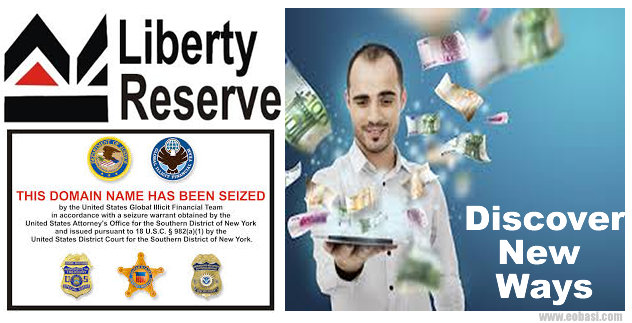
    The shutting down of libertyreserve by the US government is probably the saddest news any internet marketer would want to hear. Now the question surrounding the whole affaire is why were they shut down? and is there an alternative? I can not give you answer to the first question but the later is what we are going to consider here.
    When payment gateway is mentioned, the first thing that comes in mind is paypal but is paypal really enough?
    In most countries like Nigeria, Lebanon, Ghana etc paypal is completely out of bounds (registration is not available to users from such countries). What is the payment option for a user from such countries? Lets take a look at the the top 3.

    Top 3 Option for Online Payment Gateways

    Perhaps, the US government is sounding a warning bell to all global payment exchange network, so it is important you consider your options wisely.
    Why Liberty Reserve was shut down
     On the 24th of may 2013 Arthur Budovsky Belanchuk was arrested is Spain under charges of financial crimes during worldwide investigation. He is the founder and owner of Liberty Reserve, one of the most popular electronic currencies online

    Security expert Bryan Krebs said Liberty Reserve’s features such as using only a name, date of birth and an email address as a means of identification  had made it a popular among cybercriminals who wanted to move funds and make payments anonymously.

    If you wanted to launder money, you would open an account with Liberty Reserve, providing them with a name, which could be fake, and an e-mail address. The key to the scheme was that you couldn’t then deposit money directly into the account. Instead, you had to work through middlemen, who were called “exchangers.” These were typically unlicensed moneymen in countries like Malaysia, Nigeria, and Vietnam, who bought Liberty Reserves in bulk from Liberty Reserve. You would pay them dollars (or whatever currency) for a certain sum of Liberty Reserves, which they would then deposit into your account. And when you wanted to withdraw money, the process worked in reverse, perhaps with an exchanger in a different country. (Liberty Reserve itself took a one-per-cent fee on transactions, while the exchangers typically charged five per cent or more.) The point of doing it this way was that the Liberty Reserve bank would have no identifying data for you (no record of how or from where you sent the money), since the deposits and withdrawals were all done through the exchangers.
    This arrangement made money laundering easier, which seems to have been the main function of the network.

    Although, many will ague that they have used liberty reserve for only legal transaction but the LR currency is not legal as it does not have any limit of currency that can be produced, Budovsky can choose to produce 1Million LR for himself if he so wish.

    What are the alternatives?

    1. Payza
     Payza, previously known as Alert Pay has improved over the years and gradually placed himself as the direct alternative to paypal. Unlike Liberty Reserve, Payza plays the middle man between your bank and your internet transaction. You fund your account via your credit card and also withdraw your money back to your back account. This is pretty convinient as it allows users to transfer money from one user to the other and uses a very tight verification system..

    2. Payoneer
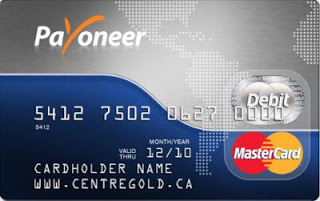
    Payoneer provides their users with a credit card that can be used globally, It is pretty much like your bank account, the verification requires you to provide a government issued identification such a driving licence, passport or national id. You can also send and receive payments from various local eWallets such as WebMoney, Payza etc from any part of the world.

    3. Perfect Money
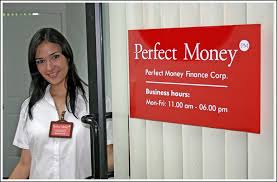
    Perfect money like Liberty Reserve uses a currency exchange system, if you are addicted to the Liberty Reserve system of transaction then Perfect Money is just the ideal option for you. Best online sellers and buyers of perfectmoney, paypal, and other ecurrencies which you can trust are
    myecurrencyexchange.com, wm-center.com, alerexchanger.com and you mention…

    Above: Preet Bharara, United States Attorney for the Southern District of New York, describes charges against Liberty Reserve, The New Yorker.
  • Why Did Criminals Trust Liberty Reserve?

    Why Did Criminals Trust Liberty Reserve?

    Liberty-Reserve.jpg
    Liberty Reserve, the alternative-payment network and digital currency that federal prosecutors shut down a couple of days ago, was not, as it described itself, the Internet’s “largest payment processor and money transfer system.” (PayPal, obviously, is much bigger.) But Liberty Reserve was, by all accounts, the Internet’s largest payment processor for illicit and criminal transactions. The Justice Department says that since the founding of Liberty Reserve, in 2006, it has handled more than fifty-five million transactions totalling more than six billion dollars, and as of last year it had more than a million users. In effect, Liberty Reserve provided a key piece of the infrastructure for criminal activity on the Web. What makes it so interesting is that it was only able to do so by getting hundreds of thousands of criminals to trust it.
    Descriptions in reports of the legal action against Liberty Reserve have made its day-to-day business sound enormously confusing. So let’s walk through how it worked. Liberty Reserve functioned like a bank that only took deposits in its own currency (also called the Liberty Reserve). If you wanted to launder money, you would open an account with Liberty Reserve, providing them with a name, which could be fake, and an e-mail address. The key to the scheme was that you couldn’t then deposit money directly into the account. Instead, you had to work through middlemen, who were called “exchangers.” These were typically unlicensed moneymen in countries like Malaysia, Nigeria, and Vietnam, who bought Liberty Reserves in bulk from Liberty Reserve. You would pay them dollars (or whatever currency) for a certain sum of Liberty Reserves, which they would then deposit into your account. And when you wanted to withdraw money, the process worked in reverse, perhaps with an exchanger in a different country. (Liberty Reserve itself took a one-per-cent fee on transactions, while the exchangers typically charged five per cent or more.) The point of doing it this way was that the Liberty Reserve bank would have no identifying data for you (no record of how or from where you sent the money), since the deposits and withdrawals were all done through the exchangers.
    This arrangement made money laundering easier, which seems to have been the main function of the network. But Liberty Reserves were also used as a digital currency, in the sense that that there were “merchants” who would accept L.R.s as a form of payment for goods and services. (Liberty Reserve actually designed a shopping-cart interface for their Web sites.) These merchants were, at least according to the government, “overwhelmingly criminal in nature,” engaging in transactions in which both the buyer and the seller had an interest in anonymity. They included traffickers in stolen credit-card and social-security numbers, drug dealers, and hackers. If you wanted to pay for someone to hack a company’s data, you could just transfer L.R.s from your bank account to theirs. What Liberty Reserve offered criminals, in other words, was something that had, relatively speaking, the anonymity of cash (since all that identified you was an e-mail address) in the virtual world.

    What’s fascinating about all this is that, at least for a while, it worked—drug dealers were willing to trade real drugs and hackers were willing to do real work in exchange for Liberty Reserves. That suggests they were confident that the currency wouldn’t become worthless, and that when they wanted to trade their Liberty Reserves for dollars (or euros), they’d be able to do so with reasonable ease and at a reasonable price. This is a little surprising. It makes sense to accept dollars for your work, because you can be certain you’ll be able to use them to buy stuff tomorrow—the fact that they’re the legal currency of the U.S. is a good guarantee of that. But Liberty Reserves were backed by nothing at all. They were historically pegged to the U.S. dollar—one L.R. equaled one dollar—but there were no legally binding rules that guaranteed that exchange rate (the whole point of the system was that it was outside the law), which means that Liberty Reserve could, in theory, have raised or lowered the rate at will. More important, there were no restrictions that would have prevented Arthur Budovsky (who founded Liberty Reserve) from simply printing as much currency as he wanted and using it to buy illicit goods. (This makes it different from Bitcoin, which has been algorithmically engineered to permanently limit the number of bitcoins in existence.) Had Budovsky done this, it would have radically devalued the wealth that everyone else had in Liberty Reserves. Yet, even knowing that, hundreds of thousands of people, many of whom broke the law for a living, put their faith in the system.
    The reason they were willing to do so, presumably, was that the long-term value of Liberty Reserve as a business depended on it not screwing over its customers. Like good disciples of Adam Smith, Liberty Reserve’s users relied not on Budovsky’s benevolence but, rather, on his pursuit of his own self-interest. This was a good gamble for a while, but there was an important catch: because Budovsky couldn’t protect Liberty Reserve from the U.S. government, all of those L.R.s are now essentially worthless. Still, Liberty Reserve’s success (short-lived as it was) is a kind of testament, however perverse, to the fact that markets can flourish even when there is no government to supervise them, and no legal way to enforce the rules. When self-interest is well-harnessed, apparently, you get honor even among thieves.
    Above: Preet Bharara, United States Attorney for the Southern District of New York, describes charges against Liberty Reserve. Photograph by Mike Segar/Reuters.
    Credit: http://www.newyorker.com/online/blogs/newsdesk/2013/05/why-did-criminals-trust-liberty-reserve.html