Tag: Nigeria

  • Nigerian Government Drops Money Laundering Charges Against US Binance Executive

    Nigerian Government Drops Money Laundering Charges Against US Binance Executive

    In a major development, the Federal Government of Nigeria has officially dropped money laundering charges against Tigran Gambaryan, a Binance executive and former U.S. IRS investigator, after months of international scrutiny and diplomatic pressure.

    Gambaryan, who joined Binance in 2021 as part of its compliance and investigations team, was arrested earlier this year in Nigeria as part of the government’s broader efforts to combat cryptocurrency-related financial crimes. His arrest stemmed from accusations that Binance had facilitated illegal money laundering transactions through its platform. Gambaryan’s role at Binance involved ensuring that the company adhered to anti-money laundering (AML) and know-your-customer (KYC) compliance regulations, making the charges against him particularly controversial. His previous career with the U.S. government made him a high-profile figure in this case.

    Before joining Binance, Gambaryan spent over a decade working for the IRS Criminal Investigation Division, where he became renowned for his efforts in uncovering major crypto-related crimes, including dark web drug markets like Silk Road and AlphaBay. He was credited with helping track down billions of dollars in stolen cryptocurrency and bringing major criminal networks to justice. Given his distinguished record, many were shocked by his detention.

    Reports indicate that Gambaryan was arrested in a raid that targeted Binance’s operations in Nigeria. He was initially accused of conspiring to launder money through cryptocurrency transactions, which were allegedly facilitated by Binance’s platform. Nigerian authorities claimed that the exchange had not done enough to prevent illicit transactions. Gambaryan, however, maintained that his work focused on preventing money laundering, not enabling it.

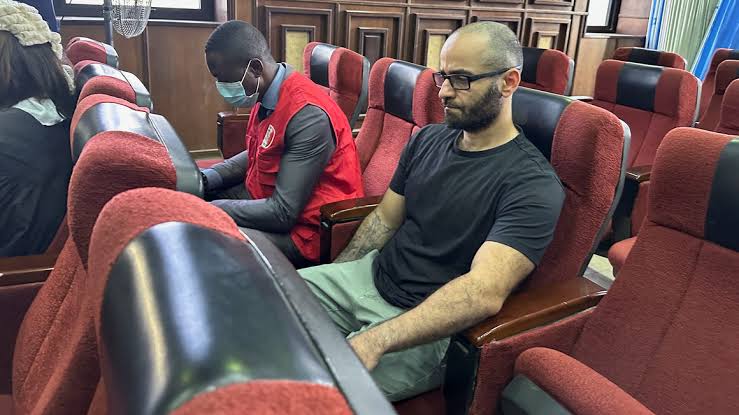
    After his arrest, Gambaryan’s health rapidly declined while in custody. Images of him attending court hearings in a wheelchair and, later, using a crutch due to mobility issues sparked concern globally. His detention became a diplomatic issue, with calls from U.S. lawmakers and advocacy groups urging the Nigerian government to release him. A group of 16 U.S. Congress members signed a letter to the White House, urging the U.S. government to treat his case as a hostage situation. State attorneys general also joined the campaign, advocating for his immediate release and pointing to his contributions to global financial crime investigations as reasons for leniency.

    The case drew significant international attention, not just because of Gambaryan’s high-profile career, but also due to its implications for the global cryptocurrency industry. Binance has been under scrutiny by regulators worldwide, with many accusing the platform of failing to enforce strict anti-money laundering measures. Gambaryan’s arrest intensified concerns about the risks of working in the cryptocurrency space, where regulatory frameworks are still evolving.

    Despite the severity of the charges, Gambaryan’s legal team continued to push for his release, arguing that the charges were baseless and that he was being wrongfully detained. International pressure and diplomatic efforts finally led to the Nigerian government dropping the charges.

    Gambaryan’s supporters have hailed the decision as a victory for justice and transparency, though his ordeal has cast a shadow over the relationship between Binance and international regulators. Binance continues to face challenges as it strives to navigate the complex legal landscape surrounding cryptocurrency.
    Possible Reinstatement of Naira Feature on Binance P2P

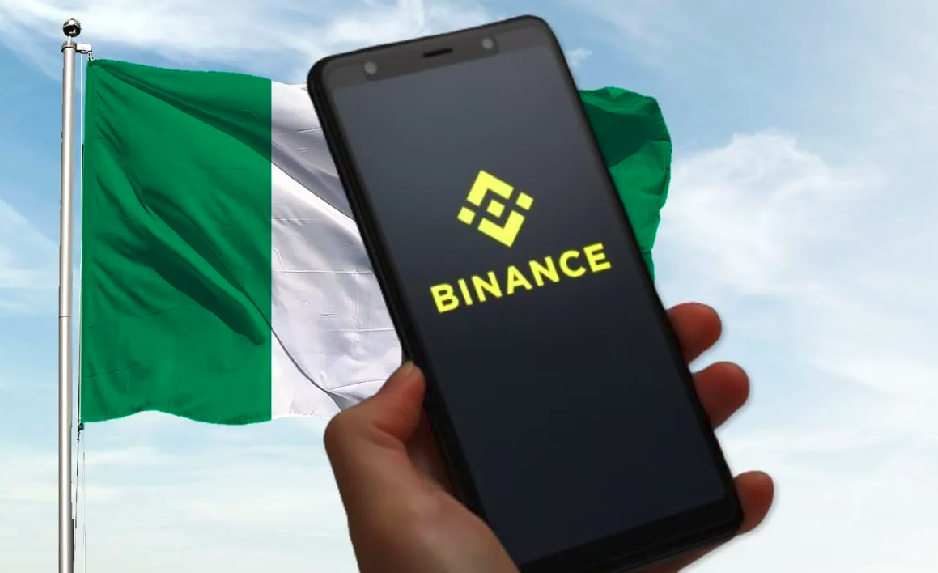
    The dismissal of money laundering charges against Binance executive Tigran Gambaryan could have significant implications for Binance’s decision to disable the naira feature on its P2P market. Binance suspended naira transactions following increased scrutiny and regulatory pressures from Nigerian authorities. With the charges now dropped, it may create an opportunity for Binance to re-evaluate its stance on naira transactions in the region.

    If Binance feels that the regulatory environment has become more favorable or stable, it might reconsider the suspension and re-enable naira functionality on its P2P platform. This could restore confidence among Nigerian users who rely heavily on P2P trading due to the central bank’s restrictions on crypto-related transactions within the formal banking sector.

    The demand for P2P trading in Nigeria remains high, as many citizens use cryptocurrency as a hedge against inflation and currency devaluation. Enabling the naira feature again would facilitate easier access for users and may drive up transaction volumes, benefiting both the exchange and its customers.

    However, this potential restoration would also depend on how Nigerian regulators respond post-Gambaryan’s case. The legal environment surrounding cryptocurrencies in Nigeria remains uncertain, and Binance may still face challenges if authorities maintain strict control over crypto activities. Nonetheless, the dismissal of such a high-profile case might encourage Binance to take steps toward resuming full operations, including reactivating naira trading on its P2P platform.
  • PayPal will Fully Accept Nigeria only when their US Allies has Ignored them

    PayPal will Fully Accept Nigeria only when their US Allies has Ignored them

    After waiting for a little over a decade, PayPal arrived Nigeria in 2014 – arrived Nigeria with a half-baked service. A service that does little than market foreign products to Nigerians and prevent Nigerians from marketing theirs.

    From the first day they stepped into the Nigerian Market, the intent was quite clear. To make maximum profit from the Africa’s second largest economy and deliver nothing in return. Yes, I said that, the service PayPal provides to Nigerians is completely one dimensional and only profit foreign companies and businesses abroad.

    PayPal would fully accept Nigerians only when their US allies has found a more reliable means to do business. Nigeria has always been the dumping ground of failed US investments. It will come of no surprise if PayPal turn to Nigerians – desperate to do business with them – only after their popularity among US companies has declined. See why we think so.

    Do Nigerians Really Need PayPal?

    In case you are new to the current system, Nigerians can only pay money with their PayPal account but cannot receive money with their accounts. Some Nigerians has led various campaigns, asking that they should be able to receive money through their accounts like in many other countries where PayPal exist. But this campaign don’t usually make it past as many social media platforms.

    Nigerians need PayPal both on the individual scale and the corporate scale. There are so many companies looking to integrate a reliable, convenient and globally accepted payment gateway to their online store. PayPal is one of the few payment gateways meeting such criteria. Some individuals, especially freelancers has found themselves in a position where having a PayPal account is the only thing standing between them and a life-transforming job.

    Just recently, one Kofi Rukky called out PayPal on change.org. She asked that they should allow Nigerians receive money through their PayPal accounts. The petition like every other campaign, fell on deaf ears even after gaining the attention of over 1200 Nigerians.

    Like so many other Nigerians, we have often pondered on the reason why PayPal isn’t fully functional in Nigeria. Reasons why Nigerians cannot receive money through their accounts? In our twitter handle, Geek NG and 3rd Planet Techies responded to our question on why PayPal doesn’t send money to Nigerians. They suggested that “Nigeria is still considered a high risk country, the possibility of getting a full PayPal service is pretty slim”.

    Is Nigeria Really that Bad?

    Nigeria as a country has long being associated with fraud. How can we ever forget the “Nigerian Prince”? The advance fee fraud has also earned popularity across the globe.

    How far away is the 1960s from today?

    Does time really change yesterday? PayPal doesn’t think so.

    Miss Kofi Rukky is just one example of a Nigerian who is relying on the internet to earn legitimate income for themselves. As at March 31, 2017 there are 93,591,174 people accessing the internet from Nigeria. 8th position in the world’s overall ranking of internet users. According to Internet World Stats, this population amounts to 2.5% of the overall internet internet users in the world (3,731,973,423). It is likely to grow at the rate 46,695.6% in the coming year.

    This population of internet users are composed of Bloggers, Programmers, Internet Marketer, Developers, Designers and various other professionals. Professionals who has come to the ‘free web space’ seeking a legitimate way to earn income. It is also important to note that this population has its fair share of cyber criminals and 419 internet frauds.

    But is it fair to punish an entire population seeking to make clean income because of a crime committed by a few individuals? I’m sure Byron Howard and Rich Moore of Zootopia will disagree.

    Sift Science Disagrees Too

    Out of curiosity, I was forced to conduct a research on economic cyber-crime. And it was alarming to know that even the USA has more e-commerce fraud than Nigeria. Really, Nigeria is not even in the top 10. Sift Science has developed a comprehensive analysis on e-commerce fraud activity from practically everywhere in the world. Nigeria, contrary to the general assumption, lies 7 places away from the top 10 countries involved in e-commerce fraud.

    The research showed that people in the smaller countries (in terms of population) like Latvia, Egypt, Mexico, Ukraine, etc are found to participate more in e-commerce fraud than Nigerians. Even bigger economic countries like Russia and the USA has earned its place in e-commerce crime above Nigeria.

    Most US Companies are Losing Trust in PayPal

    Knowledge has increased. US companies are becoming more aware of the loopholes associated with PayPal. Really, if their system is as secure as they claim, why the need to alienate a certain individuals? That is a debate for another day.

    Minimizing cost and maximizing profit is the basic objective of every business. Over the years, PayPal hasn’t helped most businesses in the US towards achieving this basic business objective. Customers who do not have a PayPal account and wishes to buy products has to go through the rigorous process of creating a PayPal account. This in return makes companies/businesses lose potential revenues and clients.

    It has also being argued that PayPal puts customers at a risk of identity theft as they demands too much personal information, makes misleading claims, tricks people into signing up and creating an account they don’t want and extorts more personal data from those who signed up. With too much privacy questions raised recently, it wouldn’t be surprising to see people considering a life after PayPal. And with Bitcoin gaining more international recognition, it is only a matter of time before more serious businesses start jumping ship.

    Why PayPal needs Nigeria?

    Nigeria’s economy is the second largest in Africa ( after South Africa) and her banking system is one of the best in Africa. Nigeria is the most populous nation in Africa and the 7th most populous in the world. PayPal would get to realize that there are lot of business people in the country. People who are willing to use their accounts for legitimate businesses in Nigeria.

    Also, operating in Nigeria opens a unique opportunity for them in Africa. As the arguable giant of Africa, the success of most businesses in Africa depends on how successful it is in Nigeria. Several companies has denied services to Nigeria on the basis that there is no payment gateway for Nigerians.

    PayPal full arrival to Nigeria will mean more companies extending their services to Nigeria. More revenues generated for both parties and more happy Nigerians. Everybody wins! But PayPal won’t see this until their US allies turn their back on them.

  • Nigeria Dominate the World Internet Consumers Table on Its 54th Anniversary

    Nigeria Dominate the World Internet Consumers Table on Its 54th Anniversary

    According to statistics on Internet Live Stats Nigeria is dominating 2.30% share of the 2,981,011,134 (two billion nine hundred eighty-one million eleven thousand one hundred thirty-four) population of internet users in the world since January, 2014.

    Around 40% of the world population has an internet connection today. In 1995, it was less than 1%. The number of internet users has increased tenfold from 1999 to 2013. The first billion was reached in 2005. The second billion in 2010. The third billion will be reached by the end of 2014 at this rate.

    Understandably, the world most populated country China leads the chart of countries with the highest number of internet users in 2014. Reaching 29.99% i.e 641,601,070 internet users out of 2,981,011,134 world internet users.

    China is followed, though at a very wide margin by United States with 279,834,232 internet users.Which is 9.58% of the world overall internet users.

    Behind United States is the world second most populated country and the world third most populated internet users. 243,198,922 people access the internet from India which is exactly 8.33% of the total internet users in the world.

    Japan (109,252,912) and Brazil (107,822,831) follows further behind in fourth and fifth place respectively, both having 3.74% and 3.69% population share of the world internet users.

    The sixth and seventh place is occupied by Russia (84,437,793) and Germany (71,727,551) respectively, collecting 2.89%  and 2.46% shares of the total population count.

    Nigeria is posed on eight position in the global internet population ranking table. The African giants with over 178,516,904 human population, seventh most populated country in the world has improved its share of the global internet population by 16% since 2013. Nigeria currently has a total  of 67,101,452 internet users, constituting 2.30% of the total global internet population.

    Nigeria and the Egypt are the only African countries in the top 20 global internet consumers ranking table. The rest of other countries in top 20 include:

    • 9. United Kingdom 57,075,826 (1.95%)
    • 10. France 55,429,382 (1.90%)
    • 11. Mexico 50,923,060 (1.74%)
    • 12. South Korea 45,314,248 (1.55%)
    • 13. Indonesia 42,258,824 (1.45%)
    • 14. Egypt 40,311,562 (1.38%)
    • 15. Viet Nam 39,772,424 (1.36%)
    • 16. Philippines 39,470,845 (1.35%)
    • 17. Italy 36,593,969 (1.25%)
    • 18. Turkey 35,358,888 (1.21%)
    • 19. Spain 35,010,273 (1.20%)
    • 20. Canada 33,000,381 (1.13%)
  • Job Vacancy! IBM is Looking for a Client Technical Advisor

    Job Vacancy! IBM is Looking for a Client Technical Advisor

    IBM is currently in need of a Client Technical Advisor within Nigeria. IBM is a global technology and innovation company headquartered in Armonk, NY. It is one of the largest technology and consulting employer in the world, with more than 400,000 employees serving clients in 170 countries. (Find out more about IBM).

    The company announced recently that the position of a Client Technical Advisor has been thrown open to qualify candidates within Nigeria. Details are provided below.

    Job description

    Provide proactive technical counsel to CIO – Chief Information Officer and key IT executives on technical strategy, direction and projects
    Improve and broaden client access to IBM’s global technical and innovation expertise
    Increase the value that clients derive from application of new and existing technologies and accelerate innovation

    Requirements

    Bachelor’s Degree
    At least 5 years experience in Understanding Banking industry and business objectives
    At least 5 years experience in Understanding client’s IT strategy and architectural goals
    English: Fluent

    Preference

    At least 6 years experience in Understanding Banking industry and business objectives
    At least 6 years experience in Understanding client’s IT strategy and architectural goals
    IBM is committed to creating a diverse environment and is proud to be an equal opportunity employer. All qualified applicants will receive consideration for employment without regard to race, color, religion, gender, gender identity or expression, sexual orientation, national origin, genetics, disability, age, or veteran status.Apply Now or Read More About IBM

  • Google Partners with Airtel to give Nigerians Free Internet Service.

    Google Partners with Airtel to give Nigerians Free Internet Service.

    The internet search engine giant (Google) has combined powers with Airtel Nigeria to provide a unique Internet service tagged Free Zone powered by Google.

    This service allows customers within Nigeria to access mobile web search and other feature-phone-friendly versions of Gmail and Google+ without getting billed. The first page of any website linked from the search results is also provided at no charges.

    Free Zone aims to put the web in the hands of more people. First time Internet users who haven’t purchased data bundles often find basic services like email, mobile web browsing and social applications to be very expensive. With Free Zone, phone users can take advantage of the web to grow their businesses or keep in touch with friends and family without the fear of unknown data costs and also make more informed choices about their next data device.

    To enjoy the array of free Internet mobile services on Free Zone, customers are to text “Free Zone” to 881 or go to http://g.co/freezone from their phone browser.
    Juliet Ehimuan, Country Manager, Google Nigeria, said: “We are excited to be working with Airtel to introduce Free Zone powered by Google to Nigeria. We believe in the power of the Internet to create better opportunities, and working with Airtel on this makes it possible for anyone with a phone to get Internet services at little or no cost.

    Just like our other access projects, this gives people easier access to information in a way that benefits not just themselves, but their businesses, and by extension Nigeria’s economy.”
    Deepak Srivastava, Chief Operating Officer and Executive Director, Airtel Nigeria, stated: “Breaking down the barriers to Internet adoption is critical for Nigeria to keep up with the rest of world in terms of social and economic development. It is through key initiatives like these that these barriers can be reduced.
    “We are, therefore, really proud to bring this spectacular innovation to Nigerians especially our customers who will now have seamless access to Google Search, Gmail and Google+ by simply using Airtel SIM card on any data enabled handset free of charge. This is indeed another good reason to remain an Airtel customer or to joint Airtel if you are not yet a customer.”

    Airtel customers who access Free Zone will enjoy unlimited access to Gmail; share photos and messages with circles of family, friends and associates as well as follow updates on the things they are passionate about – from football to photography, music to news and follow people they’re interested in via Google+.
    Also, customers will be able to search the entire Internet and access the first page of websites from the results for free using Google Search.

    When Airtel customers leave the Free Zone to navigate deeper into a website or download an attachment they are informed about the data charges and given the option to purchase an appropriate data package.
    The service is available immediately to all new and existing Airtel customers from their mobile phones. Customers without a Google account can sign up for free.