Tag: politics

  • Study in Canada: University offers scholarships for Nigerians & Africans

    Study in Canada: University offers scholarships for Nigerians & Africans

    The University of Ottawa has announced millions of scholarships for African students hoping to study in Canada. The entrance and excellence scholarship will provide incoming students with a four-year scholarship to cover the partial cost of their university tuition.

    Beside the entrance and excellence scholarship of The University of Ottawa, you can still obtain student status in Canada by following the guideline describe on the links below.

    Entrance & Excellence Scholarship for African Students Studying in English

    The University of Ottawa is proud of the diversity of its international student body. This renewable scholarship is offered to international students who are citizens of African countries, who are admitted in the Fall 2022 term (September start date) or later with an admission average of 80% or higher, who are studying in English, and who enroll in one of the specified undergraduate programs in the faculties of Engineering, Science, or Social Sciences.

    This significant financial contribution to their education reduces their tuition fees by $17,500 to $25,000 for the excellence scholarships and by $12,000 to $20,000 for the entrance scholarships, depending on the program annually. All students who are eligible for this scholarship will automatically receive it upon enrolment. It will be applied directly to their tuition fees.

    The Entrance scholarship cannot be combined with the Excellence Scholarship for African Students Studying in English. Our scholarship program is one of the most generous in Canada.

    It rewards not only your pre-university academic achievements, but also your achievements every term of full-time study at University. The new scholarship will give African students studying in English access to numerous pilot programs in three faculties for a significantly reduced cost of tuition.

    In 2020, more than $42 million in scholarships were allocated to undergraduate students and $35 million to graduate students.

    In a bid to assist students throughout the application process, the University of Ottawa will host a number of virtual sessions to answer questions and guide prospective students on the application process.

    Eligibility Criteria

    All eligible students are considered for this award and will be notified at the time of their admission. Although no application is required for this scholarship, recipients will be asked to submit proof of citizenship of a country of territory in Africa before receiving their first installment.

    The applicant must: 1. be an international student with a valid study permit; 2. have citizenship from one of the countries in Africa; 3. be newly admitted in one of the following undergraduate programs offered in English or with the French Immersion option:

    • Engineering: Civil Engineering; Chemical Engineering

    • Social sciences: Sociology; Anthropology; International Development and Globalization; Conflict Studies; Public Administration

    • Sciences: All programs except the Honours BSc in Biochemistry / BASc in Chemical Engineering;

    Honours BSc in Physics / BASc in Electrical Engineering; and Honours BSc in Ophthalmic Medical Technology 4. be enrolled full-time; and 5. For the Entrance scholarship: have an admission average of 89.99% or lower once converted in our grading scale 6.

    For the Excellence scholarship: have an admission average of a minimum of 90% once converted in our grading scale.

    Application Guide:

    – First the student has to apply here: https://www.ouac.on.ca/ouac-105/

    – Then the University would receive the application and generate a Student Number which the prospective student would use to login to the school’s portal, UOZone, and then submit their results and documents for review.

    – After a successful review, they will be offered a conditional admission offer which will include the scholarship depending on their average.

    The submission deadline to study in Canada for all 2022 nominations is by 5:00 p.m., Central Time, on or before 31st March, 2022. For more information about the Entrance & Excellence Scholarships, contact [email protected] or call +2349071235106.

  • Move to Canada as FG Aims to Fill 432,000 Labour Gap

    Move to Canada as FG Aims to Fill 432,000 Labour Gap

    The federal government of Canada aims to welcome nearly 432,000 immigrants to Canada this year, as a part of a three-year plan to fill critical labour-market gaps and support a post-pandemic economic recovery.

    The annual immigration levels plan, tabled in Parliament Monday, projects Canada will admit 431,645 permanent residents in 2022, followed approximately by 447,000 in 2023 and 451,000 in 2024. The majority of the permanent resident spots – 56 per cent – will be designated for immigrants coming to Canada to fill job vacancies this year.

    Speaking to The Globe and Mail, Immigration Minister Sean Fraser said the COVID-19 pandemic has highlighted how key immigrants are to Canada’s success, as newcomers fill many front-line jobs.

    “When I talk to restaurants, machine shops, health care providers or virtually any other business, I see help-wanted signs in windows,” Mr. Fraser said.

    “By launching what is the most ambitious immigration plan in the history of Canada, we are going to equip the Canadian economy with the workers it needs.”

    Canada need working class immigrants

    Ottawa says immigration accounts for 100 per cent of labour-force growth and, with five million Canadians set to retire by the end of this decade, the worker-to-retiree ratio will drop – demonstrating the need for increased immigration.

    Goldy Hyder, president and chief executive officer of the Business Council of Canada, said the number of job vacancies in the country is near an all-time high and immigration will be a key driver of pandemic recovery. He welcomed the government’s immigration targets Monday, but he said the plan must be supported by increased processing capability and supports for newcomers.

    “To help meet these new targets, we urge the government to expand the immigration system’s processing capacity by adding new processing centres, updating outdated IT systems, and increasing recruitment and training of border agents and settlement services personnel. A growing workforce should also be accompanied by increased investments in public services, housing, and infrastructure,” Mr. Hyder said in a statement.

    Mr. Fraser said the government recently hired 500 new processing staff and set aside $85-million in new funding to reduce application backlogs.

    NDP immigration critic Jenny Kwan urged the government to introduce special immigration levels to give the 500,000 migrant workers already in Canada a path to settlement and help address the labour-skill shortage.

    While the government plans to increase the number of economic immigrants it welcomes to Canada over the next three years, from nearly 242,000 this year to more than 267,000 in 2024, it will simultaneously reduce the number of refugees to whom it offers safe haven. Canada will resettle approximately 77,000 refugees this year, 74,000 in 2023 and 62,500 in 2024. Mr. Fraser said resettlement numbers will gradually decrease as Canada follows through with its commitment to resettle 40,000 Afghan refugees over the next two years. More than 7,550 Afghan refugees have been resettled in Canada since last August.

    The reduction in refugee-resettlement targets – particularly the government’s plan to accept more privately sponsored refugees than government-assisted refugees – has sparked concern for advocates.

    “The responsibility to resettle refugees lies with the government – to reflect that responsibility, the government should resettle more refugees than private citizens. Yet the levels show private sponsors are being asked to do one and a half times as much resettlement as the government,” the Canadian Council for Refugees said in a statement.

    How to Apply for a Canadian Work Visa

    If you are looking to settle in Canada, here are some helpful links to get you started

    Overall immigration levels have grown substantially since the Liberals took power in 2015. Numbers continued to grow until 2020, when Canada only admitted 184,500 newcomers because of the challenges posed by the pandemic. Shuttered overseas visa offices, closed borders, quarantine restrictions and challenges booking flights heavily affected the immigration system.

    Immigration numbers rebounded in 2021, when Canada welcomed 405,000 new permanent residents – breaking the all-time record set in 1913. The majority of the newcomers were already in Canada on temporary status, including temporary foreign workers in the skilled trades, health care and technology, and international students.

    The government has not tabled an immigration levels plans since October, 2020. It normally announces it immigration targets by Nov. 1, but last year’s plan was delayed because of the federal election.

  • Top 11 Most Fascinating International Borders in the World

    Top 11 Most Fascinating International Borders in the World

    What do you imagine when you think of international borders between countries?

    For me, I imagine a heavily armed security checkpoints, or, perhaps, unremarkable, isolated, and imaginary dividers between two pieces of land.

    In reality, however, a political map shows how messy these boundaries—often invisible, but occasionally obvious—can be.

    You’ll find countries surrounded on all sides by other countries, and countries scattered in pieces throughout other countries.

    Some borders, though, are truly fascinating and downright beautiful. Listed below—in no particular order—are some of the most fascinating international borders on mother earth.

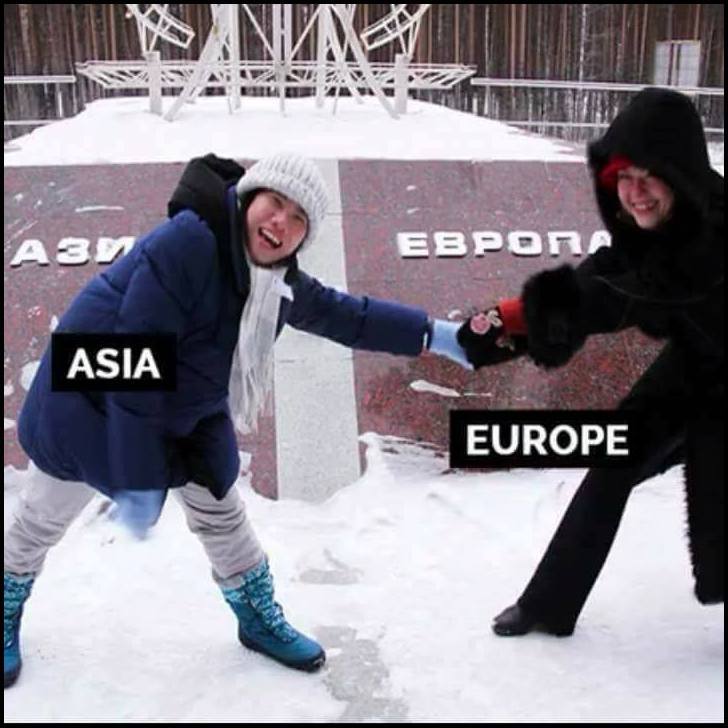
    1. Where Asia Meets Europe

    asia-europ
    (c) Facebook | Five countries link Asia to Europe —Russia, Kazakhstan, Azerbaijan, Turkey, and Georgia—which are technically part of both continents

    Turkey is a country that crosses two continents – Asia and Europe, full of rich dance and music, from the bustling city of Istanbul to the fairy caves in Cappadocia.

  • “We Took Down Trump Tower’s website”, Anonymous Claims

    “We Took Down Trump Tower’s website”, Anonymous Claims

    A group of cyber activist has claimed that it downed Donald Trump’s website after the later said the United States government should ban muslims from entering the US. The statement has since triggered missed reaction around the globe including a threat YouTube video by Anonymous – a group of online activist allegedly fighting ISIS the cyber way – citing that Trump’s comments would help the Islamic State group recruit terrorists.

    The site was unavailable during the early afternoon of Friday, and according to a media report had been down for about an hour earlier in the day. Around 9 a.m. Friday there, the Anonymous Twitter account @YourAnonNews posted tweets saying the group had taken down the site.

    Trump Towers NY site taken down as statement against racism and hatred. https://t.co/n5ftLrOs1P (what you see is cloudflare offline backup)

    — Anonymous (@YourAnonNews) December 11, 2015

    In a video the group posted on YouTube, the cyber activist warned that “Donald Trump, think twice before you speak anything,”. The YouTube video was heavily modified to avoid voice detection.

    Anonymous frequently hacks websites in the name of political causes and says it is engaged in a cyberwar against the Islamic State. It claims to have taken down thousands of Twitter accounts that support the group.

    Earlier this week, Trump said the U.S. should bar all Muslims from entering the U.S. as a measure to prevent terror attacks, “until our country’s representatives can figure out what’s going on.” The statements drew widespread condemnation in the U.S. and elsewhere but support from some right-leaning commentators. An NBC/Wall Street Journal poll found 57 percent of Americans opposed the idea.

    This isn’t the first time Anonymous has targeted Trump. In August, the group broke into Trump.com in order to leave a message to Jon Stewart as he was about to leave The Daily Show. As we await the group’s next move, they’ve already announced that Friday will be a day to troll ISIS.

    Trump is the leading Republican candidate in the 2016 presidential election.

  • The US Government finally put an End to Phone Records Collection Program

    The US Government finally put an End to Phone Records Collection Program

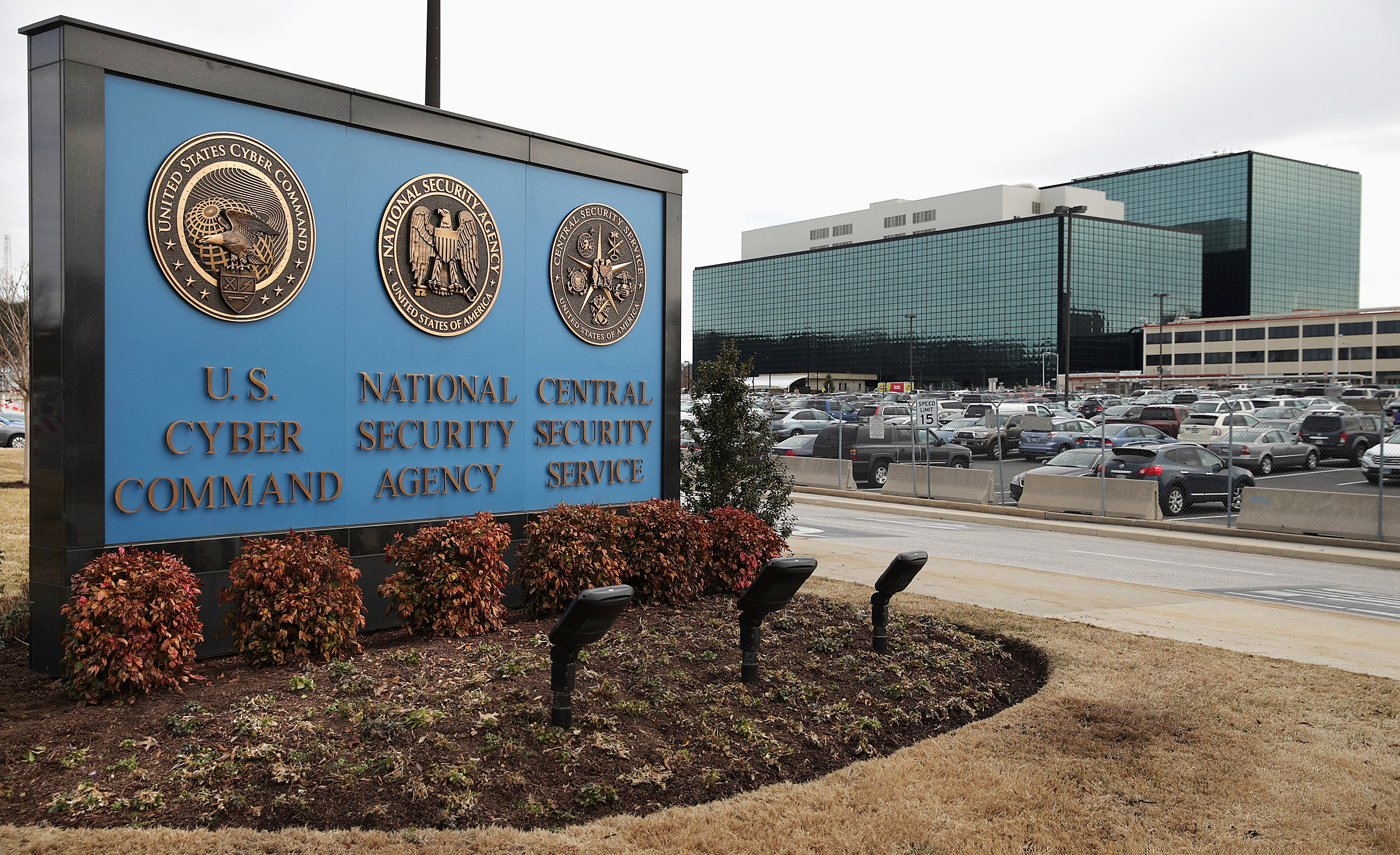
    Yesterday marked the end of NSA’s program to collect bulk phone records in the United States. Advocates all over the world questioned the The US government fairness about surveillance technology and started pushing for privacy since former NSA contractor Edward Snowden exposed the program to journalists 2 years ago.

    The masses gained the government attention earlier this year with Congress passing the USA Freedom Act. But in light of the terror attacks that rocked Paris earlier this month, many hawkish lawmakers have attempted to hold off on shutting it down.

    Reports reaching us says that the Office of the Director of National Intelligence announced on Sunday that the program shut down as scheduled.

    As the program finally came to its ultimate doom, privacy advocates took a victory lap on Monday. Here are those hot takes.

    Senator Ron Wyden of Oregon wrote:

    “This program’s very existence was concealed from the American public for over a decade.  Across two administrations, senior officials from US intelligence agencies and the Justice Department repeatedly made false and misleading statements that concealed the truth about what they were doing.  These officials relied on a secret body of law to justify the mass surveillance of the American people. Fortunately, in America sooner or later the truth always comes out.  When Americans found out about this secret, unconstitutional surveillance two years ago, they were rightfully outraged.  And they made their voices heard.  The result was historic reform legislation that required the government to shut this program down.”

    Senator Mike Lee said:

    “Today both the safety and Constitutional rights of American citizens are more secure thanks to the USA Freedom Act. Not only did the USA Freedom Act strengthen the Fourth Amendment rights of all Americans by ending the bulk collection of personal data, but it also better ensured national security by closing a loophole that prevented the government from tracking foreign terrorists once they entered the United States.”

    Members of the House of Representatives also reiterated their support of the law. Bob Goodlatte, John Conyers, Jim Sensenbrenner and Jerrold Nadler issued the following statement:

    “The implementation of the USA Freedom Act represents government at its best: it is the product of a robust public debate and intense bipartisan negotiations dedicated to finding a way to protect our Constitutional rights while enhancing the safety of our country. The bipartisan law ends the bulk collection of telephone metadata once and for all, enhances civil liberties protections, increases transparency for both American businesses and the government, and provides national security officials targeted tools to keep America safe.”

    The implementation of the Freedom Act highlights that in a government marked by gridlock, there have been many major policy decisions that impact the tech industry from Washington this year. After little happened for the industry last year, 2015 brought significant reforms to the government surveillance and made net neutrality the law of the land.

  • Sweden Government Unwilling to Place Ban on The Pirate Bay

    Sweden Government Unwilling to Place Ban on The Pirate Bay

    After one month of intense debate, a Swedish court has ruled that it cannot force ISPs to block their customers’ access to file-sharing site The Pirate Bay. Reports reaching us says that TheLocal.se and safeguards citizens’ access to the site, despite it being used to distribute copyrighted material.

    Pirate Bay for the past 10 years has been home for countless pirated copies of music, videos, games and softwares. Hence, triggering Universal Music, Sony Music, Warner Music, Nordisk Film and the Swedish Film Industry to try and force ISP Bredbandsbolaget into blocking the service, as it has been in many other European countries. In the UK, for example, none of the major national ISPs allow access to the page following court orders.

    However, the action was unsuccessful, at least at District Court level.

    The court found that Bredbandsbolaget couldn’t be held responsible for the copyright infringement of its customers’ actions while using the service as it doesn’t constitute a crime under Swedish law, according to the report. As such, it’s also not liable for any of the fines.

    While it could still be overturned by a higher authority appeals court, the group representing the copyright holders will have to pay the ISPs legal costs thus far, which is more than $150,000 according to TorrentFreak.

    As a UK citizen – and therefore subject to the court-ordered bans in place here – it’s nice to see an ISP’s resistance to copyright holder demands be upheld by the court, whether or not it holds in the longer term, or other countries follow suit, remains to be seen.

    SOURCE: The Local

    MORE COVERAGE: TorrentFreak

  • US spy court appoints lawyers to panel of advisers

    US spy court appoints lawyers to panel of advisers

    Under the USA Freedom Act, the panel is to advise the judge on privacy and technical matters

    A secret U.S. spy court has appointed a five-member panel of advisers as part of the reform of the surveillance of the National Security Agency.

    The presiding judges of the Foreign Intelligence Surveillance Court and the Foreign Intelligence Surveillance Court of Review have jointly designated five persons to be eligible to serve as an amicus curiae, or friend of the court, according to a notice on the FISC website.

    The appointments have been made under the USA Freedom Act, the reform legislation that was signed into law on June 2 by President Barack Obama.

    The panel consist of four lawyers and a professor of law, and does not include technology experts, although the USA Freedom Act provides for a panel of experts at the FISA court to provide guidance on matters of privacy and civil liberties, communications technology, and other technical or legal matters.

    The persons appointed to the panel are Jonathan G. Cedarbaum, a partner in the law firm of WilmerHale, criminal defense lawyer John D. Cline, Laura Donohue, a professor of law at Georgetown Law, Amy Jeffress, a partner in the the law firm of Arnold & Porter, andMarc Zwillinger, a privacy and data security lawyer.

    The reform of the NSA was taken up after revelations in 2013 by its former contractor, Edward Snowden, about widespread surveillance by the agency in the country and abroad, including its collection of bulk phone records of Americans.

    Obama promised in January 2014 significant reform of NSA surveillance, and called on Congress to authorize the “establishment of  a panel of advocates from outside government to provide an independent voice in significant cases” before the FISA court, to ensure that the court hears a broader range of privacy perspectives.

    Under the USA Freedom Act, the amicus curiae is expected to provide to the court, as appropriate, legal arguments to promote the protection of individual privacy and civil liberties, information related to intelligence collection or communications technology, and legal arguments or information regarding any other area relevant to the issue presented to the court.

    Another key part of the reform – the bulk collection by the NSA of phone metadata records of Americans- is set to end by the close of this month. The USA Freedom Act places curbs on the bulk collection program by leaving the phone records database in the hands of telecom operators, while allowing only a targeted search of the data by the NSA for investigations.

    In September, the FISC court appointed a lawyer Preston Burton as amicus curiae in connection with a specific application by the government to retain already acquired  phone records beyond Nov. 28 for use for technical and litigation purposes.

  • Russia offers its support to North Korea amid the Sony Hack

    Russia offers its support to North Korea amid the Sony Hack

    EWT is following the Sony Hacks, North Korea’s internet outages, and all other related topics as they develop. See bottom of article for further reading.


    MOSCOW –  Russia on Thursday offered sympathy to North Korea amid the Sony hacking scandal, saying the movie that sparked the dispute was so scandalous that Pyongyang’s anger was “quite understandable.”

    Washington failed to offer any proof to back its claims of Pyongyang’s involvement in the hacking, Russian Foreign Ministry spokesman Alexander Lukashevich said at a briefing, adding that the U.S. threats of retaliation were “counterproductive.”

    The U.S. has blamed Pyongyang for the recent cyberattack on Sony Pictures, which produced “The Interview,” a comedy depicting the assassination of North Korean leader Kim Jong Un. Pyongyang has denied a role in the hacking, but also praised it as a “righteous deed.”

    Sony initially decided not to release the film because of threats against U.S. cinemas, but released the movie online Wednesday.

    Russia’s ties with the communist North soured after the 1991 Soviet collapse, but have improved under President Vladimir Putin’s watch. Moscow has taken part in international efforts to help mediate the standoff over Pyongyang’s nuclear and missile programs, although its diplomatic efforts have had little visible effect.

    Last week, the Kremlin said that it had invited Kim to Moscow in May to attend festivities marking the 70th anniversary of the victory over Nazi Germany.

    Commenting on the Sony hack scandal, Lukashevich said that “the concept of the movie is so aggressive and scandalous, that the reaction of the North Korean side, and not just it, is quite understandable.”

    He went on to say that Pyongyang had offered to conduct a joint investigation into the incident, adding that the proposal could help ease tensions and reflected a “sincere desire of the North Korean side to study the issue in detail.”

    “We perceive the U.S. threats to take revenge and calls on other nations to condemn the Democratic People’s Republic of Korea as absolutely counterproductive and dangerous, as they only would add tensions to the already difficult situation on the Korean Peninsula and could lead to further escalation of conflict,” Lukashevich said.

    Further Reading:
    North Korea’s Internet is Offline     –     Sony Hack: U.S President Vows Responsibility for FBI Claims

    via Foxnews

  • Facebook is facing a law suit. Reason? Scanning user’s Messages

    Facebook is facing a law suit. Reason? Scanning user’s Messages

    From the revelation that Facebook scans through its user’s messages to deliver “tailored” ads, a U.S. judge has ruled that they must face a class-action lawsuit. Facebook’s bid to dismiss the lawsuit, filed by users Matthew Campbell and Micheal Hurley back in 2013, was dismissed by U.S. District Judge Phyllis Hamilton in Oakland. According to the details of the suit, until October 2012, when Facebook had said they stopped the practice, the large social networking company was scanning through user’s private messages for website URLs. This information was then used to deliver tailored advertisements to the user. By doing so, Facebook violated the federal and state privacy laws, which they broke by reading their users’ personal and private Facebook messages without their consent.

    Facebook had shown that the Electronic Communications Privacy Act covered the practice to the district court. The social networking giant also stated that it discloses to all users that the company might use the information they receive from the users about them for data analysis.
    However, Judge Hamilton wasn’t satisfied with Facebook’s explanation. She stated that Facebook had not offered a sufficient explanation of how the challenged practice falls within the ordinary court of business. She also added that the disclosure wasn’t specific enough to establish that users expressly consented to the scanning of the content of their messages.
    Facebook’s unwillingness to offer any details regarding its targeted advertising practice prevents the court from being able to determine whether the specific practice challenged in this case should be considered ‘ordinary,’” added Judge Hamilton.

    Facebook is continuing to stay silent on any comments about the case.
    Google is also under the hammer for the same message-scanning practices, though they aren’t facing a class-action suit like Facebook. Many experts in the field believe that the result of both of the lawsuits will have a major impact on how we use technology to communicate in the future.

  • North Korea’s Internet goes Offline

    North Korea’s Internet goes Offline

    DEVELOPING – Just days after the U.S. government accused North Korea of hacking Sony Corp’s computers, outages have occurred to North Korea’s internet, eventually going completely offline. The country has four official networks that connect them to the internet, all of which are ran through China. The connections began experiencing problems yesterday, and as of today it officially went black, according to Doug Madory, director of Internet Analysis at Dyn Research in Hanover, New Hampshire.

    U.S. President Barack Obama said last week that Sony Pictures Entertainment had suffered significant damage and vowed to respond. North Korea warned yesterday that any U.S. punishment over the hacking attack on would lead to a retaliation “thousands of times greater.” North Korea has said it doesn’t know the identity of the hackers — who call themselves “‘Guardians of Peace’’ — claiming responsibility for breaking into Sony’s computer network and divulging internal e-mail messages.

    The situation now is they are totally offline,

    Madory said. “I don’t know that someone is launching a cyber-attack against North Korea, but this isn’t normal for them. Usually they are up solid. It is kind of out of the ordinary. This is not like anything I’ve seen before.

    Because of the attack on the Sony computers, Hollywood secrets were released, data was destroyed, and the company had to cancel the release of “The Interview”, a comedy about the fictional assassination of North Korean leader Kim-Jon Un. The hack also caused thousands of Sony computer’s to be inoperable and caused the company to shut down their network.

    The outage probably isn’t a cut of a fiber-optic cable, which would be shown in an immediate loss of connectivity, and other possible explanations include a software meltdown on North Korea’s Web routers or denial-of-service hacking attacks, Madory said.

    Today, Marie Harf (a spokeswoman for the U.S. State Department) told reporters in Washington that she can’t confirm reports of any cyber-attacks on North Korea and won’t say what steps the U.S. might take in response to the hack on Sony.

    “We are considering a range of options in response,” Harf said at a State Department briefing. “Some will be seen. Some may not be seen.”

    While North Korea has four networks connected to the Internet, the U.S. has more than 152,000 such networks, according to Dyn Research.

    “We have no new information regarding North Korea today,” White House National Security Council spokeswoman Bernadette Meehan wrote in an e-mail today. “If in fact North Korea’s Internet has gone down, we’d refer you to that government for comment.”

    China has started an investigation into a possible North Korean role in the Sony hacking following a request from the U.S. government, a person with direct knowledge of the matter has said. The foreign ministry will cooperate with other Chinese agencies including the Cyberspace Administration to conduct a preliminary investigation, said the person, who asked not to be identified because the probe hasn’t been made public.

    The internet outage was earlier reported on the North Korean Tech blog.

    For Further Reading:
    Sony Hack: President of U.S. Vows responsibility for FBI Claims

    source(s):
    Bloomberg

  • Sony Hack: President of United States vows responsibility for FBI claims

    Sony Hack: President of United States vows responsibility for FBI claims

      A couple of days ago, North Korea was posed as the fault to the SONY FILMS hack, formally by the FBI. This all followed the major GOP hack on SONY FILMS databases, media, and employees. There is no doubt that the news of and following the SONY FILMS hack is the most breaking and worrisome in both the political and technological industries at the moment. The following article is from BBC News: President Barack Obama has vowed a US response after North Korea’s alleged cyber-attack on Sony Pictures. The US leader also said the studio “made a mistake” in cancelling the Christmas release of The Interview, a satire depicting the assassination of North Korean leader Kim Jong-un. Sony said it still planned to release the film “on a different platform”. On Friday US authorities linked North Korea to the hack, which saw sensitive studio information publicly released. Sony said it cancelled the planned Christmas release of the film after a majority of cinemas refused to show it following anonymous threats. “We will respond,” Mr Obama told reporters on Friday, declining to offer specifics. “We will respond proportionately and in a space, time and manner that we choose.” He added: “We cannot have a society in which some dictator someplace can start imposing censorship in the United States.”

    Sony HQ in California

    The US leader said it was important to protect both public and private cyber-systems from attack which could have significant economic and social impacts. Mr Obama also noted he believed Sony Pictures was mistaken in failing to go ahead with the release. “Americans cannot change their patterns of behaviour due to the possibility of a terrorist attack,” he said. “That’s not who we are, that’s not what America is about.” Analysis: Dave Lee, BBC technology reporter The FBI say it spotted distinct similarities between the type of malware used in the Sony Pictures attack and code used to attack South Korea last year. Suspicious, yes, but well short of being a smoking gun. When any malware is discovered, it is shared around many experts for analysis – any attacker could simply reversion the code for their own use, like a cover version of a song. But there’s another, better clue: IP addresses – locations, essentially – known to be part of “North Korean infrastructure” formed part of the malware too. This suggests the attack may have been controlled by people who have acted for North Korea in the past. What is the FBI evidence?   Sony Pictures chief executive and chairman Michael Lynton later told CNN it had not made an error in pulling the film. He said the president, press and public were mistaken about the withdrawal, saying the decision had only been taken after major chains had refused to screen it. He said: “We have not caved, we have not given in, we have persevered and we have not backed down.” A Sony statement on Friday said that the firm was “actively surveying alternatives to enable us to release the movie on a different platform”. “It is still our hope that anyone who wants to see this movie will get the opportunity to do so,” the statement said. Earlier on Friday, the US Federal Bureau of Investigation officially tied North Korea to the cyber-attack, linking the country to malware used in the incident. Hackers had earlier issued a warning referring to the 11 September 2001 terror attacks, saying “the world will be full of fear” if the film was screened. Poster for The InterviewThe duo play journalists enlisted to kill Kim Jong-un The movie features James Franco and Seth Rogen as two journalists who are granted an audience with North Korean leader Kim Jong-un. The CIA then enlists the pair to assassinate him. The film was due to have been released over Christmas. The film’s cancelled release drew criticism in Hollywood, with some calling it an attack on the freedom of expression. Actor George Clooney told the trade website Deadline on Thursday the film should be released online, saying Hollywood shouldn’t be threatened by North Korea. In November, a cyber-attack crippled computers at Sony and led to upcoming films and workers’ personal data being leaked online. The hackers also released salary details and social security numbers for thousands of Sony employees – including celebrities. Kim Jong-Un with North Korean soldiers' familiesNorth Korea says the film hurts the “dignity of its supreme leadership” North Korea earlier this month denied involvement in the hack – but praised the attack itself as a “righteous deed”. An article on North Korea’s state-run KCNA news agency, quoting the country’s top military body, said suggestions that Pyongyang was behind the attack were “wild rumour”. However, it warned the US that “there are a great number of supporters and sympathisers” of North Korea “all over the world” who may have carried out the attack. In the article, Sony Pictures was accused of “abetting a terrorist act” and “hurting the dignity of the supreme leadership” of North Korea by producing the movie. source: BBC news


  • US Court Officially bans Aereo from streaming live TV to devices

    US Court Officially bans Aereo from streaming live TV to devices

    Aereo can no longer relay TV shows to its customers using its teeny-tiny antennas (for now, that is), according to US District Judge Alison Nathan. 

    It’s been a while since the Supreme Court decided that the service violates the law by “transmitting performances of copyrighted work to the public,” but it’s only now that a judge has issued a temporary ban order. For those who’ve forgotten what it is: Aereo used to stream live or nearly-live programming to its subscribers’ phones, laptops or tablets for $8 a month.
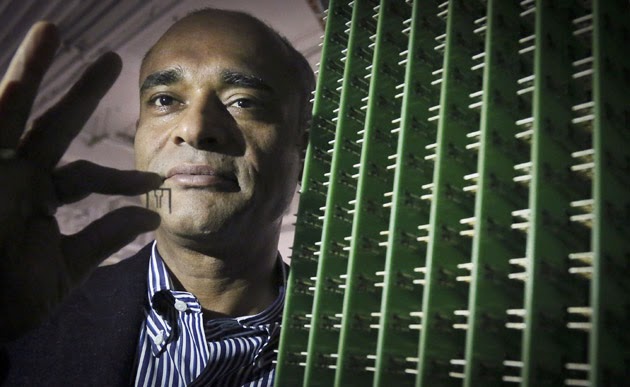
    Each customer is assigned a minuscule antenna of his own (pictured above), which captures shows from the airwaves, as well as a DVR that stores recordings for a later time. Now, though, it’s no longer allowed to beam on-air TV shows to people’s devices anymore. Even worse, Judge Nathan has refused to acknowledge it as a cable service, which means it can’t reinvent itself as one — even if it’s now willing to pay those licensing fees.

    Wondering what’s next for Aereo? Well, the jury’s still out on whether it can record and store programs to be aired at a later time. The judge didn’t grant TV networks their request to stop the company from doing so, since they didn’t include it as part of their demands when they first filed a lawsuit. She’s currently investigating whether she should grant that request, though — and whether to order a final, permanent ban against Aereo. If you want to know more about the temporary injunction, prepare to pore over 17 pages of legalese before checking out the official court documents.

    [Image credit: AP] SOURCE: Scotusblog, Bloomberg, Hollywood Reporter,Injunction (Scribd) Via Engadget.

  • Obama Gives Smartphone Users the Freedom to Unlock their Devices

    Obama Gives Smartphone Users the Freedom to Unlock their Devices

    The President has signed a bill into law that allows American citizens to legally unlock their phones. That means you can take your mobile device, no matter which carrier subsidized it, and move with it to a competing carrier.

    Unlocking phones was made illegal in January of 2013, when an exemption to the DMCA expired. The bi-partisan bill was passed last week by the U.S. House of Representatives, after already being approved by the Senate.

    There is bit of a catch: the Unlocking Consumer Choice and Wireless Competition Act, as it’s called, is valid only through 2015. For now, it ensures you have a choice in matters of your mobile device, as long as your phone is compatible with another carrier’s network and you’ve complied with your previous contract. And even if you don’t fancy yourself as technologically savvy, the bill allows you to seek outside help.

    It’s been a long journey to get to this point. About a year ago, the National Telecommunications and Information Administration (NTIA) filed a petition urging the FCC to make a ruling that would require carriers to unlock phones and tablets at the customer’s request. While most carriers have been kind about unlocking devices, tools for consumers to unlock those phones and tablets themselves were considered illegal.

    So, what are you waiting for? Go forth and be free! At least until the next time this exemption expires.

  • Microsoft And Dell Sign Patent Royalty Agreement For Google’s OS

    Microsoft And Dell Sign Patent Royalty Agreement For Google’s OS

    Today Dell and Microsoft announced that they have signed an agreement relating to intellectual property, which will see the two companies “license each company’s applicable” patents regarding Android and Chrome OS devices, as well as Xbox consoles.

    So Dell will pay Microsoft dollars when it ships devices running Google’s operating systems. The companies mention Xbox consoles because Dell, it turns out, has some IP with surface area to the device. Dell likely got a discount on its royalty payments as a result.

    The Android and Chrome OS portion of the agreement are not surprising, other than that they indicate that Microsoft can turn the largest of OEMs into its paying customers, and that it undercuts Google’s mobile platform hegemony and attempt to break into the traditional PC market. How so? Increasing the unit cost of using Android and Chrome OS adds a nip of cost to each unit, making them less profitable for their manufacturer, or more expensive to the consumer. Neither is much of a good option.

    And Microsoft directly cashes further into Google’s success, which is one of the more ironical pieces of the technology world at the moment.

    This post was originally posted on Techcrunch | Image by Flicker user Alex Schwenke under CC BY 2.0 Licence (Images has been cropped)

  • German federal prosecutor considers formal NSA investigation

    German federal prosecutor considers formal NSA investigation

    Germany’s federal prosecutor is considering if there is enough evidence to warrant a formal, criminal investigation into the German government’s alleged involvement in the U.S. National Security Agency (NSA) data collection program, a spokeswoman said Monday.

    Privacy and human rights campaigners including the Chaos Computer Club (CCC), the International League for Human Rights (ILMR) and Digitalcourage on Monday filed a criminal complaint against the German federal government and the presidents of the German secret services for their alleged involvement in illegal and prohibited covert intelligence activities, they said in a news release.

    The complaint also targeted German Chancellor Angela Merkel, the German Minister of the Interior as well as U.S., British and German secret agents who are all accused of violating the right to privacy and obstruction of justice by cooperating with the NSA and its British counterpart GCHQ to electronically spy on German citizens, they said.

    According to the groups, these activities are felonies and violate German criminal law. “With this criminal complaint, we hope to finally initiate investigations by the Federal Prosecutor General against the German government,” they said.

    However, for the moment it remains unclear if the group’s effort is going to have the intended effect.

    The Federal Prosecutor General of the Federal Court of Justice, located in Karlsruhe, did not yet receive the group’s criminal complaint, a spokeswoman for the federal prosecutor said. But when they do, it wouldn’t be the first, she said, declining to reveal how many complaints related to the NSA affair the federal prosecution had received.

    The agency has taken very seriously the media reports about alleged mass monitoring of phone calls and emails from millions of German citizens as well as reports on the alleged spying of the chancellor’s mobile phone, she said.

    Therefore, the attorney general has asked the relevant federal authorities to share their knowledge about the operations to achieve a secure factual basis for examining the initial suspicion, she said. But because not all the necessary comments are available it is too early to make a final decision about a formal criminal investigation, she said.

    The groups called it “unacceptable that the public offices have not helped in the investigation of these crimes even if the spying is widely visible.” They also asked to hear Snowden as a technical expert and witness, and called on German citizens to file similar criminal complaints with the federal prosecution.

    The criminal complaint follows similar complaints filed in France and Belgium, the campaigners said. In August, the French public prosecutor started a preliminary inquiry into allegations that the NSA spied on French citizens with its Prism program.

  • EU’s copyright do-over delayed a month

    EU’s copyright do-over delayed a month

    The planned overhaul of the European Union’s copyright laws has been set back by a month as a public consultation was extended.

    The European Commission had asked for feedback by Feb. 5, but following strong lobbying from all sides, has decided to extend that to March 5. The internal market department said that some interested parties had asked for more time to finalize and submit their contributions.

    The E.U. faces problems with the cross-border provision of services. Not all online services are available to consumers in all member states. In some instances, even if the “same” service is available in all E.U. countries, consumers can’t access the service across borders. “They can only access their ‘national’ service, and if they try to access the ‘same’ service in another member state they are redirected to the one designated for their country of residence,” reads a Commission document.

    The consultation comprises 80 technical questions leading some critics to say that it is beyond the understanding of the average citizen.

    Question 11 asks if the provision of a hyperlink leading to a work or other subject matter protected under copyright should be subject to the authorization of the rightholder. Question 12 asks if viewing a webpage “where this implies the temporary reproduction of a work protected under copyright on the screen and in the cache memory of the user’s computer should be subject to the authorisation of the rightholder.”

    Other questions ask respondents if they have faced restrictions when trying to resell legally-purchased digital files such as MP3s or ebooks.

    “It is a well known fact that these types of consultations are often only answered by the ‘usual suspects’, namely advocacy organizations that closely follow the copyright discussions and hence do not feel daunted by the extreme technical nature of the questions,” said Caroline De Cock, coordinator of the Copyright for Creativity Coalition (C4C).

    Therefore C4C set up an answering aid at http://youcan.fixcopyright.eu

    LIBER, an organization that represents the library community, has also created a guide to help people answer the consultation. “Responding to the consultation is critical because its outcomes will affect anyone who works with researchers, or who cares about future library services and access to cultural heritage,” said the organization in a statement.

    The consultation has since received thousands of responses. Internal Market Commissioner Michel Barnier said on Twitter on Friday that there had been “strong interest” in the consultation.

    He was scheduled to make a presentation on the subject on Wednesday, but that is now thought to be postponed.

    Meanwhile the European Parliament is expected to formally adopt Tuesday a new law on collective management for copyright and related rights and multi—territorial licensing of rights in musical works for online uses in the E.U. Although the Commission says this Collective Rights Management Directive is a welcome step in the right direction, it says the consultation is necessary in order to further improve copyright for the Internet Age.

  • President Obama: Learning Coding is Important for the Future of America

    President Obama: Learning Coding is Important for the Future of America

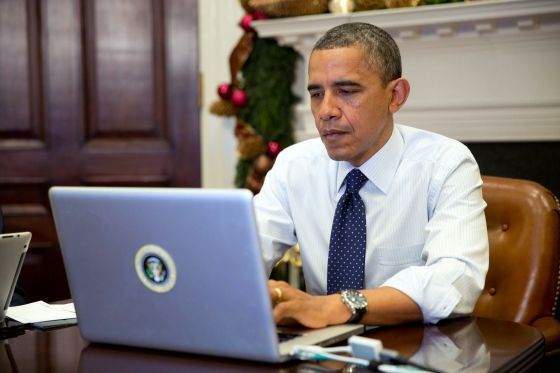
    To commemorate the Computer Science Education Week, President Barack Obama has re-awaken a long time Internet’s debates: whether it’s appropriate to take selfies at funerals, and whether everyone should learn to code. In a YouTube video titled “President Obama calls on every American to learn code.” (watch video below).

    “Learning these skills isn’t just important for your future, it’s important for our country’s future,” he said. “If we want America to stay on the cutting edge, we need young Americans like you to master the tools and technology that will change the way we do just about everything.”

    The last time we went through this was when New York City Mayor Michael Bloomberg tweeted that he would learn to code as part of Codecademy’s “Year of Code” in 2012, which earned a certain amount of backlash.

    “I would no more urge everyone to learn programming than I would urge everyone to learn plumbing,” Discourse co-founder and CTO Jeff Atwood wrote, suggesting that communication skills were at least as important to a well-rounded education as programming. Many other critics complained that you don’t need to learn to build an engine in order to drive a car.

    This time around Slate’s Matthew Yglesias complained that far too many people in the U.S. don’t know how to read English, and that spreading actual literacy should be a higher priority than spreading code literacy.

    I’m still on the side of pushing code literacy to as many people as possible. If everyone in the country were likely to spend a significant portion of their waking hours using faucets, and Congress was likely to debate bills that had great ramifications for the future of faucet users, then I probably would say that everyone should at least learn the basics of plumbing. And I agree with Douglas Rushkoff, author of Program or be Programmed, that not knowing how to code is more analogous to not only not being able to drive, but being blind folded while you ride. And while we don’t teach all of our high schoolers how to build engines, we do generally teach them the basics of physics and internal combustion as freshman. Likewise, we can’t expect to teach everyone enough programming to build Facebook, but we can make sure as many people as possible have a general idea of how it was built.

    But I think we can all agree that learning programming shouldn’t detract from other educational objectives, like reading, writing and math. Fortunately, it doesn’t have to. In fact, it can be combined with other skills.

    Mathematics is the most obvious subject to combine with computer programming. Conrad Wolfram — Stephen Wolfram’s brother — is one of the most radical proponents. His organization, Computerbasedmath.org, calls for students to stop doing rote memorization of steps and focus instead on using computers to explore the concepts that underpin those steps.

    “Why get students emulating what computers do so much better (computing) rather than concentrate on imaginative thinking, analysis and problem-solving that students ought to be able to do so much better even than today’s computers?” he wrote in a blog post announcing a partnership with Estonia to rewrite the country statistics and probability coursework. But you don’t need to go that far to add a few programming exercises to an algebra or geometry course.

    Meanwhile, economics is an elective at most high schools, but it’s probably something more students should learn and it’s another subject that could incorporate some programming lessons. There are already books on programming for college level biology and physics courses, and they could be adapted to fit high school level courses as well.

    But it’s not just math and science that can be combined with programming. A class that used SuperCollider or PureData to teach music theory could be a fun and interactive way to learn both programming and music. And Adam Parrish at New York University already teaches creative writing through programming (yes you read that right). He teaches students a bit of Python, and then sets them to work doing stuff like creating algorithmic poetry using the Twitter API.

    Where things could get really interesting is combining multiple subjects. My dream course would be one that taught programming, electronics, mathematics, physics and music by having students build, program and play Arduino-based synthesizers.

    The big idea here would be to give students early, accomplishable projects. One of the most interesting posts of the week was one by an anonymous blogger titled “People Feel Dumb: That’s Why They Don’t Code.” It’s a big problem: there’s research showing that students who think they can make themselves smarter do better in school. Those who think that they just aren’t smart get left behind. I know from experience that people feel the same way about writing, drawing and other creative endeavors.

    One of the best ways to combat the “I’m not smart enough” or “I’m not talented enough” phenomena would be to give students early victories, showing them that they can program or that they can make music or that they can do math — preferably while teaching them something else important along the way.

    The hardest part of such a scheme, though, will probably be teacher training. Estonia designed a curriculum to teach computer science in elementary school last year. The first step in bringing the program to life, though, is teaching training. We’d do well to remember that in the U.S.Photo by Michael Himbeault | Article Credit: TechCrunch