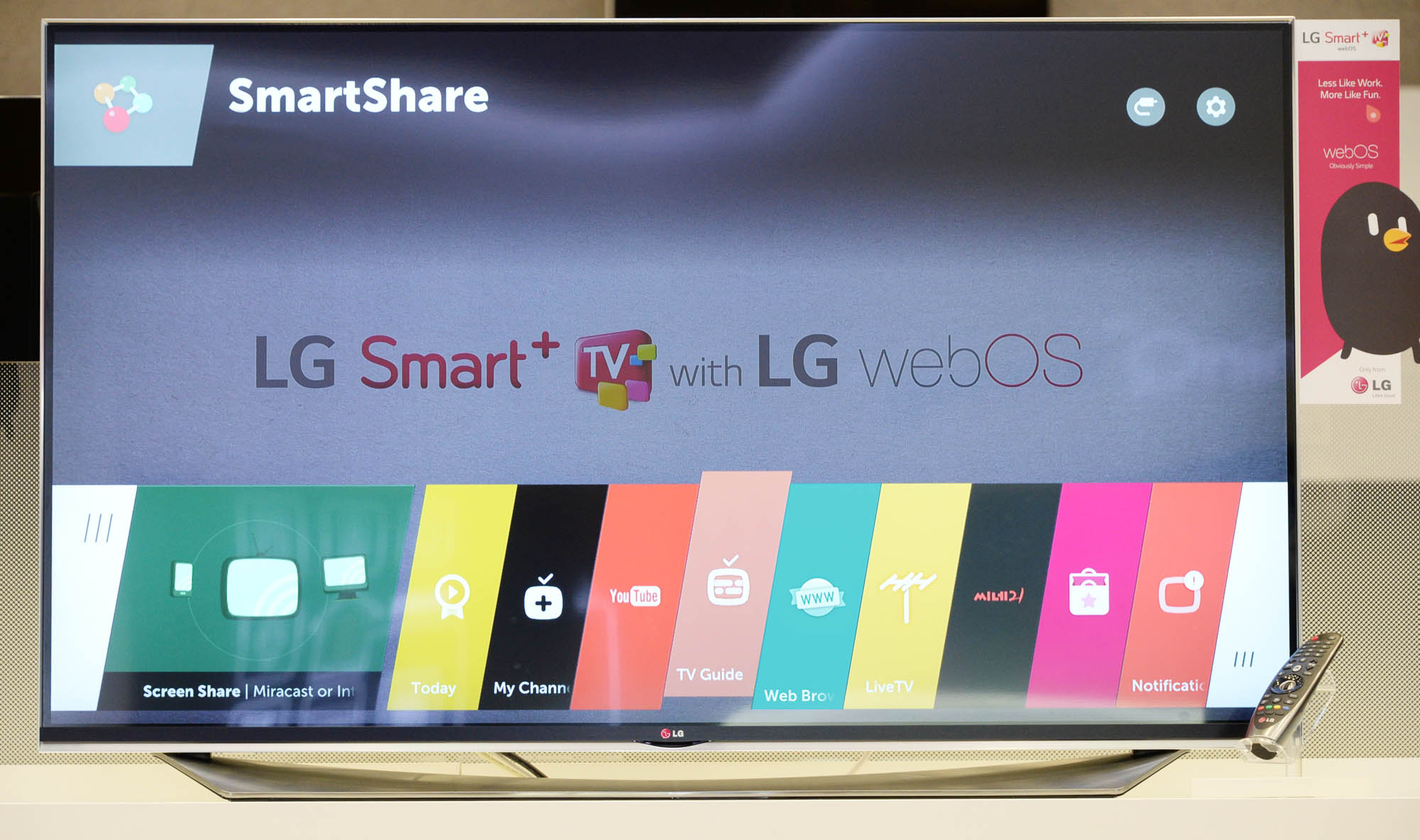
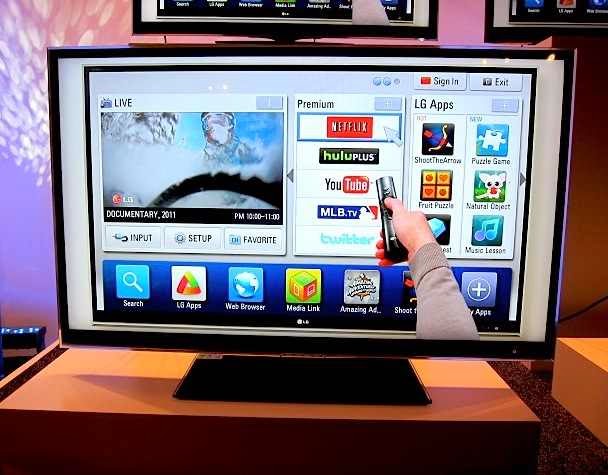
LG Electronics recently launched an internet television tagged WebOS Smart+TV. The TV has the unique ability to connect users with the wealth of knowledge available on the internet. Yet it grants access to the full potential of the smart TV.
The first time the user turns on the webOS-enabled LG Smart TV, an animated character named BeanBird appears onscreen to help get connected and walk the use through the setup process. All the viewer has to do is shake the Magic Remote or press the OK button to receive further advice from the winged virtual facilitator. webOS can instantly recognize when and what kind of external device has been plugged into the TV and brings up a pop-up menu listing all relevant options for the user to choosefrom.
The new Launcher, a left-to-right scrollable menu that runs along the lower portion of the screen is one of the most distinctive features of webOS.
The Launcher makes it possible to switch between broadcast TV, smart TV content and media stored on external devices without having to return to the Home screen. It allows the viewer to simultaneously watch a show, play a game or browse the internet while searching or downloading other content.
Live Menu, which can be opened while viewing the TV, keeps the search, recommendation and channel options within easy reach. LG’s webOS also offers access to the LG Store’s comprehensive collection of apps.
The LG Store lets users browse the most-viewed and most-downloaded items available from across the Smart TV platform, including broadcast TV programs and the latest games.
The logically organized categories, which include 3D content, games and movies, employ thumbnail images for fast and convenient selection of content.
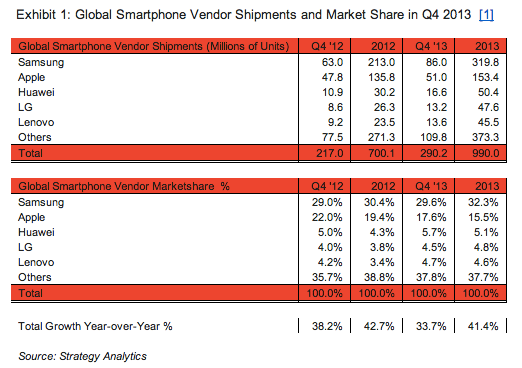
Techcrunch – To coincide with Apple releasing its Q1 earnings, Strategy Analytics has put out its quarterly and full-year figures for how the smartphone market has fared, along with figures on the wider mobile phone market. Overall, there were nearly 1 billion — 990 million — smartphones shipped in 2013, representing growth of 41% over 2012′s 700 million units. Smartphone shipments for the last quarter of 2013 were 290.2 million, up 34%.
Mobile phone shipments, meanwhile, were just under 1.7 billion — and as a mark of how smartphones are where all the buying has shifted, the wider mobile phone market grew only 5% over a year ago. While 41% growth sounds good, Ken Hyers, an analyst at Strategy Analytics, notes that it is actually down slightly on the 43% growth of a year ago. He says this is because of “high penetration in some major markets like the United States.” This was something that had a direct effect on Apple. Traditionally a strong player in the U.S., CEO Tim Cook noted today that Apple’s sales in North America declined.
As we pointed out earlier today, although Samsung continues to remain in the lead with its 32% of all smartphone shipments, the real story appears to be about what is happening underneath that.
Apple continues to fall (pardon the pun) and is now at 15.5% for the full year (compared to 19% a year ago) on 153 million units. And although Huawei, LG and Lenovo are all behind Apple, together they are nearly overtaking the iPhone maker in units, with a combined share of 14.6%.
That’s not to overlook that Samsung’s growth is nothing short of impressive: its 319.8 million smartphones shipped in 2013 was the “largest number of units ever shipped by a smartphone vendor in a single year,” according to the analyst group’s executive director Neil Mawston. Samsung also retained its title as the world’s biggest mobile phone maker overall: it shipped 451 million units for a 27% share of the market.
Although Apple made a point today of talking up its emerging market business, Strategy Analytics (and perhaps others, given the stock decline) are not buying it: “Apple remains strong in the high-end smartphone segment, but a lack of presence in the low-end category is costing it lost volumes in fast-growing emerging markets such as India,” writes Mawston.
As in quarters past, the Samsung/Apple juggernaut is all but dominating the smartphone world in terms of vendors.
“Large marketing budgets, extensive distribution channels and attractive product portfolios have enabled Samsung and Apple to maintain their grip on the smartphone industry,” writes analyst Linda Sui.
The question will be whether the economics of making cheaper phones will mean that the smaller vendors like LG, Huawei and Lenovo can stick around longer, or whether they will eventually find themselves in the same positions as Nokia, BlackBerry and HTC — all out of the top five rankings now partly because it eventually became unsustainable to play in the smartphone game without scale.
In any case, although in times past it seemed that the route to being a worldwide phone leader was to have a strategy of offering devices across a range of price points and feature sets, today that’s not as clear.
Over 70% of the handsets Samsung’s shipping right now are smartphones. And Apple, the number-three player in mobile sales overall, is a smartphone-only vendor. Meanwhile, Nokia’s smartphone share these days is so small that Strategy Analytics doesn’t break it out, meaning that its number-two position among mobile phone makers is based largely on its power at the lower end of the market.
However, it turns out the strategy of not having a killer smartphone lineup not only is not lucrative but eventually self-destructive.
Nokia’s global mobile phone shipments fell 25% between 2012 and 2013, from 335.6 million units to 252.4 million units. “Nokia faced tough competition from Samsung in developing markets like India, while LG and others ramped up the pressure in developed regions such as Western Europe,” writes Mawston. “Nokia’s Windows Phones have been performing relatively well, but this was not enough to offset sluggish demand for its Asha models and other feature phones during the course of the year.”
As Strategy Analytics points out, one route for smaller, national players to survive longer term is to continue to grow internationally. Huawei, it notes, is expanding in Europe; LG’s Optimus range “is proving popular in Latin America”; Lenovo’s Android models are selling at competitive price-points across China. “Samsung and Apple will need to fight hard to hold off these and other hungry challengers during 2014,” notes Sui.
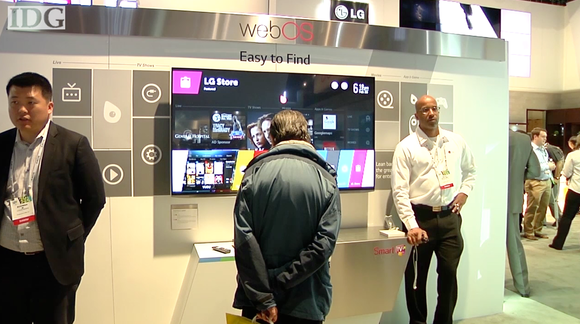
WebOS made its second big debut at last week’s CES, but not on a smartphone like it was in 2009. This time around, WebOS has landed on televisions from LG, as we’ll explore in this video report.
WebOS will power 70 percent of LG’s Smart TV lineup.
The webOS interface on the TV makes sense of all the different types of content and inputs on your television. There’s no more wondering which input to use or which service has the best content.
Google’s Nexus phones have become irrelevant for all but the most ardent Android fanboys. Although the Nexus program was launched three years ago to show off the very best that Android has to offer, Google’s newly announced Nexus 5 doesn’t push the envelope as much as earlier Nexus phones.
Google is stuck between a rock and a hard place: Its hardware partners don’t want to innovate when building the company’s Nexus phones; they want to save all the cool stuff for their own brands. But Google can’t just use its Motorola division to build cutting-edge phones with exciting new features without burning bridges with Samsung, LG, Sony, and HTC. Those guys are already trying to build their own ecosystems and Google doesn’t want to push them even further over the edge.
More of the same
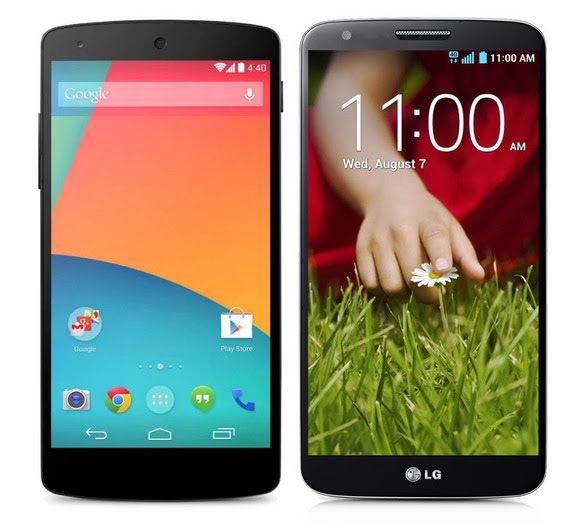
In terms of hardware alone, Nexus 5 doesn’t seem like a bad phone—its high-end specs ensure it will be relevant for at least a year. But it’s essentially identical to recent phones released by Samsung and LG. In some ways the Nexus 5 is an inferior product because LG, which built the handset for Google, released its own phone with all the same hardware but more software enhancements. Under the hood, the Nexus 5 is a stripped-down version of the LG G2, just like the Galaxy Nexus was a stripped-down version of the Samsung Galaxy S III.
Nexus 5 (left) and LG G2 (right)
The biggest draw of Nexus phones is that they get timely Android updates directly from Google, but the market has shown that most people don’t really care about that. Ever since Android 4.1 Jelly Bean, most of the updates to Android have been minor tweaks that don’t deliver much in the way of new, consumer-facing features. Instead, Google has slowly started spinning off key components of the OS to the Google Play Store as standalone apps. So, as long as you bought your Android phone in the last year or two, you’ll still have access to the latest version of Gmail, Maps, and Google Now.
Indeed, without any killer, exclusive features, you have very few reasons to buy a Nexus 5. Unless you’re a developer who needs constant access to the latest version of Android, or insist on buying an unlocked phone, the Nexus 5 is no better than any of the other high-end phones already released this year. In many ways it’s just another Android phone, and would fade into obscurity if it weren’t for the big, bold NEXUS on its back.
It’s becoming increasingly obvious that the companies Google partners with to make Nexus phones are reserving all the coolest features and innovations for their own branded handsets. Of course Google owns Motorola, but has held back on using its acquisition to build its Nexus devices for fear of upsetting its hardware partners. But maybe it’s time to start playing favorites.
Time to use Motorola
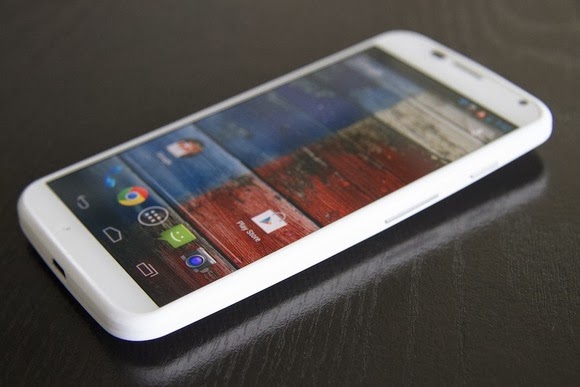
Motorola and Google collaborated on the Moto X, one of the most innovative phones available. Note that it’s not a “Nexus,” even though the OS bloatware and customizations are minimal—it’s rocking nearly stock Android. The kicker? You can get it on pretty much any carrier and there’s a developer version available for people who want it. The Moto X deserves the title of Nexus more than the Nexus 5, as it introduced a lot of the Nexus 5’s ostensible innovations first. (Take, for instance, touchless controls.)
The Moto X is one of the most innovative phones ever released.
In releasing Nexus devices via its Motorola arm, Google could more directly shape the Android experience. It could dictate all aspects of the phone, creating cutting-edge new hardware features to go hand in hand with new Android software features. KitKat introduces a lot of under-the-hood improvements that allow it to run better on low-end hardware, but manufacturers will continue to cram as many processing cores as they possibly can into their phones in an effort to win an imaginary specs war, making the optimizations almost meaningless. So Google could build a phone showing that you don’t need a quad-core processor and 2GB or RAM to run simple apps without lag. And your battery wouldn’t be eaten up due to poorly written radio drivers.
It would essentially be the Apple approach to making smartphones, an approach that’s proven to work and often leads to a better device. And if Google decided to compete directly with Samsung and others via Motorola, it would push the other Android manufacturers to make better phones and set the bar for Android devices—just like the Nexus One was originally intended to do. Microsoft is trying a similar tactic by purchasing the devices division of Nokia, while Google lets its $12 billion Motorola purchase go to waste.
We’re never going to see a truly revolutionary Nexus phone again until Google decides to take a stand against the other Android smartphone manufacturers. The more the company attempts to placate Samsung, HTC, LG, and Sony, the more meaningless the term “Nexus” becomes. It’s time for Google to drive Android forward with a more holistic hardware-and-software approach, and make Nexus mean something again.Adapted from PC WORLD