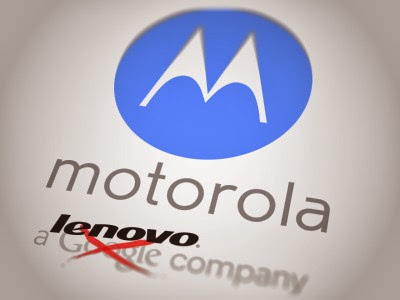
Motorola Mobility is being sold to Lenovo, in a deal worth $2.91B. Google is divesting itself of the handset division it purchased for $12.5B in 2011, but it will keep some of the assets — including patents.
“Google will maintain ownership of the vast majority of the Motorola Mobility patent portfolio, including current patent applications and invention disclosures,” says Motorola Mobility CEO Dennis Woodside. “As part of its ongoing relationship with Google, Lenovo will receive a license to this rich portfolio of patents and other intellectual property. Additionally Lenovo will receive over 2,000 patent assets, as well as the Motorola Mobility brand and trademark portfolio.”
When Google purchased Motorola Mobility, much of the discussion swirled around whether it was buying it simply to own a hardware pipeline on which to deliver its Android juice — or whether it wanted patents for protection. The answer, as is typical, lay somewhere in the middle. Though the Motorola patents never turned out to by incredibly effective winning solo battles against Google’s patent enemies, they did work as a part of a larger tactic which has seen Google aligning itself via cross-licensing with OEMs like Samsung.
One segment of the statement today by Woodside was interesting:
Since being acquired by Google in 2012, Motorola has transformed itself, focusing on solving real consumer problems and providing amazing experiences built on a foundation of pure Android. The result has been Moto X, Moto G, and a reinvigorated Droid line. Together, these devices have won over consumers and critics alike and helped re-establish the Motorola brand around the world.
Indeed, Google’s purchase and investments in Motorola did raise the flagging manufacturer’s profile significantly over the intervening years. They have several well-received smartphones on the market and have made a lot of noise about technology innovations in wearable computing and DARPA-think-tank-director hires.
Techcrunch – TechCrunch has confirmed reports that Lenovo is buying Motorola Mobility from Google. This is the division within Google that the company purchased in 2011 for $12.5 billion. Motorola Mobility will go to Lenovo for $2.91 billion.
Of that $2.91 billion, $1.41 billion will be paid at the close of the deal. $660 million will be comprised of US cash and $750 million in Lenovo ordinary shares. The remaining $1.5 billion will be paid in the form of a three-year promissory note. Google will maintain ownership of the vast majority of the Motorola Mobility patent portfolio. Lenovo will still receive 2,000 patent assets and the Motorola Mobility brand and trademark.
According to a separate report published by Reuters, Lenovo is being advised by Credit Suisse Group while Lazard Ltd advised Google on the transaction.
“As part of Lenovo, Motorola Mobility will have a rapid path to achieving our goal of reaching the next 100 million people with the mobile Internet. With the recent launches of Moto X and Moto G, we have tremendous momentum right now and Lenovo’s hardware expertise and global reach will only help to accelerate this,” said Dennis Woodside, CEO, Motorola Mobility, in a released statement.
According to our source, Google wanted to dump the asset for some time. The company had to hold off selling the division for tax reasons.
Motorola Mobility’s performance has yet to live up to its purchase price. Since Motorola split and its consumer division went to Google, it has been a constant source of red ink. Motorola lost quite a lot of money: $248 million in the last quarter alone. Google sums this well, noting that the loss was “-21% of Motorola Mobile segment revenues.” Motorola lost $192 million in the year-ago quarter, so the trend here isn’t positive.
Google previously sold off the cable box division of Motorola Mobility for $2.4 billion.
This comes just weeks after Google purchased the hot hardware startup Nest. Since then, Nest’s role in the budding conglomerate that Google is turning into has been widely speculated about. With Motorola gone, Nest’s superstar team that includes many former Apple engineers seemingly has an empty playground.
It seems this complete’s Lenovo’s quest for an established cell phone business. It was rumored back in October that the company submitted a bid for BlackBerry. That deal clearly didn’t pan out.
Simply buying its way to the top worked for Lenovo in the past. In 2005 Lenovo purchased IBM’s personal computer division for $1.25 billion. That purchase alone caused Lenovo to be the world’s third-largest computer maker. But, using the established brand, Lenovo scaled the PC division to become the largest shipper of PCs in the world. In the last months of 2013 Lenovo overtook HP.
Just last week, Lenovo announced a plan to buy IBM’s x86 server business for $2.3 billion.
As the dust settles on this deal, it’s clear that Google took a large loss on its venture with Motorola Mobility. Google acquired an established brand with a vast portfolio of patents, a mature distribution system and a knowledgeable manufacturing arm. Even after pouring money and resources into the historic American brand, Google couldn’t make lemonade with Motorola. Maybe Lenovo, the now-leader in personal computers, will have better luck.
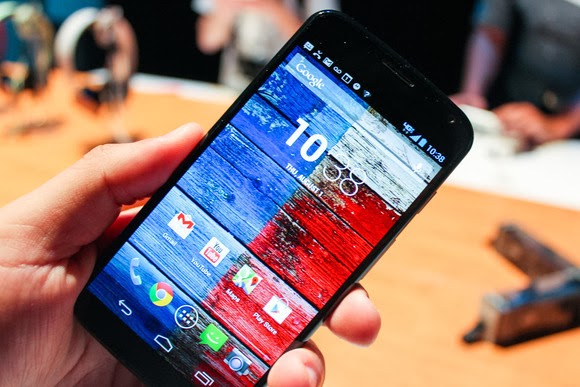
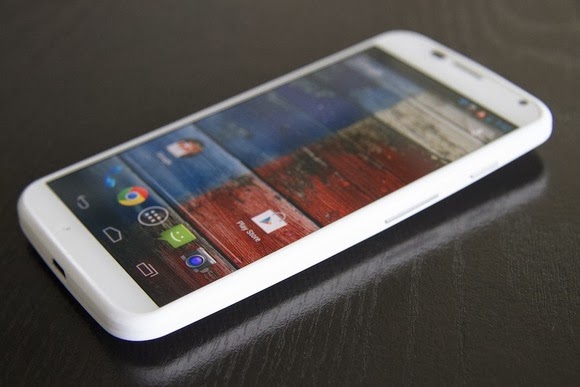
IDG News Service – One of the nicer features of Motorola’s Moto X (shown above) and recent Droid phones is the ability to have text messages read aloud while driving, but responding to those messages has been tricky until now.
A new update to Motorola’s Assist app makes those responses much easier. Users can now reply directly to incoming text messages by voice, instead of having to initiate a completely new voice command by saying “Okay Google Now.”
Assist is a major feature of Motorola’s newer phones that automatically does things based on your situation. For example, it switches to hands-free communications while driving, silences calls while you’re in meetings, and only allows important calls at night.
Motorola says it has improved driving detection over Bluetooth in the latest update, and also added a way to launch your favorite music app once you’re on the road. (The app could already start playing your most recent track when connected to car audio through the headphone jack or Bluetooth.)
Although the Moto X received critical acclaim for its clever software and customizable finish, Motorola has reportedly been disappointed by weak sales, and has slashed prices on both unlocked and carrier models. Starting next month, Motorola will start selling its flagship phone in Europe, but without the Moto Maker customizations available to U.S. customers.
Even if the Moto X remains a sales dud, it makes sense for Motorola to keep investing in the software. CEO Dennis Woodside has spoken of the “long-term mindset” at parent company Google, so Motorola will likely build upon Assist and other software features for future handsets.
Motorola’s flagship smartphone, the Moto X, now costs $399 without a contract, the company has announced.
Rick Osterloh, Motorola’s Senior VP, Product Management, explained the company’s reasoning behind the price change, arguing that prepaid service plans have gotten better than ever.
“Today several wireless carriers offer good month-to-month or prepaid service plans that cost much less than the contract plans that come with subsidized devices. Combine one of those plans with our new $399 everyday pricing and you could save hundreds of dollars over two years while keeping the freedom to change service providers when you feel like it,” he wrote in a blog post.
The Moto X sports a 4.7-inch 720p touchscreen, a 1.7GHz dual-core Qualcomm Snapdragon S4 Pro processor, a quad-core Adreno 320 GPU, 2GB of RAM, 16 or 32 GB of storage, and a 10.5-megapixel camera.
The device is available at AT&T, Sprint and Verizon for $99 with a two-year agreement as well.
Google’s Nexus phones have become irrelevant for all but the most ardent Android fanboys. Although the Nexus program was launched three years ago to show off the very best that Android has to offer, Google’s newly announced Nexus 5 doesn’t push the envelope as much as earlier Nexus phones.
Google is stuck between a rock and a hard place: Its hardware partners don’t want to innovate when building the company’s Nexus phones; they want to save all the cool stuff for their own brands. But Google can’t just use its Motorola division to build cutting-edge phones with exciting new features without burning bridges with Samsung, LG, Sony, and HTC. Those guys are already trying to build their own ecosystems and Google doesn’t want to push them even further over the edge.
More of the same
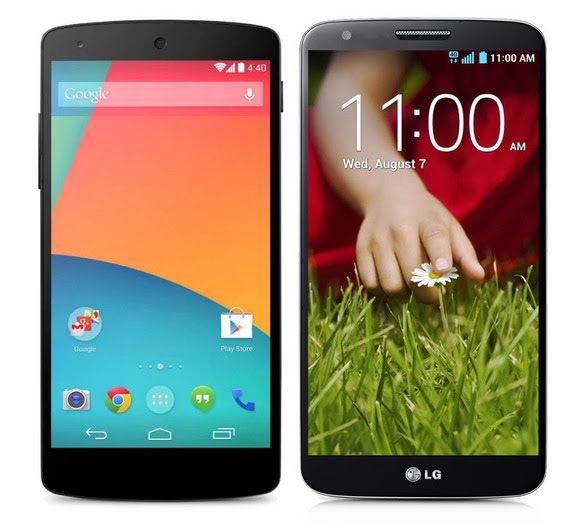
In terms of hardware alone, Nexus 5 doesn’t seem like a bad phone—its high-end specs ensure it will be relevant for at least a year. But it’s essentially identical to recent phones released by Samsung and LG. In some ways the Nexus 5 is an inferior product because LG, which built the handset for Google, released its own phone with all the same hardware but more software enhancements. Under the hood, the Nexus 5 is a stripped-down version of the LG G2, just like the Galaxy Nexus was a stripped-down version of the Samsung Galaxy S III.
Nexus 5 (left) and LG G2 (right)
The biggest draw of Nexus phones is that they get timely Android updates directly from Google, but the market has shown that most people don’t really care about that. Ever since Android 4.1 Jelly Bean, most of the updates to Android have been minor tweaks that don’t deliver much in the way of new, consumer-facing features. Instead, Google has slowly started spinning off key components of the OS to the Google Play Store as standalone apps. So, as long as you bought your Android phone in the last year or two, you’ll still have access to the latest version of Gmail, Maps, and Google Now.
Indeed, without any killer, exclusive features, you have very few reasons to buy a Nexus 5. Unless you’re a developer who needs constant access to the latest version of Android, or insist on buying an unlocked phone, the Nexus 5 is no better than any of the other high-end phones already released this year. In many ways it’s just another Android phone, and would fade into obscurity if it weren’t for the big, bold NEXUS on its back.
It’s becoming increasingly obvious that the companies Google partners with to make Nexus phones are reserving all the coolest features and innovations for their own branded handsets. Of course Google owns Motorola, but has held back on using its acquisition to build its Nexus devices for fear of upsetting its hardware partners. But maybe it’s time to start playing favorites.
Time to use Motorola
Motorola and Google collaborated on the Moto X, one of the most innovative phones available. Note that it’s not a “Nexus,” even though the OS bloatware and customizations are minimal—it’s rocking nearly stock Android. The kicker? You can get it on pretty much any carrier and there’s a developer version available for people who want it. The Moto X deserves the title of Nexus more than the Nexus 5, as it introduced a lot of the Nexus 5’s ostensible innovations first. (Take, for instance, touchless controls.)
The Moto X is one of the most innovative phones ever released.
In releasing Nexus devices via its Motorola arm, Google could more directly shape the Android experience. It could dictate all aspects of the phone, creating cutting-edge new hardware features to go hand in hand with new Android software features. KitKat introduces a lot of under-the-hood improvements that allow it to run better on low-end hardware, but manufacturers will continue to cram as many processing cores as they possibly can into their phones in an effort to win an imaginary specs war, making the optimizations almost meaningless. So Google could build a phone showing that you don’t need a quad-core processor and 2GB or RAM to run simple apps without lag. And your battery wouldn’t be eaten up due to poorly written radio drivers.
It would essentially be the Apple approach to making smartphones, an approach that’s proven to work and often leads to a better device. And if Google decided to compete directly with Samsung and others via Motorola, it would push the other Android manufacturers to make better phones and set the bar for Android devices—just like the Nexus One was originally intended to do. Microsoft is trying a similar tactic by purchasing the devices division of Nokia, while Google lets its $12 billion Motorola purchase go to waste.
We’re never going to see a truly revolutionary Nexus phone again until Google decides to take a stand against the other Android smartphone manufacturers. The more the company attempts to placate Samsung, HTC, LG, and Sony, the more meaningless the term “Nexus” becomes. It’s time for Google to drive Android forward with a more holistic hardware-and-software approach, and make Nexus mean something again.Adapted from PC WORLD