Author: AOXEN

  • Ten Countries Account for 70% of IMF’s Total Outstanding Debt

    Ten Countries Account for 70% of IMF’s Total Outstanding Debt

    A review of the International Monetary Fund (IMF) recent debt profile reveals that 70% of the total of $117.6 billion in outstanding debt obligation is owed by the top ten countries. The report reveals that 91 countries have outstanding debt obligations to the IMF as of 8th May, 2025. 

    According to the report, the cumulative outstanding debt obligation of the top ten most indebted countries to the Fund totalled $82.44 billion. 

    The majority of countries featured were from low and emerging-market, mostly domiciled in Africa, South America, the Caribbean, and Asia. Less than 10 countries owing outstanding balances to the IMF were from Europe, and no G20 country had any balance with the Fund. 

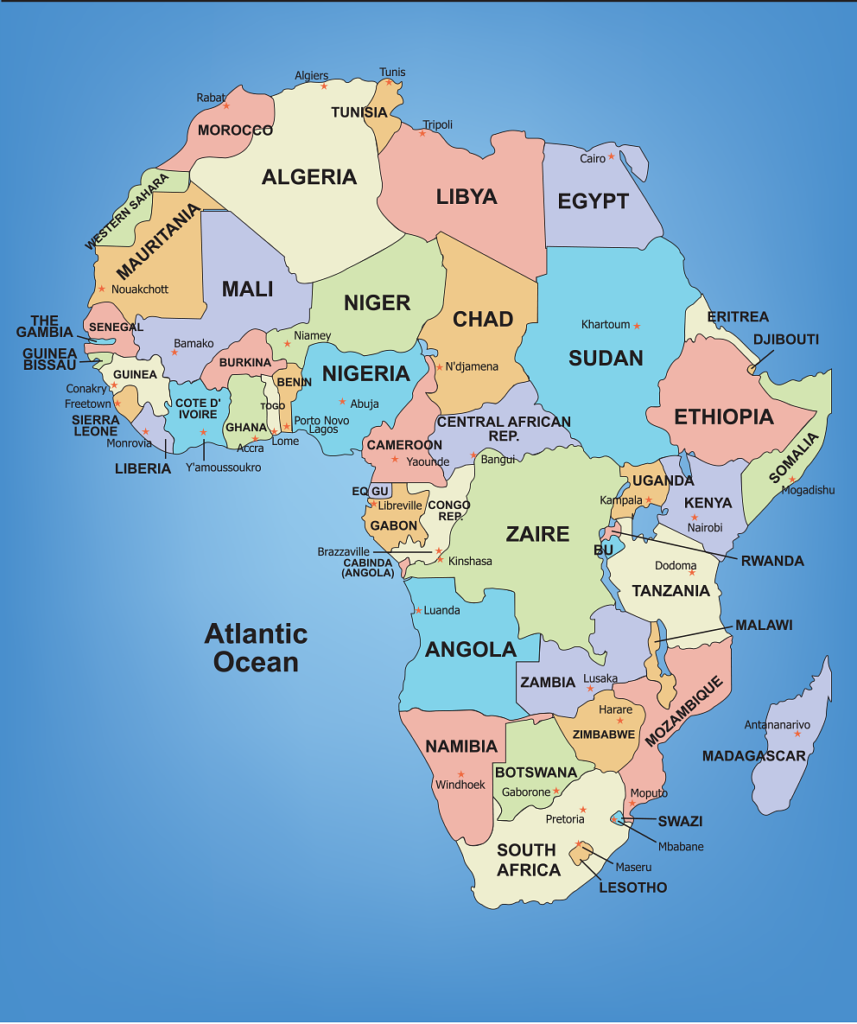
    Of the top ten countries most indebted to the International Monetary Fund (IMF), five are from Africa, two from South America, two from Asia, and one from Europe, war-torn Ukraine.
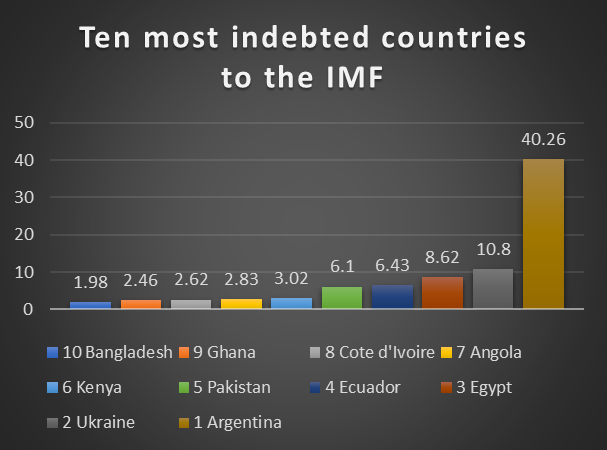
    Source: IMF

    10. Bangladesh ($1.98 billion)

    In 2024, Bangladesh reached a staff-level agreement with the IMF where the fund agreed to provide $645 million comprising Standard Drawing Rights (SDR 325.2 million (about US$426 million) under the External Credit Facility (ECF) and External Fund Facility (EFF) and SDR 166.7 million (about US$219 million) under the Resilient and Sustainability Facility (RSF).

    Since 2020, the IMF has reached an agreement on support facilities totaling $4 billion but has only drawn around $355 million. In May 2020, the country reached a Rapid Financing Instrument (RCF) of $355.5 million. 

    Fast forward to January 2023, it agreed to three facilities with the IMF: an Extended Credit Facility (ECF) of $822 million, an Extended Credit Fund (ECF) of $1.6 billion, and a Resilience and Sustainability Facility (RSF) of $1 billion. All three facilities are yet to be drawn and are expected to expire by July 2026. 

    09. Ghana ($2.46 billion)

    This West African country has outstanding debt balances with the IMF totaling $2.46 billion. Since defaulting on its debt obligation in 2022, Ghana has borrowed up to $1.17 billion from the IMF under the Extended Credit Facility (ECF) initiative. 

    However, the country’s economy has been in turmoil since the COVID-19 pandemic, with inflation reaching over 50% in 2022. In April 2020, the country agreed $738 million which it has drawn but not repaid. 

    The oldest unpaid IMF credit facility to Ghana dates back to 2015- an Extended Credit Facility (ECF) of $664.2 million, of which $393.5 million remains as an outstanding balance. 

    08. Côte d’Ivoire ($2.62 billion)

    This country has outstanding balances with the IMF for credit facilities dating back to a decade ago in 2011. The country has drawn portions of its last three credit facilities from the IMF, which include: an $867.2 million ECF of 2023, a $1.73 billion ECF, and $975.6 million RSF of March 2024. All three are billed to expire by 23rd September, 2026. 

    07. Angola ($2.83 billion)

    This oil-dependent economy has outstanding balances with the IMF to the tune of $2.83 billion, which was a $3.2 billion Extended Fund Facility (EFF) approved in December 2018 and set to expire in December 2021. 

    Beyond the high outstanding debt to the IMF, the country continues to be weighed down by extreme poverty, a high debt-to-GDP ratio, low life expectancy, high infant mortality, and epidemic corruption levels.

    The situation appears gloomy for Angola in the coming years as the number of people living in the country is expected to climb to 16.3 million people. 

    06. Kenya ($3.02 billion)

    The country’s total outstanding obligation to the IMF came under four credit facility programs: Rapid Credit Facility, Extended Fund Facility, Extended Credit Facility, and Resilience and Sustainability. 

    It has an outstanding balance of $542.8 million under the (RCF), and $1.51 billion under the EFF—the loan initially totaled $1.8 billion. 

    The country’s economy has been resilient despite the harsh operating environment in the past years, especially debt. Efforts by the Ruto-led government to raise revenue in line with recommendations of the Fund were met with the most brutal protests in the region to date. 

    05. Pakistan ($6.10 billion)

    This country has received over $10 billion in credit facilities from the IMF since 2019. The latest of these facilities was the Extended Fund Facility of $5.32 billion, agreed in September 2024 and set to expire in 2027. Others include a $2.25 billion iStandby Agreement, which has been fully drawn by Pakistan, and EFF of $4.98 billion, of which $3.03 billion has been drawn. 

    Last week, the IMF’s Board completed its first review of the 37-month EFF and noted that the government’s effort under the EFF has delivered economic stability in terms of surplus, inflation reduction, and increase in the country’s gross external reserve. 

    The IMF Board, in its review of the country’s performance, further approved a request to access the $1.4 billion Resilience and Sustainability Facility (RSF), which aims to strengthen resilience to natural disasters and federal and provincial responses to natural disasters, among others. 

    04. Ecuador ($6.43 billion)

    Aside from Argentina, Ecuador is the only South American country on the list. The latest of the IMF’s facilities comes amidst a significant fiscal deficit in the country, financial and fiscal instability, coupled with illiquidity problems. 

    In May 2024, the Board of the Fund approved a 48-month Extended Fund Facility (EFF) for Ecuador of $4 billion, of which $1 billion was immediately disbursed. This follows a September 2020 EFF of $4.61 billion, which has been completely drawn. Another Rapid Financing Instrument of $461.7 million was approved by the Fund in May of 2020, which was geared to help the country meet immediate balance of payment obligations in light of the shocks necessitated by the COVID-19 pandemic. 

    03. Egypt ($8.62 billion)

    The economy of Egypt faced severe challenges in 2023 and 2024, necessitating the IMF to approve significant EFF. Among these challenges are disruption of trade through the Suez Canal owing to violence orchestrated by Yemeni Houthis in the Red Sea, significant refugee inflow from the war in Sudan and Gaza. Egypt’s economy faced significant economic shocks and pressures in 2023 and 2024 owing to insecurity, which disrupted trade volume in the Suez Canal and tourism, a vital source of forex for Egypt.

    Beyond that, reforms in the foreign exchange market executed by the administration of President Sisi further encouraged support financing from the IMF. The Fund noted that these reforms are already bearing fruit for the country’s fiscal position. 

    02. Ukraine ($10.8 billion)

    This country’s presence on the list should not surprise anybody, as the reason is obvious. In the last three years, Ukraine has engaged in a war with Russia, which has defied every move to resolve it. 

    Since Russia’s invasion of Ukraine in February 2022, the country has agreed to up to $12.6 billion in Rapid Finance Instrument and Extended Fund Facility with the IMF. However, the Fund has only been able to disburse around $9.6 billion. 

    01. Argentina ($40.26 billion)

    Argentina topped the list of most indebted countries to the IMF due to the stabilization policies of the President Javier Milei administration, which inherited an economy on the brink of a balance of payments crisis.

    In the past few years, no country has received more monetary support from the IMF than Argentina. Argentina’s economy prior to President Milei had already crashed—inflation reached 211%, but has declined, significant budget deficits, and a rapidly declining foreign exchange reserve meant that only an economic surgery could see the country through. 

    Last month, the IMF reached a staff-level agreement with Argentina, which could see the country receive up to $20 billion in credit facilities-—a further boost if eventually approved by the board. This is aside from the country’s $40 billion outstanding payment. 

  • World Bank Projection of Top Ten Fastest Growing Countries in Africa in 2025

    World Bank Projection of Top Ten Fastest Growing Countries in Africa in 2025

    African economies in the past few years have been blighted by geopolitical, climatic and macroeconomic shocks resulting in a tepid post pandemic recovery curtailing growth of the fastest growing countries in the region.

    These shocks resulting in supply chain disruptions have led to high food and energy prices and worsened standards of living across the continent.

    Elevated food and energy inflation exacerbated by currency weaknesses in many countries has pushed more people into hunger and worsened the humanitarian situation in Africa most especially in West and Central Africa where an estimated 55 million people are expected to go hungry in 2024. 

    However, the tide of inflation seems to be turning in 2024 compared to 2023 where average inflation in the continent stood at 17% according to the African Development Bank (AfDB). The World Bank projects that 70% of African countries are set to register lower inflation figures in 2024 compared to the past year. Although, 13 countries including Nigeria, Ethiopia and others have rising inflation. 

    Also, exchange rate pressures have propelled Central Banks of many countries in Africa to embark on a hawkish monetary policy stance. This was due to tighter financial conditions, a strong U.S. dollar, and foreign exchange market reforms. The Nigerian Naira led the pack of worst performing currencies in Africa in 2024 so far losing almost 50% of its value followed by the Ethiopian Birr and the Kenyan shilling losing 30% and 21% respectively. 

    There has been a mixed reaction to the twin threats of inflation and currency weakness in Africa- while some Central Banks have joined the global wave of easing interest rates, others have taken a more cautious approach- and continue to tighten MPR as inflation remains stubborn.

    fastest growing countries in Africa

    Despite these macroeconomic malaises, Africa remains the second fastest growing continent in the world- only trailing Asia. In 2023, growth in Sub-Saharan Africa stood at 2.4% and rose to 3% in 2024. The World Bank projects growth to reach 4% in 2025 and 2026. Growth in the region was largely impacted by the collapse of the Sudanese economy over the raging civil war in the country which when excluded will put the regions GDP growth at 3.5% in 2024.

    In the East and Southern Africa region economic growth is expected to rise to 3.9% in 2025- 2.2% in 2024. However, South Africa and Angola seems to be dragging the regions down as the region is projected to grow by 5.3% excluding these two countries.

    Rwanda, Kenya, Tanzania and Uganda contributed significantly to making East Africa the best performing region in the continent.

    West and Central Africa’s biggest economy poses a lag to the region’s growth which is projected at 4.2% in 2025 mainly propelled by fast growth in Niger, Benin and Cote d’Ivoire. However, excluding Nigeria’s the region will is forecast to grow by 5.1% in 2025-2026.

    The World Bank in its Africa Pulse for 2024 and Middle East and North Africa (MENA) update projected growth of African countries in 2025. This article looks at the top ten fastest growing countries by GDP in Africa in 2025. 

    10. Zambia

    This Southern African country is projected to grow at 6.1% in 2025- a sharp spike considering the country’s 2.0% growth in 2024. Risk to the outlook stems from significantly high inflation projected to decelerate to 12.1% in 2025 from 15% this year.

    The country’s currency- the Zambian Kwacha is one of the worst performing currencies in the continent losing over 30% of its value in 2024 so far after the Central Bank notified the public of moving to a market driven exchange rate system.

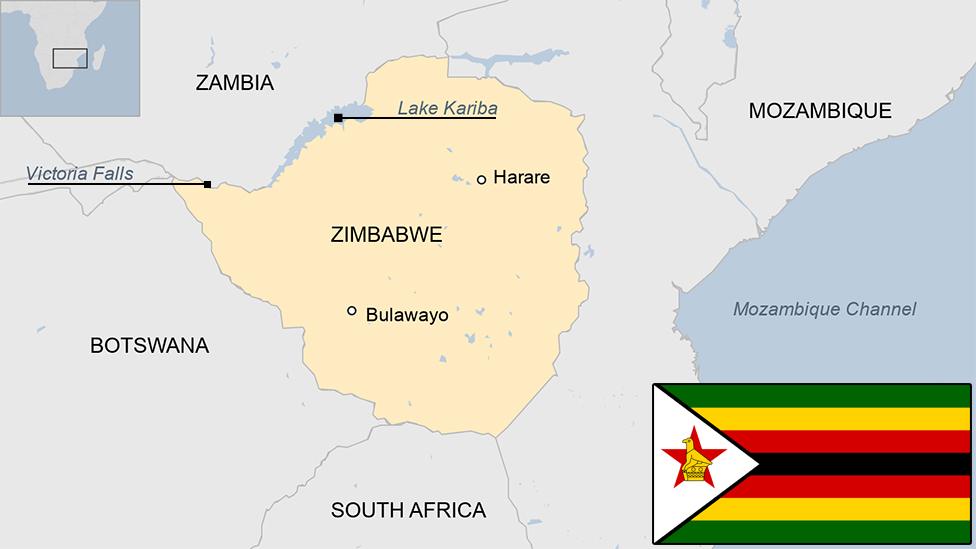
    09. Zimbabwe

    Fastest Growing Countries

    This country’s economy is projected by the World Bank to grow at 6.2% in 2025- an increase from the projection of 2.0% in 2024. The country’s inflation is projected to accelerate to 8.4% in the coming year from 6.0% in 2024. In the past few years, inflation in this country reached over 200% on the back of severe depreciation of its local currency- the Zimbabwean dollar.

    Risk to the outlook include the effect of climate change induced El Nino which affects production of key staple such as maize. Also, the country has also seen natural disasters such as flooding like its other Southern African counterpart in 2024 so far.

    08. Uganda

    The World Bank provided the same economic growth projection for both Zimbabwe and Uganda at 6.2% in 2025. The country’s GDP growth projection for 2025 represents a 0.2 percentage points increase compared to its projection for 2024. GDP growth in Uganda is one of the highest across the East Africa region.

    The country in the past 18 months has seen inflation fall to stable levels resulting in monetary policy authorities to begin the easing cycle with a 25 basis points cut in MPR. In 2023, inflation in the country stood at 8.8%- this dropped to 3.2% in 2024 and consumer prices in the coming year is projected to remain stable at 4.6%.

    07. Republic of Benin

    This West African nation is forecast to see 6.4% GDP growth in 2025 which has helped in no small measure to boost economic expansion in the West African region.

    In the past five years, the country has posted GDP growth above 5% whilst maintaining inflation under 3% dating back to 2020.

    06. Cote D’Ivoire

    Fastest Growing Countries

    The World Bank projects growth in this West African country to reach 6.4% in 2025- one of the strongest performers in the West African region. This growth is underpinned by strong private consumption and capita deepening as well as exploitation of recent oil discoveries in the country.

    In the past four years, the country has seen GDP growth above 6% and barring the pandemic in 2020, growth has average 7.5% dating as far as 2010.

    Inflation in the country is projected to decline by 0.6 percentage points to 3% next year from 3.6% in 2024.

    05. Ethiopia

    with GDP growth at 6.5% in 2024 according to the World Bank projection, Ethiopia is the fifth fastest growing economy in Africa. The country has been a consistent performer in the region recording over 6% growth in the last five years including during the pandemic in 2020.

    The major risk to the currency outlook is severe currency weakness- the Ethiopian Birr is among the worst performing currencies in the continent losing 30% of its value as of August 2024 and would likely have a pass-through effect on inflation.

    Also, natural disasters such as droughts and floods have negatively impacted agricultural output in the past few years with crop failure in some years hovering around 50% to 90%.

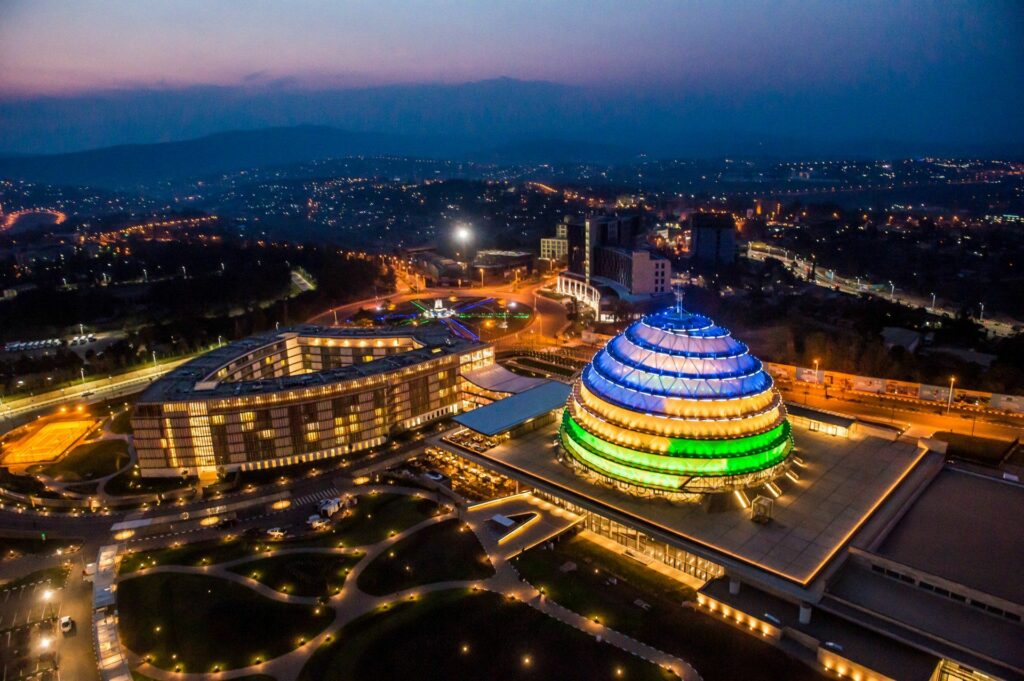
    04. Rwanda

    this country sits joint third with Mauritania as the third fastest growing economy in the Africa with the World Bank projecting its GDP to grow by 7.8% in 2024.

    The GDP growth projection for 2025 is an improvement from 7.6% recorded in 2024. Inflation in the country for 2025 is projected to decelerate to 5.0% in 2025 from the projected 6.8% this year.

    03. Mauritania

    the World Bank puts the country’s economic growth for 2025 at 7.8%- making her the joint third fastest growing economy on the continent. The projection represents an increase of 1.3 percentage points from the 2024 forecast of 6.5%.

    Inflation in the country is forecast to decline to 2% from 2.7% in 2024.

    02. Niger

    despite a coup and severing of its membership of the ECOWAS in the year, Nigeria is on track to become the second fastest growing economy in the continent in 2025 with the World Bank putting GDP growth at 8.5% in 2025.

    This is an improvement from the 5.7% projected GDP growth in 2024 which has strengthened economic activities in the West African region.

    01.Libya

    the fastest growing economy in Africa in 2025 according to the World Bank is conflict and unstable Libya projected to grow at 10.7% in 2025. The impressive GDD growth projection is underpinned by recovery from the contraction of 10.1% in 2024.

    The outlook for Libya is a downgrade compared to the Bretton Wood institute projection earlier in the year.

    The outlook for Libya is marred by conflict and political instability which has severely affected oil production in the country. Further distabilisation in the Middle East with the toppling of the Assad led Syrian regime and uncertainties in the conflict between Israel and Hamas could potentially upend the potential recovery. 

  • Top 10 Most Valuable Startups in Nigeria as Moniepoint Hits $1 Billion Valuation

    Top 10 Most Valuable Startups in Nigeria as Moniepoint Hits $1 Billion Valuation

    The Nigerian startup space has witnessed tremendous growth in the last decade, transitioning from relative obscurity to becoming a force to reckon with, not just in Africa but across the globe.

    The Nigerian government has not failed to notice this growth trajectory and its impact on the Nigerian economy. In 2022, the National Assembly passed the Nigerian Startup Act, which was eventually signed into law by former President Buhari.

    Beyond the passage of the Startup Act, the federal government is also providing the necessary support, despite the harsh business environment, to allow these startups to scale.

    Despite a series of economic challenges in Nigeria since 2014, including two recessions, the COVID-19 pandemic, issues in the foreign exchange market, and others, the tech ecosystem has weathered these storms. In the process, it has birthed up to four (4) unicorns—the latest being Moniepoint. However, some have seen their valuations decline in recent years.

    Nigerian startups received the largest share of the international funding pie for Africa in the years prior to 2023. Of the $2.9 billion raised by startups in Africa in 2023, Nigerian startups secured $410 million, with Kenya taking the biggest slice of the pie, followed by Egypt and South Africa.

    However, in the past five years, from 2019 to 2023, Nigerian startups captured the largest share of funding raised by African startups, accounting for 29% of the total $15 billion in investments.

    The startup ecosystem in Nigeria is dominated by e-commerce, fintech, and edtech startups, leveraging the country’s burgeoning youth population and the large number of unbanked individuals in Nigeria.

    10. Konga and Paystack

    Retail giant Konga and the fintech startup Paystack rank together as the ninth most valuable startups in Nigeria, with a market valuation of $200 million each. Paystack was sold to Stripe in 2020 for a whopping $200 million, which remains its current valuation.

    Konga was founded in 2012 as a Nigerian e-commerce firm that provides direct online retail and also serves as a third-party marketplace. Amid a dire situation in 2017 and severe cost-cutting measures, including significant downsizing, the company was sold to Zinox Technologies in 2018 for an undisclosed amount.

    08. Paga

    This mobile payment platform was established by Tayo Oviosu in 2009 but eventually launched to the public in 2011. It offers a range of services, including money transfers, bill payments, retail payments, data and airtime top-ups, as well as banking services.

    It is reportedly valued at $300 million, with investors including Global Innovation Fund, Goodwell Investments, Unreasonable Capital, and others. Since its founding, it has raised up to $35 million in funding.

    07. Jumia

    Africa’s first startup to achieve unicorn status and list on the New York Stock Exchange now ranks seventh among the most valuable startups in Nigeria. The e-commerce giant has, in recent times, seen its valuation nosedive to $450 million as it struggles to achieve profitability and revenue growth amidst operational challenges.

    So far, the startup has raised up to $750 million in funding since its establishment in 2012.

    06. Kuda

    Dubbed “Africa’s bank for the free” for its near-zero fees and charges, Kuda is the sixth most valuable startup in Nigeria, with a market valuation of $500 million. Founded in 2018, the company has raised around $90 million in funding from investors, with the latest funding round occurring in August 2021, where it raised $55 million led by Valar Ventures, Target Global, and other angel investors.

    05. Moove

    This fintech startup offers financial services specifically to drivers, focusing on helping them acquire vehicles through a revenue-based financing model. The startup is barely four years old, having been established in 2020.

    Since its inception, Moove has raised a total of $447.2 million in funding from up to 33 investors, including SpeedInvest, Left Lane Capital, Tekton Ventures, Class 5 Global, and others. These funding rounds include debt financing and private equity.

    Moove operates in Nigeria, South Africa, and several other African countries. Its latest funding round occurred in February 2024, when it raised $10 million in debt financing from India’s Stride Ventures.

    Following its latest funding raise, Moove’s valuation rose to $750 million, making it one of the most valuable startups in Nigeria.

    04. Moniepoint (formerly TeamApt)

    The latest entrant into the unicorn rank boasts a market valuation of over $1 billion.

    Its recent status came after raising $110 million in its latest Series C funding round, led by Development Partners International’s African Development Partners III (ADP III) fund. Other investors included Google’s Africa Investment Fund, Verod Capital, and Lightrock.

    03. Andela

    The second of Iyin Aboyeji’s unicorns, Andela is the third most valuable startup in Nigeria, with a market valuation of $1.5 billion.

    Andela helps companies build remote teams quickly and cost-effectively and rose to prominence during the pandemic when the demand for remote workers surged.

    Since its establishment in 2014, the company has raised up to $340 million in funding, with the latest being a $200 million Series E funding round in 2021 led by SoftBank Vision Fund 2, Whale Rock, Generation Investment Management, the Chan Zuckerberg Initiative, and Spark Capital.

    02. Opay

    The second most valuable startup in Nigeria transitioned from a mobility firm to a fintech and has recorded tremendous success since the shift.

    The company is valued at a staggering $2.7 billion and has so far received $540 million in funding across several rounds.

    Opay facilitates money transfers and various types of payments. Its prominence peaked during the cash scarcity in Nigeria in early 2023, when demand for online payments soared, and traditional banks’ digital banking infrastructure became overwhelmed.

    01. Flutterwave

    The most valuable startup in Nigeria is a fintech company that helps businesses and banks process seamless and secure payments to clients and customers worldwide.

    The company is currently valued at over $3 billion and has floated plans to list on the New York Stock Exchange (NYSE).

    Its backers include Y Combinator Continuity Fund, Greycroft, Greenvisor Capital, Omidyar Network, and Glynn Capital, which collectively have invested over $445 million in the startup.

  • Potential Israel-Iran Conflict and Its Impact on Nigeria’s Exchange Rates and Petrol Prices

    Potential Israel-Iran Conflict and Its Impact on Nigeria’s Exchange Rates and Petrol Prices

    Just over one year ago, Hamas terrorists launched arguably the most brutal attack on Israeli civilians since the Holocaust resulting in death of over 1000 people.

    In the past year, the Israel Defence Force (IDF) has been involved in a brutal conflict with Hamas in Gaza which has spilled over to Lebanon where Hezbollah has a significant presence.

    The onslaught of the Israeli military pushed oil prices up by as much as 4% after Yemeni Houthi rebels in solidarity with Hamas began attacking ships in the Red sea.

    In the past few weeks, we’ve seen Israel come on the brink of full-blown conflict with Iran after attacks on Iran-backed Hezbollah militants by Israel and assignation of top Iranian military commanders.

    Just one week ago, Iran fired over 180 missiles inside Israel in escalation of the ongoing conflict, the Prime Minister of Israel had promised to retaliate and analyst are saying Israel plans to attack Iran’s oil facilities.

    In the wake of this current attack, oil prices have shot up to $80 per barrel and there are projections of nearly reaching $100 if Israel attacks Iran’s oil facilities as predicted. Conflicts in major oil producing regions has always resulted in higher oil prices and going back to the 1970s oil crisis caused by the Yom Kippur war in Israel and the Iranian revolution.

    The most recent scenario occurred in 2022 after Russia invaded Ukraine where crude oil prices closed the year at $97 per barrel compared to $69 in the previous year. In fact, the post pandemic recovery of oil prices stems from the Russia-Ukraine war.

    For countries like Nigeria whose economy is heavily influenced by the swing in oil prices especially in the post-subsidy era, oil prices could be a double-edge sword.

    Crude oil does two things to Nigeria’s government finances- provides revenue for government and foreign exchange for the CBN’s external reserves which is used to back the Naira.

    However, in this post-subsidy era we are moving into, swinging crude oil prices could now mean higher petrol prices for Nigeria even when the petrol is produced locally and the raw crude even sold in Naira. Before now, the federal government through the Nigeria National Petroleum Company (NNPC) Limited pays a fraction of petrol cost of petrol to keep it low and fixed. This enabled Nigerians to not just enjoy low PMS prices but keep petrol prices immune from the vagaries of the international oil market.

    However, in the past years, the cost of this subsidy has become unbearable for the federal government. Attempts have been made by different administrations in the past to end petrol subsidies but was met with stiff resistance by civil society groups with the greatest being the Occupy Nigeria protest in 2012 after President Jonathan removed petrol subsidy. This pushed the then President to reintroduce the subsidy where it remained until President Tinubu announced the removal on his first speech as President.

    What Does Projected Rise In Oil Prices Mean For Petrol Price

    In simple terms, Nigerians are going to pay higher PMS prices at the pump if the Iran-Israel conflicts escalates and pushes petrol prices above the current $80 per barrel. This is irrespective of where the crude oil is sourced and where or who refines it either locally or abroad. For example, the NNPC has declared it would supply 17.6 million barrels of crude oil to the Dangote refinery in Naira.

    However, it will be dependent on the price of crude oil in the international market. If the price increase, Dangote and other local refineries would have to cough more Naira to settle the NNPC and this cost will be passed on to consumers. This is because crude oil as an international commodity is priced in U.S dollars.

    Rising Oil Prices and Exchange Rate

    In the face of rising oil prices, it is expected that the Naira strengthens against the dollar but that is dependent on the decisions of the United States Federal Reserve Bank and Central Bank of Nigeria (CBN).

    The Naira has witnessed the worst volatility in history this year becoming at one time the best performing currency before a 180 degrees reversal of fortunes to become the worst performing currency. The strengthening of the Naira in March stems from the action of the CBN selling forex to BDCs at rates below the official market rate but there is a problem with such is that it is not sustainable- there is a limit to how much forex the apex bank can burn.

    The Naira currently trades in the region of N1,550/$ to N1,660/$ in the official NAFEM window. This represents a depreciation of over 100% compared to the rates before the unification of all segments of the FX market by the CBN.

    Rising oil prices could help shore up the country’s foreign reserve which has been seen rising in the past few months. In September 2023, the country’s foreign reserve stood at $33.23 billion- this has increase to $38 billion by the end of September 2024.

    The CBN is presented with two choices with potential increase in foreign reserves- either to sell FX to BDCs like it did earlier in the year when the Naira became the best performing currency in the world or to allow the forces of demand and supply determine the value of the Naira as it currently does with the exchange rate reaching N1,600/$.

    Hence, the value of the Naira with the potential increase in oil prices would be dependent on the decision of the CBN.

    Most Ideal Scenario For Nigeria

    From the foregoing, it seems the potential war between Israel and Iran and the ripple effects on crude oil prices means Nigeria would likely face another round of petrol price increase in the event the NNPC continues on its post-subsidy policy.

    There is also uncertainty on the decision of the apex bank on either backing the Naira or allowing market forces determine the exchange rate.

    Furthermore, Nigeria has been unable to since the beginning of the year to significantly increase oil prices. According to OPEC’s records, Nigeria has not met its crude oil production quota of 1.5 million barrels daily since January, despite calls to ramp up production.

    For Nigerians, the best case scenario in the wake of potential increase in oil prices would be for low crude oil prices to keep petrol prices low and high crude oil production to increase forex supply to the CBN’s foreign reserves.