Tag: Artificial Intelligence

  • AI Jobs Listings: What Roles Are in Demand in 2025?

    AI Jobs Listings: What Roles Are in Demand in 2025?

    In 2025, 97 million new jobs will be created by artificial intelligence. Sounds glorious, doesn’t it? Until you realised it will also scrap 85 million old ones without asking for permission. 

    Putting it simply, AI isn’t knocking politely on the job market’s door, it’s barging in with a suitcase full of resumes and a wrecking ball for outdated careers.

    The question isn’t whether your job will change, but how soon and if you’ll still be holding a badge when it does. I’m not here to glamourise the situation. We either adapt, or we become cautionary stories. 

    So, let’s get straight into it. Where are the opportunities, what skills will be currency, and what on earth are employers actually looking for?
    AI Jobs Demand Across Industries

    If you think AI jobs are limited to nerds in hoodies tapping away in Silicon Valley basements, think again. Healthcare is already using AI for diagnosis better than half the doctors you know. 

    Finance relies on algorithms that sniff out fraud faster than a pack of bloodhounds. Logistics? AI is practically running the show, plotting delivery routes while humans argue over parking spaces.

    According to CompTIA, AI-related job listings jumped by 32% in 2024 alone. Glassdoor says searches for AI jobs tripled in the same period. It’s not slowing down but accelerating like a Formula 1 car on fresh tyres.

    Here’s where the hottest demand is boiling over:

    • Tech: AI developers, systems architects, data strategists
    • Healthcare: Medical imaging AI specialists, clinical data analysts
    • Finance: Fraud detection experts, AI risk modellers
    • Manufacturing: Smart factory engineers, robotics maintenance specialists
    • Retail and Marketing: AI customer behaviour analysts, personalisation platform managers

    In short, if you work in any of these sectors and you’re not at least conversing with AI, you’re falling towards professional extinction.

    Most In-Demand AI Job Roles in 2025

    Here’s the real meat. May I let you know that these roles are not predictions. They’re already booking meeting rooms.

    1. AI / ML Engineer

    AI and machine learning engineers design systems that learn from data to make predictions, automate tasks, and improve over time. From chatbots to self-driving cars, they power the AI we interact with daily. With demand rising across industries like tech, finance, and healthcare, this role is at the center of AI innovation.

    The required skills are as follows:

    • Python
    • TensorFlow
    • deep learning
    • data science
    • cloud computing

    Average Salary: $128,000–$185,000 per year
    Expected to grow significantly through 2030

        2. Machine Learning Engineer

        Machine Learning Engineers build algorithms that allow systems to learn from data and make accurate decisions, without being explicitly programmed. They’re behind everything from Netflix recommendations to fraud detection systems.

        As businesses automate more processes, ML engineers are critical for designing models that scale and improve over time.

        The required skills are as follows:

        • Python
        • Scikit-learn
        • PyTorch
        • data engineering
        • model deployment (MLOps)

        Average Salary: $101,000–$257,000 per year
        High-growth, especially in fintech, healthcare, and big tech

        3. Data Scientist

        Data Scientists analyze large sets of data to uncover patterns, predict outcomes, and provide actionable insights. They use statistical and machine learning methods to solve business problems and guide decision-making. As companies rely more on data to gain a competitive edge, Data Scientists are essential for turning raw data into strategic advantages.

        The required skills are as follows:

        • Statistical analysis
        • machine learning
        • data visualization (Tableau, PowerBI)
        • SQL
        • big data tools (Hadoop, Spark)

        Average Salary: $95,000–$100,000 per year
        Strong demand in industries like healthcare, finance, and tech

        4. AI Research Scientist

        AI Research Scientists push the boundaries of artificial intelligence, developing groundbreaking algorithms and models. They are the masterminds behind new AI technologies, from advanced machine learning techniques to innovations in natural language processing and robotics.

        As AI continues to evolve, the need for visionary researchers to drive the next wave of innovation is crucial. These experts work at the forefront of AI, paving the way for the technologies that will shape the future.

        The required skills are as follows:

        • Deep learning
        • advanced statistics
        • machine learning
        • algorithm design
        • Python programming language (and other languages like C++ or Java)
        • research methodologies

        Average Salary: $161,000–$258,000 per year
        High demand in both academia and industry, especially for tech giants and research labs

        5. AI Product Manager

        AI Product Managers lead the strategy, development, and launch of AI-powered products. They bridge the gap between the technical team and business stakeholders, ensuring that AI solutions meet user needs and business goals. From concept to market, they drive the AI product lifecycle.

        As companies increasingly focus on AI-driven solutions, the demand for skilled product managers who can guide AI projects from idea to execution is growing rapidly.

        Required skills:

        • Product management
        • AI and machine learning understanding
        • Cross-functional collaboration
        • Strategic thinking
        • Agile methodologies
        • Communication and leadership skills

        Average Salary: $140,000+ per year (depending on experience)
        Strong demand across tech companies and startups

        6. Robotics Engineer

        Robotics Engineers design intelligent robots that can handle manual tasks and, in some cases, think autonomously. These engineers work on creating robots that can perform actions traditionally done by humans, but with greater precision and efficiency.

        As automation continues to take over industries, the demand for Robotics Engineers who can create these smart machines is increasing.

        Required skills:

        • Robotics design
        • AI integration
        • Mechanical engineering
        • Programming (Python, C++)
        • Sensors and automation technology

        Average Salary: $90,000–$150,000 per year
        High demand in manufacturing, healthcare, and logistics industries

        7. Prompt Engineer

        Prompt Engineers specialize in crafting inputs for large language models like ChatGPT or Gemini to ensure high-quality outputs. This emerging role is critical in getting the most out of AI systems and is evolving rapidly.

        As AI tools become more integrated into daily life, Prompt Engineers are needed to fine-tune and optimize AI responses.

        Required skills:

        • Understanding of AI language models
        • Data analysis
        • Prompt crafting and optimization
        • Natural language processing
        • Creativity and problem-solving

        Average Salary: $95,000–$270,000 per year
        Rapid growth, especially in AI-focused tech companies

        8. AI Cybersecurity Analyst

        AI Cybersecurity Analysts protect digital systems from AI-driven cyberattacks. They develop advanced security measures to defend against emerging threats posed by AI technologies. Think of them as digital bodyguards, but faster and more intuitive.

        With the rise of AI-enhanced cyber threats, this role is becoming increasingly essential for companies in all sectors.

        Required skills:

        • Cybersecurity protocols
        • AI-driven threat detection
        • Cryptography
        • Risk assessment
        • Python, Java

        Average Salary: $95,000–$160,000 per year
        Strong demand across tech, finance, and government sectors

        9. AI Ethicist

        AI Ethicists ensure that AI systems operate in a way that is fair, transparent, and free from bias. They address the moral and societal challenges posed by AI, ensuring that machines don’t harm people or society. This role has quickly gained importance as AI’s influence grows.

        As AI becomes more integrated into decision-making, the ethical implications are becoming a critical area of focus.

        Required skills:

        • Ethics in technology
        • AI transparency
        • Bias mitigation
        • Policy development
        • Communication skills

        Average Salary: $100,000–$160,000 per year
        Growing demand, especially in tech companies and governmental organizations

        10. AI Trainer

        AI Trainers help artificial intelligence systems learn by providing human feedback to improve the AI’s performance. These trainers ensure that models become more accurate and efficient over time, guiding AI to understand and respond better.

        As AI continues to evolve, these professionals will play a key role in shaping AI capabilities.

        Required skills:

        • Machine learning
        • Data labeling
        • Human-AI interaction
        • Feedback loops
        • Communication skills

        Average Salary: $80,000–$130,000 per year
        Increasing demand as AI tools expand into new sectors

        11. AI Governance Specialist

        AI Governance Specialists define the rules and policies around AI usage within companies and governmental bodies. These professionals ensure that AI systems are used ethically, legally, and responsibly, essentially acting as the “new law-makers” for AI technology.

        With AI becoming ubiquitous, governance is becoming a top priority.

        Required skills:

        • AI policy development
        • Legal and regulatory knowledge
        • Risk management
        • Strategic thinking
        • Communication skills

        Average Salary: $110,000–$170,000 per year
        High demand as companies need regulatory compliance in AI deployment

        12. Synthetic Data Engineer

        Synthetic Data Engineers create realistic, privacy-safe datasets to train AI models. This allows companies to build AI systems without using real data that might breach privacy laws. Synthetic data has become a critical asset as AI adoption grows.

        This emerging field is vital for developing AI responsibly.

        Required skills:

        • Data generation techniques
        • Machine learning
        • Privacy laws
        • Python programming language
        • Statistical analysis

        Average Salary: $100,000–$155,000 per year
        Growing demand, especially in tech and data-driven industries

        13. AI Creativity Director

        AI Creativity Directors combine artistic vision with AI technology to drive creative projects in marketing, media, and entertainment. They use AI tools to create new types of content, blending technology with artistic expression.

        As AI takes on a more creative role, this unique role is becoming more important in various industries.

        Required skills:

        • AI in creative fields
        • Creative direction
        • AI tools for design and content generation
        • Collaboration skills
        • Innovation

        Average Salary: $115,000–$180,000 per year
        High demand in media, marketing, and entertainment sectors

        No, I didn’t make any of these up, you just haven’t seen half of them because they’re arriving faster than the market can even post job ads.

        Old Skills Meet AI: Evolving Traditional Jobs

        If you thought only tech people needed to panic, well, you’re wrong.

        • Marketers must now use AI-driven customer segmentation tools.
        • Lawyers are automating discovery processes with machine learning.
        • Teachers are deploying AI-tutors personalised to every student’s learning style.

        Companies are no longer simply rewriting job descriptions. They’re burning the old templates, pouring a drink, and starting from scratch.

        Take Unilever, for example. Their HR staff now use AI to screen candidates before a human even touches a CV. In hospitals, AI interprets MRI scans faster than some radiologists.

        It’s not about fighting machines, you need to ride them.

        Emerging AI-Driven Roles

        Some careers didn’t even exist five years ago — now, they’re goldmines.

        • AI Policy Advisors: Advising governments and corporations on safe AI deployment.
        • Human-AI Interaction Designers: Making AI systems easier for humans to engage with.
        • Synthetic Voice Designers: Creating the tone and style of AI-generated speech.
        • AI Bias Auditors: Evaluating systems for bias and discrimination risks.

        Gartner predicts that by 2027, corporate legal, risk, and compliance functions will double their technology spending, driven largely by the adoption of AI, while investments in AI governance are expected to grow significantly across industries. Let that sink in.

        Top Skills Professionals Need to Stay Competitive

        AI jobs

        Hard Skills:

        • Machine Learning (using libraries like TensorFlow, PyTorch)
        • Programming (Python, R, C++)
        • Data Analytics (SQL, Tableau)
        • Prompt Engineering
        • AI Ethics (Understand bias, fairness, transparency)

        Soft Skills:

        • Critical Thinking (machines handle patterns, humans handle judgment)
        • Creativity (machines can’t ideate… yet)
        • Adaptability (AI will keep evolving)
        • Communication (translating AI outputs into plain English for decision-makers)

        The smartest professionals are blending technical know-how with human insights. That’s the sweet spot.

        How Companies Are Changing Hiring Processes
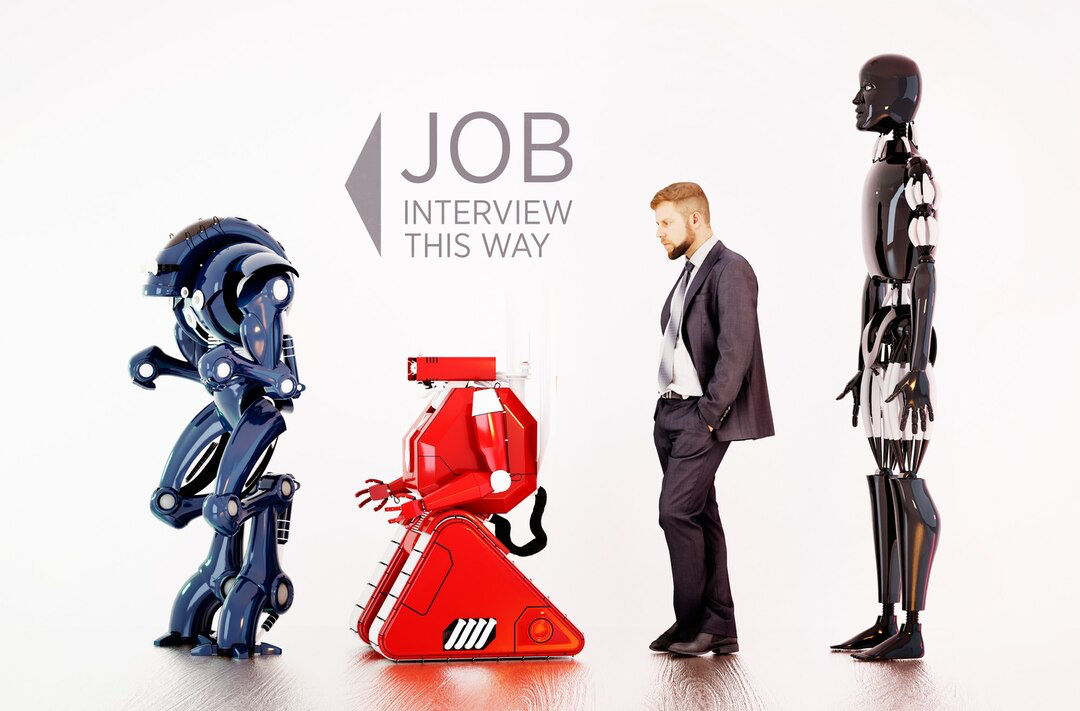
        AI Job in Demand 2025

        Gone are the days when AI knowledge was “nice to have.” Now, if you’re an accountant, Amazon expects you to understand automated ledger analysis. If you’re a doctor, you need to know AI-assisted diagnosis tools.

        Firms like PwC, Amazon, and JPMorgan have already rewritten their job listings to include AI literacy requirements. Even creative agencies are sneaking “experience with AI tools” into design job descriptions.

        The message is that if you can’t collaborate with AI, someone else will.

        AI isn’t the enemy. Complacency is.
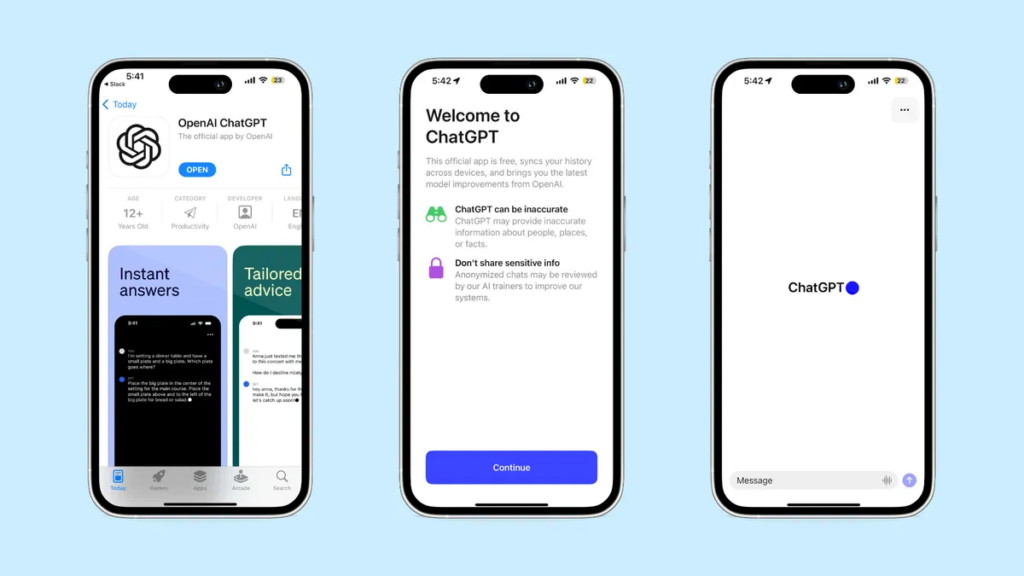
      1. ChatGPT App for iOS Devices is now Available

        ChatGPT App for iOS Devices is now Available

        OpenAI, the popular artificial intelligence research lab, has made an extremely pivotal move by introducing its official mobile app, bringing its famous AI chatbot, ChatGPT, to mobile devices. The launch of the ChatGPT app comes after the App Store was flooded with uncertified and unreliable AI chatbot services. This highly-anticipated app will be free to use, devoid of advertisements, and for the time being, cater to only users in the United States. As OpenAI is making plans to expand to other countries around the globe in the near future.

        About OpenAI’s New Mobile App

        ChatGPT App for iOS Devices is now Available
        cnet.com

        Similar to its desktop counterpart, the ChatGPT app allows users to engage with an AI chatbot. From asking questions, seeking guidance, and motivation, to conducting research, and much more, all without the need for conventional internet search engines such as Google. This release comes at a time when users are increasingly dissatisfied with Apple’s own voice assistant, Siri, and Apple’s overall lack of progress in the AI domain.

        Consequently, the ChatGPT app could potentially attract a significant user base, positioning itself as the go-to mobile assistant. Again, this launch might also have repercussions for Google, as it currently benefits from being the default search engine on Apple’s iPhone through Safari.

        One noteworthy feature of the new mobile version of ChatGPT is its ability to synchronize search history across iOS devices. This means that the app will be aware of users’ previous searches made through the web interface, providing a seamless experience. Additionally, the ChatGPT app integrates Whisper, OpenAI’s open-source speech recognition system, allowing users to input queries through voice commands.

        OpenAI emphasizes that their ChatGPT Plus subscribers will have the privilege of accessing all the capabilities of GPT-4 through the new ChatGPT app. These subscribers will also enjoy early access to new features and faster response times, expressly offering them a premium experience. ChatGPT Plus, which was launched in February this year, is available for a monthly subscription fee of $20.

        Countries with Access to the App

        As earlier stated, OpenAI revealed that the launch of the ChatGPT app will begin in the United States and gradually expand to other countries in the coming weeks. OpenAI has recently shared an exciting update via Twitter, announcing the expanded availability of the official ChatGPT mobile app in multiple countries.

        Initially, the app was exclusively accessible on iOS devices within the United States. However, OpenAI has broadened its reach, making it possible for individuals residing in various regions to now download the app from the App Store.

        The list of countries where the ChatGPT app is presently available includes:

        • Albania
        • Croatia
        • France
        • Germany
        • Ireland
        • Jamaica
        • New Zealand
        • Nicaragua
        • Nigeria
        • South Korea
        • The United Kingdom
        • The United States

        It is important to note that, for the time being, the app remains exclusive to iOS users. Moreover, OpenAI has teased the development of an Android version of the app. They’re focused on the possibility of users on different platforms having access to the powerful AI chatbot soon.

        What We Think About The ChatGPT App

        ChatGPT is a leading example of generative AI and has enough potential to revolutionize various industries and sectors. From internet search engines to email programs, content creation, e-commerce, and so much more.

        OpenAI’s commitment to democratizing AI and transforming research into practical applications that empower people is evident in the launch of the ChatGPT app for iOS. By providing users with a mobile version of their flagship technology, efficiency has been boosted across various niches.

        While these chatbots have their many flaws, considering they learn from extensive amounts of internet data without distinguishing fact from fiction, their current role is to complement human workers rather than replace them entirely. (Continue reading about AI replacing jobs). OpenAI’s introduction of the ChatGPT app marks another step forward in its mission to make research tools accessible, user-friendly, and credible.

        ChatGPT App Download

        Users can download the ChatGPT app from the App Store. Android users can look forward to its arrival on their devices in the near future. OpenAI isn’t the only company dishing out applications on the AI streets. Grammarly’s recent announcement of incorporating a generative AI tool for writing called GrammarlyGo was well received. As well as Duolingo’s rollout of a new subscription tier called Duolingo Max.

        FAQs

        Is there an app for ChatGPT?

        Yes, OpenAI now has an app for iOS and Android

        Is ChatGPT available on iPhone?

        Yes, it is available on the iOS App Store

        Is ChatGPT available for free?

        The app is free

        How to download ChatGPT for free?

        Visit the app store to download it

        How much will ChatGPT cost?

        The app is free but ChatGPT plus subscription is $20 monthly

        Does ChatGPT work on iPad?

        The app works on both iPhones and iPads 

        Does ChatGPT have an app?

        Yes, the app is available on iOS

        Can I install ChatGPT?

        Visit the iOS app store to install the app

      2. Prompt Engineering Becomes One Of The Hottest AI Jobs

        Prompt Engineering Becomes One Of The Hottest AI Jobs

        Back in 2022, the term “Artificial Intelligence” became an increasingly ubiquitous part of various workforces. Several companies and businesses thrived under the influence of a newfound gem. There were definite predictions that many careers will suffer losses and at the most, go extinct. And the possibilities of generative AI creating jobs were too far-reaching to even bank on. Fast forward to 2023, and those far-reaching predictions are now a thing of the past or so it seems. As Artificial Intelligence is creating new windows of opportunities in the job market. One of those windows of opportunity is “Prompt Engineering“.

        What a plot twist!. Every significant technological advancement presently or in the future does not entirely pose a threat to human employment as earlier predicted. Instead, it puts millions of people at an advantage because experts who can constructively interact with AI models close the gap between machines and human interaction.

        A Brief Catch Up

        Prompt Engineering Becomes One Of The Hottest AI Jobs

        A lot of people stumbling on the term for the first time, and learning of the staggering remunerations perplexingly ask “What is prompt engineering in GPT-3?.” The term is used to describe a concept of how AI chatbots that are created to understand and respond to human text/speech using language prediction models can deliver better output based on specific prompts. This new field of expertise is also called prompting.

        Developing content that is comprehensible to humans has historically stood as a challenge for machines. Centuries worth of deep research by computer scientists and engineers have led us to believe that many of these machines could not learn the intricacies and fine distinctions of human language. GPT-3 has demolished this theory with its pre-trained language model that generates realistic human-like content.

        There are obvious limitations, however. Third-generation Generative Pre-trained Transformer chatbots are just that, pre-trained. Suggesting that these bots rely only on training data rather than a memory bank that continuously retains information from every dialogue. Minimal input to the chatbots can generate copious amounts of output, with limited interpretations. And most often, these responses lack structure and can be biased.

        Due to a lack of contextual understanding when generating these responses, human intelligence is required to produce desired responses. This is where Prompt Engineers come in.

        What Does A Prompt Engineer Do?

        Prompt Engineering Becomes One Of The Hottest AI Jobs

        Picture this, you get paid $335,000 a year to be good at Google search. It’s not the same context but visualize it nonetheless. Prompts are the way people interact with these AI chatbots anyway, so why not streamline operations with Prompt Engineering to enable industries to focus on other roles that require expertise and proficiency?.

        When AI Engineers build AI systems and models, Prompt Engineers develop prompts that are used to train AI models. By using a written language that tells computers what to do, which is mostly human language. These AI prompts then generate precise text summarizations, programming codes, and even visual output.

        Why prompt engineering is important

        To understand Why prompt engineering is important, Generative AI models undergo a series of training stages to avoid bias. So Prompt Engineers write prompts bearing in mind an accurate output and If the output is flawed, the input is modified to produce better responses. Without this, these AI models will continue to create documents, articles, posts, images, codes, reports, and overall output based on non-specific keyword input. Which may very well be out-of-context and unsatisfying to the user.

        The demand for Prompt Engineers is progressively increasing. Several companies are hiring Prompt Engineers to instruct machine learning models, identify glitches and streamline workflow. Online learning platforms like Udemy are also incorporating Prompt Engineering courses. It is unclear however if Prompt Engineering jobs are here to stay. A large influx of new tools to aid in crafting prompts, such as PromptLayer, PromptPerfectPromptingGuide, etc. Online marketplaces for buying and selling prompts like PromptBase have equally emerged. 

        Will prompt engineering be a job that people commit to overtime?. As human labor gradually phases out with the dawn of disruptive technology, automated jobs will most likely usher us into uncharted territories. We hope Prompt Engineering is one of such unexplored terrains.

      3. Best AI Copywriting Tools For 2023

        Best AI Copywriting Tools For 2023

        In terms of generative AI, tons of artificial intelligence tools for copywriting, programming, visual arts, etc, are becoming more mainstream. Most notably, copywriting tools. Writing can be arduous; it takes a lot of effort and time to develop high-quality written content. And creating persuasive copy, especially for marketing or advertising is even more challenging. This prompts most copywriters to switch to more labor-saving alternatives—utilizing some of the best AI copywriting tools to generate and optimize copy.

        Several disruptive AI tools and frameworks for business, entertainment, or educational purposes have come to light in recent years. In 2022 alone, plenty of startups pushed into the market remarkable AI tools for art generation that made waves, numerical computation, voice generation, and content development. Ever since the emergence of these artificial intelligence tools in the public eye, it’s been a rollercoaster of thoughts and opinions.

        At first, these tools were met with high demands, and positive reviews, but at some point came skepticism. One of the major concerns that stirred controversies was AI taking over jobs. Of course, there were fears of estrangement, which social media is doing a fantastic job at—alienating folks from people around them. There were also predictions of inconsistency as these were, after all, just machines. And machines have limitations.

        Nevertheless, these uncertainties do not deter individuals, companies, investors, and marketers from plugging into some of these groundbreaking technology tools. Such as artificial intelligence copywriting software. In fact, because of how time efficient most of these AI copywriting tools are, their utilization is rather high. Especially among young creators. It saves them time and energy by delivering content faster. Before progressing to the best AI copywriting tools, we’ll examine how AI copywriting tools work.

        What Is AI Copywriting and How Does It Work?

        AI copywriting is the generation of written content using artificial intelligence tools. Machines designed to think like humans and copy human actions use natural language processing and machine learning to develop promotional content. Such as blog posts, articles, ads, social media posts, emails, web pages, etc, that are optimized to reach a target audience. AI copywriting essentially eliminates the hassles Copywriters face while crafting and optimizing content. As such, streamlining the entire process of increasing brand recognition and driving sales.

        How to use AI for copywriting?. Like any other machine out there, if you input a set of precise data into AI copywriting tools, these tools generate the desired content you need. Depending on the tool, the amount of specific background information you provide determines the kind of direct copy you receive.

        Can AI Replace Human Copywriters?

        Best AI Copywriting Tools For 2023

        First, what does a Copywriter do? Brainstorm, develop, analyze and write marketing and advertising copies targeted at convincing specific audiences to take action. Either to increase engagement with the target audience or to boost sales and visibility. It can be difficult to research and develop content that is optimized to rank on search engines regularly. Most human Copywriters aren’t versatile enough to write copious texts consistently for different brands, and this is where AI copywriting comes to play.

        AI copywriting tools are lightning-fast and have been designed to generate extensive content on diverse topics. In a split second, an AI copywriter can produce a full article that ordinarily would have taken days for a human Copywriter to craft. And because these AI copywriting tools are developed with machine learning algorithms, they learn and perform better by using these algorithms to detect patterns. They analyze the data and draw insights from them to make meaningful predictions.

        While AI copywriting cannot entirely replace human Copywriters, it is an efficient tool for crafting clear-cut copy in a short time frame. Copywriting is mostly targeted at compelling people and will always require human Copywriters to deeply understand various subject areas. We cannot equally neglect the fine distinction between human Copywriters and AI copywriting tools based on emotionally connecting with the target audience. To also prevent repetitious content, human Copywriters are still needed to edit and proofread.

        10 Best AI Copywriting Tools

        Let’s check out some of the best AI copywriting tools that have not only become popular but have penetrated the content creation market.

        Rytr

        An easy-to-use, all-in-one writing platform with great SEO content for blogs, emails, ads, landing pages, product descriptions, testimonials, reviews, etc. It employs the two most popular copywriting formulas; AIDA and PAS. The PAS acronym stands for Problem, Agitation, and Solution, while AIDA stands for Attention, Interest, and Desire.

        There are over 40 writing templates available to Copywriters in 30 different languages. What’s more, Rytr is equipped with an interface that offers a rich text editor; that enriches text and allows users to reword or shorten sentences. And possesses an in-built plagiarism checker to nuance your copy. can develop a 1,000-word count in 15 mins tops.

        Also, Rytr AI is available as a browser extension with excellent features to manage SEO, grammar, collaborative projects, etc. The Copywriting AI tool offers 3 plans—Free, Saver, and Unlimited plan. With the free plan, users can generate as many as 10,000 characters a month, in 30 languages, using 20 writing tones. As well as access to Rytr’s built-in plagiarism checker and 40 writing templates. Users can equally create up to 5 images per month with Rytr AI. Accessing more features requires upgrading to the other plans.

        For the Rytr saver plan, users get to develop 100,000 characters every month, in 30 different languages, using 40 writing templates. There’s also a plagiarism checker, 20 writing tones, access to generate 20 images, and free rein to create custom use cases. All for $9 per month with 2 months of free access to the saver plan when users subscribe for a full year.

        The unlimited plan allows Copywriters to generate unlimited content, in 30 different unique languages. It also grants automatic access to 40 writing templates, 20 tones, a plagiarism checker, up to 100 images, and an account manager. Aside from these, Copywriters have access to the premium community, priority emails, support, and free will to make custom use cases. It costs about $29 per month and users get 2 months free when they subscribe to a yearly plan.

        CopyAI

        This powerful copywriting software is considered the best AI writing tool that caters to creators across several niches. Including bloggers, social media managers, and marketers. Copywriters can utilize well over 100 writing templates and 25 languages in CopyAI, to create blog posts, product descriptions, social media content, or ad copy. Along with some excellent features and regular learning resources to aid the navigation of the platform by its users.

        CopyAI offers both freemium and premium plans. The free plan is a 7-day free trial with an auto-renewable monthly limit of 2,000 words. Users can enjoy unlimited word count along with extensive features once they upgrade to the premium plan which costs about $49 per month.

        Neuraltext

        Copywriters who have difficulty optimizing their copy will find Neuraltext AI very handy. It’s a keyword research tool, an SEO content tool, and an AI copywriter that enables users to create effective copy for marketing and advertising. It has over 50 writing templates for Facebook ads, taglines, newsletter emails, landing pages, blog writing, etc.

        This SEO software saves the stress of researching keywords, and competitors and also optimizes content for search engines. As well as an outline builder to organize and analyze SERP(search engine results page). Neuraltext is capable of doing this by using the data from pages ranking on Google. When users input a keyword, the tool automatically displays the top 20 results on the Google Search result page. Going as far as suggesting relevant keywords and topics, questions to answer, and other statistics.

        Although it comes at a price. Neuraltext Starter Plan costs $19 monthly and only 1 user can access it. You can also write and develop 5 articles with a 20,000-word limit per month. Including 2,000 keyword suggestions to optimize your content.

        Jasper

        Another great AI tool to create unique content that ranks on SERPs, write blog articles, craft stories, ramp up ad conversions, and generate copy for marketing products, etc is Jasper AI. social media posts, website copy, 

        Widely recognized as the best copywriting tool, Jasper integrates with Surfer SEO, Grammarly, and Copyscape to detect plagiarism and optimize content for search engines. it comes with a host of impressive features for a free five-day trial that requires credit card information before users can access the free trial.

        Jasper can generate a 1,500-word piece in less than 15 minutes in over 26 languages. Some of Jasper AI’s cool features include 11,000 free fonts, 50 writing templates, 2,500 writing styles, etc.

        The Jasper AI copywriting tool offers a starter plan for beginner Copywriters, boss mode, and business plans. With the starter plan, over 10 users can create a maximum of 320,000 words of short-form content like product descriptions. With $40 every month, users also have access to about 50 writing templates and 20 languages. While the boss mode plan enables users to generate a maximum of 10,000,000 words every month for just $82. Including access to Google docs style editor, support chat, and other customized features

        Wordtune

        Wordtune is an AI copywriting tool designed mostly for editing long-form and short-form content. It’s aimed at assisting content marketers in crafting, rewriting, and shortening their copy. It’s available as a Chrome extension and works well with Google Docs, Gmail, Slack, Facebook, Twitter, Web Outlook, Facebook, Twitter, LinkedIn, Whatsapp Web, etc. The tool also comes with lots of other features such as offline functionality; all you need to do is subscribe to the premium plan.

        ClosersCopy

        What differentiates this AI copywriting tool from the rest is that instead of using a third-generation Generative Pre-trained Transformer(GPT-3), it uses a custom-made machine-learning model. ClosersCopy has glowing reviews all over the internet from assisting Copywriters in generating clear-cut sales copy, promotional content, ads, cold emails, blog posts, etc.

        The AI tool has over 700 use case frameworks, 120+ languages, and a built-in text editor that is ideal for extensive collaborative work. Users can also increase organic traffic from search engines to your websites with CloserCopy SEO audits and an SEO planner. It’s not free as users need to pay for any of the 3 plans the tool offers, ranging from $49.99 per month.

        Copysmith

        As far as AI content creation is concerned, Copysmith is one of the best tools available for marketing copy, and eCommerce product descriptions, and to assist organizations in scaling their businesses. It helps to generate, optimize, and organize campaigns, bulk content, blog posts, articles, etc, in over 65 languages.

        The best part is that it comes equipped with an in-built plagiarism checker and translator. It’s easy and quick to translate written content from one language to another and can receive feedback from team members on the copy generated. Copysmith offers about 30 writing templates, that lets users create content around the product-centric topic. Alongside integration with various marketing tools such as HootSuite, Zapier, etc. There’s also a 7-day free trial with a pricing plan that starts at $19 per month.

        Anyword

        Another very popular AI copywriting tool among Copywriters is Anyword. It is targeted at generating short-form promotional content that drives engagement and sales. The Anyword tool offers several advanced functionalities like SMS content writing and predictive copy performance. It also delivers data analytics options for content writers and marketers which is only available for paid users. However, the hiccup in this tool is the inability to generate long-form content.

        Writesonic

        Linkedin folks will take to this powerful AI writing software that offers a host of amazing features for writers, eCommerce stores, marketing teams, and entrepreneurs. Available in 24 languages with over 50 templates to generate content such as emails, Google ads, and landing page copy. Writesonic is one of the popular AI article generators.

        Copywriters can create a minimum of 2,500 compelling copies every month, free of errors. With the aid of Writesonic’s built-in grammar and plagiarism checker. The Writesonic AI equally offers new users a maximum of 6,250 free words monthly, but other features can be accessed with the paid plans. Which starts at $10 per month.

        AI-Writer

        AI-Writer is an efficient writing software for content writers and marketers to boost their content marketing strategy more cost-effectively. From article drafts, rewording, search engine optimization(SEO), and editing, to trending topic suggestions. AI-Writer is one of the best AI content writing tools in the market in 2023. It’s equipped with intelligent algorithms that focus on generating content for specific audiences. To streamline content generation, copywriting, etc.

        Wordsmith

        Those who need a tool that analyzes data to make meaningful predictions and well-informed decisions should consider Wordsmith. Which is the best AI copywriting tool for data experts?.

        Automated Insights is a business intelligence company and the brains behind Wordsmith AI. It works by utilizing AI to process and analyze data input, then returns easy-to-use narratives such as summaries, headlines, and articles for various companies.

        Although it’s not clear if Wordsmith operates a freemium or Premium plan, users need to request a free demo to find out.

        Other copywriting alternatives include Writecream, Frase, Simplified, Article Forge, etc.

      4. AI Replacing Jobs: What Will Happen In 2023?

        AI Replacing Jobs: What Will Happen In 2023?

        Is AI replacing jobs now? Imagine losing your job to software or robots. What jobs are being replaced by technology and how do we prevent AI from taking over jobs in 2023?.

        Several industries have recently switched or considered switching to AI with the advent of disruptive technologies. Granted, technology is progressively increasing productivity across the board, but to what end? Folks are questioning the future of AI technology. There are concerns, speculations, and predictions.

        Firstly, let’s cover some of the fundamental aspects of AI.

        What Is Artificial Intelligence?

        American Computer Scientist John McCarthy defined Artificial Intelligence as ‘The science and engineering of making intelligent machines.’

        Put simply, Artificial Intelligence is a branch of computer science that designs machines to think like human beings and copy human actions. The acronym AI is short for artificial intelligence.

        There are four types of AI; Reactive AI, Limited memory AI, Theory-of-mind AI, and Self-aware AI.

        When Did AI Become Popular?

        Ever since the 1950s, scientists explored the possibilities of applying artificial intelligence to everyday human activities. From basic physical interactions to making business decisions and solving complex issues. In the 1980s, AI saw a quantum leap with the introduction and adoption of expert systems after several failed attempts by scientists to develop thinking machines.

        Researchers are relentlessly seeking to unearth and implement artificial intelligence solutions to streamline human operations. On the other hand, investors are pumping millions of dollars into these AI projects and research to generate wealth.

        Where Is AI Used Or Applied?

        Where Is AI Used Or Applied?

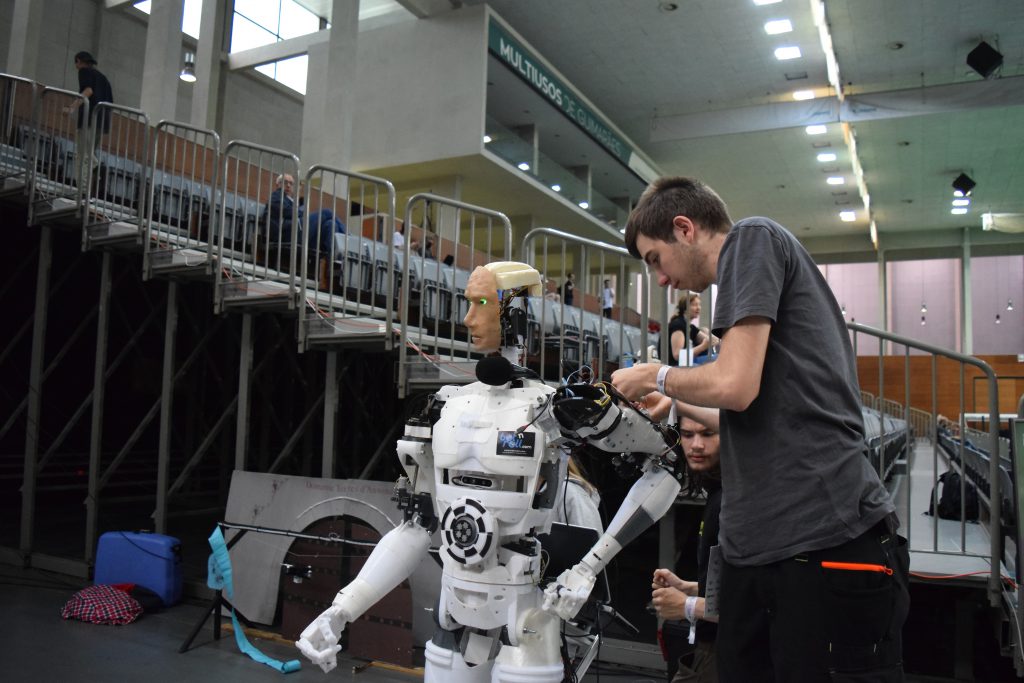
        Artificial intelligence is applied in a number of industries and sectors—healthcare, agriculture, transportation, IT, etc. AI is applied to design humanoids, self-driving cars, speech recognition, and virtual assistants(like Siri and Alexa).

        In finance, artificial intelligence is used to detect fraudulent activities, loan analysis, and stock trading. Healthcare sectors also utilize AI to streamline medical activities, diagnosis, surgical procedures, and documentation. Other areas of AI application include customer support and engagement, automated content creation, and journalism. As well as art generation which has taken the world by storm, gaming, linguistics, vision systems, etc.

        AI branches include;

        1. Machine Learning
        2. Deep Learning
        3. Natural Language Processing
        4. Robotics
        5. Expert Systems
        6. Fuzzy Logic

        How Is AI Replacing Jobs In The Future?

        How Is AI Replacing Jobs In The Future?

        With the increasing emergence of AI tools or platforms for securing data, identifying security threats, and maximizing all round efficiency—which is human jobs, why then do we need humans?. If AI technologies can conduct surgeries and provide life-changing solutions by simply mimicking human cognitive abilities, it essentially means that AI will take away jobs.

        If we were to hazard a guess about the future of artificial intelligence, it’s not that hard to predict what will happen in 2023 and beyond. Every significant technological advancement in the future poses a threat to human employment. Presently, it already puts millions of people at risk of unemployment.

        What Jobs Will Be Replaced By AI?

        1. Data entry
        2. Market Research  Analyst
        3. Commercial Drivers
        4. Customer Service
        5. Sales Representatives
        6. Copywriting and Proofreading
        7. Industrial Workers
        8. Truck Drivers and Heavy Equipment Operators
        9. Visual Artists
        10. Administrative or Clerical Jobs

        Jobs That AI Cannot Replace

        Is Replacing Jobs

        Most people overlook the positive aspect of AI replacing jobs in the future. Not all jobs will be displaced by technology—if anything, more jobs will be created. The question is, how will AI create jobs?.

        Some of the menial jobs that technology is currently displacing will enable industries to focus on other roles that require expertise and proficiency. Thereby streamlining workflow as well as business processes.

        As human labor gradually phases out with the dawn of disruptive technology, automated jobs will most likely usher us into uncharted territories. There’ll equally be massive job creation as these systems, software and machines will require humans to design and maintain them.

        Also, no matter the levels of technological advancement the world reaches, artificial intelligence cannot completely eradicate humans. The reason is human cognitive functions and physiological responses are required to carry out complex, creative, and emphatic roles. While AI will primarily make jobs more efficient, it cannot take the place of human emotion, intelligence, and interactions.

        What will happen with AI Replacing Jobs
      5. Google Acquires Artificial Intelligence Startup DeepMind For More Than $400M

        Google Acquires Artificial Intelligence Startup DeepMind For More Than $400M

        TechCrunch – Google will buy London-based artificial intelligence company DeepMind. The deal wasconfirmed to Re/code by Google. Re/code reports that the acquisition price was $400 million, but we’ve heard from a source that it was more. We’ve emailed Google and DeepMind for comment.

        DeepMind was founded by neuroscientist Demis Hassabis, a former child prodigy in chess, Skype and Kazaa developer Jaan Tallin, and researcher Shane Legg.

        This is the latest move by Google to fill out its roster of artificial intelligence experts, and the acquisition was reportedly led by Google CEO Larry Page. In December 2012, Google hired inventor, entrepreneur, author, and futurist Ray Kurzweil as a director of engineering focused on machine learning and language processing. Kurzweil has said that he wants to build a search engine so advanced that it could act like a “cybernetic friend.”

        Google’s hiring of Deepmind will help it compete against other major tech companies as they all try to gain business advantages by focusing on deep learning. For example, Facebook recently hired NYU professor Yann LeCunn to lead its new artificial intelligence lab, IBM’s Watson supercomputer is now working on deep learning, and Yahoo recently acquired photo analysis startup LookFlow to lead its new deep learning group.

        DeepMind’s site currently only has a landing page, which says that it is “a cutting edge artificial intelligence company” to build general-purpose learning algorithms for simulations, e-commerce, and games.

        In 2012, Carnegie Mellon professor Larry Wasserman wrote that the “startup is trying to build a system that thinks. This was the original dream of AI. As Shane [Legg] explained to me, there has been huge progress in both neuroscience and ML and their goal is to bring these things together. I thought it sounded crazy until he told me the list of famous billionaires who have invested in the company.”

        Deepmind was started about three years ago, according to LinkedIn profiles. Re/code reports that Founders Fund and Horizons Ventures are both major investors in the startup.

        This arrticle was originally posted on Techcrunch