Category: Market

  • Melania Trump Announces Launch of Her Cryptocurrency, $MELANIA

    Melania Trump Announces Launch of Her Cryptocurrency, $MELANIA

    Melania Trump has officially launched her own cryptocurrency, $MELANIA, just one day before her husband’s inauguration as the 47th President of the United States. This announcement follows the introduction of the $TRUMP cryptocurrency, both of which have already begun to gain significant attention and traction.

    Launch of $MELANIA Coin

    On Sunday, Melania took to her X page, announcing,

    “The Official Melania Meme is live! You can buy $MELANIA now.”

    The cryptocurrency is based on the Solana blockchain, renowned for its scalability and speed, and is clearly positioned as a part of the growing digital asset ecosystem. The $MELANIA website states, however, that the coin is “not intended to be, or the subject of, an investment opportunity or a security,” providing important disclaimers similar to those seen on her husband’s $TRUMP cryptocurrency platform.

    Donald Trump’s Shift in Stance on Cryptocurrencies

    Melania Trump Cryptocurrency

    Donald Trump, who previously referred to cryptocurrencies as a “scam,” notably changed his stance during the 2024 presidential election. By embracing digital assets, Trump became the first presidential candidate to accept cryptocurrency donations and promised a drastic overhaul of financial regulations, especially regarding cryptocurrencies.

    Trump’s campaign proposal to build a Bitcoin stockpile and appoint crypto-friendly financial regulators fueled optimism within the crypto market, which was already preparing for a shift in policy under his administration. As a result, the market responded positively, and Bitcoin reached an all-time high of $107,000 following Trump’s victory. In addition, other cryptocurrencies, including Dogecoin—which has been promoted by Trump ally Elon Musk—saw significant growth in 2024 and early 2025.

    Cryptocurrency Market Performance and Regulation Under Trump

    As of now, $TRUMP boasts a market valuation of approximately $12 billion (£9.8 billion), while $MELANIA has already achieved a valuation of around $1.7 billion, according to CoinMarketCap. This growth marks a stark contrast to the regulatory approach seen under the previous administration. Under President Joe Biden, the crypto industry faced tighter regulations, with increased scrutiny on exchanges and ongoing concerns about fraud and money laundering.

    Melania Trump Cryptocurrency Policies and User Requirements

    The $MELANIA website has specific policies in place for potential users, with access limited to those who can legally enter into binding contracts. To comply with these regulations, users must be at least 18 years old or the age of majority in their jurisdiction to access the services. Additionally, the website reserves the right to terminate access for individuals who fail to meet these criteria.

    The Future of $MELANIA and Digital Assets

    Melania Trump’s launch of the $MELANIA cryptocurrency highlights the growing importance of digital currencies in today’s economy. With strong market performance and continued interest from digital asset enthusiasts, both the $TRUMP and $MELANIA cryptocurrencies are expected to play an influential role in the broader cryptocurrency space in the years to come. As these initiatives evolve, all eyes will be on the potential regulatory changes under the new administration and how they might shape the future of digital currencies.

  • Best Crypto to Buy Now Ranked by Market Analysts

    Best Crypto to Buy Now Ranked by Market Analysts

    There are opportunities to make money quickly through cryptocurrencies. While most of these profits from trading and investing in cryptocurrencies might be the singular lens of view for many, cryptocurrencies have the potential for long-term value and utility beyond speculative investment.

    We ranked these cryptocurrencies based on their market capitalization, trading volume, prices, adoption rate, and contribution to the global blockchain ecosystem. From real-time data and detailed information on market trends​ of hundreds of digital assets, we were able to handpick a select few of the best cryptocurrencies to buy now.

    These digital assets include established cryptos like Bitcoin and Ethereum, and promising newcomers like Solana and Polkadot. They are not just the best cryptocurrencies for making profits from short-term price changes, but the best investment opportunities in the cryptocurrency space.

    Best Crypto to Buy Now

    Bitcoin (BTC)

    Bitcoin, created in 2009 by the pseudonymous Satoshi Nakamoto, is the cornerstone of the cryptocurrency market. Like most cryptocurrencies, Bitcoin operates on a blockchain—a decentralized ledger that records transactions across a vast network of computers.

    As the first and most widely recognized cryptocurrency, Bitcoin is seen as a haven in the volatile crypto market. Analysts and aggregators recommend Bitcoin as the best crypto to buy now or in the foreseeable future due to its strong network security, widespread adoption, and status as digital gold. As well as the ongoing institutional interest and increasing acceptance as a payment method.

    The value of Bitcoin has surged dramatically as it gained widespread recognition. In May 2016, the cost of a single Bitcoin was roughly $500. By June 2024, its price had soared to approximately $71,033, marking an impressive increase of 14,107%.

    Ethereum (ETH)

    Created by Vitalik Buterin in 2015, it has become one of the most prominent cryptocurrencies after Bitcoin. ETH is used as “gas” to power transactions and execute smart contracts on the Ethereum network. Its versatility and programmability have led to a dynamic ecosystem of projects, ranging from decentralized finance (DeFi) to non-fungible tokens (NFTs).

    The surge in Ethereum’s price from approximately $11 in April 2016 to roughly $3,833 by the end of June 2024 speaks volumes about its potential for substantial returns on investment. This growth reflects a staggering increase of 34,742%, highlighting the immense value that Ethereum has generated for early adopters and investors over the years.

    Tether (USDT)

    Tether is one of the most widely used stablecoins in the cryptocurrency ecosystem, partly due to its liquidity and integration into many cryptocurrency exchanges and trading platforms.

    Currently, Tether has a market capitalization of $112.4 billion with a year-over-year return of 0%. This designation indicates that it is backed by fiat currencies such as the U.S. dollar and the Euro, aiming to maintain a value equivalent to one of these denominations.

    This stability feature makes Tether a more reliable asset compared to other cryptocurrencies, which is particularly appealing to investors seeking to mitigate the substantial volatility associated with alternative coins.

    Binance Coin (BNB)

    This is the native cryptocurrency of the Binance exchange, one of the largest cryptocurrency exchanges in the world. Initially launched as an ERC-20 token on the Ethereum blockchain, BNB has since migrated to Binance’s blockchain, Binance Chain.

    BNB is one of the most valuable cryptocurrencies in terms of market capitalization and serves several purposes within the Binance ecosystem. It can be used to pay for trading fees on the Binance exchange, offering users discounts when using BNB to cover trading fees.

    Since its inception in 2017 at $0.10, BNB’s price surged to approximately $709 by late June 2024; an astounding gain of 709,093%. With a market capitalization of $104.5 billion and a year-over-year return of 162%, Binance Coin is one of the best crypto to buy now.

    Also, BNB is used in various Binance-related services and products, such as Binance Launchpad, which is a platform for launching new token sales, and Binance Smart Chain, a blockchain platform that supports smart contracts and decentralized applications (dApps).

    Solana (SOL)

    Launched in March 2020 by the Solana Foundation, Solana is one of the best crypto in the market addressing the scalability issues faced by many blockchain networks, and allowing for high-speed transactions at low costs.

    Since its launch, Solana has gained massive adoption within the crypto community, with a growing number of projects and developers building on its platform. Its performance, scalability, and developer-friendly features have contributed to its rising prominence.

    SOL began trading at $0.77, but as of late June 2024, its price has surged to approximately $172.78, reflecting an impressive gain of 22,340%. With a market capitalization of $79.5 billion and a remarkable year-over-year return of 773%, it is one of the best crypto to buy now.

    One of Solana’s key features is its innovative proof-of-history (PoH) and proof-of-stake (PoS) consensus mechanism, which timestamps transactions before they are added to the blockchain. This helps to enhance the network’s throughput, enabling it to process thousands of transactions per second, far exceeding the capacity of many other blockchain platforms.

    U.S. Dollar Coin (USDC)

    USDC, introduced in September 2018 by CENTRE, a consortium co-founded by Circle and Coinbase, operates as a stablecoin pegged to the value of the U.S. dollar. With a current market cap of $32.6 billion and a year-over-year return of 0%, USDC offers stability and liquidity in the cryptocurrency market. Built on the Ethereum blockchain, USDC facilitates seamless global transactions, providing a reliable bridge between traditional finance and the digital asset space.

    XRP (XRP)

    Launched in 2012 by Ripple Labs, XRP is one of the oldest cryptocurrencies in the market. With a market cap of $29.1 billion and a slight year-over-year return decline of -1%, XRP operates within the Ripple network as a bridge currency.

    Its primary function is to facilitate efficient cross-border payments and remittances. Unlike Bitcoin and Ethereum, XRP transactions are processed quickly and at a fraction of the cost, making it an attractive option for financial institutions seeking efficient payment solutions.

    Dogecoin (DOGE)

    Introduced in December 2013 by software engineers Billy Markus and Jackson Palmer, Dogecoin started as a light-hearted parody of the cryptocurrency craze but quickly gained popularity due to its viral meme culture.

    With a market cap of $23.5 billion and significant growth of 138% year-over-year, Dogecoin has found utility in tipping content creators and charitable fundraising. Despite its unlimited supply and low transaction fees, Dogecoin embodies the whimsical side of the crypto world.

    Cardano (ADA)

    Founded in 2017 by Ethereum co-founder Charles Hoskinson, Cardano took a research-driven approach to development. With a market cap of $16.4 billion and steady growth of 36% year-over-year, Cardano provides a secure and scalable platform for decentralized applications and smart contracts.

    Also utilizing a proof-of-stake consensus mechanism, Cardano reduces energy consumption while maintaining high levels of security and decentralization. ADA, the native cryptocurrency of the Cardano platform, powers transactions and governance within the ecosystem.

    Toncoin (TON)

    Originally conceived as the native token for the Telegram Open Network (TON), Toncoin (formerly known as Gram) transformed the TON Foundation. With a market cap of $17.6 billion and impressive growth of 343% year-over-year, Toncoin remains one of the best cryptos in the cryptocurrency market.


  • Buyer’s Journey Guide to Finding Sales Classes Near You

    Buyer’s Journey Guide to Finding Sales Classes Near You

    Are you ready to improve your sales game? Look no further! This guide will help you find top-notch sales classes near you. It doesn’t matter if you’re a seasoned sales professional aiming to sharpen your skills or looking to find sales classes online for beginners, as a newcomer eager to embark on a lucrative career path, we’ve got you covered.

    General sales training programs equip you with the knowledge, techniques, and strategies needed to excel in various sales environments. One of the important components of this training is a buyer’s journey. A salesperson may use the buyer’s journey as a framework but should focus on providing the right customer experience. This type of training emphasizes not being too intense or pushy. Every salesperson needs to examine their potential clients’ choices at each stage, to make the customer acquisition process smoother.

    How to Find Sales Classes Near You

    Follow these steps to find the best sales classes in your area:

    Online Courses

    Can I find sales classes near me? Yes, online courses are available for sales classes that fit any level of experience or industry. From entry-level virtual workshops to complete sales certification programs, you can train your team at a high level or get more detailed with learning modules like how to close the deal in complex situations. Some of these courses can also be woven into a more extensive curriculum, which includes foundational sales training and new approaches and mindsets to boost your team’s success.

    For example, this course helps participants understand how to sell value in a world where customers complete much of their initial research before picking up the phone. It explores a customer-centric mindset, unique selling proposition, relationship-selling techniques, and networking skills. It also covers sales call choreography, leveraging customer pain points, handling objections, and servicing relationships after the sale.

    Another option is a virtual workshop on creating a powerful product demo. It walks participants through the ins and outs of creating a solid demo. Which includes research, one-to-one, and one-to-many presentations, incorporating stories, and avoiding sales-killing mistakes. It also covers using evaluation checklists, comparison charts, 3rd-party advice, and proof-of-value trials to mitigate buyers’ concerns.

     Entry-level eLearning courses show new salespeople how to navigate the process smoothly, while more advanced workshops and labs teach them how to apply the sales methodology to specific scenarios.

    In-Person Courses

    Just as you have a vehicle and a road map for a trip, your CRM or sales process is your vehicle to navigate the sales journey. Each sale stage is a stop to your final destination of converting a deal into a customer.

    For example, qualifying a potential buyer is the first step in your sales process. It is when reps meet a new lead through an initial contact and determine whether they have the budget, authority, need, and timeline to buy your product or service. Qualifying a lead is an integral part of the sales process and helps your team focus on pursuing leads that are most likely to buy.

    If your lead meets your requirements, take them up on your offer and move the deal to quoted or closed. It would help if you continued working hard on this sale until it is closed or canceled.

    Regularly review your sales processes to see how well they align with the buyer’s journey. Examining the content you provide at each selling point can help you identify gaps and develop plans to address them. For instance, if your buyers need more information about product features and specifications, comparison charts, 3rd-party advice, or proof of value trials before making a purchase, it may be time to introduce some of these resources into your sales process.

    Corporate Courses

    Whether you’re looking to train an entire sales team or attend a course independently, various options are available. These courses typically follow a particular sales methodology and can be tailored to specific situations. For example, if your company sells SaaS software on a subscription basis, you should pursue courses that teach consultative selling techniques. These can help you build trust with customers and nurture long-term relationships.

    If your business operates on a B2B model, you might choose courses that help you navigate the challenges of selling to major accounts. These include training in strategic account management, which teaches you to identify the right decision-makers and develop a relationship that yields long-term sales success.

    General sales courses also cover the basics of building and delivering a sales pitch. These courses can benefit newer reps who need a comprehensive understanding of the field. Some of these programs follow the MEDDIC sales methodology. Like the other-centered selling approach, others emphasize influence and service over traditional selling strategies.

    Many of these programs are also offered as a part of a more extensive learning management system (LMS) provided by your sales training provider. It enables you to track your progress and receive feedback from your instructors.

    Continuing Education

    In the digitally influenced buyer’s journey, educating potential customers is paramount to earning their trust and ultimately converting them into paying clients. Companies are taking this seriously and investing in training opportunities for their employees. From one-time LinkedIn seminars to formal courses at accredited colleges, there are many ways to make learning a part of the workplace culture.

    Continuing education, also known as lifelong learning, is defined as the “ongoing, voluntary, and self-motivated pursuit of knowledge for personal or professional reasons. It can be anything from studying a subject that interests you to earning a degree at an accredited college. The benefit of this is that it’s a great way to sharpen your skills, learn new techniques, and stay up-to-date on industry best practices.

    How to Navigate the Buyer’s Journey

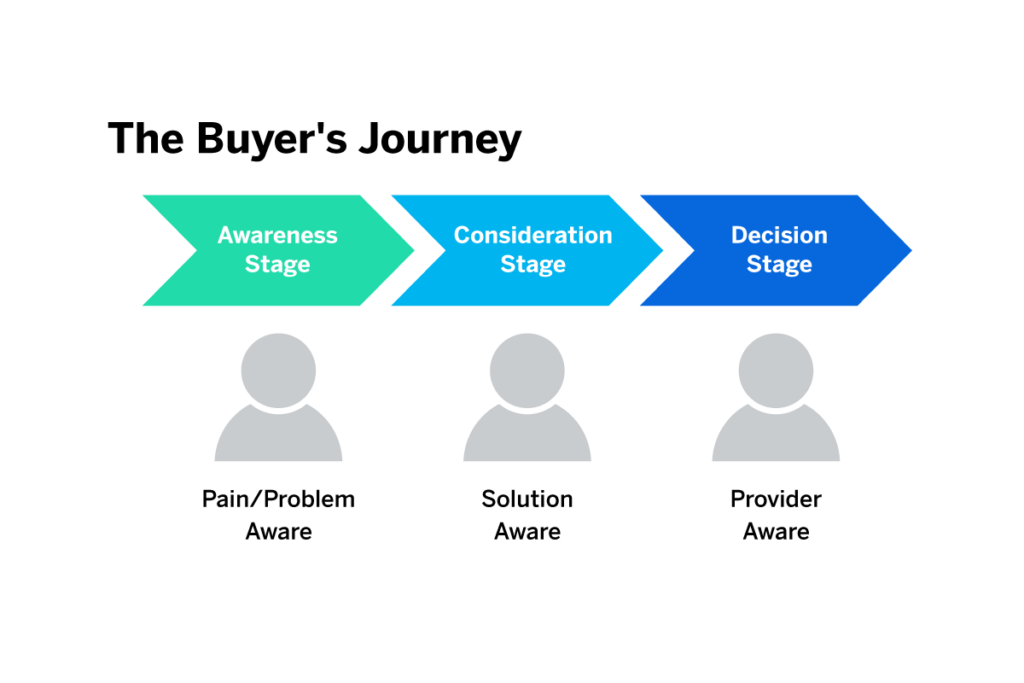
    Finding the ideal sales courses to enroll in is an exciting journey. To ensure you make informed decisions every step of the way, we will break down the buyer’s journey into four key stages:

    • Stage of Awareness: At this point, you learn how the lead begins to recognize a pain point. This initial point of contact between customers and your business is sometimes referred to as the “top of the funnel.
    • Consideration Stage: The goals of your leads shift as they enter the consideration stage. They are now weighing their options rather than attempting to become acquainted with the fundamentals of your products.
    • Decision Stage: In order to determine which good or service gives them the best value, people evaluate their options here. This is where all the effort you have put in throughout the customer journey will pay off. Individuals are aware of the value you have added by assisting them in understanding the features and learning about their subject.

    Benefits of Effective Sales Training Programs

    1. Improved Ability to Close Deals  Acquiring new sales skills is one of the main objectives of sales training. Members of the sales team will be introduced to tactics and procedures they are not familiar with through a sales training program. Effective sales training helps sales team members learn new skills to stay up-to-date with recent trends in the industry.
    1. Improved Customer Relationships: This benefit makes it easier to deliver a satisfactory customer service experience. An effective sales training program helps sales team members identify ways to improve the customer service experience. Sales training promotes attentive listening among sales team members by emphasizing interpersonal communication. Team members can then respond and take appropriate action on behalf of clients. This increased response will undoubtedly elicit good feedback from clients and customers.
    1. Revenue Boost: When sales team members participate in sales training, the organization benefits from an increase in the revenue it generates. Effective sales marketing strategies lead to higher sales, which translates to higher profits. To maximize sales, each salesperson needs to understand the best way to sell the products or services the company offers. Compared to an inexperienced agent, a well-trained salesperson will be able to close more deals faster.  

    Currently, with so many people looking for jobs, having a few extra qualifications can go a long way when landing that next position. It’s a great way to differentiate yourself from your competition. Even if the job isn’t directly related to your educational background, showing that you have a passion for learning and want to advance in your career can be what makes you stand out amongst the rest of the applicants.