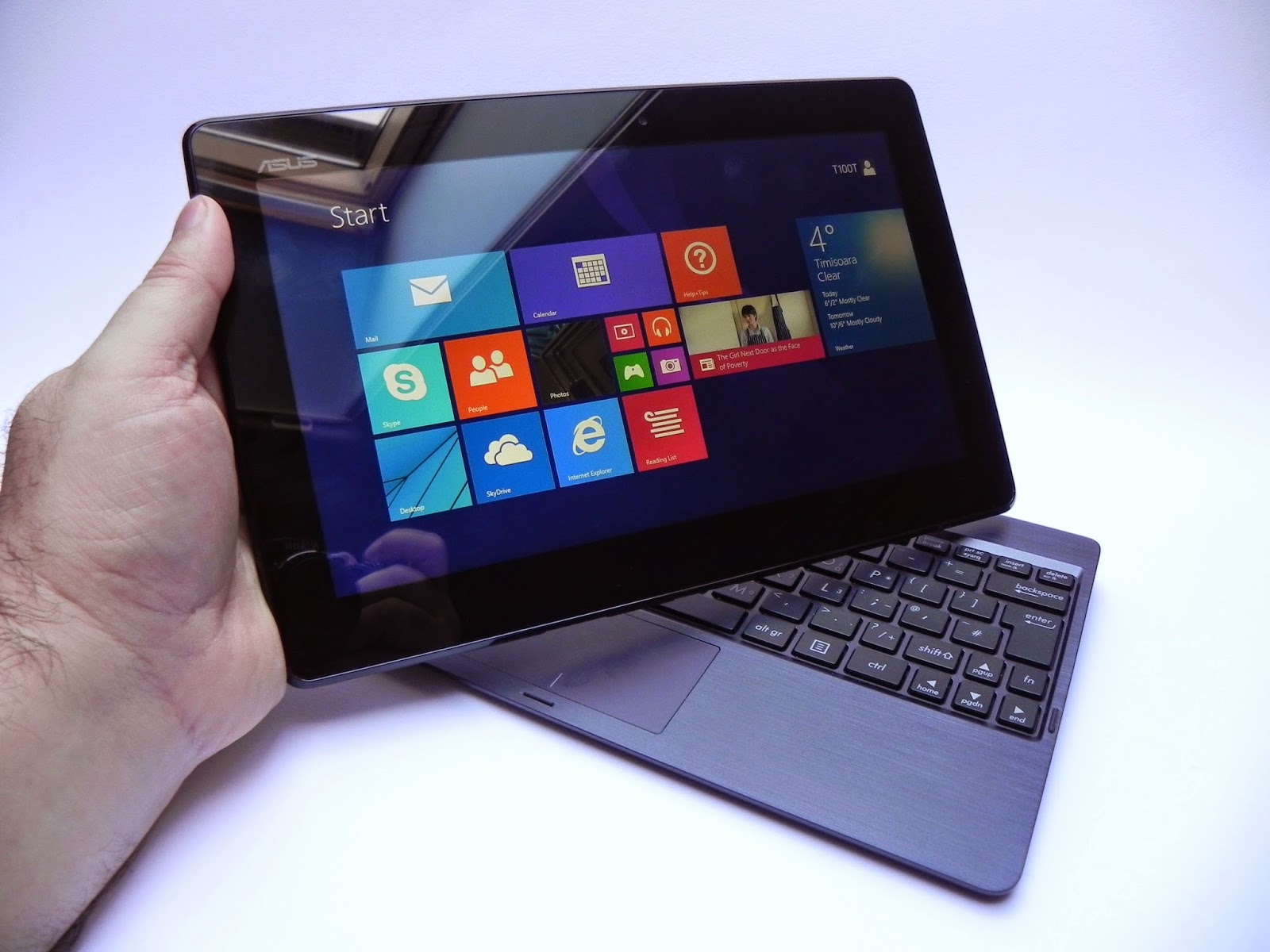
The Asus transformer Book T100TA is a beautiful ultraportable 10.1-inch tablet with Windows 8.1 pre-installed.
You can detach the tablet to work and play anywhere, dock to enjoy the comfortable keyboard, smart gesture-enabled touchpad and advanced connectivity. Style, power and convenience. this beautiful device Transformer Book T100 is sleek, slim and also light — measuring less than 1 inch thin and a mere 2.4lbs docked.
When you need to travel even lighter, simply detach the 10.1-inch tablet and you’re all set to go, with full sized keyboard which can be used on tv screens, stream and watch from a distance with family and friends
Key Specifications
10.1 inches Display Screen with a Max Screen Resolution of 1366 x 768 pixels
EWT is following the Sony Hacks, North Korea’s internet outages, and all other related topics as they develop. See bottom of article for further reading.
MOSCOW – Russia on Thursday offered sympathy to North Korea amid the Sony hacking scandal, saying the movie that sparked the dispute was so scandalous that Pyongyang’s anger was “quite understandable.”
Washington failed to offer any proof to back its claims of Pyongyang’s involvement in the hacking, Russian Foreign Ministry spokesman Alexander Lukashevich said at a briefing, adding that the U.S. threats of retaliation were “counterproductive.”
The U.S. has blamed Pyongyang for the recent cyberattack on Sony Pictures, which produced “The Interview,” a comedy depicting the assassination of North Korean leader Kim Jong Un. Pyongyang has denied a role in the hacking, but also praised it as a “righteous deed.”
Sony initially decided not to release the film because of threats against U.S. cinemas, but released the movie online Wednesday.
Russia’s ties with the communist North soured after the 1991 Soviet collapse, but have improved under President Vladimir Putin’s watch. Moscow has taken part in international efforts to help mediate the standoff over Pyongyang’s nuclear and missile programs, although its diplomatic efforts have had little visible effect.
Last week, the Kremlin said that it had invited Kim to Moscow in May to attend festivities marking the 70th anniversary of the victory over Nazi Germany.
Commenting on the Sony hack scandal, Lukashevich said that “the concept of the movie is so aggressive and scandalous, that the reaction of the North Korean side, and not just it, is quite understandable.”
He went on to say that Pyongyang had offered to conduct a joint investigation into the incident, adding that the proposal could help ease tensions and reflected a “sincere desire of the North Korean side to study the issue in detail.”
“We perceive the U.S. threats to take revenge and calls on other nations to condemn the Democratic People’s Republic of Korea as absolutely counterproductive and dangerous, as they only would add tensions to the already difficult situation on the Korean Peninsula and could lead to further escalation of conflict,” Lukashevich said.
One way of shamelessly making anything you make – especially online – seem like the greatest thing ever is testimonials. Not just in the actual section of a webpage or area dedicated for them, but choosing the best ones to put in the body of text meant to describe your “thing.” Google knows this and seems to think doing so on the Play Store can lead to many of things like unfair advantages, false advertising, etc. So, how do they fix this? By banning the user of testimonials in app descriptions n the Play Store, of course.
“Please do not include user testimonials in your app description. They tend to be dubious and are frequently utilized to include references to popular search terms and competitor apps in violation of the policies outlined here. Let your users speak for themselves via Play’s comment review system,” reads an update to the “Spam, & Placement in the store” section of Google’s developer guidelines.

Basically, Google is preventing app developers from inflating their position on the search results and lists of Google Play as to attain a fair advantage for every developer, in addition to other methods one could use such as repetitive use of keywords in an attempt to boost the presence of the app, using completely unrelated keywords to draw unsuspecting people to your application, and many more.
“To help ensure the best experience for Android users, Google Play policies prohibit the publication of spam. Please do not publish unwanted, deceptive, repetitive, or irrelevant content on Google Play. Not only will it lower your app’s rating and cause negative reviews, it can result in your app being suspended or your developer account being terminated,” reads Google’s guidelines.
Hopefully, this small change to the policy allows more people to get only high quality applications for their device. Believe it or not, there is a lot of scrap-apps (scrapps) on the Google Play store, and most of them are the ones including testimonials in their descriptions.
Speaking of Play Store apps, did you know about the EWT app? Get all of our post and latest tech news no matter where you’re at! Download it here to your device!
From the revelation that Facebook scans through its user’s messages to deliver “tailored” ads, a U.S. judge has ruled that they must face a class-action lawsuit. Facebook’s bid to dismiss the lawsuit, filed by users Matthew Campbell and Micheal Hurley back in 2013, was dismissed by U.S. District Judge Phyllis Hamilton in Oakland. According to the details of the suit, until October 2012, when Facebook had said they stopped the practice, the large social networking company was scanning through user’s private messages for website URLs. This information was then used to deliver tailored advertisements to the user. By doing so, Facebook violated the federal and state privacy laws, which they broke by reading their users’ personal and private Facebook messages without their consent.
Facebook had shown that the Electronic Communications Privacy Act covered the practice to the district court. The social networking giant also stated that it discloses to all users that the company might use the information they receive from the users about them for data analysis.
However, Judge Hamilton wasn’t satisfied with Facebook’s explanation. She stated that Facebook had not offered a sufficient explanation of how the challenged practice falls within the ordinary court of business. She also added that the disclosure wasn’t specific enough to establish that users expressly consented to the scanning of the content of their messages.
“Facebook’s unwillingness to offer any details regarding its targeted advertising practice prevents the court from being able to determine whether the specific practice challenged in this case should be considered ‘ordinary,’” added Judge Hamilton.
Facebook is continuing to stay silent on any comments about the case.
Google is also under the hammer for the same message-scanning practices, though they aren’t facing a class-action suit like Facebook. Many experts in the field believe that the result of both of the lawsuits will have a major impact on how we use technology to communicate in the future.
DEVELOPING – Just days after the U.S. government accused North Korea of hacking Sony Corp’s computers, outages have occurred to North Korea’s internet, eventually going completely offline. The country has four official networks that connect them to the internet, all of which are ran through China. The connections began experiencing problems yesterday, and as of today it officially went black, according to Doug Madory, director of Internet Analysis at Dyn Research in Hanover, New Hampshire.
U.S. President Barack Obama said last week that Sony Pictures Entertainment had suffered significant damage and vowed to respond. North Korea warned yesterday that any U.S. punishment over the hacking attack on would lead to a retaliation “thousands of times greater.” North Korea has said it doesn’t know the identity of the hackers — who call themselves “‘Guardians of Peace’’ — claiming responsibility for breaking into Sony’s computer network and divulging internal e-mail messages.
The situation now is they are totally offline,
Madory said. “I don’t know that someone is launching a cyber-attack against North Korea, but this isn’t normal for them. Usually they are up solid. It is kind of out of the ordinary. This is not like anything I’ve seen before.”
Because of the attack on the Sony computers, Hollywood secrets were released, data was destroyed, and the company had to cancel the release of “The Interview”, a comedy about the fictional assassination of North Korean leader Kim-Jon Un. The hack also caused thousands of Sony computer’s to be inoperable and caused the company to shut down their network.
The outage probably isn’t a cut of a fiber-optic cable, which would be shown in an immediate loss of connectivity, and other possible explanations include a software meltdown on North Korea’s Web routers or denial-of-service hacking attacks, Madory said.
Today, Marie Harf (a spokeswoman for the U.S. State Department) told reporters in Washington that she can’t confirm reports of any cyber-attacks on North Korea and won’t say what steps the U.S. might take in response to the hack on Sony.
“We are considering a range of options in response,” Harf said at a State Department briefing. “Some will be seen. Some may not be seen.”
While North Korea has four networks connected to the Internet, the U.S. has more than 152,000 such networks, according to Dyn Research.
“We have no new information regarding North Korea today,” White House National Security Council spokeswoman Bernadette Meehan wrote in an e-mail today. “If in fact North Korea’s Internet has gone down, we’d refer you to that government for comment.”
China has started an investigation into a possible North Korean role in the Sony hacking following a request from the U.S. government, a person with direct knowledge of the matter has said. The foreign ministry will cooperate with other Chinese agencies including the Cyberspace Administration to conduct a preliminary investigation, said the person, who asked not to be identified because the probe hasn’t been made public.
The internet outage was earlier reported on the North Korean Tech blog.
Over the past 18 months, Intel has been striking on the Chromebook market as the said market grows as more and more content is placed and trusted to the cloud. The company, that makes many CPU chips and graphics, wants to help customers switching to a Chromebook device to have a much easier time with their switch.
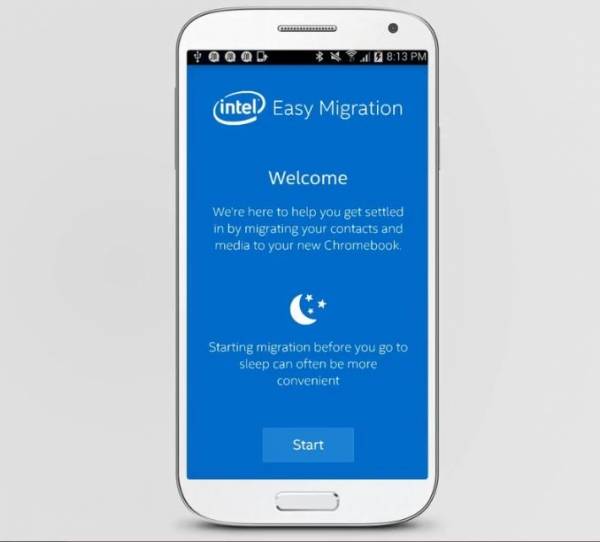
With their app, conveniently named Intel Easy Migration, users can easily migrate files from their mobile devices or PCs to Intel-powered Chromebooks. The app can move all sorts of files like photos, videos, and audio to even contacts and more. The Intel Easy Migration app let’s the customer move any of said files from their mobile Apple iOS or Google Android device to their Chromebook or even files from their Intel-powered Windows computers.
According to Intel officials, the customer can use the Quick Migration function to have all of their files sent over to the targeted destination, or manually select the files they want to have migrated. The user can also pause the migration whenever they wish to. The app is available in the Google Play and Apple App Store online stores, or can be downloaded for Microsoft Windows systems. Through the software, users can migrate their local and Hotmail contacts to Google Contacts, and their photos and videos to Google+ Photos. The app will also show how much space on their Google Drive is being used during the migration.
The new app by Intel comes shortly after the popularity for the Chromebook grew, the trend continuing through 2014. In July, analysts with NPD Group found that during the first half of the year, Chromebook sales in the U.S. commercial channel jumped 250 percent from the same period in 2013 and accounted for 35 percent of the notebook sales in the channel.
“Building on last year’s surprising strength, Chrome’s unit strength ahead of this year’s education buying season shows how it has become a legitimate third platform alongside Windows and Mac OS X and iOS,” Stephen Baker, vice president of industry analysis at NPD, said in a statement at the time.
Analysts also look at the Chromebook as a key reason – alongside Microsoft cancelling Windows XP support – for the decline of global PC sales this year. Intel has been aggressive in pursuing the Chromebook market as part of its larger efforts to gain inroads in the mobile device space against ARM and its manufacturing partners and to extend the reach of its chip portfolio into as many computing devices as possible. That includes supporting a broad range of operating systems, including Windows, Android and Chrome.
The leisurely window-shopper might be forgiven for feeling rather ambivalent towards Christmas, a time of lavish shop-displays – and of crowds of people getting in the way. Google’s latest online tool solves this problem, by allowing you to tread the streets of world shopping capitals such as London and New York. The tool, Google Maps Business View, allows surfers to avoid the cold weather, heavy bags and huge numbers of people associated with Oxford Street or Fifth Avenue at this time of year. It is similar to Google Street view – where the facades of properties on public highways can be viewed – but the shop-fronts of various flagship stores have been updated to show their festive window displays. It is also possible to take a 360-degree tour of the stores. From the comfort of your own home, you can browse the sparkling display at Liberty, which is awash with gold – and toys – or salivate with wonder at the gingerbread house at Selfridges nearby.
Meanwhile, in New York, the department store Saks Fifth Avenue has been turned into a fairy-tale world called Once Upon a Time in NYC, complete with a Cinderella magical carriage. Santa and his Elves are hard at work at Macy’s ‘Miracle on 34th Street’ in Herald Square, and at Bloomingdale’s, the New Year’s Eve party has apparently already kicked off. The Business Map tool also allows users to look inside world famous stores, including Old Navy in San Francisco or Benetton in Moscow. Google users can click the ‘see inside’ marker when they search for shops on the maps app, or when they use the search engine.
The company is working on a new Android version that will power a car’s entertainment and navigation systems, connect it to the Internet, and integrate with the vehicle’s sensors, a Reuters report says.
Sometime in the not-too-distant future, cars from many automakers could feature a version of Google’s Android operating system built directly into the vehicles. If Google’s plans take shape, its operating system will power the car’s entertainment and navigation systems, connect it to the Internet, and integrate with the vehicle’s sensors, camera, fuel gauge and other components.
That’s according to a report by Reuters Dec. 19 that it said was based on conversations with two unnamed officials with knowledge of the matter. According to Reuters, Google could announce plans for integrating Android directly into cars when it rolls out Android M, the successor to its recently released Android 5.0 Lollipop operating system, sometime next year. Google did not confirm or deny the report. In an email, the company merely noted that it does not comment on rumors and speculation.
But if Google were indeed to integrate Android directly into vehicles someday, that would mark a significant step forward for the company. At the I/O conference this year, Google announced Android Auto, software that will allow drivers to basically stream most of their smartphone’s functions to the in-car display. Android Auto is expected out next year. It will allow drivers to take advantage of Google Maps, Google Now and other Android applications more easily when driving using simple voice commands and touch commands.
With the new version of Android that Google is reportedly working on, drivers will no longer be required to connect their phones to the vehicle. Instead, a lot of the same functionality that is currently available on Android smartphones will be accessible directly from the vehicle in a manner that is optimized for in-vehicle use.
Google’s big challenge though will be to persuade automakers to integrate its technology into their vehicles. Google has said that Android Auto will be available in vehicles from several major domestic and international automakers, including Ford, Chrysler, Honda and Audi. However, some automakers may be wary of giving the company too much access to internal components for safety reasons and because of branding concerns, Reuters noted. Google will also have to deal with the myriad safety concerns that have been expressed over connected cars recently. Security researchers have already shown how hackers can exploit a connected vehicle’s electronic control unit and take remote control of functions like steering, braking and acceleration.
The National Highway Traffic Safety Administration highlighted several of those concerns in a report on connected cars earlier this year while advocating the need for intrusion detection, access control and other security technologies in vehicles over the next few years. One of the areas of concerns highlighted in the report has to do with in-vehicle entertainment and navigation systems becoming potential attack vectors in connected cars of the future.
For safety-conscious automakers to allow any version of Android to be integrated into their vehicles, Google will likely have to first considerably bolster the security of the operating system. Currently, Android is one of the most attacked operating systems in the world, with more malware targeting it than any other mobile operating system.
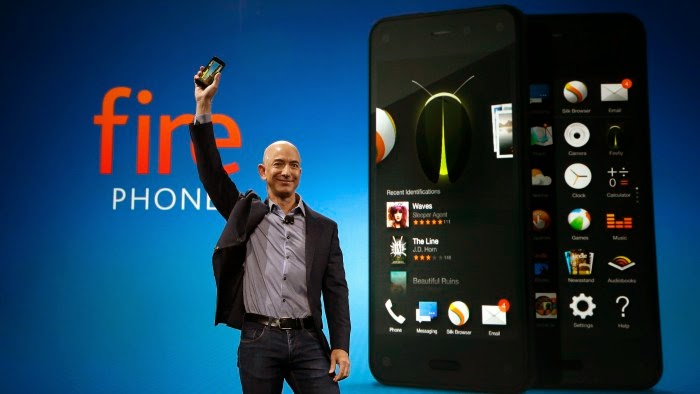
In June of 2014, Amazon tried to launch their newest product – the Fire phone. It was essentially a modified Android phone with a “unique” 3D display and a ton of references to different Amazon shops. It turned out that “Fire” was pretty cold, being a complete failure. The phone hit Amazon with a $170 million loss in its most recent financial quarter to account for “inventory valuation and supplier commitment cost.” The major commerce company is finding it hard to even give these things away; if you wander into a Amazon warehouse, you may just find a big pile of these lonely little buggers hoping; waiting for someone to come and make them theirs.
However, Bezos & CO aren’t giving up without a few punches here, truly living up to the phrase “if at first you don’t succeed, try again.” On Friday, Amazon released a software update for their Fire phone that adds new features and sources close to the giant company says they have plans of releasing a second Fire phone, just not anytime soon.
Among the new features in the Friday update is text translation for the Fire Phone’s Firefly app, where you can scan text and have it converted to or from English, French, German, Italian, and Spanish.
Firefly has also been trained to identify 2,000 famous paintings, for those of you who like to walk around art museums with your mobile in your hand.
The update introduces a new camera feature named Best Shot, a (camera) app that takes three quick photos and lets the user choose the best ones. Amazon said this would be great for group photos or pictures of children or pets. There are also some minor UI changes, such as adjustable SMS settings and blocking phone calls by the number. Added to their “flop” phone was a office-document editing app, VPN support, and even more which you can find in the full list of changes here.

On the topic of making another phone that customers will actually like, VentureBeat reports that several sources agree that the online megastore will take another shot at it, but it’s not in a hurry. It has “gone back to the drawing board,” one source claimed, and is currently pondering which features to put into the new device that would make it appealing, with an eye to ship it sometime in 2016.
And we may be able to expect more phones to come from Amazon after that. The company CEO Jeff Bezos gives the Fire Phone line full support and believes it’s a young product that the company will need to “iterate” over time.
What do you think of a new Fire phone coming out, or about the changes in the new update? Leave a comment below.
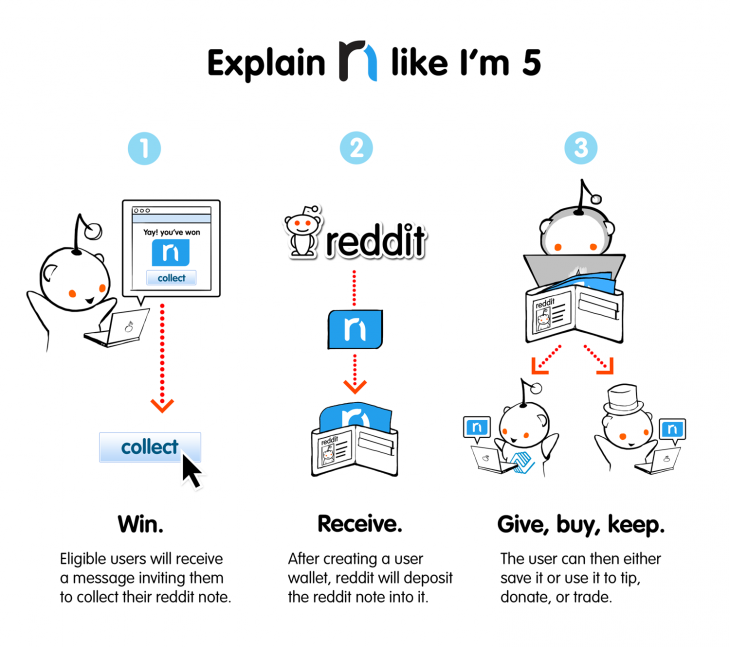
After securing $50 million in outside funding back in September, Reddit had promised it would find a way to let the community own 10 percent of those shares. Today, it is revealing some details as to how: Reddit Notes.
Details are still vague, but Reddit will host a random lottery to give away around 950,000 notes to divide among active users. They will then be able to deposit their notes into a virtual wallet, after which they can use the funds to “tip, donate or trade.”
Reddit Notes started taking shape after listening to thousands of requests from users and considering some ideas of its own. The company notes its still working out the kinks – such as how the plan will work under government regulations – and plans to start handing out the notes in fall of 2015.
As more innovators and tech gurus crawl into the ever-growing technology and internet market, the concern between users and their privacy online become more and more dominant. According to a Pew Research Center study, policymakers and tech innovators will have a hard time to respond.
Experts responded to a survey with split opinions on the matter that politicians and tech innovators can create “secure, popularly accepted, and trusted privacy-rights infrastructure by 2025 that allows for business innovation and monetization,” while offering people accessible options for protecting their personal info.
Looking at the results of the survey, about 55% of the 2,511 people surveyed said they believed a accepted privacy-rights infrastructure would exist in the next decade. The other 45% said it would, however. Regardless to the surveyed thoughts on the future of online privacy, many had agreed that online life is public nature.
“Almost everybody agrees this new environment is coming,” said Lee Rainie, co-author of the study. “About half say we will make accommodations and about half say it’s an inexorable blob that will swallow people’s lives…and leave people in an environment where they have little control over their privacy.”
Pew’s survey uncovered common threads among responses; many experts agreed that security and privacy are “foundational issues of the digital world” and that people don’t require much more than the draw of convenience to share their personal information.
“Lack of concern about privacy stems from complacency because most people’s life experiences teach them that revealing their private information allows commercial (and public) organisations to make their lives easier (by targeting their needs), whereas the detrimental cases tend to be very serious but relatively rare,” Bob Briscoe, chief researcher in networking and infrastructure for British Telecom, wrote in his response.
We are living in an unprecedented age of surveillance, said John Wilbanks, chief commons officer for the biomedical research company Sage Bionetworks.
“I do not think 10 years is long enough for policymakers to change the way they make policy to keep up with the rate of technological progress. We have never had ubiquitous surveillance before, much less a form of ubiquitous surveillance that emerges primarily from voluntary (if market-obscured) choices,” he said.
What does this mean for the media, which often relies on targeted ads mined from readers’ personal data? The widespread use of personalized ads is a fait accompli, Rainie said. They aren’t going anywhere.

“People don’t freak out now when they see ads that they see on other sites, or ads related to things they search for,” he said. “What experts would say is it’s a settled issue, not a top-of-mind problem.”
The tricky part is figuring out “the Internet of things,” Rainie added, and adapting to future changes in the display and rendering of information.
And social and cultural norms are ever-changing, said Homero Gil de Zuniga, director of the Digital Media Research Program at the University of Texas-Austin. That includes perceptions of privacy. “By 2025, many of the issues, behaviors, and information we consider to be private today will not be so,” he told Pew. “Information will be even more pervasive, even more liquid, and portable. The digital private sphere, as well as the digital public sphere, will most likely completely overlap.”
What do you think of the idea of still not having an accepted, private-rights infrastructure by the next decade? Leave a comment below with your thoughts.
BlackBerry is hitting the market by returning to their roots; releasing a new “Classic” smartphone with a traditional keyboard which seems like an un-logical choice in the time when rival Apple and Android devices – and most smartphone customers – have come to accept and use their screen for almost all functionality.
BlackBerry is calling out to it’s core customer with the Classic – business folk. The physical keyboard is a traditional asset that BlackBerry users have found to be more easier and comfortable to use than to type using a touch-screen keypad. The company is also putting their emphasis on security and long battery life, however there is little released facts to prove the ladder.
“A lot of people say the Classic is aiming for loyal customers. And that is true,” CEO John Chen said at the gadget’s launch event, tellingly held in New York City’s Financial District. But he also invited people who haven’t used a BlackBerry “especially people who are young,” to try the BlackBerry Classic.
1999 was the year BlackBerry came up with the RIM 950, and allowed on-the-go business people to access their email wirelessly. Soon however more and more competitors came around, and BlackBerry seemed to have turned ancient. Apple showed that phones could definitely perform to a greater extent past the use of email and phone calls, and all while BlackBerry was too late to overhaul its operating system.
A obvious sign to BlackBerry’s decline is their hold on the smartphone market – they only hold a small fraction compared to the nearly 50% that they continuously had going up until as late as 2009. The company is trying to stay relevant on making hardware even as it tries to transform into an enterprise security and consumer software company. Whether the Classic will sell enough to keep it in the hardware business is unclear.
“It’s going to be a niche product based around enterprise, based around security and pockets of the world where there is still strengths. The future of this company is not the hardware,” BGC analyst Colin Gillis said. The BlackBerry classic is on sale as of Wednesday (12/17/2014) for $449 in the U.S through Amazon.com and BlackBerry.com. The phone will soon be available at AT&T and Verizon shops and their respective websites.
What are your thoughts on the BlackBerry Classic? What do you love/hate about it? Let us know in the comments.
The NSA has recently conducted a campaign focused on the interception of internal communications of operators and trade groups in order to infiltrate mobile networks around the world, according to recent revelations from Edward Snowden.
The U.S. National Security Agency ran two undisclosed operations, the Wireless Portfolio Management Office and the Target Technology Trends Center, operating under the aegis of a program called Auroragold, according to an article Saturday in The Intercept, which also published related documents.
Operations closely monitored the GSM Association with a maintained list of 1,201 email targets or “selectors” used to intercept internal company communications and gathered information of network security flaws in the process.
As of May 2012, NSA documents shown that the company had collected technical information on about 70% of the estimated 985 mobile phone networks worldwide. Besides mentioned names of operations in Libya, Iran, and China; no other names of the targeted networks were disclosed in the documents revealed by Snowden. Intercept founding editors Glenn Greenwald and Laura Poitras have been instrumental in helping Snowden leak NSA documents to the public through various media outlet
The mentioned NSA operations collected information in “IR.21” documents used by the GMSA members to report security weaknesses and encryption details used by mobile operators, according to the documents of Mr. Snowden. The NSA used this information to circumvent encrypted communications, according to the documents.
“NSA collects only those communications that it is authorized by law to collect in response to valid foreign intelligence and counterintelligence requirements — regardless of the technical means used by foreign targets, or the means by which those targets attempt to hide their communications,” the NSA said in an emailed statement. “Terrorists, weapons proliferators, and other foreign targets often rely on the same means of communication as ordinary people. In order to anticipate and understand evolving threats to our citizens and our allies, NSA works to indentify and report on the communications of valid foreign targets.”
Since June 2013, Snowden’s leaked documents have lead to a series of of reports on the extent of NSA’s spying on Internet and telecom networks worldwide. The documents have also shown that the NSA has hacked into emails of leaders of U.S. allies as well as into networks and equipment of foreign companies including China-based Huawei.
Additional to the covert spying, the NSA has a bulk telephone record collection system highly criticized by many. Last month, NSA Director Michael Rogers said the agency is planning no major changes in its domestic telephone records collection program after a bill to curb those efforts failed in the Senate.
Hey, are you an Android user? Good, because the end-year Holidays are rounding up on us quick, and you need to snap into the spirit! We live in a amazing age where we can set the mood from the power of a small device, in this case your Android. So, with that out of the way let us make like Santa to our list of 10 Apps/Movies/Albums to get on Google Play to help get you “ho-ho-ho’ing” into the spirit of the season.
Ah, a classic! Fortunate for you this Holiday Seaon, Frosty the Snowman: Holiday Collection is available on the Google Play store. Each episode starts at $9.99 but you can save by getting the entire bundle for $12.99. If you have a Chromecast and you’ll be having a lot of kids around this season, then you should definitely look into this classic set of short-films.
You or someone special to you a fashonista? Then you should definitely check out this Android application conveniently named “Wish.” Their slogan; Shopping made Fun. I personally am using this app (yep, that means an app review to come soon), and so far I can definitely recommend it. It’s focus is letting worldwide customers get constant deals stacked on deals on awesome clothes, accessories, and other fashion items that are sold from vendors around the world. Take my word on it, it is cheap. Perfect to make you some quick “ugly sweater” shopping for X-mas.
Step one: get some friends. Step two: put on ugly sweaters. Step three: make hot chocolate. Step four: sit down and pull out this game. Step five: ??? = Merry Memories. This newly found app on the Play store is a Christmas oriented piece of work. Developed by SMARTSTUDY, this app is meant to make your Christmas season more fun with songs and activities. It comes with features like 16 Christmas songs with a sing-a-long feature, little seasonal games, and more all accompanied by amazingly cute graphics and animations.

It’s Christmas, and you are wanting some funny sh*t. This album is for you. You will be greeted with a total of 18 songs all across the South Park history of Christmas and Holidays. No doubt that this could help make your office Christmas party less quiet and more fun (no guarantee on how it will effect the status of your job) for everyone!
This album is for those looking to move onto new traditional music for the Holidays. This “NOW” album is a good pick up for a great price ($5.99) that focuses on Christmas music from today’s hottest artist.
Mmmm..imagine waking up to the smell of delicious, beautiful cookies on Christmas morning – only to find out that Santa had eaten them. Anyways, this book on Google Play Books is filled with Christmas-oriented cookies recipes. Perfect gift for your mom, or yourself if you love to bake!
Staying on the trend of recipes and cooking (I like to cook in my spare time), next on this list of Holiday Android goods is the Allrecipes (Dinner Spinner) application. Having personal experience with this app, I can definitely recommend it for everyone preparing multiple items for that Christmas dinner, or that New Year’s Eve punch.
This app will be best for those travelling around this Holiday Season. Hotwire helps their users get discounts on great hotel rooms and rental cars. No more stressing over the pre-planning stage of your family Holiday travels!
Kids Paint Christmas Cards is a neat little app that offers a cutesy painting system that your children will love. You can use the replay mode to re-watch your coloring session, and share created cards to friends on social media. There are 60+ templates, so get to it!
And to tie off the list with a fan-favorite: the official amazon app for Android. Download, tap items into your cart, and get those last-minute gifts in quickly and safely.
There, now you have your Christmas and New Year’s Eve setup from your friends at EWTNet! However, this is just our own personal list of recommendations, if you’re looking for more go and check out Google’s Holiday Prep Kit on Google Play! Happy Holidays from EWTNet.
BONUS: Love our tech-related news and updates? We also offer tech profiles and job vacancies in the US and Africa. You can get our official Android app here and make your technical Holiday Season better and more informative.
Facebook has faced allegations in the past about using its users private information for marketing reasons. Questions has been raised on what user information Facebook itself gets to see – If you were ever in doubt on how Facebook handles your privacy, the Manager of privacy and public policy at Facebook, Matt Scutari has made it clear that there is no hiding place for you on the internet – or least on Facebook.
Matt Scutari has confirmed that the information you are hiding from other Facebook users you called friends are not completely private, claiming that Facebook like every other platform “have to at least use that information to provide the service”. “With most online services, there’s an understanding that when you use those services to share information, you’re also sharing information with the company providing the service,” said Matt Scutari, manager of privacy and public policy at Facebook.
“For users who are truly concerned with sharing their information with a particular platform, honestly, you might not want to share information with that platform,” he said, speaking during a conference on digital privacy in Palo Alto, California, on Friday.
“I don’t think there are many services out there who could claim they’re not using your information that you’re sharing with them for any purpose. They have to at least use that information to provide the service,” he added.
Scutari was responding to a question from the audience about what tools, if any, Facebook might provide to people who want to post and share information but keep it from Facebook itself.
Lately, the company has been trying to improve its controls for sharing among friends. In September it introduced a “privacy checkup” feature. And just this week it released a revamped privacy policy designed to be easier to use. The company also gives users information about how their data is used for advertising. But it has never offered users tools to limit what data Facebook can ingest when they share.
Data collection—what companies collect, and how it’s used—is an area of concern for Internet users in general, highlighted by some dramatic findings in a recent Pew survey.
Facebook does have a team of employees tasked with looking at privacy issues related to its products, features and tools. The team has a number of programs in place, including daily surveys of users and talks with people in other countries to get their views on privacy, Facebook said on Friday.
Google is literally hitting the road to promote the potential of the internet in Bangladesh. The company today launched ‘Google Bus Bangladesh’, an educational program aimed at teaching key digital skills to more than half a million students in the South Asian country.
There are some outlandish programs to help connect the world’s population — including Google’s balloons, SpaceX’s forthcoming satellites, and Facebook’s drones — but Google is going back to basics with this roadshow across the world’s eighth most populated country. It plans to visit some 500 educational campuses across 35 locations over the next 12 months, bringing with it instructors who can teach students about important tools to help them make the most of the internet. In addition to tutors, students involved in the project will be able to get hands-on with a number of internet-connected Android devices. Google tells us that the hardware will be entry-level devices from Symphony, like the $70 Xplorer W65i. There’s also a Google+ community for the project, where students can exchange ideas, and access more information.
“Bangladesh is a country on the move with a large pool of young citizens that’s leading the Internet charge. Equipped with the right training, the youth can be the cornerstone for creating a connected, digital Bangladesh,” said James McClure from the Google Asia Pacific
Living in Southeast Asia, I’ve witnessed first-hand how the internet can make big and also small-yet-impactful changes to people’s daily lives. Whether that’s helping connect them with friends, family or experts, giving them better access to information and news, or just providing a medium for entertainment — many people in emerging markets are simply just unaware of what’s possible. Throwing a smartphone or computer at them isn’t always the best approach, since the internet can be daunting, so a tutor-led approach is a great start.
With two-thirds of the world estimated to be offline, local initiatives like Google Bus Bangladesh offer inexperienced or first-time internet users an important opportunity to familiarize themselves with the basics and the possible benefits. It’s doubtless true that the more people who use the internet or carry mobile phones is good for Google’s business — but, even still, initiatives like this are resource and time-intensive, and Google deserves credit for getting out there and trying to make a difference.
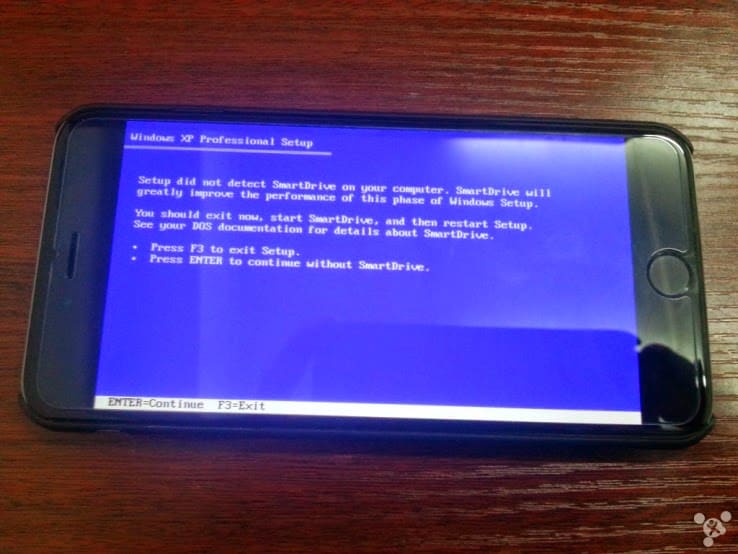
What did you do when you first got your iPhone 6 Plus device? Today in “putting stuff onto things on which they don’t belong,” a certain Chinese developer prefered to try out Windows 95 on his brand new iPhone 6 Plus.
He used a tool called iDos, an open source DOSBox-like app to install the OS. He found that most of it worked fine but he was unable to upgrade to Windows XP. And we can assume he was also able to play Doom.
There’s is very little new about this whole process – people have been putting emulators on things since the original VAX machines – but it’s cool to see resurrected software run so readily on new hardware. While I can’t imagine a real world use case for this (maybe you really need to run a copy of Mavis Beacon?) it’s a great theoretical exercise.
Here is the poorly translated FAQ:
1.Q: Can I install WINDOWS XP? A: The answer is yes you can, but certainly not by idos, because idos simply simulate the DOS environment is not the true sense of the virtual machine, so the system is more difficult to run the DOS and idos simulation environment and do not have XP running basic environmental needs, so later if transplanted XP system, then I will make use of their leisure time with friends ios platform to write a plug-in to run XP virtual machine system.
2.Q: Why are you doing this? Why not use Remote Desktop. A: First, to show that this kind of thing tall Remote Desktop is currently no support on win98 systems, not to use during system installation and tool methods have sent me here.
3.Q: Why is the process I installed the explorer process wrong? A: Because idos simulator only simulates the 16’s dos environment, although win98 16/32 hybrid system but Explorer and exe process large part needed is a 32-bit environment, so when they need 32 program calls some system environment variables and support libraries when an error occurs, LZ modify some of the resource is designed to allow him to run in idos environmental good, However, this modification will change the part of the machine, which has led some device errors when using LZ modify the good image. After LZ according to everyone’s feedback slowly improve!
There are full instructions on his post if you can read Chinese. If not, I leave the installation as an exercise for the reader.
Business app marketplace AppDirectannounced today that it has acquired Leftronic, a data visualization startup that launched four years ago.
Leftronic allows businesses to build custom dashboards visualizing important data. AppDirect co-CEO Daniel Saks told me that by integrating Leftronic’s visualizations, AppDirect can give its customers a dashboard for monitoring the status of their apps. At the same time, Saks said that Leftronic will continue to operate as an independent subsidiary, comparing this to AppDirect’s acquisition of jBilling.
“Our primary focus is extend our data visualization platform to cloud services that matter to our customers and to AppDirect’s customers,” added Leftronic CEO Rajiv Ghanta. “But I want to emphasize as an independent subsidiary we’re definitely open to and looking for opportunities outside of the AppDirect ecosystem as well.”
Leftronic had raised $500,000 in funding and was incubated at Y Combinator. AppDirect, on the other hand, recently raised a $35 million round of funding.
As part of the acquisition announcement, Leftronic is also giving away HDTVs to new customers (you know, for showing off those visualiations), and if you include the code “TCLeftronic,” you’ll get a free tablet as well.
ORIGINALLY POSTED ON TECHCRUNCH | FEATURED IMAGE: LEFTRONIC
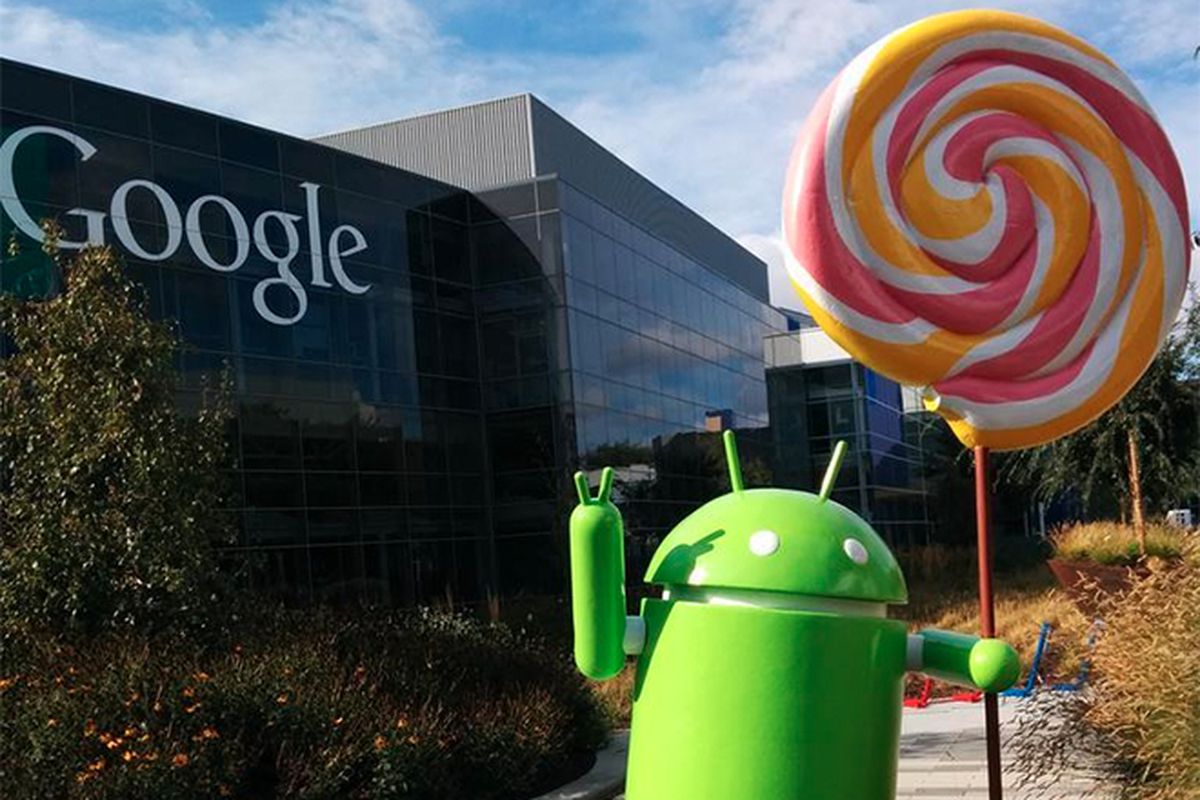
Here’s some good news for owners of LG’s G3 smartphone: Your phone will be among the first to get an update to Android 5.0 Lollipop. Assuming you live in Poland, anyway.
According to the company, it will roll out an update to Lollipop to G3 users in Poland this week, and release the update “[in] other key markets in the near future.” LG didn’t specify what it means by “near future,” however, so it could conceivably take anywhere from a few days to a few months for it to make it onto LG phones here in the US. The story behind the story: Fragmentation may not be the fatal flaw that some expected it to be with Android—it’s a non-issue for many people most of the time, and it’s arguably one of Android’s strengths in that it’s resulted in a wide variety of hardware and software options. But updates are one area where fragmentation still becomes an issue. Ironically, enthusiasts who bought Google Nexus devices because of the promise of speedy Android updates are watching third-party phones land Lollipop first.
The Lollipop waiting game continues
And so we wait. Despite the limited release of LG’s upcoming Lollipop update, though, there are some signs that we’ll start to see some updates soon. On Friday, Motorola published–then pulled —release notes for its Android Lollipop update for the second-generation Moto X. This seems to suggest that Motorola is close to having an update, but you’ll have to wait at least a little longer.
But if you’re feeling daring—and have a compatible Nexus device, the Sony Experia Z, or the Samsung Galaxy S3—the folks at XDA Developers have cobbled together a jury-rigged build of Lollipop for you to try. It’s a potentially buggy build, though, and installing unofficial builds can be a challenge, so it isn’t for the faint of heart.
The leader of Europol’s European cybercrime center said those hiding behind the anonymous communication encrypted system facility, Tor should not consider themselves invisible – at least from the European cybercrime center.
Coordinated raids by law enforcement agencies in the U.S. and 16 European countries have closed hundreds of underground websites, including dozens dealing in weapons and drugs, and led to the arrest of 17 people.
The raids took place on Thursday and were the biggest so far against sites running on the Tor network, according to the U.S. Department of Justice and Europol, which cooperated on the action.
Tor is an encrypted system that facilitates anonymous communication. It has plenty of legitimate uses, particularly for evading surveillance in countries with authoritarian governments, but its use by criminals has caused controversy. Police have increasingly been targeting underground websites on Tor, and Thursday’s raids are the latest in that work.
Troels Oerting, head of Europol’s European cybercrime center, said criminals using Tor have long considered themselves beyond the reach of the law, but that’s no longer the case.
“We can now show that they are neither invisible nor untouchable,” he said in a statement. “The criminals can run but they cant hide.”
The list of shuttered sites included names such as Blue Sky, Hydra and Cloud Nine, and the DOJ said they dealt in drugs, fake currency, stolen credit card data and fake ID documents. Executive Outcomes dealt in firearms and shipped worldwide, Fake Real Plastic sold counterfeit credit cards, Fake ID sold fake passports and Fast Cash and Super Notes Counter sold counterfeit Euro and U.S. currency in exchange for bitcoins, authorities said.
The first hint of the raids came on Thursday, when police in the U.S. said they had arrested the alleged operator of Silk Road 2.0, a website allegedly used to sell illegal drugs, computer-hacking tools and fraudulent identification documents. At the time they didn’t say that the arrest was part of a larger action.
“As illegal activity online becomes more prevalent, criminals can no longer expect that they can hide in the shadows of the dark web,’” said U.S. Attorney Preet Bharara, in a statement. ”We shut down the original Silk Road website and now we have shut down its replacement, as well as multiple other dark market sites allegedly offering all manner of illicit goods and services, from firearms to computer hacking.”
But despite the assertions of Oerting and Bharara, it still remains incredibly difficult for law enforcement to discover who is behind a Tor website. The same safeguards built into the system that keep the identity of a dissident secret from a government also help criminals stay anonymous. Typically, a true identity is discovered because of a clue such as an email address that has inadvertently been left in the open.
You must be logged in to post a comment.