Tag: technology

  • Sony Hack: President of United States vows responsibility for FBI claims

    Sony Hack: President of United States vows responsibility for FBI claims

      A couple of days ago, North Korea was posed as the fault to the SONY FILMS hack, formally by the FBI. This all followed the major GOP hack on SONY FILMS databases, media, and employees. There is no doubt that the news of and following the SONY FILMS hack is the most breaking and worrisome in both the political and technological industries at the moment. The following article is from BBC News: President Barack Obama has vowed a US response after North Korea’s alleged cyber-attack on Sony Pictures. The US leader also said the studio “made a mistake” in cancelling the Christmas release of The Interview, a satire depicting the assassination of North Korean leader Kim Jong-un. Sony said it still planned to release the film “on a different platform”. On Friday US authorities linked North Korea to the hack, which saw sensitive studio information publicly released. Sony said it cancelled the planned Christmas release of the film after a majority of cinemas refused to show it following anonymous threats. “We will respond,” Mr Obama told reporters on Friday, declining to offer specifics. “We will respond proportionately and in a space, time and manner that we choose.” He added: “We cannot have a society in which some dictator someplace can start imposing censorship in the United States.”

    Sony HQ in California

    The US leader said it was important to protect both public and private cyber-systems from attack which could have significant economic and social impacts. Mr Obama also noted he believed Sony Pictures was mistaken in failing to go ahead with the release. “Americans cannot change their patterns of behaviour due to the possibility of a terrorist attack,” he said. “That’s not who we are, that’s not what America is about.” Analysis: Dave Lee, BBC technology reporter The FBI say it spotted distinct similarities between the type of malware used in the Sony Pictures attack and code used to attack South Korea last year. Suspicious, yes, but well short of being a smoking gun. When any malware is discovered, it is shared around many experts for analysis – any attacker could simply reversion the code for their own use, like a cover version of a song. But there’s another, better clue: IP addresses – locations, essentially – known to be part of “North Korean infrastructure” formed part of the malware too. This suggests the attack may have been controlled by people who have acted for North Korea in the past. What is the FBI evidence?   Sony Pictures chief executive and chairman Michael Lynton later told CNN it had not made an error in pulling the film. He said the president, press and public were mistaken about the withdrawal, saying the decision had only been taken after major chains had refused to screen it. He said: “We have not caved, we have not given in, we have persevered and we have not backed down.” A Sony statement on Friday said that the firm was “actively surveying alternatives to enable us to release the movie on a different platform”. “It is still our hope that anyone who wants to see this movie will get the opportunity to do so,” the statement said. Earlier on Friday, the US Federal Bureau of Investigation officially tied North Korea to the cyber-attack, linking the country to malware used in the incident. Hackers had earlier issued a warning referring to the 11 September 2001 terror attacks, saying “the world will be full of fear” if the film was screened. Poster for The InterviewThe duo play journalists enlisted to kill Kim Jong-un The movie features James Franco and Seth Rogen as two journalists who are granted an audience with North Korean leader Kim Jong-un. The CIA then enlists the pair to assassinate him. The film was due to have been released over Christmas. The film’s cancelled release drew criticism in Hollywood, with some calling it an attack on the freedom of expression. Actor George Clooney told the trade website Deadline on Thursday the film should be released online, saying Hollywood shouldn’t be threatened by North Korea. In November, a cyber-attack crippled computers at Sony and led to upcoming films and workers’ personal data being leaked online. The hackers also released salary details and social security numbers for thousands of Sony employees – including celebrities. Kim Jong-Un with North Korean soldiers' familiesNorth Korea says the film hurts the “dignity of its supreme leadership” North Korea earlier this month denied involvement in the hack – but praised the attack itself as a “righteous deed”. An article on North Korea’s state-run KCNA news agency, quoting the country’s top military body, said suggestions that Pyongyang was behind the attack were “wild rumour”. However, it warned the US that “there are a great number of supporters and sympathisers” of North Korea “all over the world” who may have carried out the attack. In the article, Sony Pictures was accused of “abetting a terrorist act” and “hurting the dignity of the supreme leadership” of North Korea by producing the movie. source: BBC news


  • Will our privacy problems be solved by 2025? Responses released in Pew study

    Will our privacy problems be solved by 2025? Responses released in Pew study

    As more innovators and tech gurus crawl into the ever-growing technology and internet market, the concern between users and their privacy online become more and more dominant. According to a Pew Research Center study, policymakers and tech innovators will have a hard time to respond.

    Experts responded to a survey with split opinions on the matter that politicians and tech innovators can create “secure, popularly accepted, and trusted privacy-rights infrastructure by 2025 that allows for business innovation and monetization,” while offering people accessible options for protecting their personal info.

    Looking at the results of the survey, about 55% of the 2,511 people surveyed said they believed a accepted privacy-rights infrastructure would exist in the next decade. The other 45% said it would, however. Regardless to the surveyed thoughts on the future of online privacy, many had agreed that online life is public nature.

    Almost everybody agrees this new environment is coming,” said Lee Rainie, co-author of the study. “About half say we will make accommodations and about half say it’s an inexorable blob that will swallow people’s lives…and leave people in an environment where they have little control over their privacy.”

    Pew’s survey uncovered common threads among responses; many experts agreed that security and privacy are “foundational issues of the digital world” and that people don’t require much more than the draw of convenience to share their personal information.

    “Lack of concern about privacy stems from complacency because most people’s life experiences teach them that revealing their private information allows commercial (and public) organisations to make their lives easier (by targeting their needs), whereas the detrimental cases tend to be very serious but relatively rare,” Bob Briscoe, chief researcher in networking and infrastructure for British Telecom, wrote in his response.

    We are living in an unprecedented age of surveillance, said John Wilbanks, chief commons officer for the biomedical research company Sage Bionetworks.

    I do not think 10 years is long enough for policymakers to change the way they make policy to keep up with the rate of technological progress. We have never had ubiquitous surveillance before, much less a form of ubiquitous surveillance that emerges primarily from voluntary (if market-obscured) choices,” he said.

    What does this mean for the media, which often relies on targeted ads mined from readers’ personal data? The widespread use of personalized ads is a fait accompli, Rainie said. They aren’t going anywhere.

    People don’t freak out now when they see ads that they see on other sites, or ads related to things they search for,” he said. “What experts would say is it’s a settled issue, not a top-of-mind problem.”

    The tricky part is figuring out “the Internet of things,” Rainie added, and adapting to future changes in the display and rendering of information.

    And social and cultural norms are ever-changing, said Homero Gil de Zuniga, director of the Digital Media Research Program at the University of Texas-Austin. That includes perceptions of privacy.
    “By 2025, many of the issues, behaviors, and information we consider to be private today will not be so,” he told Pew. “Information will be even more pervasive, even more liquid, and portable. The digital private sphere, as well as the digital public sphere, will most likely completely overlap.

    What do you think of the idea of still not having an accepted, private-rights infrastructure by the next decade? Leave a comment below with your thoughts.

    sources:
    latimes.com

  • NSA has a spying program that targets many mobile networks

    NSA has a spying program that targets many mobile networks

      The NSA has recently conducted a campaign focused on the interception of internal communications of operators and trade groups in order to infiltrate mobile networks around the world, according to recent revelations from Edward Snowden.   

    The U.S. National Security Agency ran two undisclosed operations, the Wireless Portfolio Management Office and the Target Technology Trends Center, operating under the aegis of a program called Auroragold, according to an article Saturday in The Intercept, which also published related documents.

    Operations closely monitored the GSM Association with a maintained list of 1,201 email targets or “selectors” used to intercept internal company communications and gathered information of network security flaws in the process.

    As of May 2012, NSA documents shown that the company had collected technical information on about 70% of  the  estimated 985 mobile phone networks worldwide. Besides mentioned names of operations in Libya, Iran, and China; no other names of the targeted networks were disclosed in the documents revealed by Snowden. Intercept founding editors Glenn Greenwald and Laura Poitras have been instrumental in helping Snowden leak NSA documents to the public through various media outlet

    The mentioned NSA operations collected information in “IR.21” documents used by  the GMSA members to report security weaknesses and encryption details used by mobile operators, according to the documents of Mr. Snowden. The NSA used this information to circumvent encrypted communications, according to the documents.

    “NSA collects only those communications that it is authorized by law to collect in response to valid foreign intelligence and counterintelligence requirements — regardless of the technical means used by foreign targets, or the means by which those targets attempt to hide their communications,” the NSA said in an emailed statement. “Terrorists, weapons proliferators, and other foreign targets often rely on the same means of communication as ordinary people. In order to anticipate and understand evolving threats to our citizens and our allies, NSA works to indentify and report on the communications of valid foreign targets.”

    Since June 2013, Snowden’s leaked documents have lead to a series of of reports on the extent of NSA’s spying on Internet and telecom networks worldwide. The documents have also shown that the NSA has hacked into emails of leaders of U.S. allies as well as into networks and equipment of foreign companies including China-based Huawei.

    Additional to the covert spying, the NSA has a bulk telephone record collection system highly criticized by many. Last month, NSA Director Michael Rogers said the agency is planning no major changes in its domestic telephone records collection program after a bill to curb those efforts failed in the Senate.

    sources:
    computerworld.com – computerworld.com(2)
    firstlook.com
    pcworld.com

    What are your thoughts on the NSA’s mobile spying intentions thus far? Leave a comment below.

  • Google Tour Bus will pass through Bangladesh To Help 500,000 Students Learn About The Internet

    Google Tour Bus will pass through Bangladesh To Help 500,000 Students Learn About The Internet

    Google is literally hitting the road to promote the potential of the internet in Bangladesh. The company today launched ‘Google Bus Bangladesh’, an educational program aimed at teaching key digital skills to more than half a million students in the South Asian country.

    There are some outlandish programs to help connect the world’s population — including Google’s balloons, SpaceX’s forthcoming satellites, and Facebook’s drones — but Google is going back to basics with this roadshow across the world’s eighth most populated country. It plans to visit some 500 educational campuses across 35 locations over the next 12 months, bringing with it instructors who can teach students about important tools to help them make the most of the internet.

    In addition to tutors, students involved in the project will be able to get hands-on with a number of internet-connected Android devices. Google tells us that the hardware will be entry-level devices from Symphony, like the $70 Xplorer W65i. There’s also a Google+ community for the project, where students can exchange ideas, and access more information.

    “Bangladesh is a country on the move with a large pool of young citizens that’s leading the Internet charge. Equipped with the right training, the youth can be the cornerstone for creating a connected, digital Bangladesh,” said James McClure from the Google Asia Pacific

    Living in Southeast Asia, I’ve witnessed first-hand how the internet can make big and also small-yet-impactful changes to people’s daily lives. Whether that’s helping connect them with friends, family or experts, giving them better access to information and news, or just providing a medium for entertainment — many people in emerging markets are simply just unaware of what’s possible. Throwing a smartphone or computer at them isn’t always the best approach, since the internet can be daunting, so a tutor-led approach is a great start.

    With two-thirds of the world estimated to be offline, local initiatives like Google Bus Bangladesh offer inexperienced or first-time internet users an important opportunity to familiarize themselves with the basics and the possible benefits. It’s doubtless true that the more people who use the internet or carry mobile phones is good for Google’s business — but, even still, initiatives like this are resource and time-intensive, and Google deserves credit for getting out there and trying to make a difference.

    This article was originally posted by Techcrunch. All rights reserved.

  • AppDirect Acquires Data Visualization Company Leftronic

    AppDirect Acquires Data Visualization Company Leftronic

    Business app marketplace AppDirectannounced today that it has acquired Leftronic, a data visualization startup that launched four years ago.

    Leftronic allows businesses to build custom dashboards visualizing important data. AppDirect co-CEO Daniel Saks told me that by integrating Leftronic’s visualizations, AppDirect can give its customers a dashboard for monitoring the status of their apps.

    At the same time, Saks said that Leftronic will continue to operate as an independent subsidiary, comparing this to AppDirect’s acquisition of jBilling.

    “Our primary focus is extend our data visualization platform to cloud services that matter to our customers and to AppDirect’s customers,” added Leftronic CEO Rajiv Ghanta. “But I want to emphasize as an independent subsidiary we’re definitely open to and looking for opportunities outside of the AppDirect ecosystem as well.”

    Leftronic had raised $500,000 in funding and was incubated at Y Combinator. AppDirect, on the other hand, recently raised a $35 million round of funding.

    As part of the acquisition announcement, Leftronic is also giving away HDTVs to new customers (you know, for showing off those visualiations), and if you include the code “TCLeftronic,” you’ll get a free tablet as well.

    ORIGINALLY POSTED ON TECHCRUNCH | FEATURED IMAGE: LEFTRONIC

  • Job Vacancy: Oracle Database Administrator for IBM

    Job Vacancy: Oracle Database Administrator for IBM

    If you are a Bachelor’s Degree holder in IT or Computer Science with at least 6 years experience in Business Controls, time management and ability to multi task, get your CV ready, IBM calls.

    The opening is vacant for qualified applicants residing in any part of Nigeria. As an Oracle Database Administrator, you are expected to carry out the following key functions:

    • Implement and manages databases per defined standards and procedures
    • Analyzes and provides recommendations on application logic and interfaces to improve database performance, capacity, and availability
    • Identifies opportunities to optimize application data models for performance, manageability, scalability and availability
    • Performs database administration activities such as storage management, backup and recovery using RMAN, and performance tuning
    • Analyzes and resolves critical and complex database issues
    • Ensures successful, daily backups and guaranteed recoverability
    • Responds to monitoring alerts and high severity problem tickets, applying analytical, problem solving, and resolution skills to handle scenarios
    • Define mechanisms to improve SQL performance
    • Works with fellow database administrators in defining standards for backup and recovery, performance tuning, disaster recovery, high availability and monitoring
    • Works with Infrastructure and development teams in delivering optimal database solutions throughout the life cycle
    • Identifies tasks to be automated, developing scripts and supporting documentation
    • Seeks and contributes to the continuous improvement of the databases and database environment
    • Leads internal Infrastructure DBA projects
    • Creates test and implementation plans
    • Performs duties in such a way as to serve as an example to other DBAs in the department
    • Maintains accurate and up to date documentation
    • Performs research and evaluation of new database features and technology

    Required Skills and Expertise

    • Have worked on oracle 10g/11g RAC on Unix HP/Sun/Aix/Linux/Windows
    • Experienced in the design and support of large Oracle and mission critical databases in a 24/7 environment
    • Proven experience in troubleshooting complex Oracle database problems such as performance, corruption and recovery
    • Understanding of Cloud based database strategies and configuration
    • Intermediate knowledge of database internals and data structures, including defining init.ora parameters for optimum performance and understanding Oracle V$ system tables
    • Proficient in designing advanced backup and recovery procedures using RMAN
    • Experience in implementing and supporting complex architectures such as high availability, disaster recovery and scalability using utilities such as Oracle Dataguard
    • Experience in managing Oracle databases on clustered hardware
    • Experience with Oracle 10g/11g features such as Locally Managed Tablespaces, Transportable Tables and Automated Storage Management.
    • Experience deploying and managing databases with enterprise monitoring and management tools such as Oracle Enterprise Manager.
    • Understanding of Oracle Real Application Clusters technology 

    Required Qualifications

    • Bachelor’s Degree
    • At least 6 years experience in Business Controls, time management and ability to multi task
    • Ability to speak English language fluently
    • Engineering
    • At least 8 years experience in Business Controls, time management and ability to multi task

    To apply logon to the job application page and hit the apply button. All qualified applicants will receive consideration for employment without regard to race, color, religion, gender, gender identity or expression, sexual orientation, national origin, genetics, disability, age, or veteran status.

  • Editorial: Can French Robotics Save the Industry?

    Editorial: Can French Robotics Save the Industry?

    Editor’s note French Robotics: French RoboticsLaetitia Vitaud is a blogger, coach, and teacher of U.S. politics in France and is passionate about the digital transition of our economy.

    The French still dream of humanoid robots and electric sheep. Swedish TV series Real Humans, broadcast on French-German TV channel Arte, seduced a surprisingly large audience in France. The president himself proudly promotes flagship robotics projects. Nao is one of those flagship robots, an autonomous programmable humanoid robot developed by French company Aldebaran Robotics. The same company also created Romeo, which was exhibited in Lyon earlier this year.

    Romeo is supported by Paris business cluster Cap Digital and is destined, like Real Humans’ fictitious “hubots” to help the elderly and the sick regain some form of autonomy.

    These are the types of robots used to showcase France’s engineering prowess. Yet a few extra decades will still be necessary to produce robots that can perform half as much as a human maid.

    NAO Robot (Source: Aldebaran Robotics,

    NAO Robot creator, under a 
    CC-BY-3.0 license)

    What’s been known as “Moravec’s paradox” is the fact that high-level reasoning and calculation require little computation, whereas low-level sensorimotor skills require huge computational resources.

    “It is comparatively easy to make computers exhibit adult-level performance on intelligence tests or playing checkers, and difficult or impossible to give them the skills of a one-year-old when it comes to perception and mobility.” Or as Steven Pinker famously put it: “The main lesson of 35 years of AI research is that the hard problems are easy and the easy problems are hard.” This is why no robot can yet perform all of our domestic chores. iRobot’s Roomba can only vacuum the floor and will never empty the dishwasher.

    Humanoid robots are a showcase, not a business. Robots shouldn’t be expected to look human, but to do the “hard” things their own way. The dedicated specialised machinery used in our modern factories (particularly in high-wage countries), fascinating though they may be, are not so new nor are they very French (one immediately has Germany in mind), but French robotics has been conquering warehouses with an increased mastery of “hard” sensorimotor skills.

    Balyo‘s Co-founder Raul Bravo had this vision in 2005: “Logistics is a sector that really needs robotics.” Little did he know that in 2012 Amazon would spend $775 million to buy Kiva Systems, a U.S. company that produces mobile robotics fulfillment systems for Amazon to use in its warehouses.

    Balyo’s MoveBox doesn’t look impressive nor does it look human, but it is replacing human workers in warehouses. It is designed to make any fork-lift truck into a fully autonomous vehicle. The potential market hasn’t yet been fully explored: In Europe alone, more than a million fork-lift trucks are used to move pallets in warehouses, all of which could become automated! The really promising element is that no ground infrastructure is required to use these tools.

    Like warehouses, parking lots are cleared areas dedicated to one purpose. These areas can be made more efficient with robots. German company Serva Transport Systems developed an automated parking system: “279 automated parking spaces at Düsseldorf Airport can now be used via patented robots.”

    In France, two researchers, Clément Boussard and Aurélien Cord, have been working on their own version of that system: Stanley Robotics is developing a solution that would be lighter and more flexible (and cheaper) than Serva’s sophisticated system, something that reminds more of Balyo’s MoveBox.

    Stanley Robotics “Optipark” doesn’t require any modification of existing infrastructure and the solution can be deployed in any parking lot. The potential market in crowded urban Europe seems limitless. And parking solutions could be an entry point to the larger market of driverless vehicles.

    But can these robotics firms really boost the French industry and economy? France’s industrial decline has proved particularly dramatic in the past decade. Robotics doesn’t seem to have changed anything, and the number of factories has dwindled drastically in France. The share of the industrial sector in the country’s added value dropped from 18 percent in 2000 to 12.5 percent only in 2011 and lags far behind that of Germany (26.2 percent) or Sweden (21.2 percent). In the 2000s, France’s export market share plummeted while Germany’s grew. The French industry has seen no other option but to crop its margins, which fell from 30 percent to 21 percent (meanwhile Germany’s margins went up).

    There seems to be a stark contrast between the dynamism of France’s high-tech and robotics entrepreneurs and the catastrophic results of the French industry and its under-equipped factories. There are clearly too few robots in French factories; there are five times as many industrial robots in German factories as in France. German companies have invested an extra $12 billion each year while the French cut their investment by $5 billion. No integration has happened between French startups and the industrial giants that could make good use of their output. It’s as if the industry was worlds apart from the tech scene.

    Former Minister of “Industrial Renewal” Arnaud Montebourg did try to create fruitful interactions between the world of innovation and the industry. In September of last year his 34 “industrial action plans” were designed by the government to boost France’s industrial sector by bolstering the country’s most competitive and innovative industries. Connected devices and robotics were identified as a source of future wealth for the nation and regularly promoted by the Ministry with special events called “Les objets de la nouvelle France industrielle“. Montebourg’s “New Industrial France” aimed to combine the actions of public actors and private companies to help the emergence of future French innovation.

    Even if these plans had not been abandoned with the change in minister, one can doubt the efficacy such measures could have had. French ministers often only pay lip service to the idea of disruptive innovation, but in effect only protect the incumbents and business as usual.

    The construction of bridges between France’s innovative startups and its fast-declining industry is not likely to come only from the French government but rather mostly from private initiatives and improved financing fluidity. Investment Fund Robolution Capital aims to do just that. Bruno Bonnell and his partners at Orkos Capital raised €80 million this year to invest in French (and European companies) and boost the industry in the process. “Robotics will emerge as an industry unto itself that will impact all sectors of the economy,” they say.

    French economist Robin Rivaton in a widely discussed note titled “Relancer notre industrie par les robots” (how robots can help reboot the French industry) argues that factories reflect a country’s economic wealth and that mastering one’s production is a matter of economic strategy. He is convinced that industrial robots offer a path to re-industrializing France. Robots can help the French “insource” its industrial activities and restore its margins.

    There’s no knowing whether France’s industrial decline can still be reversed. But promoting cool French robots can’t do any harm, can it?

    FEATURED IMAGE: STOKKETE/SHUTTERSTOCK Source: Techcrunch

  • Apple CEO Tim Cook Reveals he is Gay on Bloomberg Business Week

    Apple CEO Tim Cook Reveals he is Gay on Bloomberg Business Week

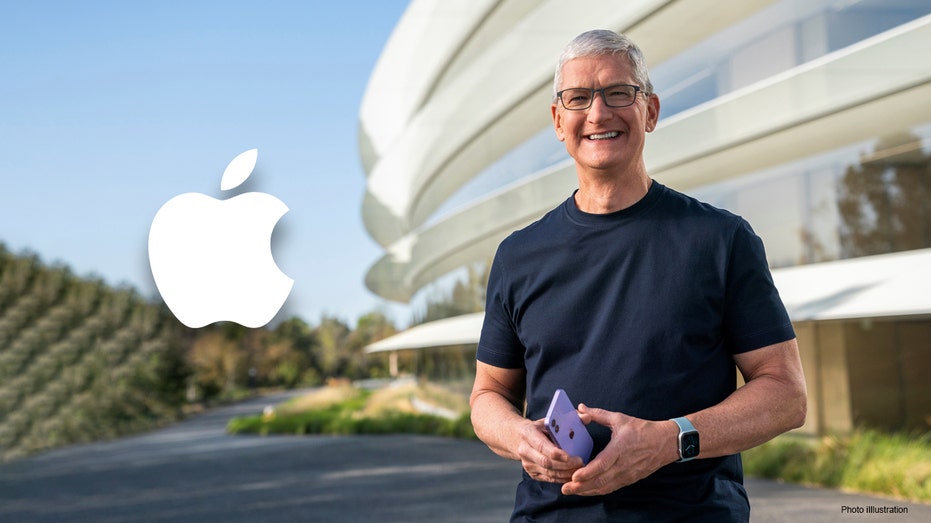
    Today the CEO of Apple Tim Cook wrote a long essay on Bloomberg Business Week magazine in which he proclaim that he considers “being gay among the greatest gifts God has given me.”

    Below is an extract from Bloomberg Business Week published on the 30 October, 2014.

    Throughout my professional life, I’ve tried to maintain a basic level of privacy. I come from humble roots, and I don’t seek to draw attention to myself. Apple is already one of the most closely watched companies in the world, and I like keeping the focus on our products and the incredible things our customers achieve with them.

    At the same time, I believe deeply in the words of Dr. Martin Luther King, who said: “Life’s most persistent and urgent question is, ‘What are you doing for others?’ ” I often challenge myself with that question, and I’ve come to realize that my desire for personal privacy has been holding me back from doing something more important. That’s what has led me to today.

    For years, I’ve been open with many people about my sexual orientation. Plenty of colleagues at Apple know I’m gay, and it doesn’t seem to make a difference in the way they treat me. Of course, I’ve had the good fortune to work at a company that loves creativity and innovation and knows it can only flourish when you embrace people’s differences. Not everyone is so lucky.

    While I have never denied my sexuality, I haven’t publicly acknowledged it either, until now. So let me be clear: I’m proud to be gay, and I consider being gay among the greatest gifts God has given me.

    Being gay has given me a deeper understanding of what it means to be in the minority and provided a window into the challenges that people in other minority groups deal with every day. It’s made me more empathetic, which has led to a richer life. It’s been tough and uncomfortable at times, but it has given me the confidence to be myself, to follow my own path, and to rise above adversity and bigotry. It’s also given me the skin of a rhinoceros, which comes in handy when you’re the CEO of Apple.

    The world has changed so much since I was a kid. America is moving toward marriage equality, and the public figures who have bravely come out have helped change perceptions and made our culture more tolerant. Still, there are laws on the books in a majority of states that allow employers to fire people based solely on their sexual orientation. There are many places where landlords can evict tenants for being gay, or where we can be barred from visiting sick partners and sharing in their legacies. Countless people, particularly kids, face fear and abuse every day because of their sexual orientation.

    I don’t consider myself an activist, but I realize how much I’ve benefited from the sacrifice of others. So if hearing that the CEO of Apple is gay can help someone struggling to come to terms with who he or she is, or bring comfort to anyone who feels alone, or inspire people to insist on their equality, then it’s worth the trade-off with my own privacy.

    I’ll admit that this wasn’t an easy choice. Privacy remains important to me, and I’d like to hold on to a small amount of it. I’ve made Apple my life’s work, and I will continue to spend virtually all of my waking time focused on being the best CEO I can be. That’s what our employees deserve—and our customers, developers, shareholders, and supplier partners deserve it, too. Part of social progress is understanding that a person is not defined only by one’s sexuality, race, or gender. I’m an engineer, an uncle, a nature lover, a fitness nut, a son of the South, a sports fanatic, and many other things. I hope that people will respect my desire to focus on the things I’m best suited for and the work that brings me joy.

    The company I am so fortunate to lead has long advocated for human rights and equality for all. We’ve taken a strong stand in support of a workplace equality bill before Congress, just as we stood for marriage equality in our home state of California. And we spoke up in Arizona when that state’s legislature passed a discriminatory bill targeting the gay community. We’ll continue to fight for our values, and I believe that any CEO of this incredible company, regardless of race, gender, or sexual orientation, would do the same. And I will personally continue to advocate for equality for all people until my toes point up.

    When I arrive in my office each morning, I’m greeted by framed photos of Dr. King and Robert F. Kennedy. I don’t pretend that writing this puts me in their league. All it does is allow me to look at those pictures and know that I’m doing my part, however small, to help others. We pave the sunlit path toward justice together, brick by brick. This is my brick.

    Extracted from  Bloomberg Business Week post released on 30th October, 2014 Tim Cook Speaks Up

  • “Apple Pay Reached 1M Cards Users In 72 Hours”, Said Apple CEO Tim Cook

    “Apple Pay Reached 1M Cards Users In 72 Hours”, Said Apple CEO Tim Cook

    This evening at a Wall Street Journal technology conference, Apple CEO Tim Cook said that in its first 72 hours, Apple Pay activated 1 million cards.

    That figure indicates that Apple Pay is picking up traction outside of the technology, early-adopter set. Apple Pay competes with rival offerings from Google, among others, alongside traditional payment methods.

    Paying for goods with your smartphone, still nascent in the Western market, could grow quickly: Given smartphone penetration in the United States and other developed nations where this sort of transaction system remains new, Apple has the potential to quickly scale its new product.

    The possible revenue for Apple is not trivial. The company picks up 0.15 percent of transactions, or 15 cents per $100 dollars in payments. That isn’t much on a per-transaction basis, but it could quickly add up for the company worth more than $600 billion. If its smartphone userbase adopts its Pay technology, the product could bring in fresh top line for Apple, a company looking for a new hit.

    Of course, 1 million cards is a fraction of the total number of saved credit cards that Apple has via its iTunes and long-standing app businesses, implying that it could enjoy continued quick growth. How large its payment volume will grow in the meatspace remains to be seen.

  • Job Vacancy: Data Solutions Sales Specialist, IBM, Lagos

    Job Vacancy: Data Solutions Sales Specialist, IBM, Lagos

    What does your dream job look like? Does it include working for a globally recognized technology and innovation firm? IBM is about to make your dream a reality.  

      The tech-savvy company headquartered in US is looking to add a data solutions specialist to their branch in Lagos, Nigeria.   Data Solutions Sales Specialist is responsible for developing Storage Brand/Product solutions that address client’s business needs (both industry and business) and delivers client value while supporting Storage brand specific business strategies. 

    Required

    • Bachelor’s Degree
    • At least 4 years experience in Unix Brand Sales in the Region
    • At least 3 years experience in Implementing Account/Territory Planning
    • At least 4 years experience in Leading Channel Development
    • English: Fluent

    Preferred

    • At least 5 years experience in Unix Brand Sales in the Region
    • At least 4 years experience in Implementing Account/Territory Planning
    • At least 5 years experience in Leading Channel Development

    All qualified applicants will receive consideration for employment without regard to race, color, religion, gender, gender identity or expression, sexual orientation, national origin, genetics, disability, age, or veteran status.   You can apply directly for this job position on this page or read more about IBM here.

  • WeeShare! is now hubshr.com

    WeeShare! is now hubshr.com

    Today (10/26/2014) WeeShare! re-branded, it’s new name now “hubshr” and it’s new url www.hubshr.com. The changes began earlier in the morning, and were in active development up until late in the evening. The original post from the hubshr news blog:

    “WeeShare! will no longer be WeeShare! Hi, nice to meet you, my new name is hubshr. hubshr.com to be exact! … is what the website WOULD say to you if it COULD talk.

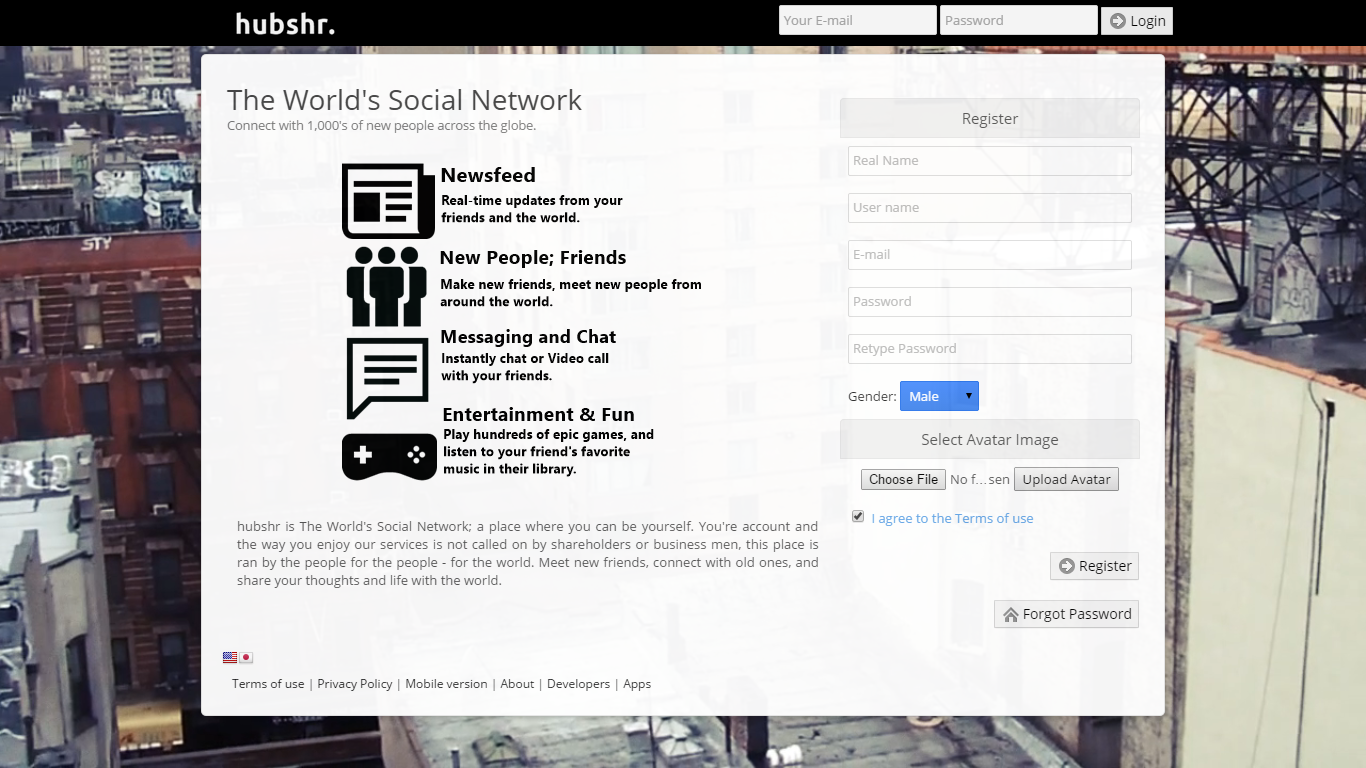
    Anyways, I’ve been wanting to do rebranding on the name of WeeShare! (now hubshr – remember!) for quite some time, so I decided to do it while it was still small. hubshr is also now a top level domain, we are now a .com! You can still access hubshr by using weeshare.ws but the main domain will be hubshr.com forever now. Along with this, our logo and icons have changed to – just a different name and font however. This re-brand was for our name and domain only; I will admit I was thinking about theme color changes as well but black is the color of sophistication and luxury: which is what I believe transparent and open-source social networking is like. So, enjoy the new name and ease of domain!”   With that, the official Twitter, Facebook, and Google+ pages for the online service made changes. The homepage of the website was re-styled as well, with a new “modern” look (picture below). As another additive to the re-brand, the support of third-party videos was added to the website as well.  

    New logo
    New singe-letter icon
    The 1st promotional image for the new named service
    The brand new homepage shows you the info of the service and a nice, quiet motionimage of New York City.
  • Job Vacancy: Graduate Computing Pre-Sales Technical Consultant, Hewlett-Packard, Lagos, Nigeria

    Job Vacancy: Graduate Computing Pre-Sales Technical Consultant, Hewlett-Packard, Lagos, Nigeria

    If your dream job is to work with Hewlett-Packard or HP, here is good news for you: The American multinational information technology corporation is looking for a technical consultant to take charge of its Printing and Personal Systems department in Lagos.

    The company announced the vacant position on their official job site yesterday, hoping to find applicants with the following qualification:

    • Bachelor’s Degree in IT related discipline (graduation from 2013 onwards)
    • 1 year of experience in a similar position
    • Ability to design and propose PC and Mobile client architectures and solutions for customers.
    • Current knowledge of computer client technologies, hardware, Operating systems, Deployment and Management solutions
    • Broader knowledge of the IT industry, technical directions and IT solutions.
    • Excellent written and verbal communication skills
    • Good presentation Skills
    • Good level of Technical English
    • Ability to search out knowledge and self-train.
    • Ability to build and maintain strategic customer relationships

    The person in this position is expected to carry out the following responsibilities:

    • Provide technical in depth technical presales support to customers and sales team in multiple computing product and solution areas.
    • Act as trusted advisor to customers based on in depth understanding of the industry and the customer’s unique business strategy and drivers.
    • Build and develop relationships with key technical influencers, decision makers, and top executives.
    • Actively participate in ongoing account planning with the PPS salesperson in opportunity analysis, technical deal qualification and competitive analysis
    • Proactively promote, propose and help ensure delivery of computing full portfolio of products, solutions and services to customer and account team.
    • Maintain positive total customer experience (TCE)
    • Technically support sales account team in competitive tenders.
    • Support the sales team in creating and proposing the right solution and answering the technical sections and aspects of tenders, RFI and RFP customer requests.
    • Providing closed-loop feedback to product divisions.
    • Maintain and manage a competitive and appropriate level of technical and professional competence.
    • Regular reporting of activity and results.

    You can apply directly for this job by visiting the job page. Click Apply and create a free account.   If you have no interest in this job, kindly help a friend by sharing this page on social Facebook, Twitter or anywhere your friends are. GoodLuck!

  • TwitPic Data Barely Surviving as they Hash out Twitter’s Terms

    TwitPic Data Barely Surviving as they Hash out Twitter’s Terms

    It’s been over a month since Twitter came after Twitpic  over the service trademark, threatening to remove the service’s access to Twitter’s API. Today, CEO Noah Everett has announced that they have reached an agreement with Twitter that will let them stay alive – but a mare survival.

    And in a somewhat happy turn of events, Twitpic has announced that it has reached an agreement with Twitter to keep Twitpic photos and links alive, giving Twitter control over the domain and the full photo archive.

    However, the agreement also states that Twitpic will no longer be taking any new photos or data and will exist in a read-only mode. Apps on the App Store and Google Play have been removed, but users will still be able to log in, delete content or the account itself, and export and/or download data.

    This comes after a “roller coaster ride” of the past few months. In September, Twitpic founder and CEO Noah Everett announced that the service would shut down after Twitter came after the service over the Twitpic trademark, threatening to remove the service’s access to Twitter’s API.

    “This came as a shock to us since Twitpic has been around since early 2008, and our trademark application has been in the USPTO since 2009,” Everett wrote in a blog post.

    Shortly thereafter, rumors circulated that Twitpic might be bought in order to save the service and the data that lives on it, until Everett once again admitted defeat and announced that he had given up on finding acquirers.

    It’s with a heavy heart that I announce again that Twitpic will be shutting down on October 25th. We worked through a handful of potential acquirers and exhausted all potential options. We were almost certain we had found a new home for Twitpic (hence our previous tweet), but agreeable terms could not be met.

    According to the blog post from today, which you can read below, it seems Everett won’t be staying on at Twitter or Twitpic.

    Today marks the end of a difficult battle for Twitpic, whether it’s a happy or sad ending.

    First off I want to say thank you to everyone who has used Twitpic over the years and for your patience with us over the last couple of months. As you know it’s been quite the roller coaster ride.
    We weren’t able to find a way to keep Twitpic independent. However, I’m happy to announce that we have reached an agreement with Twitter to give them the Twitpic domain and photo archive, thus keeping the photos and links alive for the time being. Twitter shares our goal of protecting our users and this data. Also, since Twitpic’s user base consists of Twitter users, it makes sense to keep this data with Twitter.
    What this means for Twitpic users:

    • Twitpic will no longer be taking on new photos or data (the site will be in a read-only mode)
    • The iOS and Android apps have been removed from the app stores and will no longer be supported
    • You will still be able to login to your profile to delete content or delete your account on Twitpic.com
    • You can still export and download your data / photo archive on Twitpic.com

    This will be my (@noaheverett) final chapter with Twitpic, and again I want to say thank you for allowing me to be a part of your photo sharing memories for nearly seven years. It has been an honor.

  • TestFlight Beta Testing Goes Live For All iOS Developers

    TestFlight Beta Testing Goes Live For All iOS Developers

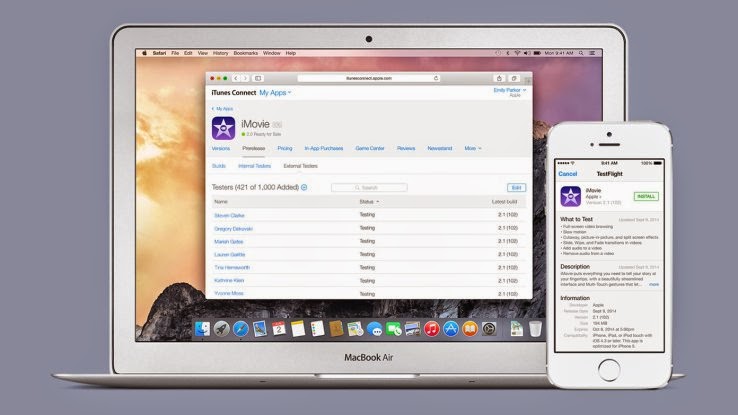
    Apple has pushed its TestFlight Beta testing service live for everyone, the company revealed on its developer news portal today. Registered developers can now invite up to 1,000 beta testers to try out their iOS apps, using emailed invitations sent via the iTunes Connect portal. TestFlight, the beta testing service Apple acquired sometime within the last year, allows developers to build teams to try out software before it launches, and report back bugs in order to prepare apps for a public launch.

    TestFlight had still been usable by devs between Apple’s acquisition of the service and now, but this marks the completion of Apple’s transition of the service to a built-in part of its developer tools. Now, TestFlight invites are distributed via iTunes Connect, as mentioned, and a dedicated TestFlight app provides the central resource for testers in terms of providing feedback and getting new builds as they’re released by developers, instead of the web portal TestFlight used pre-acquisition.

    Once external testers are invited to TestFlight, they’ll receive a link to download the official app from the App Store. There’s no longer any need to install provisioning profiles on tester devices with this shift, and there’s no need to for users to manually find and send their device’s UDID to participate. The official app will also send notifications when new builds of an app they’re testing is available, which is much more convenient than getting an email, as was the case before.

    To make an app available for the 1,000 external testers that this launch enables, an app has to pass a Beta App Review, which means it’s subject to the same App Store Review Guidelines that apply to final releases. New versions with big changes require a new review before being pushed to testers, and developers can test up to 10 apps at a time, both internally (which requires no review approval, and which is available to 25 admin or tech level team members in iTunes Connect) and externally.

    Apple has shared more about how to get started with TestFlight here, and developers who are looking to get more help can head over to the App Review team contact page (developer account and login required).

    The new TestFlight offers a lot of convenience features that should make it easier for developers to gather feedback from actual users, instead of just tech-savvy early adopters, but that review requirement might add some time to how fast builds can go out. At any rate, it’s nice to see wider beta testing options finally built directly into the platform.

  • Video: Astrobotic Technology to Land a Robot on the Moon and Send Live Video Back to Earth

    Video: Astrobotic Technology to Land a Robot on the Moon and Send Live Video Back to Earth

    Astrobotic Technology, a private technology company, is planning to land a robot on the moon.

    “Whether men have reached the moon” has long been kept to bed as researchers compete to earn a $30 million fortune from Google to beam video back from the moon.

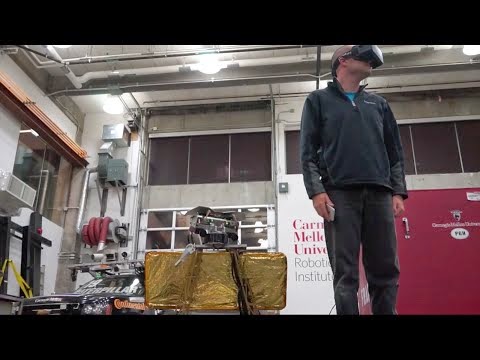
    A researcher at Carnegie Mellon University, Daniel Shafrir, and his team want to do something incredible: they want to send a rover to the moon and then let us, the Earthlings, control it and look out of its stereoscopic cameras as it tumbles around that barren alien rock. The researchers are working to win a $30 million prize from Google to beam video back from the moon.

    The team, called Astrobotic Technology, has to complete the Google Lunar XPrize, a mission to land a robot on the moon and send live video back to Earth while moving it at least 1,600 feet. As you can imagine, this is harder than it sounds, given that they have to help the robot escape Earth’s orbit.

    Shafrir, game designer Ben Boesel, and astronomer Dan Arnett are working together to connect the robot to an Oculus Rift which, in turn, would control the robot. The team said they hope to let children worldwide see what “only 12 other people” have seen on Earth. They will build their lunar lander and fire their little robot, Andy, after Andrew Carnegie, into the stratosphere to pull this off.

  • You can now Add Friends by Username in Telegram Messaging App

    You can now Add Friends by Username in Telegram Messaging App

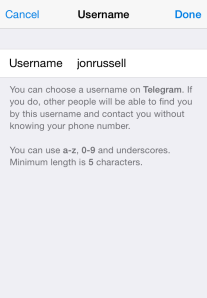
    The Telegram Messaging App, the security-focused messaging app, now lets you add friends without necessarily knowing their phone number (see the step-by-step guide on how to add a username in Telegram). An update to the iOS and Android apps today has introduced the option to register a a username, although all users must still bind their account to a phone number.

    The advantage of a username is that you can share your contact details for Telegram without revealing your phone number, thus safeguarding some level of privacy.

    Usernames must be a minimum of five characters — so you can’t make up for losing out on a one-letter Twitter handle here — and can contain letters, numbers and underscores.

    You are also free to change your alias, so long as the new one is not already taken.

    That’s not quite all from this Telegram update. The company has also taken a leaf out of Snapchat’s book with a new feature that lets users ‘Tap and Hold to View’ photos, video and voice messages that are sent with a self-destructing timer. Prior to this update, Telegram users had to tap on media to load it.

    Importantly, Telegram has now amended said self-destructing timer for media so that it only begins once the content has been opened. That means that photos, videos, etc do not self-destruct before being read.

    Founded by the brothers behind Russian social network VK, Telegram launched in October 2013 with a promise to make mobile messaging more secure. The service gained some serious momentum after Facebook agree to buy WhatsApp, when it clocked 8 million downloads in a matter of days, primarily from users concerned with Facebook’s approach to user data.

    Earlier this year, Telegram revealed that it has 35 million monthly active users, 15 million of whom use it daily. Co-founder Pavel Durov confirmed to TechCrunch that, as of March 2014, more than 18 billion messages were received by users of the service per month.

    Those stats are far smaller than WhatsApp — which has over half a billion monthly users — and others, but they are impressive for such a new entrant in the messaging space.

  • New Microsoft adapter lets Xbox One’s Kinect play nice with PCs

    New Microsoft adapter lets Xbox One’s Kinect play nice with PCs

    Xbox One owners can attach their Kinect motion sensors to Windows PCs and tablets thanks to a new adapter introduced by Microsoft.

    The new $49.99 adapter is specific to Kinect sensors built for Xbox One, and it plugs into the USB 3.0 port of Windows 8 PCs. Microsoft already sold a separate $199.99 Kinect for Windows v2 motion sensor, which plugs directly into PCs without the need for an adapter.

    There will be no difference in the performance of the Kinect sensors, Microsoft said.

    Kinect sensors can recognize movement and gestures, which then allows users to participate in games. It can do much more for PCs than a simple webcam-style monitor. Kinect sensors, for example, can work with Windows applications like Microsoft’s 3D Builder, which allows the scanning of 3D objects.

    Software developers are working on various PC applications that take advantage of Kinect sensors, which are also used in engineering, design, and healthcare applications.

    To further fuel developer interest, Microsoft on Wednesday also released the Kinect SDK 2.0, which is available for download. It is an update from the June preview and has more than 200 updates and improvements.

    With SDK 2.0, “developers can commercially deploy Kinect apps in the Windows Store for the first time,” Microsoft said.

  • Job Vacancy: Head of Operations for Ericsson, Lagos, Nigeria

    Job Vacancy: Head of Operations for Ericsson, Lagos, Nigeria

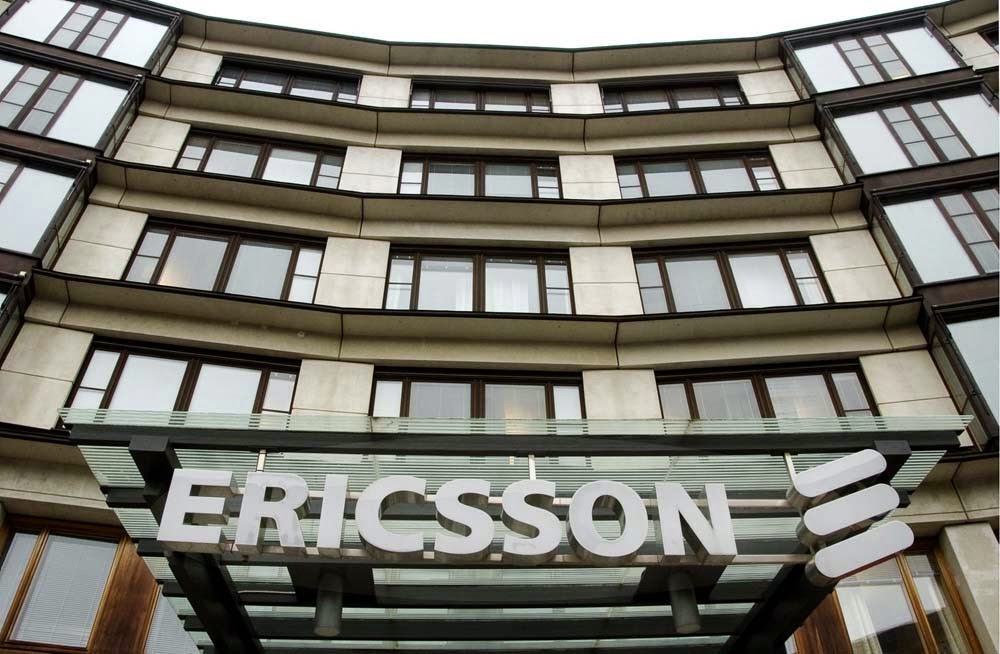
    Job Vacancy: Multinational telecommunications company Ericsson is short of a head of operations in its Nigeria branch. The company is reported to require a qualified applicant to fill the void.

    Ericsson Nigeria is currently looking for a Bachelor/Master Degree holder to fill the vacant spot in the operation office.

    The Job Vacancy application is open to applicants with at least 10-12 years of experience in handling customer Networks in bigger projects or similar operations. See below for Job details and requirements.

    Job Vacancy description

    Ericsson Overview
    Ericsson is a world-leading provider of telecommunications equipment & services to mobile & fixed network operators. Over 1,000 networks in more than 180 countries use Ericsson equipment, & more than 40 percent of the world’s mobile traffic passes through Ericsson networks. Using innovation to empower people, business & society, we are working towards the Networked Society, in which everything that can benefit from a connection will have one. At Ericsson, we apply our innovation to market-based solutions that empower people & society to help shape a more sustainable world.

    We are truly a global company, working across borders in 175 countries, offering a diverse, performance-driven culture & an innovative & engaging environment where employees enhance their potential every day. Our employees live our vision, core values & guiding principles. They share a passion to win & a high responsiveness to customer needs that in turn makes us a desirable partner to our clients. To ensure professional growth, Ericsson offers a stimulating work experience, continuous learning & growth opportunities that allow you to acquire the knowledge & skills necessary to reach your career goals.

    Purpose of the role

    The purpose of the Operations Head of Managed Services is to deliver the same responsibilities as MSCOO but at MS Operations Level
    The Head of Operations will be responsible for:

    • Full responsibility for Managed Services Organization in the unit within the CU
    • Meeting the contracted KPI’s in the designated geographical circle/area
    • CU level organisation consisting of Field Operations a, LNOC and GSC governance
    • Customer Satisfaction in the designated geographical circle/area
    • 1st Level of escalation for customer complaints and major network incidents
    • Regular customer meetings and regional performance review
    • Capacity management for the designated geographical circle/areas, including receipt/sign-off of the capacity forecast, preparation of network change plans, project plans, rollout and material forecasts etc.
    • Analyze structural problems in the networks, set improvement plans and follow up
    • Management of budget, corrective actions and follow ups
    • Implementation of the Network Change Plans
    • Own ,conduct and follow up 3PP governance and management

    Education & Expertise

    • Bachelor of engineering / Masters degree
    • Professional/Technical Competence
    • Demonstrated Ability to Deliver P&L Results Successfully in a Major Services Division
    • Ability to Drive Business Development – Up-scoping, Upselling, Contract / Business Retention
    • Contract Execution
    • Senior Leadership Capability (qualified leadership experience of leading bigger organizations)
    • Multi-Cultural Awareness
    • International Mobility willingness to relocate globally

    Skill and Experience

    • At least 10-12 years of experience in handling customer Network in bigger projects or similar operations, with a Combination of:
    • Technical & Operational Management
    • Financial & Business Management
    • Customer Relationship & Business Development
    • Leadership & Change Management

    To apply for the job role, click here and fill the form in the resulting page. See Ericsson company profile.  

    Primary country and city: Nigeria (NG) || Lagos || Lagos || Consulting&SysInt IT; ProdMgt; R&D SalesStratMkt&ComMgt ServEng; SharedServ; Stud&YP Supply&Log

  • First Apple Pay ad features George Brett making an Apple Pay purchase.

    First Apple Pay ad features George Brett making an Apple Pay purchase.

    Apple’s new payment system is live, and Apple Pay purchase have already garnered more attention than most mobile payment efforts to date. It also have a new ad, which aired yesterday during the opening game of the 2014 World Series, from payment partner MasterCard.

    MasterCard’s ad accompanies its new rollout of contactless payments at food and beverage purchase points in MLB ballparks across the U.S. The program supports a range of NFC-powered mobile payment options, but MasterCard is pushing the Apple Pay angle specifically, touting the fact that it brings Apple Pay to pro sports facilities for the first time, at ballparks in both Kansas City and San Francisco.

    MasterCard says that the Apple Pay system works well in the ballpark setting basically because people want their franks fast. Apple Pay/MLB partnerships don’t end there, however – the company is also offering in-app purchase support for Apple Pay users for single-game tickets once those start going on sale in November, via the MLB.com At the Ballpark app.

    The first ad features MBL Hall of Famer George Brett making an Apple Pay purchase. Remember, this is a MasterCard ad, not an Apple ad, meaning this is yet another sign that payments providers think Apple could be the company to make mobile payments really take off, and are investing resources and backing accordingly.