Verizon Wireless announced the BlackBerry Curve 9310 smartphone will go on sale for $49.99 after rebate, with a two-year service plan, starting with online sales Thursday and in stores in the “coming weeks.”
The BlackBerry Curve 9310 smartphone.
The announcement came just minutes before BlackBerry maker Research in Motion was set to begin its annual shareholders meeting. About two weeks ago, the company reported $500 million in reduced first-quarter profits and a 40% decline in sales.
RIM also announced then that it would ship BlackBerry 10 smartphones in early 2013, a further delay that helped send RIM’s stock price plunging 19% in one day.
The Curve 9310 and runs the current BlackBerry 7.1 operating system and comes with a physical keyboard, the preference among some of RIM’s most solid customers. The 9310’s styling looks like many previous Curve models, with its smaller 2.44-in. screen, below which sits a central touch navigation keypad and physical keys in a Qwerty keyboard.
Many analysts and even some at RIM have admitted the BlackBerry has not kept up with successful touchscreen smartphones with large screens like the 3.5-in. iPhone and Android phone models that range from 4-in. to 5.3-in. in screen size.
The 9310’s display is 320 x 420 pixels, putting its resolution well below more expensive smartphones.
Verizon and RIM noted in a statement that the 9310 is intended to “help customers make the move from a basic phone to a smartphone,” which is partly indicated by its low price.
There is also a dedicated key for access to BlackBerry Messenger, RIM’s social network that is most popular outside of the U.S.
Facebook and Twitter apps are easily accessible for real-time updates with RIM’s Social Feeds 2.0 app. A 3.2-megapixel camera is included, as well as a microSD card slot for up to 32GB of storage. It runs a 1,450 mAh battery and overall is 4.29 in x 2.36 in. x 0.5 in. in size and weighs 3.66 ounces.
Verizon requires buyers to sign up for a Share Everything plan starting at $80 a month for unlimited text, talk and 300 MB of data service that can be shared with up to nine other devices.
About The Author
This article was originally published By Matt Hamblen, Computerworld
Matt Hamblen covers mobile and wireless, smartphones and other handhelds, and wireless networking for Computerworld. Follow Matt on Twitter at @matthamblen or subscribe to Matt’s RSS feed. His email address is [email protected].
See more by Matt Hamblen on Computerworld.com.
Search results for: “phones”
-

Verizon to Sell BlackBerry Curve 9310 for $50 After Rebate
-
HTC Fends off Apple in UK Patent Lawsuit Involving ‘Slide to Unlock’ Feature
A High Court in the U.K. has ruled that HTC did not infringe on Apple’s photo management patent, while stating that three other patents Apple claimed in the lawsuit were invalid, according to HTC.
The three patents declared invalid, include Apple’s “slide to unlock” feature, which Apple alleged HTC had infringed on in its smartphones and tablets.
A multi-touch software that Apple had claimed certain HTC devices using Android 2.3 had infringed on was also found not to be patentable, with the Judge declaring it to be computer program.
” HTC is pleased with the ruling, which provides further confirmation that Apple’s claims against HTC are without merit,” the company said in a statement. “We remain disappointed that Apple continues to favor competition in the courtroom over competition in the marketplace.”
Apple could not be immediately reached for comment.
The ruling, which was issued on Wednesday, gives HTC a victory as the company faces ongoing patent battles with Apple across different countries.
Both companies are fighting legal battles against each other in the U.S., and have sought for import bans on products allegedly infringing on their patents. Shipments of HTC smartphones to the U.S. were recently delayed, as a result of a ruling by the U.S. International Trade Commission that went in favor of Apple. Apple was denied an emergency ban on HTC phones earlier this week by the U.S. International Trade Commission. ITC said it found that Apple had not demonstrated the propriety of temporary emergency action.Important Notice: Tweet this article with the bookmark social media share below to stand a chance to win an ipad or start making money with your twitter account (it works only with your twitter account and the more articles you tweet the more you stand a chance to win an Ipad)
-

Google Glass Launches New Age of Personal Computing
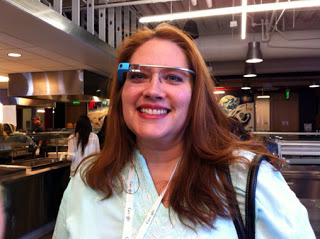
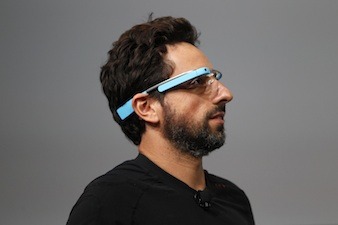
Computerworld – Sergey Brin, CEO and co-founder of Google, wears Google Glasses during a product demonstration at the Google I/O 2012 conference last month. (Image: Stephen Lam / Reuters)When one talks of computers today, he or she could be referring to a laptop, a desktop or maybe even a smartphone. However, if Google’s latest plan stays on track, the definition of a computer could broaden significantly.
At its Google I/O developers conference in San Francisco, the company threw a lot of effort behind the unveiling of a prototype of its so-called Google Glass computerized eyeglasses.
The Android-powered eyeglasses are equipped with a processor, memory, camera, GPS sensors and a display screen.
Google co-founder and CEO Sergey Brin said the Google Glass development effort is all about “doing brand new risky technological things that are really about making science fiction real.”
In that world of science fiction, he said, computers won’t always look like what we now expect from the term. The next generation of computers won’t necessarily sit on one’s desk or lap or in one’s hand. The devices may not have a have a monitor and/or keyboard.
Someday – probably in the near future – computers will be worn, whether incorporated into glasses, or in a piece of jewelry such as a bracelet or something else, analysts say.
“Google Glass changes the way we will look at computers,” said Patrick Moorhead, an analyst at Moor Insights & Strategy. “It isn’t just research, it’s a workable prototype.”
“Glass serves to stretch the technology ecosystem to even greater lengths, Moorhead said. “I believe that in five years we will see many different form factors and brands of wearable computers. We will have computers embedded in our glasses of course, but also in our jewelry and watches.”
Moorhead noted that the U.S. military, especially the Special Forces units, already use wearable computers to for communications and GPS tasks. That technology hasn’t yet reached consumer or business users, he added.
Google’s research efforts could hasten the mainstream use of the technologies.
“As we see real devices in use that we previously saw only in movies and books, it will expand the possibilities even further,” said Moorhead. “We can go beyond the glasses and visualize computers in our jewelry, in our watches and even inside our bodies.”
Charles King, an analyst at Pund-IT, said such new computing form factors are an extension of the current mobile trend, taking GPS-enabled smartphones, growing compute power and multiple new communications capabilities to the next level.
“It’s the ever smaller and ever more powerful mobile technologies,” he added. “It’s about the things we used to see and think about in relation to sci-fi novels or Star Trek. The idea of highly mobile and highly powerful computers is extremely intriguing.”
King said he expects there will be great demand for what he calls “mobile computing lifestyle choices” in a few years.
“It would not surprise me if we see a lot of this in, say, five years,” he noted. “As the technology becomes more sophisticated and cheaper, it becomes something everybody can afford.”
“Some years ago, a smartphone like the Blackberry was considered something that only business professionals needed. It doesn’t seem farfetched to think we could see Google Glass widely adopted in five years,” King added.
Rob Enderle, an analyst with the Enderle Group, pointed out that Google Glass or other wearable computers could be very useful in many workplaces — not just the next big thing to help users look cool or geeky.
“They could be used regularly for things like taking inventory in warehouses, and for tasks on factory floors and other places where folks need to use computers and their hands at the same time,” Enderle said.
At the Google I/O conference, the company said it is offering prototype versions of Google Glass, dubbed the Google Glass Explorer Edition, to developers for $1,500. Brin said he expects the glasses to be generally available in 2014 — at a lower price.
“If the developer community can come up with interesting solutions, the sky’s the limit,” said King.
Enderle said that wearable computers could be a big step toward a new generation of compute form factors that can be embedded inside the human body.
Putting aside visions of Star Trek’s Borg initiative, Moorhead and Enderle agreed that wearable computers are a bridge to the first such computer implants.
“It’s an interim step toward imbedding computers into people and creating some kind of biomechanical interface that bypasses the eyes,” Enderle said, adding that he believes that computer generation is some 25 to 50 years away.“The change we are working toward … is one of the big changes we will see in computing this century. It will redefine personal computing by the time it has fully matured,” he added.
Sharon Gaudin Author Biography:
Sharon Gaudin covers the Internet and Web 2.0, emerging technologies, and desktop and laptop chips for Computerworld. Follow Sharon on Twitter at @sgaudin, or subscribe to Sharon’s RSS feed . Her e-mail address is [email protected].
-

New Ways to Track You via Your Mobile Devices

New GPS tech can track your every move. Should you fear it or embrace it?
Privacy fans, take note: A new technology, called Indoor Positioning System, could push your worry meter to the max. IPS allows pinpoint tracking of any Wi-Fi-enabled device, such as a smartphone or tablet, within a building. This means that an IPS service could easily track you–right down to, say, the table you’re occupying in a mall’s food court–as long as your mobile devices’ Wi-Fi is turned on. And, if you’re a typical device user, your Wi-Fi is always on, right?
In short, we’ve moved far beyond using regular old GPS for location tracking. Indoor environments are challenging for low-cost location systems such as GPS, because the ways in which buildings are constructed–not to mention physical obstacles and even people’s bodies–interfere with GPS’s ability to pinpoint a location. Navizon ITS logoOne example of the new technology is the Navizon Indoor Triangulation Service, which MIT’s Technology Review blog discussed recently. Location services company Navizon says that ITS can provide accurate tracking of Wi-Fi-enabled devices, including smartphones, tablets, and laptops, anywhere inside a building or throughout a campus. (Triangulation by Wi-Fi hotspots helps to make location services more accurate.)
As such services begin to grow, they might threaten your privacy. So, in many instances, if you don’t want an entity knowing the location of your mobile device, you should shut it off or ditch it completely.
At the same time, however, device tracking could become hugely useful to you. Innovators have figured out how to take GPS-like navigation indoors so that people can not only quickly find the restroom in a department store or their departure gate at the airport, but also receive deals and discounts from retailers upon stepping over a shop’s threshold.
Navizon wouldn’t comment for this article, but some of its competitors did. Let’s take a look at other companies working on IPS services.Skyhook
 Skyhook developed the first hybrid location system to use Wi-Fi positioning, GPS, and cell-tower triangulation to determine the coordinates of a device, even indoors. Since then, Apple (Skyhook’s biggest customer) and Google (Skyhook’s biggest competitor) have emulated the hybrid approach for their respective mapping apps.
All sorts of mobile devices on the market–phones, laptops, ebook readers, digital cameras, and gaming devices–are location aware. In many cases, that’s because Skyhook software is baked into them.
For instance, Apple, Dell, and HP laptops use the Skyhook system to change their clocks automatically when users take them across time zones. The laptops also let users pull up real-time information about what’s happening in a neighborhood that they happen to be in, and they can broadcast their location so that users can find them in case of theft.
Skyhook’s SpotRank data-intelligence service predicts the density of people in predefined urban square-block areas worldwide at any hour, any day of the week. Image: Courtesy of SkyhookBut what’s really interesting about Skyhook is its ability to profile individual devices–not identifiable people, as CEO Ted Morgan is quick to point out–and know which ones are associated with certain kinds of people. For instance, if Skyhook sees that a device shows up at Wrigley Field four times in a season, it assumes that the person using the laptop is a sports fan. Or if a laptop or smartphone is detected in an airport several times a month, Skyhook guesses that the user is most likely a business traveler.
“Because we’ve been running the location on about 100 million devices for the last four or five years, we have a tremendous amount of knowledge into overall human behavior–about where people are throughout the day, where they go, which street corners are busy, which ones are not at different times of the day,” Morgan says.
Over time, Skyhook also figures out where all these devices live. Then, by mixing into device profiles publicly available data from the U.S. Census, for example, it adds demographic data such as age and ethnicity.
This is a veritable gold mine of data that Skyhook can then package and offer to marketers who want to reach only select segments of consumers, or to developers and device makers who can use the software to deliver highly relevant real-time content to users.
“We’re able to see at an aggregate level what 100,000,000 people are doing, so we can predict what areas of a city are getting busy or less busy, what types of people are in different areas of the city,” Morgan says. “So, if you want to know where to go out in Seattle tonight, I can tell you what the most active street corner is going to be, and I can tell you the high-level breakout of the type of people who will be there, because they’ve done that every Friday night for the last three years.”
So just how does Skyhook do all this profiling of individual devices while maintaining the anonymity of the people using them?
Morgan says that the company does not use device MAC addresses or phone numbers.
“Every time a new phone registers on our system, we give it an ID like a license plate. There’s no way for you to know what it is. There’s no way for anyone to see it. If you were able to look into our system and see what my phone’s ID was, the only thing you’d ever find out about me is that I’m a middle-aged white guy who makes over $100,000,” Morgan says. “It would never say my name. It would never say where I’m from. There’s nothing that could ever figure out the user, and that’s the bar we have for privacy. Nobody could get into our system, even ourselves, to figure out the name of a user.”Skyhook and Google
 The main thing you need to know here is that Skyhook is suing Google currently.
“Google recognized [the value of mapping the country’s Wi-Fi] and decided it wanted to have a similar system, so it copied the model,” says Morgan. “And because Google brings so much else to the table, where it’s giving away things for free [such as] maps and search and email, they became a competitor to us.”
The problem, Morgan says, came about after Skyhook won deals with Motorola and Samsung, and Google forced those companies to back out of their contracts. Google did not respond to a request for comment.
Even so, maps are undeniably a brilliant gem in Google’s crown–its turn-by-turn navigation is something that Android users universally adore. It only makes sense that the company would get involved in IPS services.
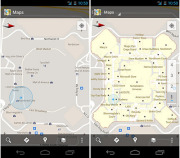
In November, Google announced that it was taking Google Maps indoors. Now, if you go to select U.S. shopping malls, airports, and retail locations, or certain Japanese transit stations, you can use your Android mobile device to see where you are. The idea is similar to the physical kiosk maps you see in malls, except this one is on your phone and adds Google’s famous little blue pin so that you can quickly figure out how to get from the shoe department in Macy’s, for example, over to the men’s department.Google Maps 6.0 for Android updates your indoor location as you move, and will even refresh the map when you move to a different floor. Image: Courtesy of Google Google Maps 6.0 for Android updates your location as you move, and it will even refresh the map when you move to a different floor. It also labels all sorts of helpful information, such as bathroom locations, ATMs, and airport gates.
At launch, the application included floor plans for Tokyo’s Narita and 17 U.S. airports; stores of the retail chains Bloomingdales, Home Depot, Ikea, and Macy’s; and malls such as the Mall of America in Bloomington, Minnesota, Times Square Mall in Mt. Vernon, Illinois, and Liberty Fair Mall in Martinsville, Virginia.
To enable indoor mapping, Google created a desktop tool that lets venue owners and business owners upload the floor plans of their locations. After doing so, they download an app from Google Play that lets them share publicly broadcast GPS, cell-tower, and Wi-Fi information with Google. With that radio-signal information in hand, Google can allow Android users to track their indoor locations on its maps.
Currently Google isn’t pushing ads, discounts, or offers to consumers who use its IPS service. Since Google makes gobs of money on advertising, however, one can only imagine that we may very well see something like that at some point in the future.
As for whether the service profiles devices the way Skyhook does, Google’s new privacy policy doesn’t exactly say. It does state that the company keeps a consolidated record of how you use its services so that it can improve them as well as serve you more-relevant search results and ads.
Regarding location information specifically, Google’s privacy policy states: “When you use a location-enabled Google service, we may collect and process information about your actual location, like GPS signals sent by a mobile device. We may also use various technologies to determine location, such as sensor data from your device that may, for example, provide information on nearby Wi-Fi access points and cell towers.”Wifarer
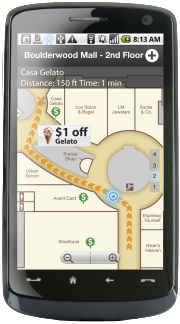 Wifarer is another company using IPS. Unlike Google, which so far provides only indoor maps and location awareness to users, Wifarer wants to give its users heaps of content, discounts, and deals related to where they are located.
The company says that its service is essentially a private, customized version of Google’s IPS offering that lets venues control the content, the branding, and various ways to make money from their digital space.
The Wifarer app for Android gives users heaps of content, discounts, and deals related to where they are located. Image: Courtesy of WifarerThe Wifarer software works with Wi-Fi systems that exist in public places such as malls, museums, and airports–that is, any location where it might help you to know your whereabouts so as to better find your way and receive relevant information or offers.
If you have the Wifarer app installed on your Android phone (Apple has yet to allow the app into its ecosystem), the fingerprint radio frequency-based system determines your phone’s position within a few feet of where you’re using it.
Currently beta testing in 25 venues, Wifarer expects to be up and running in 400 additional places by the end of this year.
“One of the things about indoor positioning systems is that they open up a new vein of [intellectual property],” says Wifarer CEO Philip Stanger. That means IPS is seeing a tremendous amount of development; Stanger says that some exciting things will be coming down the pipeline in the next several months to a year.
He won’t divulge what those developments might be, although they could include inventions such as displays that employ augmented reality and are triggered by users’ locations.
Stanger, like many other people in the business of phone-finding technology, maintains that his product keeps user privacy intact.
“Without giving away core IP and proprietary processes, I can say that the app calculates and displays its own positioning and location information entirely from within the app. This occurs when the app is turned on, and only when the app is turned on,” Stanger says. “Upon first download, a new user is given an anonymous user ID, and neither their MAC ID nor their IMEI number is ever recorded, monitored, or tracked. From then on, all transactions with and downloads from our system are identified by this UI (user ID) alone. Occasionally, and only when the app is on, location information of the UI is reported back to the system, mainly to verify positioning accuracy.”
The fact that Wifarer works at all is pretty impressive, considering the technical hurdles involved.
“The challenges are many, but most revolve around the variability of Wi-Fi due to environmental considerations,” Stanger says. “For instance, most Wi-Fi broadcasts at around 2.4GHz. Unfortunately the resonating frequency of water is also 2.4GHz, and people are comprised of mostly water. So, the more that people congregate, the more the Wi-Fi radio patterns vary. So the question becomes, how can we normalize patterns when the very usage we envisage generates disruptions to those patterns?”
Stanger isn’t saying how his company has done it, only that it involves proprietary coding.Nokia
 Phone maker Nokia is also working on an interesting way to determine location in an indoor environment.
As part of a consortium of 17 technology and media companies, Nokia recently participated in a demo showing how unused portions of the TV spectrum can deliver information to people according to their location.
At the Imperial War Museum hangar in Duxford, UK, Scott Probasco, a Nokia senior manager, shows how a Nokia smartphone can connect to the Internet via TV white spaces and use an app to grab information about the planes on display. Image: Courtesy of NokiaAt the Imperial War Museum hangar in Duxford, UK, Nokia recently showed how a radio system box operating in UHF TV bands can connect to a TV white-space database to pinpoint which TV channels are available. From there, a Nokia smartphone can connect to the Internet via the TV white space and use an app to grab content. In the case of the museum demo, the content was information about the planes on display.
This type of arrangement would allow museum visitors, for example, to gain access to a vast amount of information about exhibits depending on where they are standing–far more than the museum could ever include on physical signage.
A similar system could be built out to push content to people in other places, such as retail locations; in this case, shoppers could receive offers and coupons, and participate in loyalty programs, just by walking around with an app on their phones.
That isn’t going to happen overnight, however. Before services can use TV white spaces for location finding and content distribution, the necessary technology–including mass-produced chips inside phones and special wireless access points–must be standardized, which likely won’t occur for at least a few years.
In addition, the system isn’t terribly precise, as the accuracy is good only at 25 feet to 50 feet. “We can use several well-known methods to refine this coarse location, for example taking signal-strength measurements from several access points and then mathematically combining these signals to estimate the location of the phone a bit more accurately,” says Scott Probasco, a senior manager at Nokia.Broadcom
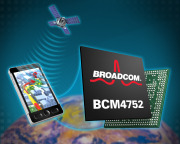 Before the end of the year, a new chip made by Broadcom, called the BCM4752, will be integrated in certain mobile devices coming to market. Although the company won’t identify the devices, the technology looks to be pretty mind-blowing.
Broadcom’s BCM4752 chipDesigned for smartphones, tablets, portable media players, and portable navigation devices, the BCM4752 chip is a Global Navigation Satellite System (GNSS) product that communicates with the U.S.-based GPS as well as with three of that system’s counterparts–the Russian GLONASS, the in-progress Quasi-Zenith Satellite System (QZSS) in Japan, and SBAS constellations of satellites.
Access to more satellites means better location awareness, but what’s really fascinating about the Broadcom location platform is that, in addition to supporting IPS through Wi-Fi, Bluetooth, and NFC, it integrates measurements from device sensors–the accelerometer, gyroscope, magnetometer, and altimeter–into its positioning engine.
Essentially, that means Broadcom’s technology can find your location without being connected to any kind of network. For example, after recording your GNSS coordinates as you enter a building, the technology could continue to track your device’s location simply based on these sensor outputs–how many steps you’ve taken, in what direction you took them, and at what altitude.
According to Scott Pomerantz, GM and VP of Broadcom’s GPS line of business, the technology makes use of intelligent location software known as the Hybrid User Location Application to integrate measurements from GNSS, inertial sensors, its Wi-Fi products, its cellular modem, and many other RF components found in smartphones today.
“We want to be able to do all of the position location locally, not necessarily depending on outside databases or other information; but, just with the device in your hand, we can recognize [the data that is] available and how to render [its] position,” Pomerantz says.
While it’s one thing to have a phone capable of doing incredible things and quite another to build out infrastructure and applications that actually use it, Pomerantz says many location-aware apps will be able to make great use of the BCM4752 chip.
The companies I spoke with represent just a sampling of those carrying out the location tracking of mobile devices. If this topic interests you, check out Polaris Wireless as another example: It provides high-accuracy, software-based systems for finding the location of mobile phones, and it can serve not only for activities like push advertising and social networking but also for asset tracking and fleet tracking, plus lawful interception by government agencies.How Much Should You Worry About Privacy Issues?
Should it bother you that so many entities can see where you’re using your mobile device, or do features such as vastly improved navigation trump any such privacy concerns?
I posed the question to a couple of experts well versed in the implications of this advanced technology.
Rob Enderle, principal analyst for Enderle Group, sees the tracking of individuals as particularly useful for companies that have high security requirements or have issues with employee theft or time-card cheating. And, he says, when physical danger is an issue, knowing a person’s exact location can mean that help comes faster. “In those instances, when implemented properly, the reward clearly exceeds the risk,” Enderle says.
“The utility and convenience for commercially available location-based services and wireless tracking usage outweigh, at this moment in time, individualistic notions of privacy,” says T. Jeff Vining, VP of government research and geospatial surveillance operational technology for Gartner, a technology research firm. “But when data is aggregated, then it will become a concern for privacy advocates and governments.”
In short, this is a subject you’re going to want to track -

GOOGLE OFFERS FREE ONLINE CERTIFICATE COURSE
I got this information from one of our contributor’s site this morning and felt i should share this with you, my readers.
A few days back google announced a short online certificate course ‘Power Searching With Google’ this program is aimed at helping all Google users learn about the powerful advanced tools which Google provides to help the world find just the right information when the stakes are high.The certificate, according to Google will be emailed upon successful passing of the online course by participants. Mobile phones according to Google will not be used for the classes.
Course Details
Power Searching with Google is a free online, community-based course showcasing search techniques and how to use them to solve real, everyday problems. It features:
- Six 50-minute classes.
- Interactive activities to practice new skills.
- Opportunities to connect with others using Google Groups, Google+, and Hangouts on Air.
- Upon passing the post-course assessment, a printable Certificate of Completion will be emailed to you.
Ready to get started?
- Registration is open from June 26, 2012 to July 16, 2012. We recommend that you register before the first class is released on July 10, 2012!
- New classes will become available Tuesday, Wednesday, and Thursday starting on July 10, 2012 and ending on July 19, 2012.
- Course-related activities will end on July 23, 2012.
To register now for “Power Searching with Google Free Online Certificate Course” follow this link Power Searching with Google Free Online Certificate Course After registration, remember to sign into your email to confirm that Google has sent you a confirmation of your registration and course dates with activities.
-
Review: Jitterbug Plus Cell Phone Simple Design, Lifesaving Technology
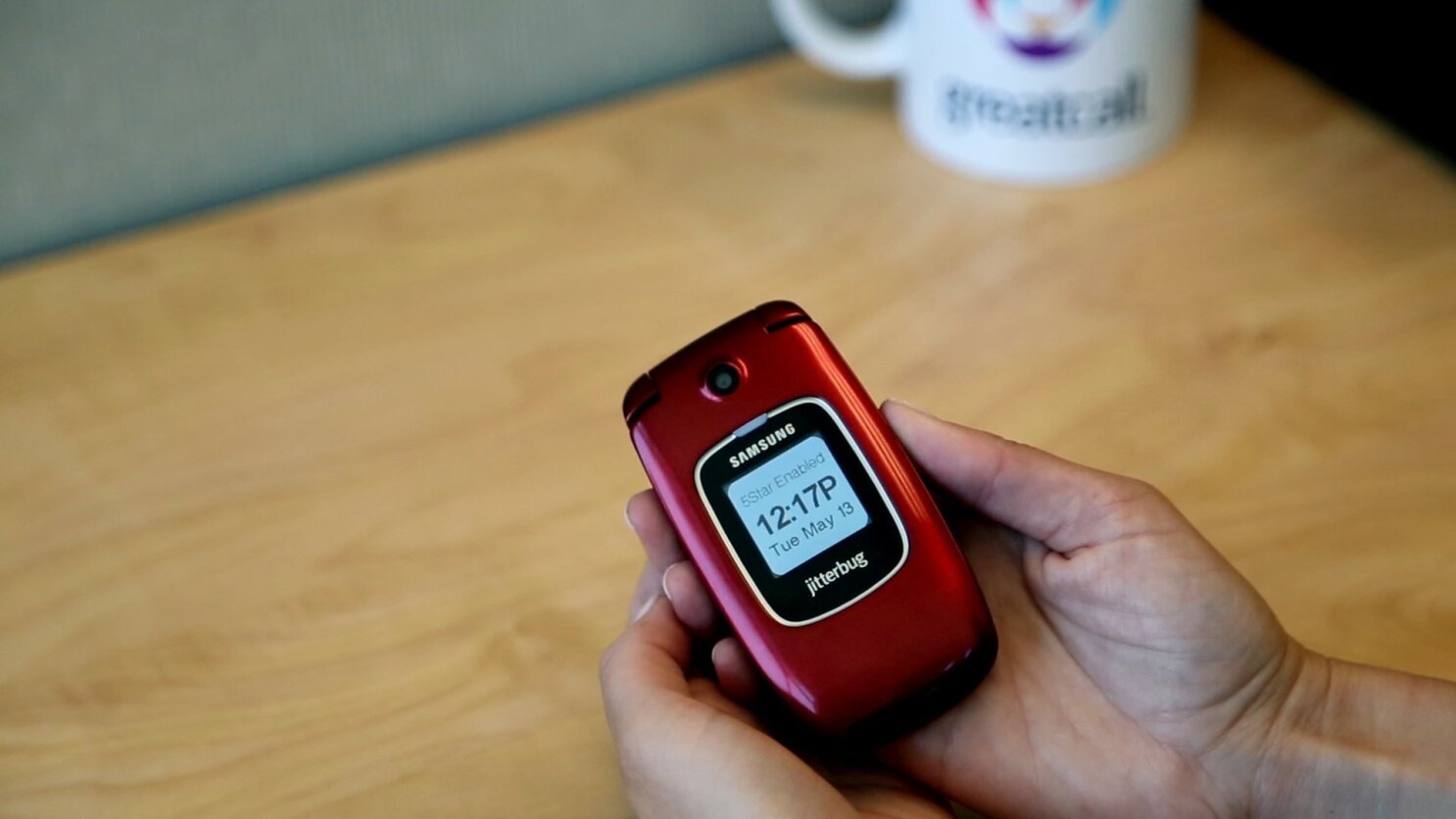
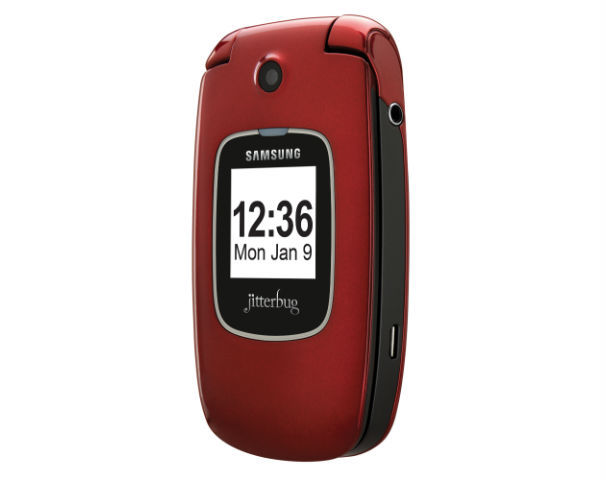
The GreatCall Jitterbug Plus ($119, no contract required; price as of July 2, 2012), designed for seniors and anyone else who needs access to health or safety services, looks and functions like a simple, no-frills feature phone, but it has lifesaving technology behind it. The Jitterbug Plus improves on the previous Jitterbug model with photo-sharing capabilities, preloaded text messages, and a more sleek design. It also supports GreatCall’s 5Star Urgent Response personal emergency-response service.
GreatCall CEO David Inns says that the company obtained feedback from customers on ways to improve the previous Jitterbug. One feature request that kept coming up was picture sharing. Jitterbug Plus owners can now share photos on Facebook, Picasa, and Shutterfly. It is easy to set up, too: You simply go to your Jitterbug.com account and fill out your profile credentials. Afterward, you can share photos with your social networks directly from the
camera gallery.
The 2-megapixel camera isn’t the highest quality; in my tests, photos looked a bit hazy and washed out. For social networking purposes, however, the Jitterbug Plus’s camera works just fine. The camera has no flash, so taking photos in dark environments might not turn out so well.
The Jitterbug’s design is a bit of a throwback to older phones, with its clamshell shape and internal and external displays. The Samsung-built phone is smaller and lighter than previous iterations, though, and comes in an attractive red or silver color.
On the Jitterbug Plus, you’ll find a few preinstalled text messages, such as “How are you?” and “On my way.” The alphanumeric keyboard offers large, easy-to-press keys with a clear font to make texting painless. Large ‘Yes’ and ‘No’ keys help you navigate the simple menu; for example, if you want to read a text message, you press ‘Yes’ to open it. As somebody who is constantly using advanced smartphones, I found that this extremely basic navigation system took some getting used to–I kept looking for ‘Back’ and ‘Home’ keys instead. But when I showed the Jitterbug Plus to a person who has never even attempted to use a smartphone, he loved the design, and said that it was much easier to use than the feature phone he already owned. He did not like how long it took to browse through the main menu, however. I also noticed that the navigation was a bit slow in that regard.
The Jitterbug Plus has insanely long battery life, which is an important feature for its demographic. GreatCall claims that the phone has 25 days of standby time. Although I haven’t had the phone for 25 days, I haven’t needed to charge it since I received it about a week ago. One drawback is that the display has no battery-life indicator; you have to go to ‘Phone Info’ from the main menu, which is a bit unintuitive. For customers who are hard of hearing, the Jitterbug Plus has a very loud ringtone and audio speaker. Call quality overall was quite clean on my test calls. My friends on the other end of the line were similarly pleased with how clear I sounded.Pricing and Additional Services
GreatCall offers a pay-as-you-go plan that starts at $15 per month for 50 minutes, and runs up to $80 per month for unlimited minutes and text messages. If you choose to go à la carte, text messages cost 10 cents each. Voicemail costs an extra $3 per month.
Jitterbug Plus owners can add a number of wellness services to their plans, including 5Star Urgent Response ($15 per month), which gives you direct contact with a certified emergency-response agent, performs GPS tracking, and provides free 24-hour access to unlimited health advice from registered nurses. You can tack on other helpful services, too, such as automated check-in calls ($5 per month) and medication reminders ($10 per month). These services add up, but are invaluable to anyone who needs them.
The Jitterbug Plus is meant for a very specific audience–one that I’m not yet a member of–so reviewing a product like this can be difficult. But I’ve seen other products that try to make an interface too simple, and end up leaving out some important features. GreatCall has done an excellent job of creating a phone that is both easy to use and full-featured, packed into a modern design. -
Google Reaction To Adobe Dropping Flash Player for Android
Adobe announced Thursday that it would not provide a version of Flash for Android 4.1, dubbed Jelly Bean, or any updates thereafter. Google introduced version 4.1 this week at its I/O conference in San Francisco. The OS will be available in July.
The Flash Player has never posed much of a security risk, because hackers have not used it as a pathway to Android. “There hasn’t been a piece of malware using the Flash Player technology as a vector,” Tim Armstrong, malware researcher for Kaspersky Lab, said.
Adobe’s decision to wind down Flash on Android is not surprising. The company said in November that it would switch to Adobe AIR as the cross-platform runtime environment for mobile applications. Adobe believes AIR is the better option as Web developers move to HTML5, the latest version of the markup language used for presenting content on the Web. The company will continue to develop the Flash Player for PCs.
Whether the technologies replacing the Flash Player will pose a greater security risk is not yet known, Armstrong said. “We can’t say yet whether these technologies could be leveraged for malicious purposes,” he said.
In general, dropping Flash with Jelly Bean is not expected to have much of an impact on Android users, because almost 90 percent are running versions 2.1 to 2.3.7. By the time they upgrade to version 4.1, Flash alternatives are expected to be firmly in place.
Adobe has also decided to limit access of the Flash Player on Google Play, the official Android app store. Beginning Aug. 15, only Android phones already running Flash will be able to get newer versions in the store. “Devices that do not have Flash Player already installed are increasingly likely to be incompatible with Flash Player and will no longer be able to install if from the Google Play Store,” the company said in its blog.
Adobe’s latest announcement only involves Android, because Apple doesn’t use Flash in the iPhone or iPad. In 2010, Apple Chief Executive Steve Jobs, who died in October of complications from cancer, bashed Flash as too slow and a battery hog, arguing that HTML5 would become the better platform for showing video and other multimedia content. Adobe initially fought back, but later realized development trends for mobile apps were against Flash. -

Total Freedom From iTunes With ‘Amazing’ Spotify Premium
Spotify’s desktop application is a fantastic music manager and a good replacement for our itune. Here’s is a complete walkthrough on how to make spotify you default music application.
Are you tired of your current music-management software? Invest in a Spotify membership and declare independence from iTunes, Google Music, or any other music app you’re fed up with. iTunes in particular is becoming pretty bloated, especially for Windows users–but I’ve barely seen it over the past few months thanks to Spotify and the new ability to upgrade my iOS software on my iPhone itself.
As long as you’re already paying for Spotify Premium, make Spotify’s mobile app your phone’s default music player. Spotify’s hybrid approach–storing your most-played tunes on disk while letting you stream anything from its massive song library–gives you a much larger musical selection on the go. If you’re buying more than an album or two every month, it’ll also save you money.
Here’s the fastest method to make Spotify your default music manager. Since iTunes is the thorniest music-management app to get rid of, I’ll use it as my example, but these methods should be just as easy (or even easier) on Android phones running other music-management apps.Initial Housecleaning
The first step is to make room for Spotify to start managing your tunes by commanding your current music-management app to stop syncing your smartphone with your music collection. iTunes at least makes this process fairly easy: While your phone is synced to your PC, switch to the Music tab in the device management options, and uncheck Sync Your Music. iTunes will warn you that this action will delete all the music off your phone, but since that’s exactly what you want, click OK. Now you should have plenty of room to start syncing with Spotify.
Next, set up Spotify as an iTunes replacement. This step is simple, since Spotify asks whether you want to automatically import your iTunes library the first time you open it. This procedure will not only bring all your local files into the application (as long as you’ve linked them with your iTunes library) but also import all your iTunes playlists.
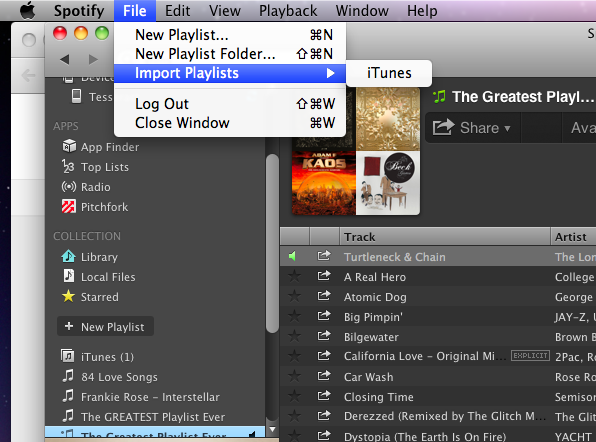
If you declined this option when you first started Spotify but want to import your iTunes library now, or if you merely want to import a library from another music manager, that’s simple enough. Open Spotify, navigate to File > Import Playlists, and then choose iTunes, Windows Media Player, or whatever other supported music application Spotify can find on your PC. Keep in mind that Spotify playlist imports sometimes require a bit of cleaning up; in my case, for example, Spotify attempted to sync the iTunes library of each of my computers separately, which resulted in quite a lot of copies of the same material. However, even with a manual check and some deletions, getting your Spotify application set up with all your iTunes music and playlists shouldn’t take more than 5 to 10 minutes.Syncing
Once Spotify is set up on your computer, it’s time to start syncing your files onto your phone. Again, Spotify makes this step fairly straightforward, but the process involves quite a few more pitfalls that you need to be ready for. First, the good news: All you have to do is connect your phone to the same wireless network as your computer, open Spotify on your PC, and then select your phone under the Devices tab in Spotify’s left navigation pane. Click the big Sync this device with Spotify button, and select the playlists you want to download to your phone.
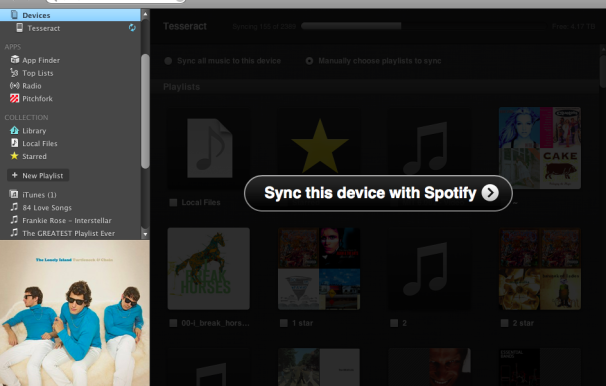
The bad news is that Spotify syncing suffers from a few irritating hiccups. Since it syncs wirelessly, it’s much slower than iTunes syncing by USB. Syncing 3000 or so songs to the Spotify app on my phone took me almost 10 hours. By itself, that wouldn’t be a huge issue, since I could just leave my phone on overnight, but Spotify also stops syncing when you leave your smartphone inactive for too long. Here’s hoping that Spotify will patch this glaring error in a future update. For now, though, this limitation makes it difficult to have Spotify sync your whole library in the background. If you’re thinking of using Spotify as a straight replacement for your music app, and if you have a gigantic music library, syncing everything will be a time-consuming process.
Instead, consider being more selective as to which playlists you listen to. Spotify syncing works much more elegantly if you don’t try to make it emulate iTunes exactly, so I suggest adding local files to Spotify gradually. Find 300 to 500 songs you know you’ll want to listen to regularly, and sync those first. Then, when you’re out and about, you can choose to save the music you find yourself streaming too often as an offline mode playlist. You probably won’t find more than 100 songs or so on any given day that you’ll want to add like this, so syncing them should be a fairly quick affair.
Don’t worry about the syncing process eating up your bandwidth. Unless you explicitly tell it to sync over 3G, the Spotify mobile app will wait until you’re on a wireless network. You can just tell it what you want to have permanently downloaded, and it will add those items to your local library the next time you’re near a stable Internet connection.A Few More Obstacles
You should keep some other small roadblocks in mind as you declare your phone’s independence from iTunes. Many of these obstacles are relatively minor and easily solved; you can’t delete the iOS default Music app, for instance, even if you don’t have any music synced with it. I suggest hiding it in a folder and ignoring it. Other issues, however, are slightly more serious.
For the most part Spotify should import all of your music and give you access to Spotify’s library of millions of streaming songs, but if you’ve downloaded a lot of DRM-protected music from iTunes or another music store, things get more complicated. Since Spotify won’t be able to play your DRM-protected files, the service automatically matches those tracks with songs that reside in the global Spotify library. Thus, if you’ve bought, say, a Ratatat album with DRM on iTunes (as I did while writing this article), you should still be able to play it in Spotify by streaming it from Spotify’s library. On rare occasions, Spotify won’t be able to find a match for your DRM-protected music in its online library.
At times, however, Spotify won’t find a match for one of your DRM-protected songs, and you’ll be unable to play your music. This occurrence should be fairly uncommon (in my library of 7000 songs, I had a grand total of five unplayable tracks, three of which were free iTunes “Song of the Day” selections I haven’t listened to in years), and you can fairly easily resolve the problem by stripping the DRM off of your iTunes track. You’ll need to go through your library and look for tracks listed in red; these are the songs on which you’ll have to remove the DRM.
Also, as much as this method frees you from iTunes for everything but backing up your data, it ties you heavily to Spotify. If you ever stop paying for Spotify Premium, you’ll lose access to offline mode, which means that any music you haven’t synced from your local computer–including Spotify copies of your DRM-protected music–won’t be available on your phone any longer.
Nevertheless, as an iTunes replacement, Spotify Premium is a great choice. Spotify comes with its own set of inconveniences and annoyances, but once you get past the basic setup it’s hard to argue with on-demand access to Spotify’s music library on the go. Happy listening! -
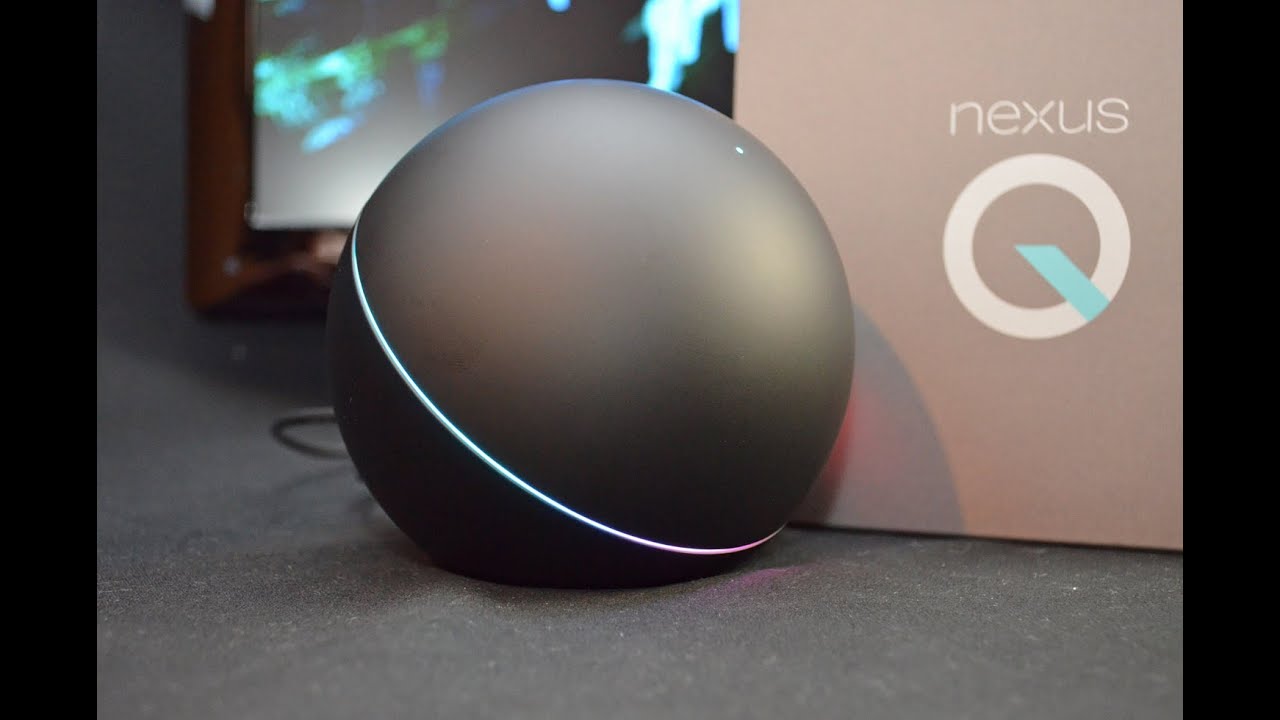
Google Nexus Q Hands-On Review: The Buggy Streaming Story
The Nexus Q has some pretty neat media streaming features, but is way too expensive–and the preview release is just plain buggy.
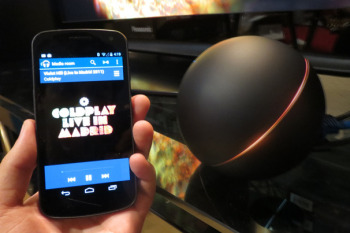
I finally got hold of one of the new Android 4.1 (Jelly Bean) smartphones capable of running the Nexus Q app you need to operate the preview release of the new Google media streamer–and a PC World colleague armed with a second Jelly Bean handset came by to help me test the device’s social networking features. The verdict: While it has some nice features–it’s cool to see a light show when you stream music to an HDTV– the Nexus Q is at this point too buggy. We were unable to implement guest access despite trying for two hours, and even the primary controlling phone sometimes lost network connectivity. Initial setup on the first phone went fairly smoothly. I had already hooked up the Nexus Q to my HDTV and to my home network using an ethernet cable connecting to a powerline switch, so when I downloaded and installed the free Nexus Q app from the Google Play store, it immediately found the device and established a link by having me log in to my Google account. Because the Android app can control multiple Q’s on the same network–much like the Sonos system–you have to give each one a name; the app proposes several common household rooms (e.g. kitchen, living room, media center) in a menu that also has a custom entry option. The app by default sets My Home as the name for your Nexus Q collection–the term it uses to denote your entire Nexus Q network (each Q appears as an entry in the collection). But you can change this name in the settings.
Sound and Light Show
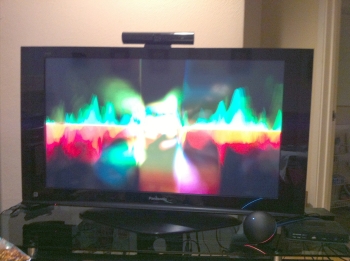
After that, when I went to Play Music and tapped a streaming media icon on the top of the screen, I was presented with the option of streaming to my phone or the Nexus name I’d just created. Because I was hooked up to an HDTV, when I played music, Nexus Q created pretty dancing visuals on the screen–and the LEDs on the edges of the Q’s dome also pulsed in color and in time to the music. You can change the look of the light show by choosing one of half a dozen themes (e.g. warm, cold, blue), make it brighter or dimmer, or eliminate it completely from the settings menu in the Q app.
 You can add songs to the Q’s queue (pun unavoidable) or play them immediately by tapping on options in a menu that appears when you tap a track listing. You can fiddle with the queue, moving or deleting tracks, by tapping an option in Play Music. To play YouTube videos, you go through much the same routine after tapping the Android’s YouTube app. You are already signed in to your Google account, so accessing favorites and new videos on channels you’ve subscribed to is a breeze. Quality was good, at least while the Nexus Q was connected to the network using the ethernet cable and powerline switch. I didn’t download any movies or TV shows to check out how well the device works with the Google Play movie and TV app.
Guest Access Proves Elusive
So far, so good, but it was all downhill from there. I’m not sure what the issues are, but my colleague Mike was never able to put his Google Play music in the queue–and when we disconnected the ethernet cable to try connecting the Q via Wi-Fi, things really went south. Here’s how it’s supposed to work. In the Nexus Q app, I made sure a setting authorizing guest access was set to On, then tapped a link that created an e-mail message inviting Mike (using his Google account address) to play his music on my network. Mike got the message, which instructed him to download and install the Nexus Q app on his Android 4.1 phone. He then ran the app, which searches for existing Nexus Q devices. Once you find a Q that has granted you access, you can go to Play Music to add tracks to the queue via a pop-up menu and a streaming media icon, the same way I could from my phone. But the Nexus Q never showed up as a streaming device on Mike’s phone. He also got repeated messages saying the My Home collection and/or the Q itself was unavailable.
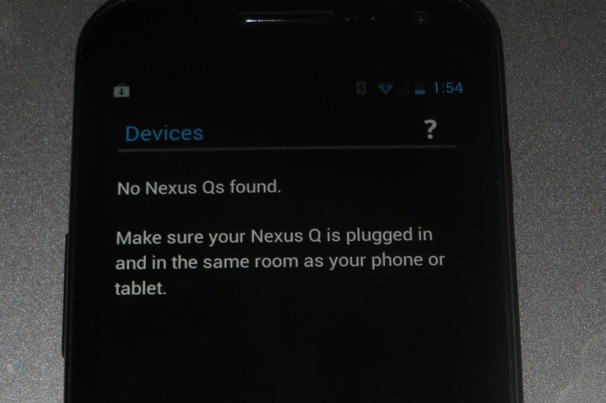
And while we were doing the testing, my own ability to stream music was intermittently impaired. A troubleshooting guide suggested connecting the Q to the network via its built-in Wi-Fi, so I disconnected the ethernet cable and rebooted the Q to start from scratch. But while I was able to restore its factory settings, setting up my 802.11n Wi-Fi network as the Q’s connection proved difficult. I rebooted several times and reinstalled the app a couple of times before the Q mysteriously began streaming the same music it had effortlessly played with the ethernet connection. Even after that, the app intermittently would show the Q as being unavailable one minute and available the next. I live next to several high-rise apartment buildings in downtown San Francisco, and my guess is that the difficulties I encountered relate to 2.4GHz network overcrowding. You also need a router that can handle Wi-Fi multicasting so that the Q can connect to your router while other devices can connect to the Q; Google’s documentation already shows several incompatible routers. Mine wasn’t among them, but I suspect that it was too difficult for the network to sustain the multiple Wi-Fi connections required. I’ll repeat what I said in my earlier post: Google should have included 5GHz 802.11n support. Still, Mike and I were at a loss to explain why he couldn’t play any of his music on the Q–even when my collection and the Q both showed up as available, the Play Music app never displayed the Q as a streaming destination.
 Hopefully Google will work on these issues before it begins selling the Nexus Q to the general public. But even if you’re an Android fan willing to spend the $299 on a device with fairly limited functionality (it could at least have supported streaming media from other local network devices), I wouldn’t recommend the Q to anyone who is planning on Wi-Fi only connections in a city or a neighborhood with lots of Wi-Fi networks in range. That’s just asking for trouble.
 -
HTC Evo 4G LTE
HTC Evo 4G LTE Review: Gorgeous, but No LTE for Now
Sprint’s original HTC Evo 4G was the carrier’s very first 4G WiMAX phone. Two years (and a few other Evos) later, we have the HTC Evo 4G LTE ($200 with a new two-year contract from Sprint; price as of 5/10/12). But despite the name, this smartphone is currently just a 3G phone until Sprint builds out its LTE network. Outside of this issue, the Evo 4G LTE is a solid phone. The display, camera, design, and multimedia features make it the best phone currently coming from Sprint. Sprint will have the HTC Evo 4G LTE available on May 18.
Different Design on HTC Evo 4G LTE
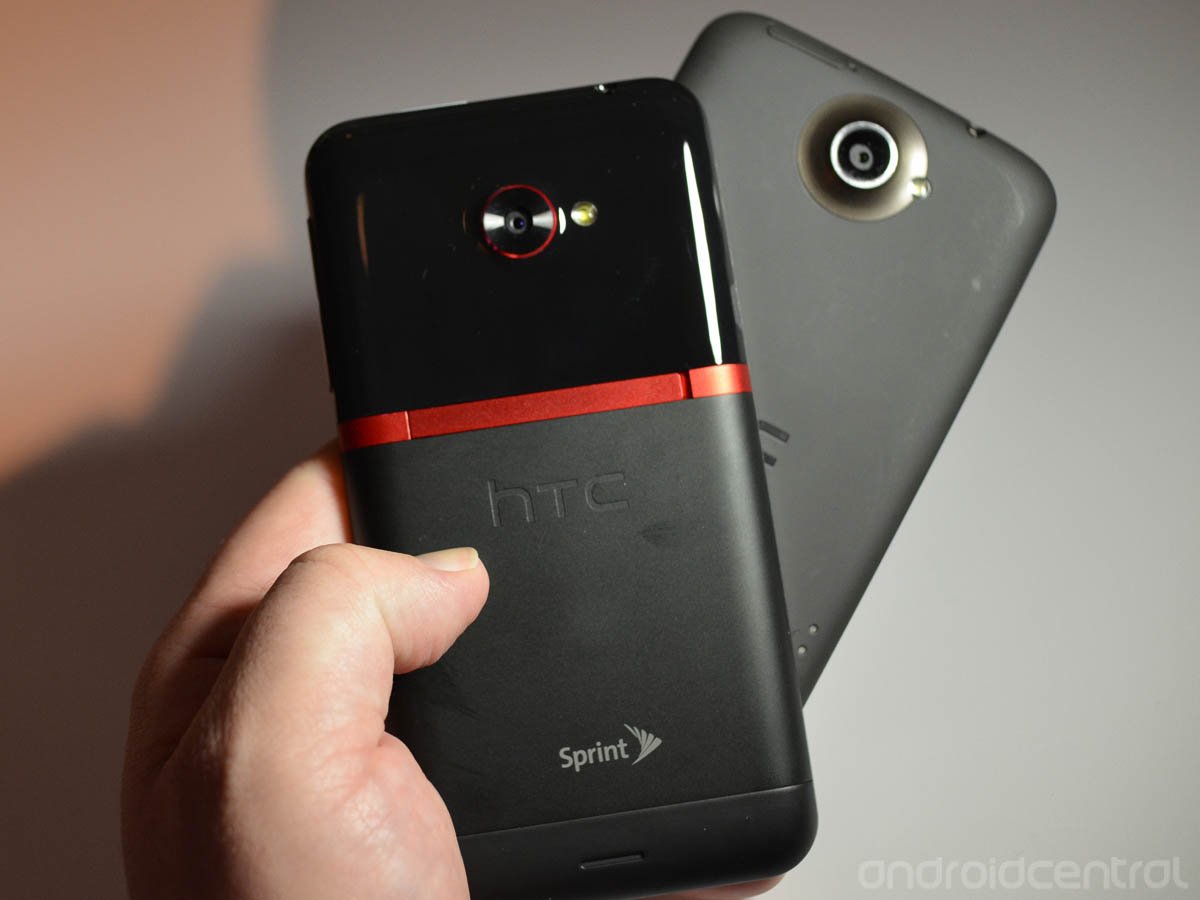
The Evo’s kickstandThe HTC Evo 4G LTE might share a lot of specs in common with the One X on AT&T, but its design is totally different. With its black body and red accents, you might mistake it for a Verizon phone; it looks an awful lot like the newly announced HTC Droid Incredible 4G LTE. It holds onto the Evo design legacy, however, with a bright red kickstand. You flip the kickstand out and set your Evo on a table for some hands-free video watching. The kickstand is a little difficult to open, however. You’ll need some nails to get it out. The kickstand divides the Evo’s battery cover, which is part glossy black plastic and part matte, soft-touch rubber.
Measuring 5.3-by-2.7-by-0.35 inches, the Evo is slightly smaller than the One X, which measures 5.3-by-2.8-by-0.4 inches. The Evo is an ounce heavier, at 4.7 ounces, than the One X (4.6 ounces).
The Evo has a 4.7-inch 1280-by-720 HD pixel display with IPS (In Plane Switching) technology. We loaded the Evo up with a few test photos we use across phones to test display quality. These images include a colorscale test, a grayscale test, and photos of people. In our colorscale test, I could detect some oversaturation as the colors bled into one another (see sample photo). In the portrait photos, skin tones had a ruddy look–another sign of oversaturation. Details appeared sharp, however, as did text.Android 4.0 with HTC Evo 4G LTE Sense
HTC Sense–the manufacturer’s user interface over Android–has garnered a mixed response from consumers and tech journalists alike. And Android 4.0 (Ice Cream Sandwich) has, by far, the best-looking interface of any version of Android. I understand why manufacturers slapped on overlays in the early days of Android: The underlying interfaces were ugly. HTC Sense is undeniably pretty. But its animations and colorful widgets have a tendency to bog down the operating system.
Perhaps my idea that manufacturers might leave Android 4.0 alone and just add a few customized widgets was just wishful thinking. To HTC’s credit, Sense 4.0 is much subtler than previous versions of the interface. The company has cleared out many unnecessary icons and text that cluttered older versions of Sense. You can still pinch the screen to see all seven of your homescreens, and you get that handy customizable lock screen that we saw with Sense 3.0.
Still, Android purists might take offense to a few changes. The Recent Apps UI has been tweaked in typical Sense fashion. Rather than displaying your apps or websites as a list with thumbnails, it displays them as pages that flip as you flick through them. The Sense widgets are a bit too busy and garish for my liking, but you can easily remove them.
HTC Sense also makes some very basic tasks more difficult than they should be. For example, to change the phone’s wallpaper, you have to dig through multiple menus in the Settings. Changing the wallpaper in vanilla Android 4.0 is as simple as holding down on the homescreen.
The Evo 4G LTE comes with a significant amount of carrier and manufacturer-added software, but that seems to be the norm these days. You can disable some of these so they don’t show up in your apps menu. Annoyingly, you can’t disable either the Sprint Music Plus player or the Sprint Zone.Camera
Sprint and HTC unleashed a bunch of journalists in the city of New Orleans to test out the HTC Evo’s camera in the field. Like the HTC One series of phones, the Evo 4G LTE has HTC’s ImageSense camera software and the HTC ImageChip, which supports a which supports an f2.0 aperture and a handful of different shooting modes, including High Dynamic Range (HDR), Macro, and Panorama. HTC also claims that One cameras have an almost no-lag shutter speed. In my hands-on tests, I found the no-lag claim to be pretty much true. My photos taken in automatic mode looked excellent, with good colors and crisp Indoor Photo Using Automatic Modedetails. Most of the shooting modes worked quite well, too, especially the macro mode (see example photos).
HDR made my photos look a bit spooky–I prefer the HDR mode on the iPhone 4S’s camera. You can also add Instagram-like filters to your photos, but I don’t think they look very good. A better bet would be to add a third-party app like, well, Instagram or Pixlr, which has even more filters.
This Evo also has a very cool continuous shooting feature, which lets you take multiple pictures at a time. You can then use the camera app’s Best Photo feature, which will automatically pick the cleanest photos out of the group. You can use continuous shooting with both the onscreen shutter button and the physical key. It is a little sensitive, however. When I was snapping photos from a tour bus in New Orleans, I accidentally took multiple pictures without meaning to.
The Evo has a dedicated camera shutter button, which is always a plus, as it helps stabilize the phone before you take your photo. Annoyingly, you can’t press the button when the phone is locked to jump directly to the camera app.Multimedia
All HTC One phones have Beats Audio built in. Beats Audio automatically turns on when you play music, but you can opt to turn it off. I could definitely hear a positive change in music quality, especially with rock and metal music, when Beats was running. Bass sounded richer and the vocals fuller. Beats Audio also kicks in when you play a YouTube video.
Unlike the One phones, the Evo has a microSD slot so you can expand your phone’s memory beyond the built-in 16GB, with photos, video, apps, and so on.
The phone also comes with HTC Watch, which is the company’s movie-streaming service. If you wish to stream movies off your phone, however, I’d go with Netflix, as it has a larger library than Watch.Performance
Using the FCC-approved Ookla Speedtest.net app, I tested Sprint’s 3G network in two cities: New Orleans and San Francisco. In New Orleans, the HTC Evo achieved an average of 1.4 Mbps for download speeds and 0.52 Mbps for upload speeds. In San Francisco, Sprint’s 3G network was a bit faster, with an average of 1.69 Mbps for downloads and 0.90 Mbps for upload speeds.
These are okay speeds for 3G, but I’ve been spoiled by 4G. Videos started and stalled over YouTube and Web pages weren’t loading as quickly as I’m used to. Even T-Mobile’s HSPA+ network seems much faster than Sprint’s 3G network. But until Sprint LTE comes to your city, you’re stuck with 3G. Even if you have WiMax in your city, the Evo 4G LTE isn’t compatible with that network.
I ran both the Quadrant and Vellamo benchmarking apps to see how powerful the Qualcomm S4 1.5GHz dual-core processor is on the HTC EVO 4G LTE. With Vellamo (which was developed by Qualcomm), the Evo had a score of 2392, slightly ahead of the HTC One S, which has the same processor and achieved a score of 2365.
Under Quadrant, the HTC Evo got a score of 5145, which put it slightly ahead of both the One S and the Galaxy Nexus. I also ran a few graphics-heavy games, like World of Goo and Osmos, and the Evo handled them flawlessly.
While we haven’t yet completed our formal battery tests, I used the EVO 4G LTE for an afternoon photo outing. After 2 hours and about 50 photos later, I noticed a significant drop in battery life. You might not use the camera as heavily in a short time span as I did for this review, but one of the main selling points of this phone is the camera. I also ran a 26-minute video over YouTube with the battery starting at 76 percent charged. After the video was finished, the Evo had a battery life of 67 percent. We’ll update the Evo’s battery life results once we finish our formal testing.
We experienced uneven call quality with both the HTC One X and the One S, but the Evo sounded good on both ends of the line. My friends said my voice sounded clear and natural, and they didn’t hear any crackling or static as they did on the One phones.
The EVO 4G LTE will be the first handset on a U.S. carrier with HD Voice. Sprint’s demo of HD Voice at the EVO 4G LTE’s launch in New York City showed how it significantly decreases background noise.
This is made possible by the Snapdragon processor, which uses dual-microphone noise suppression and earpiece active noise cancellation. It also relies on Sprint to finish its upgrades to its 3G network so we were unfortunately unable to test this feature. Also, HD Voice will only work if both people on a call are using an HD Voice-supported smartphone on an HD Voice-supported network.Bottom Line
The Evo phones have always been Sprint’s strongest offering, and the Evo 4G LTE is no exception. From its beautiful design to the versatile camera to the fast performance, this is Sprint’s best phone–and one of the best Android phones available. But without LTE, it feels as if it is not quite living up to its potential.
That Sprint is releasing LTE phones (the Evo, the LG Viper, and the Galaxy Nexus) without an actual 4G LTE network in place is a bit frustrating. While the company has disclosed the initial six cities for launch (Atlanta, Baltimore, Dallas, Houston, Kansas City and San Antonio), it has not said when these networks will turn on. And unless you live in one of those cities, you’ll find it hard to get excited about LTE. Sprint’s 3G network feels painfully slow, too, especially when you compare it to other carriers’ 4G networks. Sprint has announced that it will release 15 more 4G devices, most of them handsets. Unless you are 100 percent committed to the Evo legacy or are dying to upgrade your phone, I’d hold off on buying the Evo until you know that you’ll get LTE or have seen what else is available before locking into a two-year contract. -

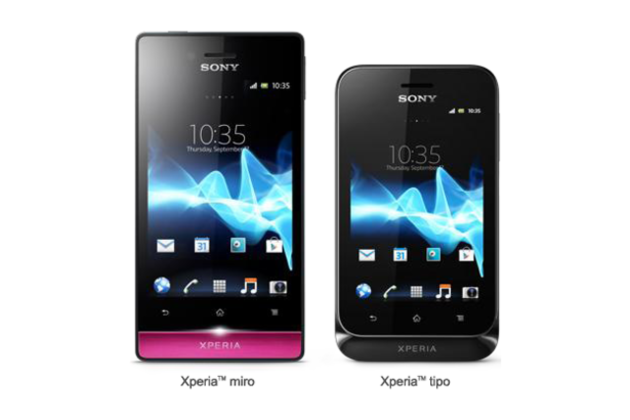
Sony Debuts New Android 4.0 Xperia Miro and Tipo via Facebook Campaign
 Japanese electronics maker Sony has announced two new smartphones, the Xperia Miro and Xperia Tipo ahead of schedule following a successful social media campaign. The new smartphones, which will run on Android 4.0, were launched 9 days early after Facebook users brought announcement date and timeforward by 20 seconds with each click they made on the Sony page. The two smartphones will be the first by Sony to run on Ice Cream Sandwich and will feature Facebook integration. Despite having a low-end 800MHz Qualcomm processor and 512MB of RAM, the Xperia Miro will also feature a 3.5 inch touchscreen,
a front-facing 5 megapixel camera, 4GB of internal storage, Wi-Fi, Bluetooth, MicroUSB and contactless DLNA connectivity to enable content to be shared and viewed on TVs, tablets and PCs. The Xperia Miro features Sony’s xLoud audio technology and also comes preloaded with the Music Unlimited app which has access to millions of music tracks on the Sony Entertainment Network for a monthly subscription fee. The Xperia Tipo is targeted at a slightly lower end of the market, featuring a 3.2 inch touchscreen, Bluetooth, Wi-Fi and a 3.2 megapixel camera. -
10 Must Have Apps For Nokia 5800
Z
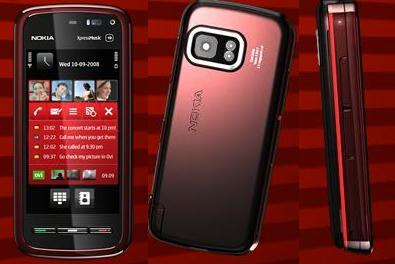
 Nokia, the one of most popular and trusted mobile company. Nokia made wide range of mobile phones for every kind of user either the user is rich or belongs to middle class. Here recently Nokia launch Nokia 5800, a Symbian OS v9.4 based mobile phone with TFT resistive touchscreen. Nokia 5800 is a fully loaded features n work over both Wi-Fi and 3G connections. Nokia 5800 has an amazing feature of TV-Out, which makes it different from other segments by Nokia. Here are the 10 best applications from my personal view which I think makes its performance excellent from good. These apps are about your social network, Business, Security, Entertainment and as well as for students.
1.Nimbuzz
Nimbuzz is application for free calls and messaging using your different social media. You can use your Yahoo!, Windows Live/MSN, AIM, ICQ, Google Talk, Facebook, MySpace, Hyves and SIP (VoIP) accounts at a same time and can customize contacts list and tabs. In new version some changes, New chat style layout, Recent Calls tab, Real time call rates for cheap international calls with Nimbuzz Out, New profile style.
Download2.MazeLock
MazeLock is the one of best security app for your phone from strangers. Just install and watch carefully the default unlock pattern. It is an innovative way to unlock your touch screen phone just set your own unlock pattern by connecting some of the nine white dots together. When you try to unlock your phone, you need to draw the same pattern exactly as you set.
Download3.Moneycontrol-Markets on Mobile
Worried about your investments in market and enable to know information, here is the solution for you while using Nokia 5800.This application is powered by moneycontrol.com, India’s no.1 financial and business portal trusted by millions. Use the application to get real-time stock quotes, Indian and Global market Indices, manage and keep track of your investment portfolio, watch Live TV and get in-depth coverage & analysis of financial markets, economy and business.
Download4.AroundMe
Stranger in a new area and want to find restaurants, banks, ATM, gas stations, and other local services while using Nokia 5800, here is the best app for you which not even tells you about places around you, also tells the maps, directions, routes, street view and read reviews about your destination.
Download5.Mundu TV
Mundu TV is Television on your mobile. Mundu TV provides a rich TV viewing experience with network independence, subscription with unlimited usage. Now everyone with an Internet access will watch their favorite channels live. You can access Mundu TV over a GPRS , 3G or WiFi connection.
Download6. Kaspersky Mobile Security
Kaspersky Mobile Security is the one of the best security app for Nokia mobile phones. Now don’t worry about your phone to lost or stolen with the Anti-Theft Locate. In case your device lost or stolen GPS Find will help you to locate your device. This app keeps your mobile life truly private you can hide or un-hide your contacts and communications history to others.
Download7.Opera Mobile Web Browser
Opera Mobile Web Browser is one of the most popular and using web browser for mobile not even in Nokia it is used on all platforms, Android, Java and iPhones. It is fast, smooth, safe and makes surfing the Web on a mobile device like never before. In latest version the interface looks better with your device and gives Opera Mobile a sleek, modern appearance. Opera Mobile Web Browser comes ultimate when your device connected with WiFi or wireless broadband connection.
Download8.AccuWeather.com WRT Widget
With this application you’ll have access to the current conditions and severe weather risk for the next 6 hours, rain and snow totals for the next 5 days, temperature and sky conditions for the next 15 hours, 10 days and nights of forecasts, daytime high wind speed and or satellite map centered on your location with 5 levels of zoom.
Download9.Dictionary & Translation Pro
Dictionary & Translation Pro is an extremely simple app to use and all you really have to do is touch once to access a thesaurus, dictionary, and translation service all in one. You can get information for a variety of different languages including Arabic, French, Spanish, German, Hindu, Italian, and many others. There are over a million words that are located in the dictionary portion. You can simple Dictionary, and Translator with use of left and right buttons.
Download10.Wikipedia Reader
Wikipedia Reader is an amazing app to read about every topic to related every field. Wikipedia Reader Widget for Symbian is a Web Runtime application that allows reading Wikipedia pages in a format appropriate for small screens. Wikipedia reader have bookmarks, history, collapsible sections and beta support for reading in all languages. It is a very useful app for students.
Download -
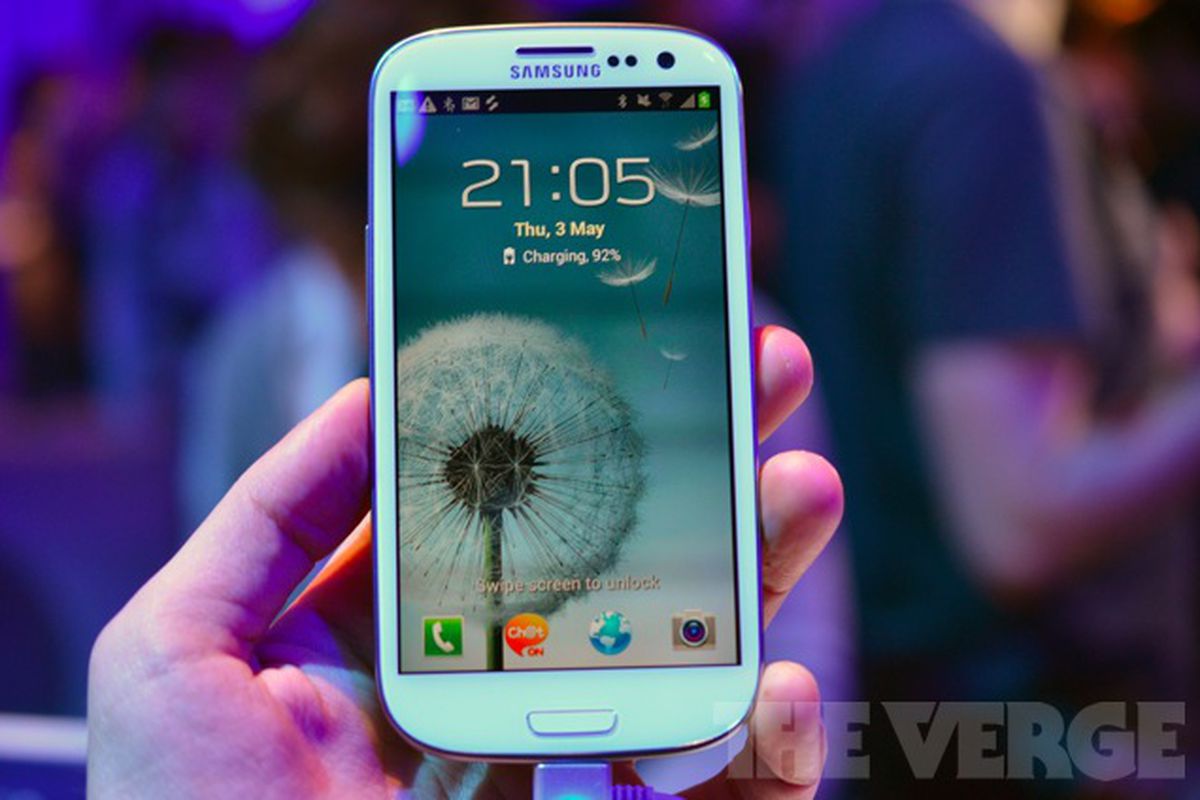
Samsung Galaxy S III: Everything You Need to Know
Here’s the scoop on what Samsung didn’t discuss at the launch party of the next hot Android phone.
Samsung Galaxy S IIIAfter all of the rumors and speculation, the Samsung Galaxy S III is finally here but you probably have a few questions about this new Android phone.
Samsung is the master of flash and flare at its press conferences, but we’re here to help you get to the nitty gritty of why you should care about this phone. The Galaxy S III will go on sale in Europe on May 23. No official word yet on a U.S. launch, but it could come this summer.Can the S III Really Follow Your Every Move?
The Samsung S III really wants to be your new best friend–your new psychic best friend. According to Samsung’s somewhat creepy commercial (shown below), the S III “follows your every move.” Scared yet?
http://www.youtube.com/embed/_JkkkdH6zTQ
In reality, the Samsung S III can do things like predict when you want the screen awake by using the front-facing camera to monitor your eyes. If you’re watching a movie on your phone and happen to fall asleep, the phone’s display will turn off.
The S III also has a feature called S Voice, which is a customized voice-recognition system. Hmm, sound familiar? Like Apple’s Siri, S Voice can recognize a variety of commands. For example, you can say “snooze” when your alarm goes off and buy yourself a little more sleeping time. You can also say “direct call” and ring somebody while you’re in the middle of a text. You can also control the volume of your music, organize your calendar, and launch the camera via voice commands.
However, there’s no word, so far, on whether S Voice works with third-party applications. S Voice works with eight different languages, including British English and American English. A few of my friends from across the pond have complained about Siri’s difficulty in understanding them so I guess this is good news there.Is It Quad-Core Powered?
Samsung confirmed before today’s announcement that the Galaxy S III phones will be powered by the company’s own quad-core 1.4GHz Exynos 4 Quad processor. Oddly, however, the processor specs were not in the press materials we received today. I have a suspicion that the Samsung quad-core processor is not compatible with U.S. LTE networks. If true, we might see a different processor on the S III phones in the United States. Samsung would not comment on what sort of processor the U.S. versions will have when I asked.
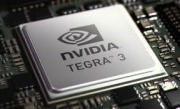 HTC pulled a similar trick with the One X. The global version runs on an NVidia Tegra 3 processor, while the U.S. phone uses a dual-core Qualcomm Snapdragon S4 processor. NVidia’s quad-core processor was not yet compatible with AT&T’s LTE network at the time of the One X’s manufacture. In our benchmarks, however, the U.S. version of the One X did quite well despite having fewer cores.
When Will the S III Come to the United States?
According to our sources at Samsung, the 4G (HSPA+/LTE) versions of the S III will come to North America this summer. Samsung said it will optimize the phones for the LTE and HSPA+ networks. Timing, pricing, or carrier partners have not yet been announced.
What is the Deal with the New Sharing Apps?
Samsung made a big deal about the ease of sharing from the S III, but from what I can tell, it looks like you can only share from your S III to another. Samsung has enhanced Android Beam, which allows large files to be transferred between phones quickly. Now called S Beam, you can share music, photos, and up to 1GB of video from your S III to your buddy’s S III.
To help you understand, here’s how Android Beam works on the Galaxy Nexus.
Samsung also enhanced its DLNA service for sharing content from your phone to your TV. AllShare Cast lets you wirelessly connect your Galaxy S III to your TV, tablet, or PC and share files over WiFi. However, you’ll have to buy the separate All Cast Hub accessory in order to use this feature (see the Accessories question below)What is an HD Super AMOLED display?
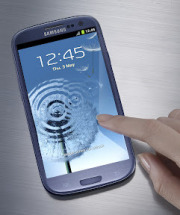 The 3.4-inch-thick S III has a 4.8-inch HD Super AMOLED display with a 1280-pixel by 720-pixel resolution. This is the same display technology we saw on the Galaxy Nexus. The Galaxy S II had Super AMOLED Plus, which is actually based on a PenTile pixel structure in which pixels share subpixels.
The Galaxy S II phones, on the other hand, have full RGB displays in which the pixels have their own subpixels. This means that HD Super AMOLED displays have lower overall subpixel density, which could translate to reduced sharpness and degraded color accuracy.
When we compared the Galaxy Nexus to the Galaxy S II, however, we didn’t notice a huge difference in display quality. The only quality different we detected was color accuracy, especially with whites (they appeared to have a yellowish tint). I have yet to see the Galaxy SIII up close and personal, so I’m not sure if it suffers from this same issue
One cool thing is that despite the Galaxy S III having a larger display than its predecessor (4.8 inches versus 4.3/4.5 inches), it isn’t much bigger. There’s very little bezel around the phone as the display takes full advantage of the hardware real estate.Will Battery Life Really Improve?
Battery life is the bane of every tech user. Samsung claims that it won’t be an issue with the S III as it has a larger 2100mAh battery. For comparison, the Galaxy S II has a 1560mAh battery, while the Galaxy Nexus has a 1750mAh battery. The granddaddy of phones with long battery life, the Droid Razr Maxx, has a 3300mAH battery.
I fear that Samsung’s all-seeing front-facing camera might put a strain on the battery life, however. Also, phone manufacturers still haven’t worked out all the kinks with battery conservation on LTE networks. Battery life will depend on what sort of processor Samsung is packing into its S III phones for the United States and, as we’ve learned, this is still very much up in the air.Is the Camera Any Good?
The Samsung Galaxy phones have always performed quite well in our PCWorld Test Center camera subjective tests. While I haven’t personally gotten my hands on the Galaxy S III’s 8-megapixel camera, I can tell you a little bit about its new features.
According to Samsung, the Galaxy S III will have zero shutter lag. The company also claims that the camera will start in “less than one second.” The S III will also have a burst-shot mode, a feature we saw on HTC’s One phones.
The S III camera also will have a feature called “Best Photo,” which will automatically select your best photos out of a series of eight photos taken in succession. But do you really want your phone to be your photo assistant?What About Accessories?
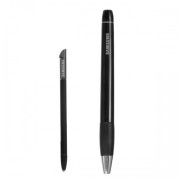 Samsung Galaxy Note S PenSamsung announced a slew of accessories, including a C Pen stylus (which seems pretty similar to the S Pen on the Galaxy Note), an AllShare Cast Hub for wireless streaming, a docking station for your desk, a wireless charger, a car kit, and an HDMI adapter.
Samsung also announced the S Pebble “music companion” MP3 player. Why does this accessory look so familiar? Oh yes, in 2009, I reviewed the Samsung Pebble MP3 player which looks strikingly similar to the S Pebble.Is the Galaxy Nexus Outdated Now?
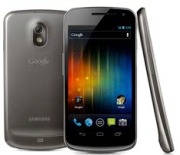 Samsung Galaxy NexusNo, relax. It might not have as many cores as the S III, and the display might be a little smaller, but don’t feel bad if you just walked out of the store with a brand new Galaxy Nexus. Your Galaxy Nexus is still an excellent, current phone and offers something the Galaxy S III does not: A pure, untouched Android experience.
Have more questions? Sound off in the comments and I’ll try my best to answer them for you. -

Apple’s Facebook Integration Will Help Both Companies, Analysts Say
 Apple announcement that it’s integrating Facebook into its operating system software should be welcome news for a social network that’s taken a lot of hits in recent weeks.
“Facebook is a company that could use some good news or could, at the very least, use a break from the seemingly non-stop drumbeat of dismal press,” said Dan Olds, an analyst at Gabriel Consulting Group. “This isn’t going to be any sort of miracle for Facebook, but it is a nice feature. And it’s [a change from] the ‘Facebook Cavalcade of Crappy News’ headlines.”
Apple announced at its annual Worldwide Developers Conference this week that Facebook will be integrated into the iOS software that runs the iPhone and iPad, as well as into the latest OS X version, code-named Mountain Lion.
Apple said the integration of Facebook into its operating systems will enable users to easily and seamlessly post photos, videos and updates to their Facebook accounts. The updates will let users update their Facebook status by talking to their phones, Apple added.
The integration puts Facebook at the fingertips of Apple device users without having to use the social network’s own apps, which many experts call mediocre at best. While Apple’s move doesn’t offer an answer to Facebook’s problem of figuring out how to make money from mobile users, it may increase the time that millions of users spend on the site when they are on the go.
“Apple caters to the masses and Facebook is the social media hub for the masses,” said Patrick Moorhead, an analyst with Moor Insights & Strategy.
“This sounds positive for Facebook, which needs any kind of win. This will undoubtedly increase Facebook interaction but it still doesn’t address the mobile monetization issue. And until Facebook figures this out, not much else matters,” he added.
As for Apple, offering integration with a wildly popular social network is a good way to keep users from drifting to other platforms, noted Rob Enderle, an analyst at the Enderle Group.
“In general, this is a nice feature which should help prevent customer moves to Android or Windows Phone,” he added. “It showcases their increased advantage in speech in what is a speech optimized device and perhaps anticipates the long-rumored smaller iPhone, where text entry would be more difficult.”
Olds agreed that the integration is as good for Apple as it is for Facebook.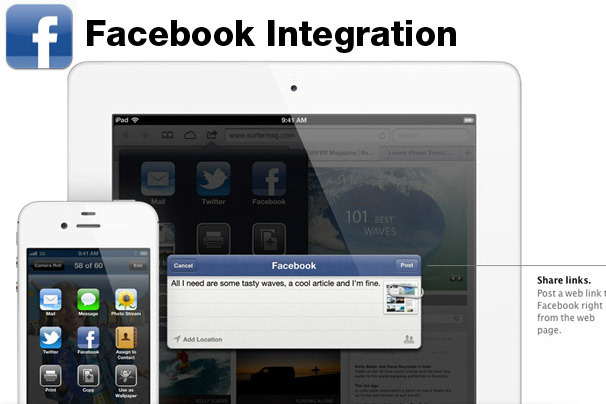
“There are almost a billion Facebook users. That’s a big, big number, even for Apple,” Olds said. “Down the road, there might be a mechanism where Facebook users can buy and view Apple content via the Facebook interface with friends. So there’s a lot of potential synergy here.”
He added that it’s wise not to forget the adage, ‘the enemy of my enemy is my friend.’
“Both companies are arrayed against Google on several fronts,” said Olds. “A combined effort, or at least a loose relationship, helps both.” -
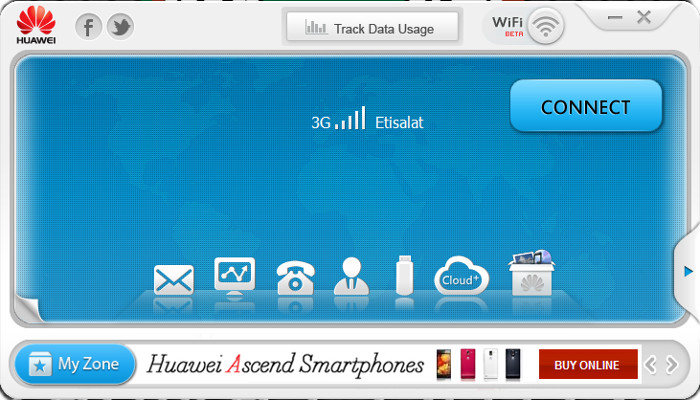
Huawei E303 Firmware Software Update.21.157.31.00.850 – Download
Huawei E303 Firmware software can be used to update the firmware of your Huawei E303 USB Modem, including Glo Bolt and MTN E303 Modems. Together with the Universal Master Code Calculator tool, Huawei E303 Firmware may be required to unlock stubborn E303 Glo Bolt modems.
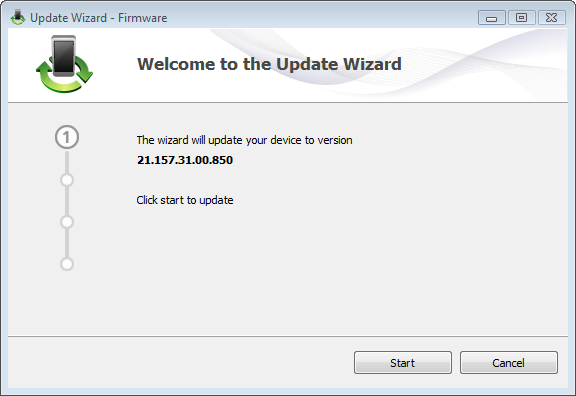
Huawei E303 Firmware installation wizard File Info
- File Name: E303 Firmware S Update.21.157.31.00.850
- File Type: WinRAR ZIP archive (.zip)
- File Size: 10.1 MB (10,694,218 bytes)










You must be logged in to post a comment.