Category: Technology

  • Exciting Keyboard Shortcuts that will Make you a Twitter Ninja

    Exciting Keyboard Shortcuts that will Make you a Twitter Ninja

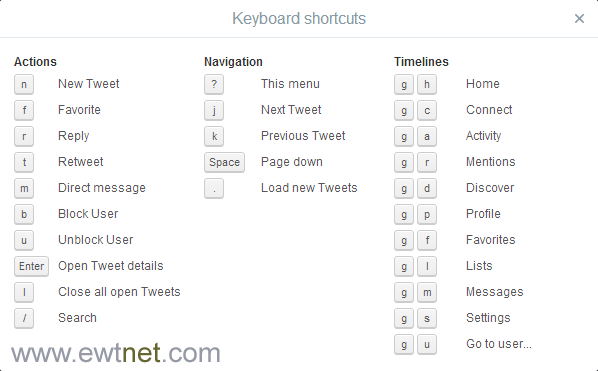
    Out of over 500 million Twitter users, only 30% can boast of knowing their way around Twitter main website without clicking. Though the new Twitter interface is pretty much like the old one, using keyboard shortcuts could prove useful when you want to perform a quick task.  

      If you use the main Twitter website, we can help you out with some seriously useful keyboard shortcuts. Whether it’s navigational tricks or keyboard actions, these handy shortcuts will save you tons of time.

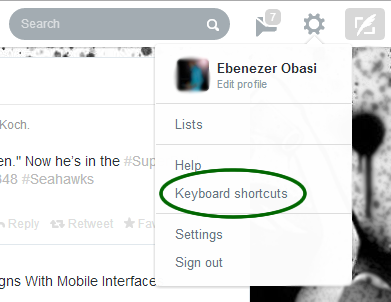
    To view the complete list of keyboard shortcuts from your Twitter account at any time. Click on the Gear Icon on the menu bar and select Keyboard shortcuts.

    Image
  • Twitter Rolls Out New Web Design That Aligns With Mobile Interfaces

    Twitter Rolls Out New Web Design That Aligns With Mobile Interfaces

    Twitter is rolling out a new design on the web today that eliminates the pop-up compose window and brings its look more in line with its mobile apps.

    We’ve been seeing Twitter test versions of this design for some time now, but this particular one appears to be the test bucket that got the best reaction from users.

    It looks, in some ways, a lot like the old version of Twitter — with a profile box and other information presented to the left of the main timeline. One of the biggest changes, of course, is that there is now an inline compose box on the left side, allowing you to pound out tweets without having to deal with the pop-up compose box. The pop up is still accessible via the ‘new tweet’ button in the upper right corner and the keyboard shortcut.

    Placing a compose box right in the left column should make the interface feel a bit lighter weight, inviting people to tweet out a bit more than placing it ‘under’ the compose button. I’d guess that this was aimed at converting lurkers to tweeters.

    If some of you are looking at this design and thinking ‘hmm, this is how mine has looked for weeks’, then congratulations, you’re in one of Twitter’s test buckets. The company experiments heavily, giving 1% of its users a tweaked or refreshed design and testing how they interact with it before rolling out changes on a wider scale. We’ve been getting reports of this particular design — or one with some of its elements — for a few weeks now.

    The alignment of Twitter’s web edition with its mobile versions for iOS and Android certainly makes sense. A large recent release saw major changes in both design and functionality. The web version has lagged a bit behind those releases in the interim, but now feels much more at home.

    Image Credit: John Verive. This post was first seen on Techcrunch.

  • AMD releases game-changing Mantle support in new Catalyst beta driver

    AMD releases game-changing Mantle support in new Catalyst beta driver

    AMD has released the latest beta driver of its Catalyst software, making its Mantle API a reality for those with supported graphics cards.

    AMD’s Catalyst 14.1 beta driver was expected last week, although a few glitches delayed the release. Over the weekend, AMD published the beta driver to its Web site. Note that you’ll need to uninstall the current driver before installing the beta.

    AMD is positioning Mantle as a low-level API optimized for its own hardware, offering significantly better performance than the generic DirectX API that powers both AMD and Nvidia graphics cards and integrated CPU/GPU chips, known as APUs. (For more, see our earlier deep dive into Mantle technology.)

    So far, just one game, EA’s Battlefield 4, has been optimized for Mantle, although a tech demo of an upcoming game, Star Swarm, has also been released. According to AMD, gamers who load the new beta Catalyst driver should see up to 45% improvement in frame rate running Battlefield 4, and 200% when using the driver and playing the Star Swarm demo. A few other games, including the Thief reboot and Wing Commandercreator Chris Roberts’ Star Citizen, will also support Mantle, the developers have said.

    PCWorld hasn’t had a chance to test Mantle yet, but real-world tests conducted by Anandtech showed gains of up to 30 percent when running Battlefield 4 on an Intel i7 4960x CPU. Naturally, because the Catalyst driver is a beta, future improvements are expected.

    The new driver also includes support for AMD’s “frame pacing” technology, which smooths the handoffs between multiple GPUs working together in a Crossfire alignment to an “even and regular pace,” according to AMD.

    AMD says that the following graphics cards will support the new Catalyst driver, and by extension, Mantle: the AMD Radeon R9 and R7 cards, plus the Radeon HD 8000 and 7000 series, and as well as the A10-7000 and A8-7000 APUs. Don’t expect to see the same dramatic gains in frame rate using the older cards, however, AMD warns—you’ll have to wait for future updates to see those improvements.

  • Feds pave the way for cars that can talk to one another

    Feds pave the way for cars that can talk to one another

    The Department of Transportation (DOT) said Monday that it plans to require vehicle-to-vehicle communications in future generations of cars, eventually making the technology as ubiquitous as seat belts.

    Specifically, the DOT said that it will prepare a report on its findings on vehicle-to-vehicle (V2V) communications for publication in the coming weeks. That report will become the foundation for a new V2V regulatory framework, to be published later.

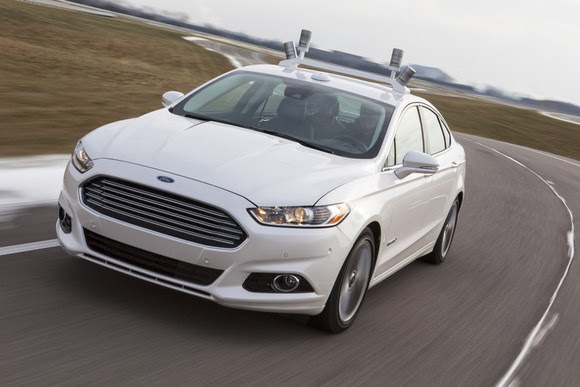
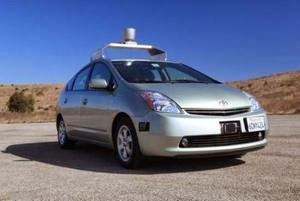
    Google has said that its self-driving cars will use 
    V2V communications in addition to its LIDAR systems.

    The National Highway Traffic Safety Administration (NHTSA), part of the DOT, “will then begin working on a regulatory proposal that would require V2V devices in new vehicles in a future year, consistent with applicable legal requirements, Executive Orders, and guidance,” the DOT said in a statement Monday. The DOT said it believes that the signal this announcement sends to the market will significantly enhance development of this technology and pave the way for market penetration of V2V safety applications.

    Vehicle-to-vehicle communications refers to the emergence of Wi-Fi-like radios that could be mounted in cars and communicate with one another. Also known as Dedicated Short-Range Communications, V2V car-mounted radios would constantly communicate with other vehicles within range, providing speed and directional data to other cars’ safety and navigation systems. The idea is that a car racing around a blind curve would “know” that a car was heading in the opposite direction, or a car would receive warnings that cars ahead were coming to an unexpected stop.

    In August, 2012, DOT launched what it called the Safety Pilot “model deployment” in Ann Arbor, Mich., where nearly 3,000 vehicles were deployed in the largest-ever road test of V2V technology. DOT testing demonstrated the interoperability of V2V technology among products from different vehicle manufacturers and suppliers and has demonstrated that they work in real-world environments, it said.

    “V2V crash avoidance technology has game-changing potential to significantly reduce the number of crashes, injuries and deaths on our nation’s roads,” said NHTSA’s acting administrator, David Friedman, in a statement. “Decades from now, it’s likely we’ll look back at this time period as one in which the historical arc of transportation safety considerably changed for the better, similar to the introduction of standards for seat belts, airbags, and electronic stability control technology.”

    At this point, the DOT doesn’t envision that the V2V data would do anything more than sound an alert, rather than trigger the braking or steering systems. The DOT also said that the data would not be used to track drivers. “In fact, the system as contemplated contains several layers of security and privacy protection to ensure that vehicles can rely on messages sent from other vehicles and that a vehicle or group of vehicles would be identifiable through defined procedures only if there is a need to fix a safety problem,” the DOT said.

    This enthusiastic wing-pup may someday be out of a job, if V2V systems start communicating location and speed data directly from car to car.

    Vehicle communications systems have been in place for some years, with bus systems in London, the San Francisco Bay Area’s BART system, and others broadcasting their estimated times of arrival at the next station, based upon their location data. It’s this vision of the future that Scott F. Belcher, president and chief executive of the Intelligent Transportation Society of America (ITS America), said he endorsed.

    “Thanks to the strong commitment by U.S. DOT and automotive leaders, and years of investment by countless innovators and industry pioneers, the vision of ‘talking’ cars that avoid crashes is well on the way to becoming a reality,” Belcher said in a statement. “And we’re not just talking about cars talking to cars, but about cars talking to bikes, trucks talking to motorcycles, and even buses talking to pedestrians. This promises to significantly reduce the number of deaths and injuries on our nation’s roads while unleashing a new wave of innovation from advanced traffic management systems and smart mobility apps to real-time traffic, transit and parking information. We look forward to working with U.S. DOT, the automakers, and high-tech industry to ensure that issues such as security and privacy are addressed as we work toward full scale adoption of this life-saving technology.”

    Credit: IDG News Service – PC World. View from original source.

  • Chrome beta users get an assist from Google Now

    Chrome beta users get an assist from Google Now

    IDG NEWS SERVICE – Google Now is moving out of the lab and onto the desktop in the beta version of Chrome.

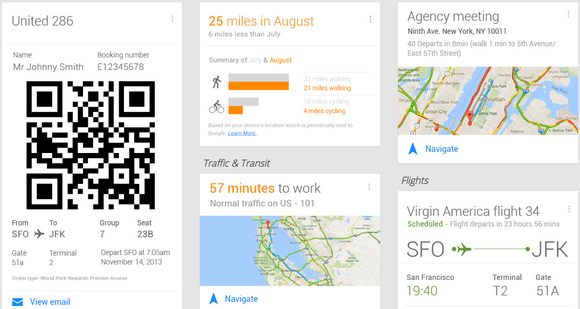
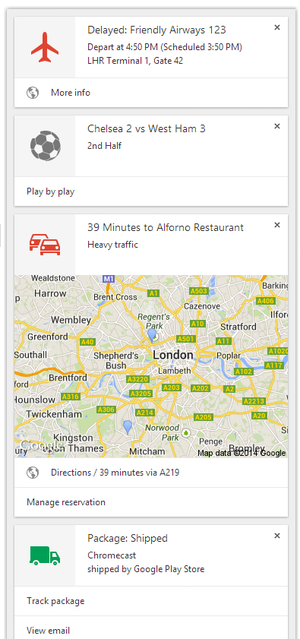
    Starting this week, Chrome beta users can view Google Now “cards” within the notifications area on Windows, Mac, and Chrome OS. The cards should show up automatically if you’re already using Google Now on Android or iOS, and have signed into Chrome with the same Google account.

    Google Now is a virtual assistant that tries to anticipate the information you want, such as the weather, traffic, travel details, and upcoming reservations. Much of that information is based on activity from your Google account. For example, Google Now can detect flight confirmations in Gmail and notify you about any delays; it can also look at your Web searches to infer what breaking news topics you’d be interested in.

    The service first launched for Android in 2012, making its way to the iPhone last April as part of the Google Search app. There have been hints of a desktop version since early last year; last month, it finally launched as an experimental feature—not enabled by default—within Chrome Canary. While the feature rolls out to the Chrome beta channel this week, it’s already available through theChrome dev channel.

    The arrival of Google Now is the search giant’s biggest step yet toward a convergence of Chrome and Android. Google has said that it won’t merge the two platforms anytime soon, but that it wants to have a more consistent experience across both platforms. Along that line, Google recently started letting Chrome developers create standalone Web apps for Android.

    Having Google Now in Chrome could be useful for certain things, such as traffic on your upcoming commute or reminders of when to leave for your next appointment. But it could also be a nuisance for less important things such as sports scores.

    If you’d rather not see Google Now notifications, click the bell icon in your notification area (lower-right corner in Windows, upper-right on Macs), then click the gear icon in the Notifications Center and uncheck the “Google Now” box.

    View original source.

  • North Korea’s home-grown OS looks a lot like Apple’s OS X

    North Korea’s home-grown OS looks a lot like Apple’s OS X

    IDG NEWS SERVICE – If imitation is the sincerest form of flattery, might the folks in Cupertino be pleased when they see the latest version of North Korea’s home-grown operating system?

    Version 3.0 of Red Star Linux presents users with a radical refresh of its desktop design, one that closely resembles Mac OS X. The new look replaces the Windows 7-like desktop that was used in version 2.0 of the software.

    The Korea Computer Center (KCC), a major software development center in Pyongyang, began developing Red Star about a decade ago. Version 2 is 3 years old and version 3 appears to have been released in the middle of last year.

    The world has gotten its first look at version 3 thanks to Will Scott, a computer scientist who recently spent a semester teaching at the Pyongyang University of Science and Technology (PUST). The school is North Korea’s first foreign-funded university and many of the lecturers come from overseas.

    Scott said he bought the operating system at a KCC dealer in the capital city and the screenshots he provided were of the basic version 3 software without any modifications.

    While most North Koreans are restricted from accessing the Internet, many can get access to a nationwide intranet through universities and public libraries. The intranet offers websites for domestic institutions and is heavily skewed towards offering information, educational materials such as PDF versions of books and scientific papers, and government propaganda.

    Red Star Linux includes a web browser based on Mozilla that has been re-branded “Naenara,” or “My country.”

    It also includes a copy of Wine, a Linux application that provides an environment under which Windows software can be run.

  • What if I want to Stick with Windows XP? Here is what to do!

    What if I want to Stick with Windows XP? Here is what to do!

    Is longer a secret, it’s been over a decade since Windows XP came into being. It’s true, time has changed; newer technologies has been introduced, even the guys up there are already getting tired of it. Yet, I want to stick with Window XP.  

      What you are asking for is quite a difficult one. Microsoft has already decided to end it’s support for the OS come April, 2014 and to continue using it, will open your PC to various security vulnerability.
      Psst! Listen to my brief advice and implement it with caution. I really understand why you might not be able to give up your Windows XP. Your business may depend on a specialized application that won’t run on Windows 7 or 8. Or you may not be able to afford a new PC and your old one isn’t powerful enough for an upgrade. Perhaps you’re just stubborn.

    Reluctantly, I’m going to advise you on protecting a Windows XP computer after Microsoft’s updates stop. But I give this advice with a warning: This is not perfect protection. You’ll be better off giving up on XP.If you absolutely can’t or won’t give up XP, consider disconnecting that particular PC from the Internet. Use it the old-fashioned way: as a truly personal computer with no connection to the outside world. Then buy another PC or a tablet for email and browsing.

    If that isn’t practical, follow these suggestions to make your XP computer more secure:

    Get a full security suite: A simple antivirus program won’t be enough. Buy a heavy-duty suite with a two-way firewall and exploit protection in addition to antivirus. I like Kaspersky Internet Security, but there are several solid security suites, as we found in our recent roundup.

    Get a second opinion: Now that you have a powerful security suite, don’t trust it. Augment your regular antivirus program with Malwarebytes Anti-Malware Free. Run it once a week to scan for malware that your suite may have missed.

    Use Firefox or Chrome: An out-of-date browser is an open door for malware, and any version of Internet Explorer that runs on XP is very out of date indeed. But the latest versions of Firefox and Chrome can still run on your machine.

    Protect your browser: Scripts are a dangerous malware delivery system, and the right browser add-ins can block them. And yes, you can tell the add-ins to make exceptions and allow scripts from sites that you trust. If you use Firefox, install NoScript Security Suite. For Chrome, go with NotScripts.

    And remember that eventually, the security suites and browsers will stop supporting XP, as well. This can’t go on forever.

  • GoldieBlox’s Super Bowl Ad Is A Counterbalance To Rampant Sexism

    GoldieBlox’s Super Bowl Ad Is A Counterbalance To Rampant Sexism

    https://www.youtube.com/embed/mHXbQ4PeNLI?feature=player_embedded
    On Sunday night, about 110 million people turned on their TVs to watch a series of lavish, expensively produced 30-second skits interspersed with live footage of men throwing a ball around. Fox Sports charged up to $4.5 million for each ad spot this year, with companies like Anheuser-Busch, Chevrolet, and Pepsi coughing the record-breaking figure.
    But one of the most notable ads was created by a 15-person tech startup called GoldieBlox, which makes engineering toys for little girls. The San Francisco-based company announced four days ago that it won Intuit’s Small Business, Big Game challenge, landing one of the year’s most coveted advertising spots.

    (GoldieBlox’s Super Bowl ad also helps distract from its legal battle with the Beastie Boys, who are suing the company for using an unauthorized parody of “Girls.” The Super Bowl ad played a cover of “Cum Feel The Noize” by Slade that was, presumably, licensed and paid for.)

    It’s extremely unusual for such a small company to advertise during the Super Bowl, but what makes GoldieBlox’s spot, which features a hoard of little girls turning their boring pink toys into a rocket and launching it into space, especially interesting is that it serves as an antidote to the outrageous sexism constantly on display in each Super Bowl’s commercials. Of course, it also gives Intuit a chance to boost its image without having to figure out how to make a commercial about tax software interesting.

    The misogyny in Super Bowl is so egregious that advocacy group The Representation Project actually made an app to help viewers send complaints directly to the companies responsible.

    It’s still too early to tell which ads will make this year’s list of the worst offenders, but based on Twitter reactions, SodaStream and Volkswagen are in the running to earn that dubious distinction. Here’s a list of last year’s creepiest spots, including Carl’s Jr’s desperate attempt to make fish sandwiches sexy.

    But the tide may be turning as the gap between male and female Super Bowl viewers narrows each year. For example, GoDaddy.com, one of last year’s top offenders, dramatically changed its tone with this year’s commercial. Hopefully more companies will figure out how to make attention-grabbing ads without resorting to crass stereotypes.

  • Neo4j, A Graph Database For Building Recommendation Engines, Gets A Visual Overhaul

    Neo4j, A Graph Database For Building Recommendation Engines, Gets A Visual Overhaul

    Part of the problem with any powerful technology is how it is perceived. It might be something that is too early for its time or it may just need those years of development and use for the market to catch up to its potential. That is true of graph databases like Neo4j, which now has a new graphical interface that helps people map relationships between different people, places or things.

    There is one simple way to think about graph databases, said Emil Eifrem, CEO of Neo Technology and one of the original developers of the graph database technology. And that is to explore how graph databases treat relationships as first-class citizens. The knowledge is all about relationships. When more connections are made, the view fills out. Graph databases find the relationships, the missing pieces that help form connections.

    Graphs databases are still known by relatively few people, but they are gaining acceptance as the use cases increase. The reasons are clear when you consider how much data is now getting created. With that scaling comes a growing demand for new types of analytics capabilities.

    Graph databases are becoming more popular for the varied amounts of data they aggregate and analyze. They treat everything as a node. That might be things like a street light or people. The properties of a graph database describe the nodes. A graph database also has “edges” that connect the nodes and properties, defining the relationship between them. The value is derived when analyzing the patterns between the nodes and the properties.

    Neo Technology has put a heavy emphasis on the user interface to make it more accessible and easier to query and build graphs from large data sets. It took the developers 10 years to get to Neo4j 1.0, said Eifrem. They built it to be fully transactional and ACID compliant, meaning transactions are processed reliably. But it lacked a decent user interface. So that became the focus as they developed the 2.0 release.

    In this new version, the goal is to make it possible for developers to create their own recommendation engines using visual guides and simple queries. Cypher, the query language, has been updated and streamlined, making it more accessible to someone like a business analyst. It also now supports labels that refer to subsets of nodes in a graph, introducing a form of schema into the technology. This means that the data can be indexed better, allowing the developer to tell the database more about the data.   https://www.youtube.com/embed/qbZ_Q-YnHYo?feature=player_embedded  

    Snap-Interactive uses Neo4j to build social graphs that find the patterns in the data to recommend potential matches on dating sites. Graph databases also apply to network and data center management. A cloud infrastructure, for example, is a connected system. The shape of the data can help track the root cause analysis of a data center outage.

    Neo4j is the most popular graph database, said Matt Aslett, a research director for data management and analytics at 451 Research. But these are early days and there are competitors like Objectivity and established providers such as Teradata that have layered a graph capability to its Aster database.

    Orchestrate takes a different approach, Aslett said. They are doing it in reverse. They have a single API that allows the user to sync multiple databases with its service that has a graph capability. It does not layer on top of the existing database. Instead, it syncs with the existing database. In Orchestrate they get the graph capability, which is connected to the pre-existing database.

    Time To Visualize

    Data has been locked up in rows and columns on a spreadsheet for years but that has to change as we increasingly need to visualize what the data means. There is just too much of it for our minds to comprehend unless it is shown in some way through pictures and graphics.

    The visualization in Neo4j helps show the relationships between different data sets that you can’t get by only looking at the code. This visualization capability is supported with Cypher, the query language developed by Neo4j. Each query represents an interaction that is shown in the visualization.

    Traditional SQL engines are not meant to collect data and seek out relationships. They are instead designed more for transaction-oriented systems. Graph databases handle the loads with far more ease as they model, store and query the data. Everything is connected. A relational database will often deteriorate in performance over time as the data set grows. It may be a result of joined tables or queries that rely on joins. This can make it quite slow as opposed to a graph database that is densely connected and easily queried.

    As sensors become more widely used in wearables such as Google Glass, the demand for graph databases will increase. It will be important to correlate the data from any number of sensors that might be in a house, a car or city street. There will also be the need to analyze increasing amounts of text from medical records, contracts, etc.

    It will be a long time before relational databases ebb into oblivion. But their role is no longer universal. Graph databases are here to stay and for now Neo4j is setting the standard for the rest of the market.

    “There is a tipping point but that will take some time,” Aslett said.

    This article was first posted on Techcrunch.

  • Here is What Google is Doing with all those Robots!

    Here is What Google is Doing with all those Robots!

    Starting from December last year, Google has acquired at least six robots companies or companies creating technologies used in the development of robotics. The acquisition of Boston Dynamic (the creators of Big Dog) on December last year and the recent acquisition of DeepMind Technologies has made a few people to wonder about Google’s actual intentions for buying all those robots.  

    Former Google Android lead and current Google Robot Guru Andy Rubin‘s list of acquired companies reads a bit like a baseline robot kit:

    While we are well aware of Google’s interest in self-driving cars, the robot end-game is unclear. Sure, you can build an army of C-3POs, but for what?

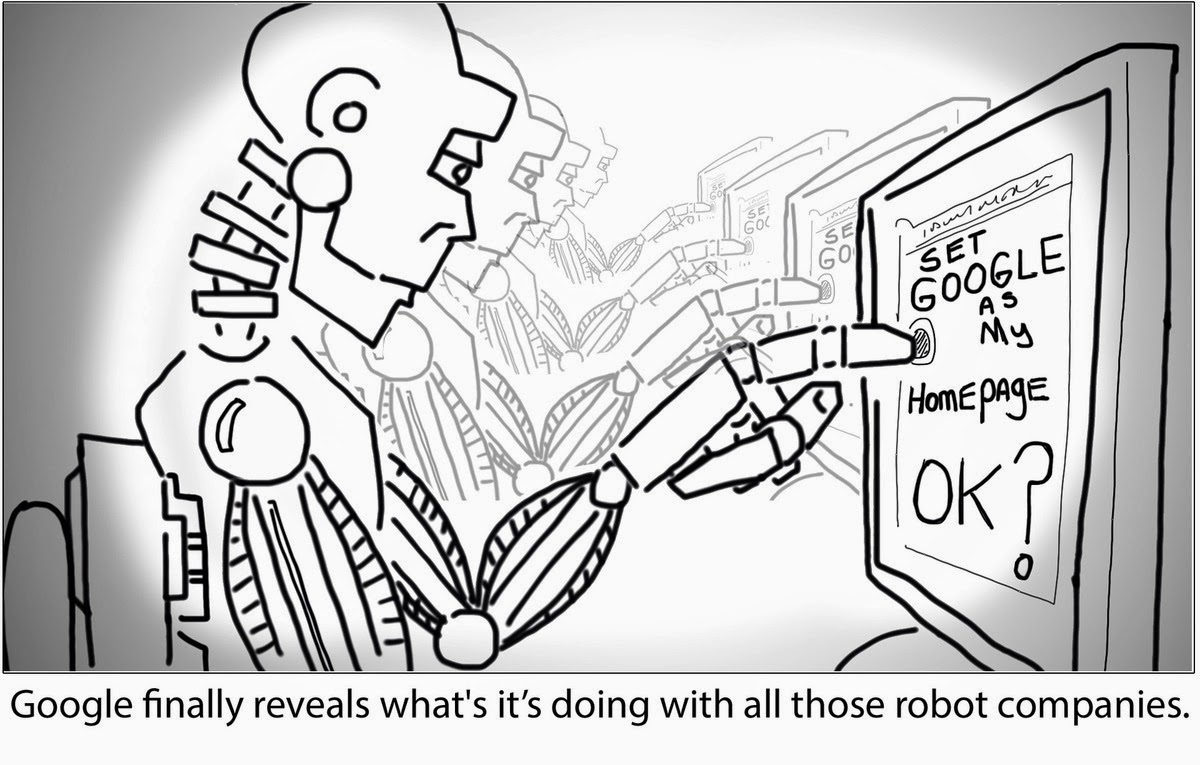
    Well, robots are excellent at repetitive tasks, like changing the settings on millions of computers so that they have Google.com as their home page and Google as their default search engine. Would these Google Robots invade homes to make the change or would Google offer it as a service? Send us your computer and our robots will “fix” them.

    No one knows. Until then, I offer you the comic guesswork above.

  • Bill Gates may be on his way Out of Microsoft; Satya Nadella to be named Microsoft CEO

    Bill Gates may be on his way Out of Microsoft; Satya Nadella to be named Microsoft CEO

    Microsoft’s cloud chief, Satya Nadella, will lead the company as its next chief executive, according to a report from Bloomberg.

    Microsoft’s board is “preparing to name” Nadella chief executive, Bloomberg reported Thursday afternoon. Nadella, whose official title is executive vice president of Microsoft’s Cloud and Enterprise group, had been one of the front-runners in the race to replace current chief executive Steve Ballmer, who said last August that he planned to step down within a year.

    But the board is also considering replacing Bill Gates as chairman of the company, Bloomberg reported, ousting the company’s co-founder and possibly replacing him with John Thompson, Microsoft’s lead independent director. If Gates is to go, as PCWorld suggested last year, it would remove two of Microsoft’s iconic employees from the software giant.

    The problem with replacing Ballmer or Gates, is that no one executive at Microsoft has traversed the range of the company’s products, which include consumer businesses like the Xbox, cloud services such as Azure, the company’s Windows business, server and development services like Visual Studio, and an emerging mobile business, too.

    Nadella, 44, is an Indian-born engineer with degrees in electronics, computer science (from the University of Wisconsin–Milwaukee), and business administration (from the University of Chicago). Nadella has worked since 1992 at Microsoft, and is credited with launching BizTalk, Microsoft’s Commerce Server, and Microsoft’s Office Small Business products.

    However, Nadella is most famous for having overseen Microsoft’s online initiatives, where he transformed Windows Live Search into Bing. The market share for Microsoft’s search offering stands at 18.2 percent, according to Microsoft’s recent earnings.

    One problem that naysayers point to: Nadella has no experience as a chief executive, unlike internal rivals like Tony Bates, who ran Skype, and external candidates like Alan Mulally of Ford, who took himself out of the running in early January, saying he was committed to Ford.

    So far, Ballmer’s commitment has been to a “devices and services” strategy. If Nadella is named CEO, its unclear whether he’d commit to that direction. On the other hand, his track record indicates that he can fulfill at least one half of that strategy.

  • Yahoo acknowledges Yahoo Mail hack

    Yahoo acknowledges Yahoo Mail hack

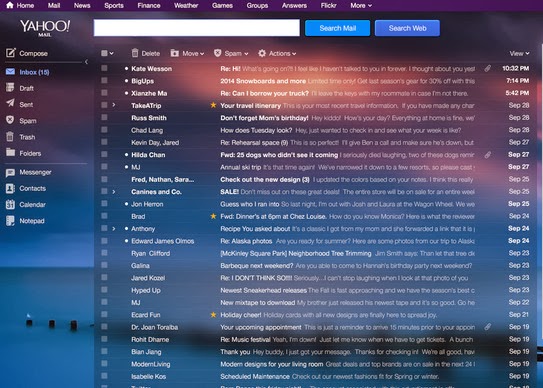
    Have your friends recently texted you about spam originating from your Yahoo Mail account? If so, that may be because you (and many of your friends) were hacked.

    Yahoo acknowledged Thursday that attackers now own an undisclosed number of usernames and passwords to Yahoo Mail accounts. In a blog post, Jay Rossiter, the senior vice president in charge of Yahoo’s platforms and personalization products, wrote that the attackers had most likely hacked an external, third-party database and obtained the information there.

    “We regret this has happened and want to assure our users that we take the security of their data very seriously,” Rossiter wrote.

    Yahoo did not say how many accounts had been compromised, nor when the attacks had taken place. However, the company says it began notifying users that the attacks had taken place, and had begun using second sign-in verification to allow users to re-secure their accounts. Users who have been affected, unsurprisingly, will be asked to change their password, and may receive an SMS text to that effect, Yahoo said.

    Yahoo said that it was working with federal law enforcement to find the culprits and would take further precautions to prevent this from happening again.

    Finally, Rossiter stated the obvious: “In addition to adopting better password practices by changing your password regularly and using different variations of symbols and characters, users should never use the same password on multiple sites or services,” he wrote. “Using the same password on multiple sites or services makes users particularly vulnerable to these types of attacks.”

    In December, Yahoo Mail went down for several days, stranding about 1 million users of the service without email—or word from the company. While the outage began on Monday, it was Friday before CEO Marissa Mayer apologized on behalf of the company.

    However, this week Mayer touted Yahoo Mail and services like Flickr as “a strong foundation for revenue growth,” even as that revenue fell by 6 percent compared with a year ago.

  • Dell’s $129 Dongle Puts Android On Any Screen With HDMI Input

    Dell’s $129 Dongle Puts Android On Any Screen With HDMI Input

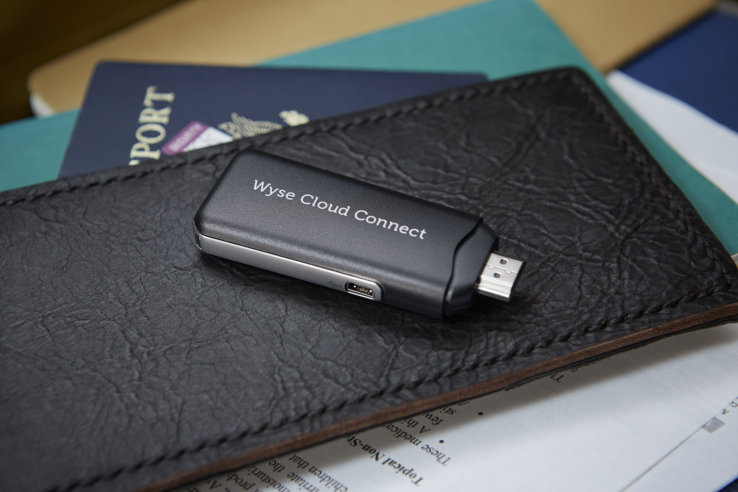
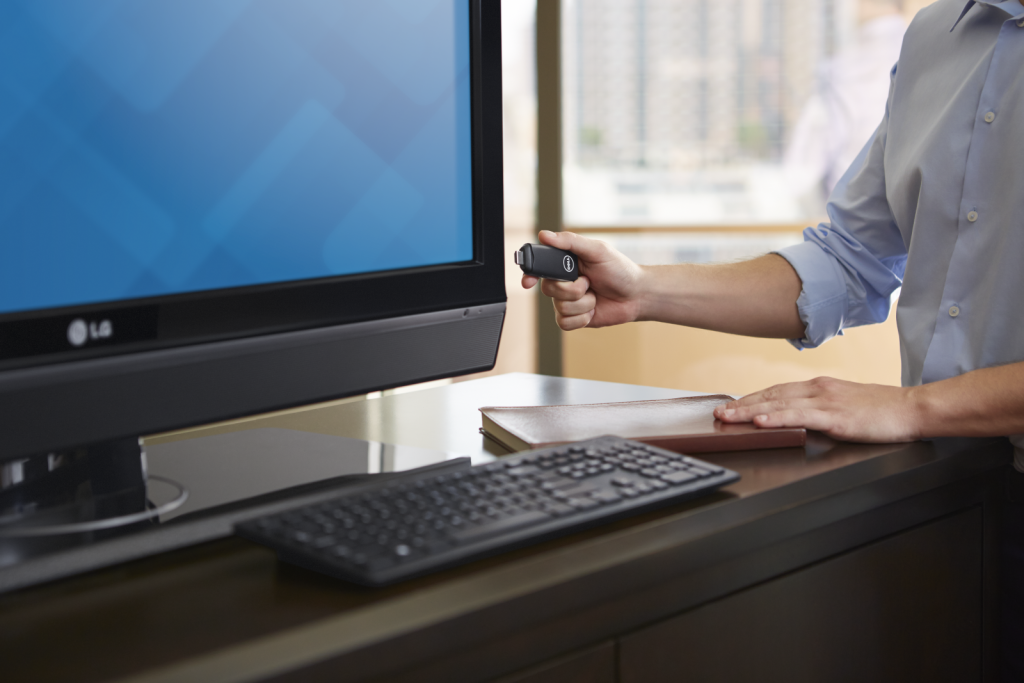
    Techcrunch – Dell continues making bets on Android in its computing lineup with a new $129 device that brings Google’s mobile OS to any TV or display with HDMI input. The new stick runs Android Jelly Bean, also supports MHL connections (mobile high-def) and offers Bluetooth and mini USB for mouse, keyboard and other device connectivity.

    In addition to onboard connectivity for Bluetooth, the new Dell Wyse Cloud Connect also offers 802.11n dual-band Wi-Fi and the standard Google Play store for Android software. It’s an enterprise and business focused device, however, and also has Dell’s Wyse PocketCloud software preloaded to help it act as a virtual terminal for remote computers.

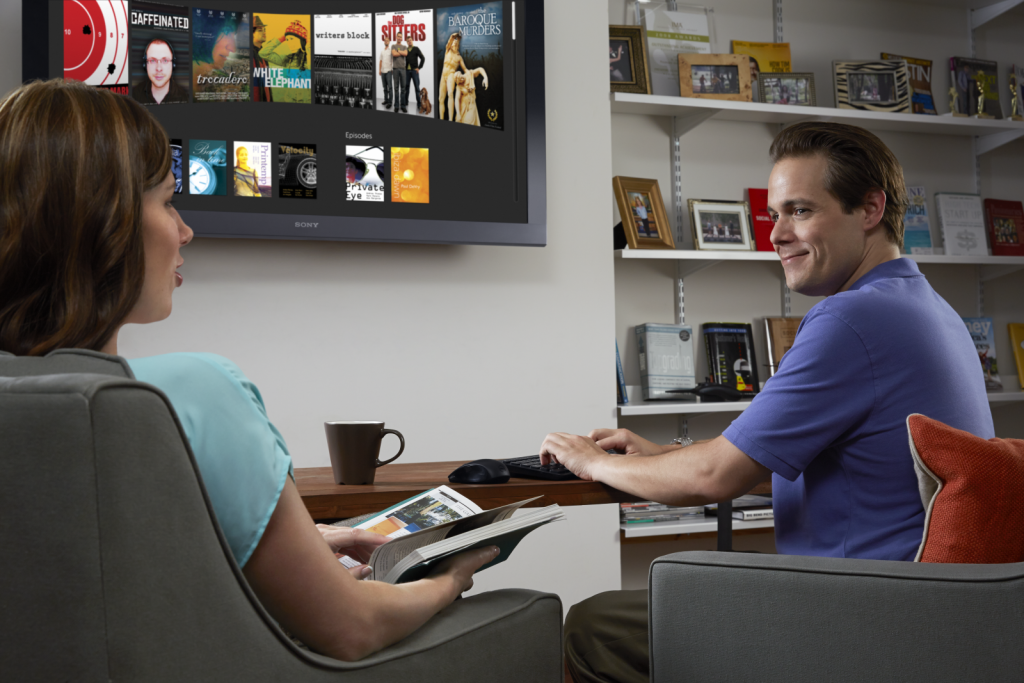
    This is, in effect, supposed to be the long-vaunted and sought-after thin client PC you can carry with you in your pocket that still manages to provide access to all your files, software and communications back home. Of course, that doesn’t mean it can’t also provide entertainment options to business travellers, since it’s capable of full HD output and should be able to easily run Netflix’s Android app.

    That “multi-core” Cortext-A9 ARM SoC might not be the most muscular mobile processor in the world, but Dell does specifically tout its HD and 3D graphics abilities in its specs sheet. It has 8GB of onboard storage, and 1GB of RAM, plus a micro SD slot that supports up to 72GB of additional space.

    Based solely on surface impressions, you could do far worse in a pocket computer for those gruelling weeks on the road if you’re a frequent business traveler. It’s interesting to see Dell move in this direction, effectively taking a page out of the playbook of devices like the Ouya and the Gamestick but cutting out all the nonsense and painting it with a business brush.

    Weirdly, more than anything else over the past half decade at least, this makes me want a Dell computer. Go figure.

  • Google Keeps ‘Vast Majority’ Of Motorola Mobility Patents In Sale To Lenovo

    Google Keeps ‘Vast Majority’ Of Motorola Mobility Patents In Sale To Lenovo

    Motorola Mobility is being sold to Lenovo, in a deal worth $2.91B. Google is divesting itself of the handset division it purchased for $12.5B in 2011, but it will keep some of the assets — including patents.

    “Google will maintain ownership of the vast majority of the Motorola Mobility patent portfolio, including current patent applications and invention disclosures,” says Motorola Mobility CEO Dennis Woodside. “As part of its ongoing relationship with Google, Lenovo will receive a license to this rich portfolio of patents and other intellectual property. Additionally Lenovo will receive over 2,000 patent assets, as well as the Motorola Mobility brand and trademark portfolio.”

    When Google purchased Motorola Mobility, much of the discussion swirled around whether it was buying it simply to own a hardware pipeline on which to deliver its Android juice — or whether it wanted patents for protection. The answer, as is typical, lay somewhere in the middle. Though the Motorola patents never turned out to by incredibly effective winning solo battles against Google’s patent enemies, they did work as a part of a larger tactic which has seen Google aligning itself via cross-licensing with OEMs like Samsung.

    One segment of the statement today by Woodside was interesting:

    Since being acquired by Google in 2012, Motorola has transformed itself, focusing on solving real consumer problems and providing amazing experiences built on a foundation of pure Android. The result has been Moto X, Moto G, and a reinvigorated Droid line. Together, these devices have won over consumers and critics alike and helped re-establish the Motorola brand around the world.

    Indeed, Google’s purchase and investments in Motorola did raise the flagging manufacturer’s profile significantly over the intervening years. They have several well-received smartphones on the market and have made a lot of noise about technology innovations in wearable computing and DARPA-think-tank-director hires.

    Image Credit: Hades2k | Source: Techcrunch

  • Owner of Twitter’s Shortest Handle @N Looses his Account  in an Extortion Scheme

    Owner of Twitter’s Shortest Handle @N Looses his Account in an Extortion Scheme

    TechCrunch – Yesterday Naoki Hiroshima, an Echofon developer, posted an article about how he lost his extremely short Twitter handle @N in an extortion scheme. Hackers compromised his GoDaddy account with social engineering (calling and lying to an account rep), gaining access to his email on a personal domain.

    They said that they gained access via a similar call to PayPal, who the hacker claimed gave them the last 4 digits of Hiroshima’s credit card. They then used that CC info to convince GoDaddy that they were the owner of the domain, and reset his login information.

    They used that data to leverage Hiroshima into giving them — under duress — his low-character-count Twitter user name @N. This, it turns out, was the point of the entire affair from the beginning.

    PayPal has since investigated and claims that it never gave out Hiroshima’s credit card number or any other personal information — though it does acknowledge there was an attempt to get the info. So, that leaves a question about whether the hacker was lying about where it got Hiroshima’s card numbers — but it doesn’t change the fact that the hack happened.

    And it leaves an even bigger question. The hack is pretty well documented and it appears evident that the end result was fairly straightforward extortion. So why hasn’t Twitter simply given Hiroshima his @N username back?

    Twitter, for its part, will only tell us that it is still investigating the matter.

    We spoke to Hiroshima about the ordeal, and exactly how it went down. He notes that it’s highly improbable for the hacker to have gained access to his account without credit card numbers somehow, and that they claim it was via PayPal. He also says that he feels he did everything normally expected to prevent this kind of thing, but that the methods used by the hackers side-stepped any additional efforts he might have taken like two-factor authentication.

    “[Two factor authentication] can’t prevent this from happening again,” says Hiroshima. “GoDaddy allowed the guy to reset everything over the phone. As long as a company only uses the last 4 digits of a [credit card] to verify [identity], this will keep happening. They should ask multiple questions.”

    GoDaddy has said that it is investigating but has not responded to a request for further comment.

    The vector for the attack, in the end, was the weakest link in many security procedures: people. A well documented attack on Wired writer Mat Honan last year was predicated with relatively similar tactics. The target of Honan’s attack was also a low-character Twitter account.

    The question about what can be done to improve security in these matters is a long-running one. There have been some changes like two-factor authentication being offered by more vendors — but sloppy procedures like allowing account resets with credit-card numbers (especially partial ones!) remain commonplace.

    And the fact is that many of these ‘hacks’ don’t take any special technical knowledge. They just require a methodical and bold operator that is willing to pick up the phone and follow a script.

    Hiroshima also notes that many of these systems are designed to make it easy to change things by phone, but nearly impossible to revert them afterwards.

    “They should design the system so that reverting should be easier than changing,” Hiroshima says. “That the attacker changed something was something that can happen, the problem is, i couldn’t revert the change. If someone updated something and someone else said “no” immediately after, what’s the chance of the latter guy is the attacker?”

    As far as why Hiroshima’s Twitter account hasn’t simply been ‘given back’ to him — the answer likely lies in the fact that he felt so threatened by the hacker’s access to his accounts that he ‘gave’ the account over willingly. Had he held out and waited for them to cause more damage or take over the account by main force or another feat of customer service manipulation — it would have been a much simpler matter. It would have been stolen and could be returned.

    Now, because the account was ‘transferred’, it’s a much murkier affair and Twitter will likely have to do a more due diligence before it takes any action. So Hiroshima will probably get @N back, but it will take a bit.

    It’s worth noting that Twitter appears to have banned the @N account at the time of this writing, so the gears are turning.

    Image Credit: Manuelxk | Article source: Techcrunch

  • How to Unlock Huawei E303, E173 Modems: MTN, Airtel, Etisalat & Glo Included

    How to Unlock Huawei E303, E173 Modems: MTN, Airtel, Etisalat & Glo Included

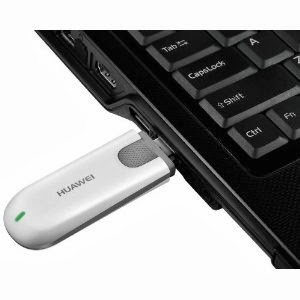
    The recent series of internet modem dominant in West Africa and South Asia is the Huawei E303 Data Card. The data card has quickly being adopted by network service providers in those countries due to it’s high speed HSDPA/3G internet features.

    Taking a closer look at your brand new data card will reveal that the IMEI is somewhat similar 86************ which contrasts with the 35*********** IMEI found on the older internet modems. This contrast is the major reason why you cannot calculate your unlock code using Universal MasterCode Calculator, old DC-Unlocker or any of the code unlocker you have used in the past.

    In this tutorial I will walk you through the steps on how to unlock any of the recent internet modem, including MTN NG, Airtel NG, Huawei E303 Glo Bolt, Airtel E173 and Etisalat internet modem using DC-Unlocker. Huawei E303 Glo Bolt Internet Modem can be unlocked for free using this method.

    Things you will Need

    To begin the process of your modem unlocking, you will need the following items:
    • A working PC of course, with internet facility.
    • DC-Unlocker Client Version 1.00.1084 or later – Download now.
    • An account on  DC-Unclocker with at  least 4 credits.
    After you have downloaded DC-Unlocker on your computer. You need to buy unlocking credits from their website. However, before purchasing unlocking credits, you need to confirm the number of credits required to unlock each modem.Unlocking E303 data cards should cost you 4 credits, but in the case of other models, you can check here to confirm the amount of credit needed to unlock them.

    Unlocking Huawei E303 Data Cards

    If everything is set, connect your USB Modem with the supported sim card. Allow the dashboard installation.
    • Disconnect to the internet and plug your USB Modem with a different provider SIM.  And insert your modem to the USB port.
    • After some seconds, you should see a popup window requesting for the unlock code. Click the Cancel Button and exit the modem dashboard.
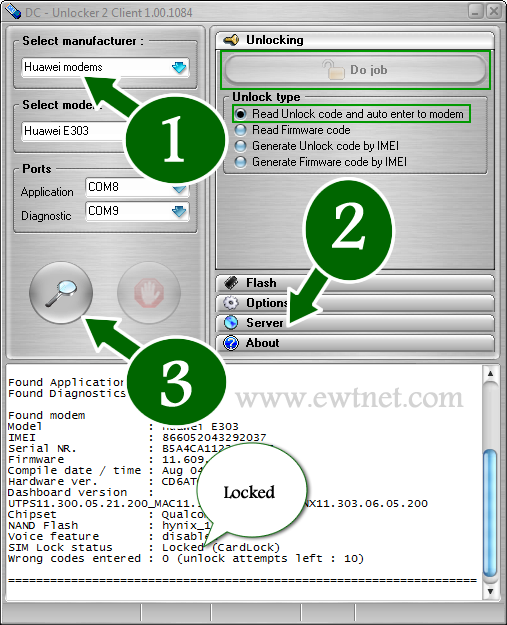
    • Locate and install dc-unlocker_client-1.00.1084.exe on your computer. Next, find the icon on your desktop and run as administrator.
    • Choose what “manufacturer” that your modem is. i.e. Huawei Modems
    • Click the magnifying glass, and it will search for plugged USB modems.
    • Once the modem is detected, Click on Server and enter your account details.
    • Go to Unlocking menu, and click on Do Job.
    • Wait till the unlocker program says that, unlock is successfully done.
    Of course, you can use this method to unlock ZTE modems, all Etisalat, Glo, Airtel and MTN modems, just follow similar steps to the ones above.

    Payment Worries for Nigerians

    The payment processors available in DC-Unlocker’s are currently not supported in Nigeria and most countries. However, the company has dealers in over 50 different countries worldwide. The official dealer in Nigeria is Gurutech and charges N2,500 for DC-Unlocker credits.
    If you have no intention of going through the so many long process involved in modem unlocking, or you cannot afford the N2,500 price tag from the Nigerian dealer. You can sit back and lets do the job for you. Click here for more details.
  • How to Unlock Huawei E303 Glo Bolt Internet Modem for Free

    How to Unlock Huawei E303 Glo Bolt Internet Modem for Free

    Before now, the Huawei E303 Glo Bolt Internet Modem has been an ugly nightmare for Nigerian geeks. I happened to be a victim of this nightmare, but somehow, I found an escape route. You might have wondered why Glo Bolt Modem cannot be unlocked using code unlockers or the Huawei E303 unclocking I tips posted earlier. The reason is because Glo Bolt modems has been blocked by either its manufactures or Glo themselves. When a user enters a wrong unlock code in a particular modem over ten times, the modem is blocked and can no longer accept SIM cards outside the one it was branded for, this is the exact state of Glo Bolt modems.

    At some point, the possibility of unblocking or re-branding the Glo Bolt modem looks hopeless, but thanks to our team’s curiosity, we now have a solution to Unblock Huawei E303 Glo Bolt Internet Modem using firmware updater. It is free and easy to follow steps.

    Requirements to Unlock Huawei E303 Glo Bolt Modem

    • A PC with internet access (preferably not from a modem).
    • Universal Master Code Calculator – Download Now
    • HUAWEI E303 Firmware Update – Download Now
    • Uninterrupted power supply (Your devices cannot be interrupted throughout the process). If you are using a laptop, it is recommend you charge your battery to the brim.

    Unblocking your Huawei E303 Glo Bolt Modem

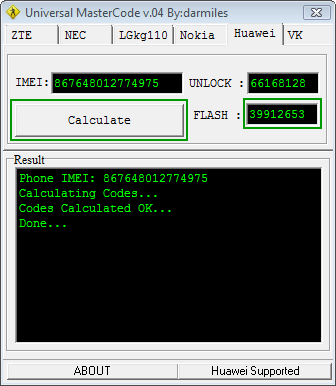
    Run the Universal Master Code Calculator you have downloaded earlier. Put your IMlEI and hit the Calculate button. Copy the Flash code into somewhere save. We will use it as a password at some point in this tutorial.

    Universal MasterCode Tool
    Universal MasterCode Tool

    Next, extract the contents of the HUAWEI E303 Firmware Update into a folder. Make sure the modem is connected and it has been installed with the SIM card inside it. Now exit the dashboard tray if it’s open and run E303SUpdate_21.157.31.00.850.B757.exe, put the Flash code you got earlier from the Universal Master Code Calculator when it prompt for password.

    In less than 3 mins, you will have a brand new modem at your disposal 🙂 Just insert any SIM and enjoy permanent freedom. You can also download a new modem dashboard here.

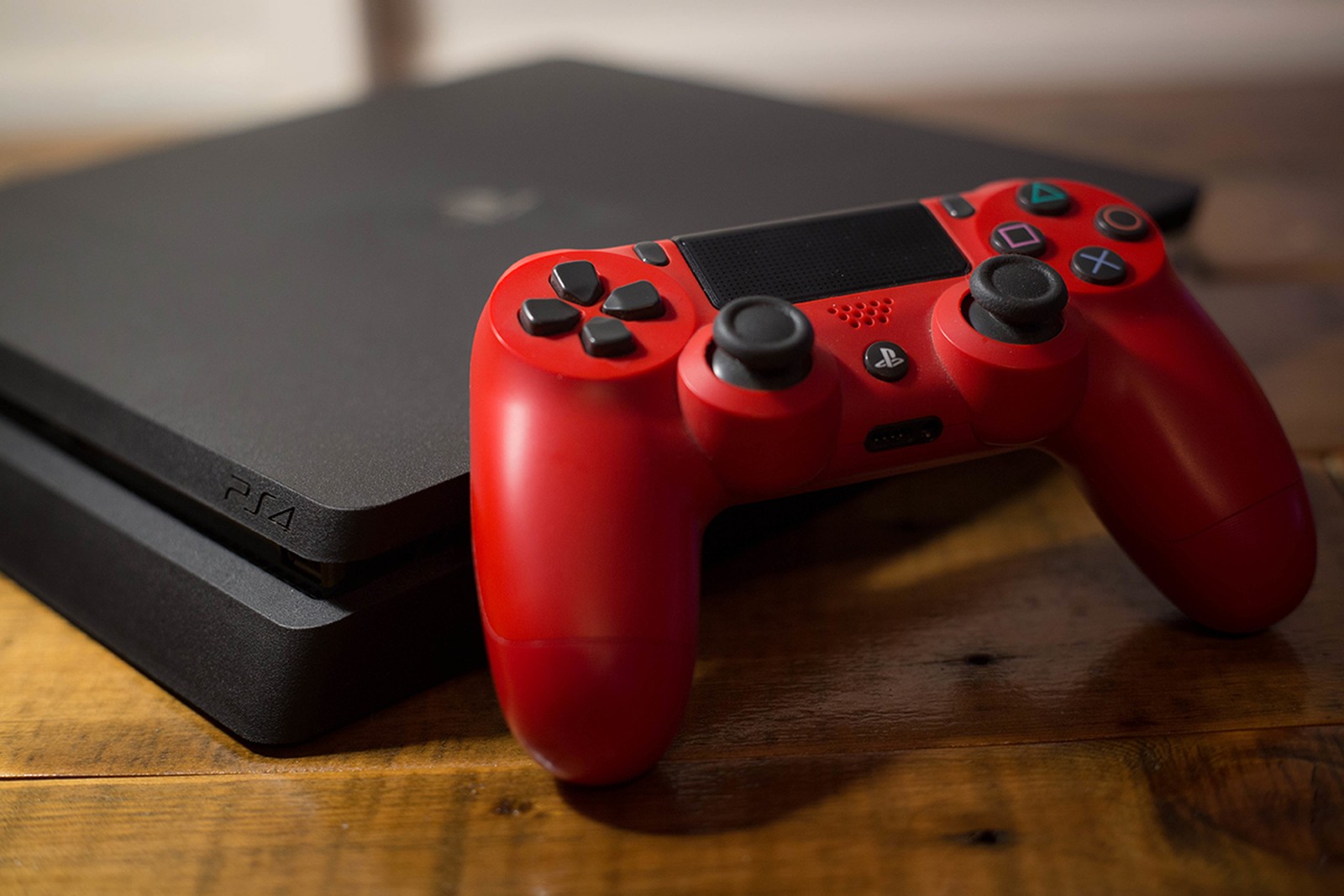
  • Battlefield 4, FIFA 14 and 6 Co-Op PS4 Games to Watch in 2014

    Battlefield 4, FIFA 14 and 6 Co-Op PS4 Games to Watch in 2014

    Here is something for the gamers. If you need to turn your friends into war enemies, go on adventures or solve ‘head cracking’ puzzles together, the new console games is the answer you seek.

    The latest PlayStation 4 titles, featuring mutiplayer facility and more advance gaming environment boast of answers for any co-op gaming style you prefer. While some of this games are available and ready to be explored, a few of them will only be available at some point in this year, but considering the interesting new mutiplayer features introduced to PS4, I think they’ll be worth the wait.

    Below, we take a look at the top six co-op games to rock with your friends. Note: You can also find some of the games listed below on your old PlayStation or the new Xbox One, but nothing can be compared to the feeling of playing it on PS4.

    6. Lego Marvel Super Heroes

    The world is in imminent danger, and it is counting on you and your friends to save it! You and your friends will have to play alone or together as members of the well-known team to save the world in Lego Marvel Super Heroes. All the superheroes have their unique superpowers, and you’ll need all their strength to go into battle against the most venomous villains of the Marvel universe.

    5. Destiny

    If you are a big believer in destiny, then you will be exited for Destiny console game. Destiny was made by the manufactures of multiplayer greats Halo and Call of Duty. The promotional trailers and gameplay videos display a beautiful world for you and your friends to explore, cherish and protect. It’s part of the new “shared-world shooter” genre which combines the typical fine motor skills of a FPS game with traits that are more common to MMOs. If anyone can make wonders out of this new breed of games, it’s the folks at Bungie.

    This game will be available, starting from Sept. 9th 2014.

    4. Watch Dogs

    Unfortunately, this amazing title from Ubisoft isn’t available yet, but it’s been making some impressive noise  since its initial unveiling. Not only will Watch Dogs allow players the chance to sneak and hack their ways through a fictional downtown Chicago, but the game will also have a multiplayer option integrated into the normal campaign. Your objective is to hack other players with a malicious virus before they catch and kill you. Ubisoft will let you opt out of the multiplayer if you want to focus on the single-player story, but we’re all looking forward to getting our hands on exponentially more underground cyber justice when the game launches. Right now, the release date is set as a hazy spring 2014.

    3. Killzone Shadow Fall

    This series has long been a PlayStation exclusive, and Killzone Shadow Fall has all the great dystopian warfare between the ISA and the Helgast that gamers have come to expect. Warzone matches players through a ringer of several traditional co-op modes (such as Team Deathmatch or Search and Destroy) all in one battle royale. Players can customize their own rules for matches, setting the modes, number of players, classes or weapons allowed, then share those creations with the online community.

    2. FIFA 14

    If the word “football” conjures up images of a black and white ball and rabid European fans, then you’re probably well-versed in the FIFA games. With FIFA 14, soccer is looking better than ever on the new generation of hardware. Players’ movements and behaviors have new realism and a much sharper look that old consoles couldn’t dream of matching. EA received some flak from long-time fans for removing the Tournament feature, but with many available co-op modes remaining, this is still an excellent title for going multiplayer. Create a unique footballer to send through the Pro Clubs circuit and pursue a stellar career in all-player matches. You can also go head-to-head against another gamer in Seasons and Online Friendlies, or team up with friends for two-on-two games.

    1. Battlefield 4

    No game delivers complex, realistic warfare as well as the Battlefield franchise. Battlefield 4 has dynamic, visually stunning maps that require players to display finesse and strategy in order to achieve victory. Technical difficulties plagued the latest release at launch, but that’s due in part to its massive scope. Now that DICE has cleaned up most of the issues, players can enjoy the classic Conquest or Rush battles, or the new Obliteration and Defuse modes. The Xbox One may be getting the expansions and other new content first, but superior graphics capabilities make the PS4 the platform of choice for the console crowd.

    Image Credit: EA Sports, DICE, Bungie, Sony, Lego, Ubisoft | Games Decription By: Mashable

  • Huawei, Lenovo and LG the Star Performers in 990M Smartphones Shipped In 2013

    Huawei, Lenovo and LG the Star Performers in 990M Smartphones Shipped In 2013

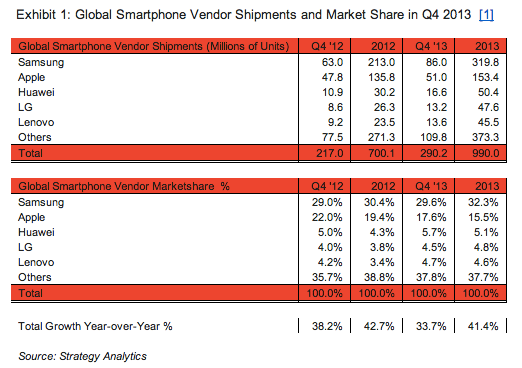
    Techcrunch – To coincide with Apple releasing its Q1 earnings, Strategy Analytics has put out its quarterly and full-year figures for how the smartphone market has fared, along with figures on the wider mobile phone market. Overall, there were nearly 1 billion — 990 million — smartphones shipped in 2013, representing growth of 41% over 2012′s 700 million units. Smartphone shipments for the last quarter of 2013 were 290.2 million, up 34%.

    Mobile phone shipments, meanwhile, were just under 1.7 billion — and as a mark of how smartphones are where all the buying has shifted, the wider mobile phone market grew only 5% over a year ago.

    While 41% growth sounds good, Ken Hyers, an analyst at Strategy Analytics, notes that it is actually down slightly on the 43% growth of a year ago. He says this is because of “high penetration in some major markets like the United States.” This was something that had a direct effect on Apple. Traditionally a strong player in the U.S., CEO Tim Cook noted today that Apple’s sales in North America declined.

    As we pointed out earlier today, although Samsung continues to remain in the lead with its 32% of all smartphone shipments, the real story appears to be about what is happening underneath that.

    Apple continues to fall (pardon the pun) and is now at 15.5% for the full year (compared to 19% a year ago) on 153 million units. And although Huawei, LG and Lenovo are all behind Apple, together they are nearly overtaking the iPhone maker in units, with a combined share of 14.6%.

    That’s not to overlook that Samsung’s growth is nothing short of impressive: its 319.8 million smartphones shipped in 2013 was the “largest number of units ever shipped by a smartphone vendor in a single year,” according to the analyst group’s executive director Neil Mawston. Samsung also retained its title as the world’s biggest mobile phone maker overall: it shipped 451 million units for a 27% share of the market.

    Although Apple made a point today of talking up its emerging market business, Strategy Analytics (and perhaps others, given the stock decline) are not buying it: “Apple remains strong in the high-end smartphone segment, but a lack of presence in the low-end category is costing it lost volumes in fast-growing emerging markets such as India,” writes Mawston.

    As in quarters past, the Samsung/Apple juggernaut is all but dominating the smartphone world in terms of vendors.

    “Large marketing budgets, extensive distribution channels and attractive product portfolios have enabled Samsung and Apple to maintain their grip on the smartphone industry,” writes analyst Linda Sui.

    The question will be whether the economics of making cheaper phones will mean that the smaller vendors like LG, Huawei and Lenovo can stick around longer, or whether they will eventually find themselves in the same positions as Nokia, BlackBerry and HTC — all out of the top five rankings now partly because it eventually became unsustainable to play in the smartphone game without scale.

    In any case, although in times past it seemed that the route to being a worldwide phone leader was to have a strategy of offering devices across a range of price points and feature sets, today that’s not as clear.

    Over 70% of the handsets Samsung’s shipping right now are smartphones. And Apple, the number-three player in mobile sales overall, is a smartphone-only vendor. Meanwhile, Nokia’s smartphone share these days is so small that Strategy Analytics doesn’t break it out, meaning that its number-two position among mobile phone makers is based largely on its power at the lower end of the market.

    However, it turns out the strategy of not having a killer smartphone lineup not only is not lucrative but eventually self-destructive.

    Nokia’s global mobile phone shipments fell 25% between 2012 and 2013, from 335.6 million units to 252.4 million units. “Nokia faced tough competition from Samsung in developing markets like India, while LG and others ramped up the pressure in developed regions such as Western Europe,” writes Mawston. “Nokia’s Windows Phones have been performing relatively well, but this was not enough to offset sluggish demand for its Asha models and other feature phones during the course of the year.”

    As Strategy Analytics points out, one route for smaller, national players to survive longer term is to continue to grow internationally. Huawei, it notes, is expanding in Europe; LG’s Optimus range “is proving popular in Latin America”; Lenovo’s Android models are selling at competitive price-points across China. “Samsung and Apple will need to fight hard to hold off these and other hungry challengers during 2014,” notes Sui.

    This article was first seen on Techcruch.

  • Twitter Introduce Photo Editing Tool and Trending Events to its Mobile

    Twitter Introduce Photo Editing Tool and Trending Events to its Mobile

    The future of internet and social networking is looking brighter as Twitter joins Google+ in photo editing technology.

    A post on Techcrunch has reported that Twitter has just released an update to its Android client (coming soon to iOS) that brings new photo editing tools to the service, which are likely meant to make it easier to share photos direct and keep people out of competitive apps like Instagram. The second change adds a significant element of event discovery and real-time trend monitoring to user timelines.
    The event surfacing is the more interesting element, since it marks a considerable attempt by Twitter to meddle with the straightforward chronological nature of that part of its service (besides promoted content). In case a user doesn’t have any new tweets to load when you manually update it, it now brings up recommended posts from people you don’t follow, as well as trending topics and suggestions about new people to follow. In the U.S. only, it surfaces event updates for things unfolding on TV, in sports and on the news.

    Each content update features a link to click through for more tweets centered on that conversation. It’s an extension of some of the other work Twitter has been doing around surfacing events and breaking news, including the Eventparrot experiment and a feature that was tested back in August to highlight nearby events via proximity-based alerts.

    A couple of things to flag about this change: It only happens when there’s no other new content for a user to view, and when they express a desire for more content, which is very clever; and it represents a way for Twitter to secure its place as the source of live, real-time information about things unfolding on the ground, a reputation that Facebook clearly covets.

    Others are already capitalizing on Twitter’s ability to identify and follow events as they unfold, including Banjo, but Twitter adding this as a native feature in its mobile clients could change the nature of the service at a basic level. Should it roll out globally, and expand its scope, mobile users could be using Twitter a lot more for things like local discovery than they had been previously.