Tag: Facebook

  • How Social Commerce is Changing Business in Nigeria

    How Social Commerce is Changing Business in Nigeria

    Social media has come a long way, leaving its impact even in the tiniest hole you’d find on the ground. Almost every aspect of modern life, including commerce, can’t deny this fact.

    This innovation has led to the dawn of social commerce, seamlessly blending social media engagement with e-commerce transactions.

    Forbes says online retail will account for 23% of all purchases by 2027 and before then, Statista reveals that by 2025, revenue in Nigeria’s e-commerce market is expected to reach $7.04 billion, with an annual growth rate of 7.81% (2025-2029). This will ultimately hit $9.51 billion by 2029.

    Stressing how much individuals will rely on digital platforms for e-commerce, particularly social commerce, Statista also disclosed that the number of online shoppers is projected to grow to 28.6 million users by 2029. User penetration will increase from 13.3% in 2025 to 15.0% by 2029.

    Even e-commerce giant Jumia agrees to this, noting the necessity of integrating social commerce for business growth. Revealing the top e-commerce trends for 2025,  the company wrote:

    In 2025, e-commerce companies must leverage social commerce to engage with younger, tech-savvy audiences in authentic ways.

    “Businesses that incorporate storytelling, user-generated content, and interactive shopping experiences will benefit from increased brand affinity and higher sales. Importantly, small and medium enterprises (SMEs) can capitalize on social commerce to reach niche markets without substantial investments in traditional e-commerce infrastructure.”

    The number of internet users and a mobile-first population has increased commendably in Nigeria, enabling the digital economy to transition into a more efficient and enjoyable space for shopping on platforms like Instagram, Facebook, and TikTok.

    Social Commerce

    What is Social Media Commerce?

    It is the direct buying and selling of goods and services through social media platforms like Facebook, Instagram, WhatsApp, and TikTok. 

    This blend of social media and online shopping makes impulse purchases easier than ever before.

    Compared to traditional e-commerce, which requires users to utilize a separate website, social commerce brings shopping right into your social networking space. 

    All you need is a few taps to see a product in a video, click a link, and complete purchases, without leaving the app.

    For businesses, particularly small and medium-sized enterprises (SMEs), this is a huge innovation. They don’t need a full-scale online store to sell; their social media page becomes their storefront.

    Why Social Commerce Works

    Social media thrives on engagement, and engagement drives sales. Compared to traditional e-commerce, where buyers rely on descriptions and reviews, social commerce builds trust through direct interaction.

    • Instant connections: Businesses respond to queries in real time via comments or direct messages.
    • User-generated content: People trust other customers more than brands. Seeing a real person using a product in a TikTok video or Instagram story is more convincing than an ad.
    • Seamless experience: No need to open multiple tabs or remember discount codes—everything is simplified.

    Data backs this up. Conversion rates from social media are climbing, thanks to features like in-app checkouts and AI-driven recommendations. 

    In Nigeria, where mobile-first internet usage is scaling, platforms like WhatsApp Business, Instagram Live Shopping, and TikTok product links have made it easy for sellers to reach buyers quickly and make instant purchases.
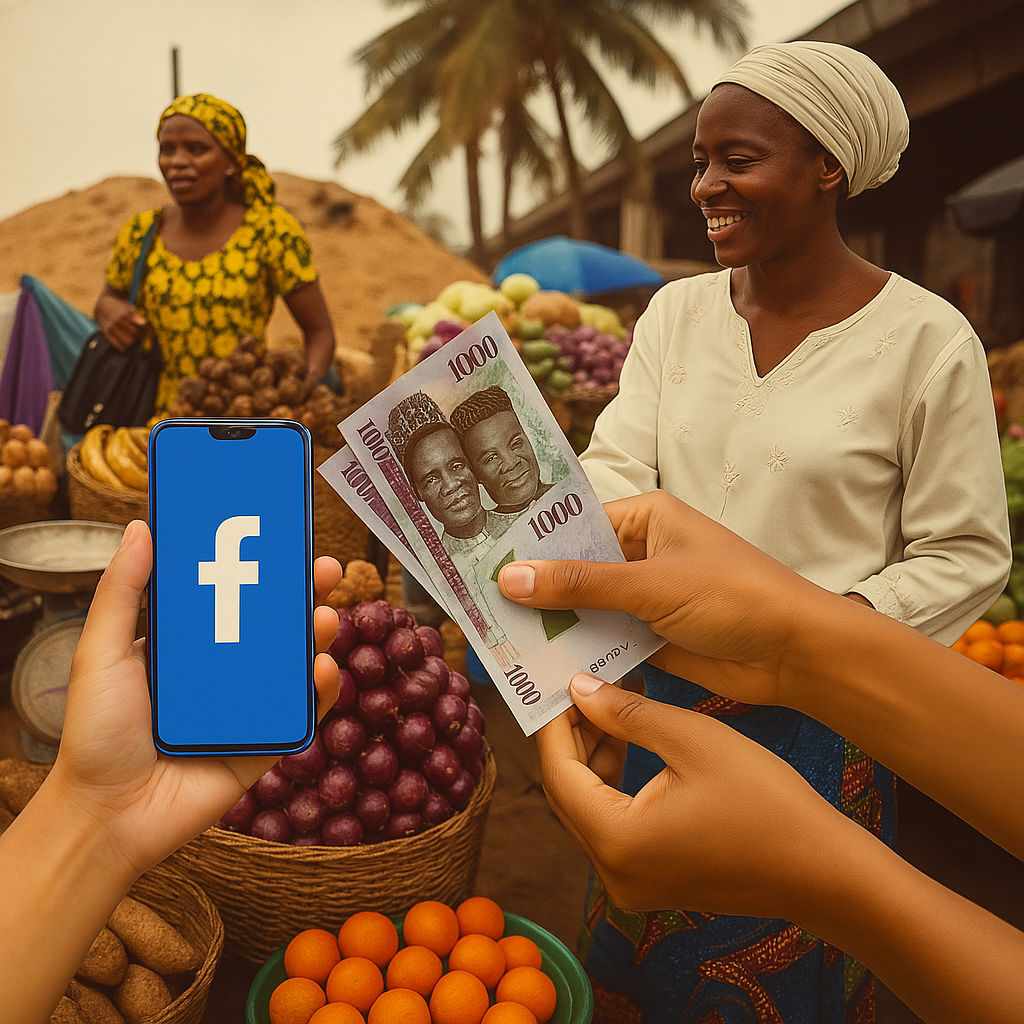
    Most Leveraged Social Media Commerce Platforms in Nigeria

    Facebook shops allow merchants to create digital storefronts on Facebook and Instagram, while users or potential buyers browse and purchase without leaving the app. 

    In order to make things even better for sellers, you’d find features like customizable catalogs, messenger integration for customer service, and targeted ads for boosting visibility.

    Instagram, which used to be just a photo-sharing platform, is now a marketplace with features like product tagging, checkout integration, and influencer promotions that make it a must-use tool for brands.

    With short-form videos being the most preferred when it comes to content consumption, TikTok Shop enables sellers to showcase products through engaging clips. Live shopping events and hashtag challenges amplify visibility.

    Nigeria’s SMEs swear by WhatsApp Business. It allows brands to list products in a catalog, interact with customers, and even process payments, all through a simple chat interface.

    Social Commerce

    The Power of E-Commerce Social Media Advertising

    Social commerce doesn’t just rely on organic reach. Paid advertising supercharges visibility. Platforms like Facebook, Instagram, and TikTok provide highly targeted ad solutions, ensuring products reach the right audience.

    Best Practices for Social Commerce Advertising:

    1. Influencer partnerships: Collaborating with content creators builds credibility and extends reach.
    2. Short-form video marketing: Engaging, digestable content drives conversions, especially on TikTok and Instagram Reels.
    3. Mobile-first optimization: Most purchases happen on smartphones. Ensuring a seamless mobile experience is highly important.
    4. Community engagement: Replying to comments and messages shouldn’t be left to just customer service, it’s part of the sales funnel.

    So, if you are a business owner looking to become a social commerce giant:

    • You can host Live Product Showcases; this can boost engagement and trust;
    • Again, Encouraging User-Generated Content will go a long way; reviews and testimonials from real customers can also build authenticity;
    • Lastly Integrating Local Payment Solutions through the use of platforms like Paystack and Flutterwave. This ensures smooth checkout for customers.

    The Future of Social Commerce in Nigeria

    Social commerce is only getting started. AI-powered recommendations, augmented reality (AR) shopping, and deeper influencer-brand integrations will drive the next phase. By 2027, online retail is expected to account for 23% of all purchases—businesses that embrace social commerce now will be ahead of the curve:

    • AI-driven product recommendations will thrive: Personalised suggestions based on browsing history.
    • AR will make shopping experiences better: Virtual try-ons for beauty, fashion, and accessories.
    • Influencer-led commerce will be king: More brands will rely on content creators to drive sales.

    Social commerce is the future of online shopping, and moving from static e-commerce sites to dynamic, interactive storefronts on social media has changed how consumers buy. Businesses that adapt to this growth will stay relevant, while those that ignore it face the risk of falling behind.

    For entrepreneurs and SMEs, the opportunity is huge. Contributing factors like high mobile penetration, deep social media engagement, and digital payment must be leveraged. 

    Social commerce might take over the e-commerce sector faster than anticipated, and now is the time to build, experiment, and sell on social media where people spend most of their time.


  • Sheryl Sandberg to Resign from Meta Board of Directors

    Sheryl Sandberg to Resign from Meta Board of Directors

    Less than two years after leaving her executive role at Facebook, Sheryl Sandberg is set to step down from the board of Meta, Facebook’s parent company. Serving as the chief operating officer, Sandberg was among the board members who helped structure and boost Facebook’s digital advertising business model in 2008 when it was still a fledgling startup. The 54-year-old who stepped down as Chief Operating Officer (COO) of Facebook in 2022 after more than 14 years in the role shared the news on her Facebook page. Expressing that “the Meta business is strong and well-positioned for the future, so this feels like the right time to step away.” Sheryl Sandberg will be resigning from Meta’s board in May 2024.

    Although she is relinquishing her board position, Sandberg will maintain ties with Meta by serving as an advisor and pledging ongoing support to the company’s teams, as mentioned in her post. She expressed gratitude to Mark Zuckerberg, acknowledging him as a visionary leader and a steadfast friend who stood by her during both joyful and challenging times. Zuckerberg reciprocated the sentiment in a comment, expressing anticipation for the next chapter together.

    Mark Zuckerberg, the CEO and founder of Meta, expressed anticipation for “a new chapter together.” Sandberg, formerly the right-hand woman to Zuckerberg, held a prominent position as one of the company’s most controversial executives who faced various oppositions. And was the subject of intense public argument during her tenure, including the Cambridge Analytica scandal and concerns about user data mining for advertising purposes.

    Before Facebook, Sandberg held roles as Vice President at Google and Chief of Staff for the US Treasury Department under Bill Clinton. She wrote the popular 2013 book Lean In: Women, Work, and the Will to Lead which garnered both acclaim and criticism. The book went on to inspire a generation of working women while facing scrutiny for overlooking the struggles of single parents and women of color. Despite the controversies, Sandberg remains a recognized and successful figure in corporate America, breaking barriers in an industry historically dominated by men.

  • How to Download Facebook Videos without Browser Extensions

    How to Download Facebook Videos without Browser Extensions

    It is no news that Facebook doesn’t allow users to download photo and videos from its platform. Uploading photos and videos may be straightforward, but downloading them is nearly impossible. This has lead to the development of several means of downloading media contents from Facebook. 

    Most of the methods available today, to download photos and videos from Facebook, requires you to download a browser extension, or you download special software. Downloading these browser extensions and software may be harmful to your computer because most of them come with malware, that can ruin your operating system and make your leak your information. 

    In this article, we explore a tutorial on how to download facebook videos without using browser extensions. We are going to explore three different methods. 

    How to Download Facebook Videos without Browser Extensions Using Downvid.net

    Downvid.net is a website that allows users to download facebook videos, by pasting copied URLs in a special box provided. It features a very simple and minimal interface. Steps to downloading Facebook videos using Downvid.net is listed below.

    facebook video downlaod
    1. Log in your facebook account
    2. Navigate to the post containing the facebook video you wish to download
    3. Copy the URL to the post
    4. Launch downvid.net on your computer, using your browser
    5. Paste the link in the box provided
    6. Select the video quality you desire
    7. Click on download

    How to Download Facebook Videos without Browser Extensions Using FBDOWN.NET

    Similar to downvids.net, FBdown.net is another website that allows users to download facebook videos seamlessly. Steps to downloading Facebook videos using this platform are very similar to that of downvids.net. They are listed below.

    How to Download Facebook Videos without Browser Extensions
    1. Log in your facebook account
    2. Navigate to the post containing the facebook video you wish to download
    3. Copy the URL to the post
    4. Launch fbdown.net on your computer, using your browser
    5. Paste the link in the box provided
    6. Select the video quality you desire
    7. Click on download

    How to Download Facebook Videos Using Savefrom.NET

    Famous for Youtube video downloads, savefrom.net is yet another platform that lets people download facebook videos easily. It offers a very simple and minimal interface. Similar to the method used in downloading youtube videos on this platform, downloading facebook videos here, requires copying and pasting the Video URL. The steps are listed below. 

    facebook video download
    1. Log in your facebook account
    2. Navigate to the post containing the facebook video you wish to download
    3. Copy the URL to the post
    4. Launch savefrom.net on your computer, using your browser
    5. Paste the link in the box provided
    6. Select the video quality you desire
    7. Click on download

    As you might have already observed in the steps listed in methods presented in this tutorial, downloading Facebook videos with browser extensions, is a straightforward thing. All you have to do is select one of the methods listed here and follow the steps given. 

  • You can no longer mention Tsu.co on Facebook

    You can no longer mention Tsu.co on Facebook

    Tsu.co is a social media website that rewards its members for sharing posts, photos, videos and the like. Users who get others to join via referrals see cash benefits in the like. Naturally, when you have an opportunity to make free money doing what you do everyday, you do it right?

    But, what would be the natural place to get referrals to sign up? Where could you access as many people – strangers and friends alike – to get them to see said link? You go to Facebook. This isn’t some imaginary scenario, as a matter of fact it is real. Tsu.co posts, mostly referral links, were becoming huge during 2014 and early 2015. I couldn’t check my Facebook without seeing a post with someones link in the newsfeed, or having a message from some friends of mine asking me to join with that link.

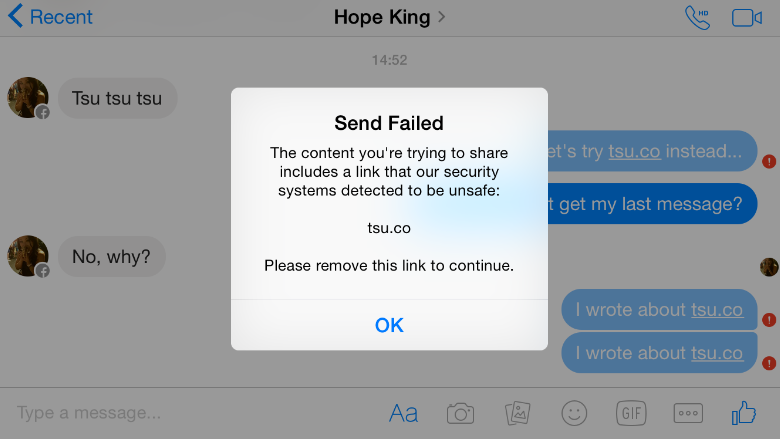
    What was quite annoying to me, seemed to become quite the little bugger to Facebook Inc. As of September 25th, the Tsu.co address has been blocked by Facebook. In fact, it’s even been reported to have been blocked on Instagram, and other Facebook owned applications. Any mention of the address is blocked, and the company even insured the censoring of the site address by removing every single old post on their servers that mentioned the site/URL; effectively killing off millions of photos, videos, and posts in an instant.

    You can still write ‘Tsu,’ but any mentions of Tsu.co will not be submitted and will be removed.

    source: CNN money

    Much like their other site-widely blocked sites, Facebook claims the link is spam and is annoying to the community. In return, Tsu thinks that Facebook is being a bully, who is killing off competition.

    “We’re persona non grata,” said Sebastian Sobczak, who founded Tsu. “You can type in all sorts of seedy websites, and you can get to them. But not us. We don’t exist.”

    Tsu had made an appeal to Facebook when their traffic source fail from an average 2,000 per day to a flat 0. However, their reasoning didn’t work. Facebook, however, says it will unblock Tsu if one thing changes: if Tsu users cannot post to Tsu.co and Facebook.com at the same time.

    “We do not allow developers to incentivize content sharing on our platform because it encourages spammy sharing,” said Melanie Ensign, a Facebook spokesperson.

    Most of Tsu.co users spoken to (who haven’t made even a dime from the service), thought that this block was unfair to the service.

  • Tim Cook, Facebook, Google and Tech Giants throw their Support for Same-Sex Marriage

    Tim Cook, Facebook, Google and Tech Giants throw their Support for Same-Sex Marriage

    When the Supreme Court issued its historic ruling on Friday legalizing same-sex marriage across the U.S., many of the biggest technology companies embraced the decision with characteristic flair through social media, on their sites, and with tools that others could use to show their support as well.

    Companies like Google, Microsoft, Motorola Mobility, Uber and Airbnb, their chief executives, and their venture capitalist funders all took to Twitter to post celebratory tweets about the ruling, often accompanied by the hashtags #LoveWins or #Pride, plus GIFs. Companies also changed the colors of their profile pictures on Twitter to those of a rainbow, conjuring the symbol of lesbian, gay, bisexual or transgender pride.


    Twitter, which called Friday “a monumental day for equal rights,” released two new rainbow emojis, of a flag and a heart, that users could post by tweeting the aforementioned hashtags.

    Google, in a tweet, said it was proud to celebrate marriage equality. The company included a GIF of a green Android robot waving a rainbow flag.

    Given the likely impact of the Supreme Court’s ruling, and rising support among the public, same-sex marriage has become a safer issue for technology companies to support. Liberal social values in the parts of California where many tech companies are based made their reactions not much of a surprise.

    And yet the ruling comes at a time of heightened sensitivity around issues of diversity in the tech industry. Whether it’s leveraged this way or not, the Supreme Court ruling offers a convenient opportunity for companies to cast their brands in the light of openness and acceptance.

    Some executives expressed wholehearted support for the ruling. Tim Cook, the openly gay CEO of Apple, said the day marked “a victory for equality, perseverance and love.”

    Mark Zuckerberg, CEO at Facebook, said the ruling represented another step toward achieving the founding promise of the U.S. that all people are created equal.

    Josh Elman, a venture capitalist at Greylock Partners in Silicon Valley, offered this observation: “Rainbow flags going up. Confederate flags coming down. Feeling the arc of progress and humanity in how we respect each other,” referring to growing opposition to the flag associated with racism in the South.

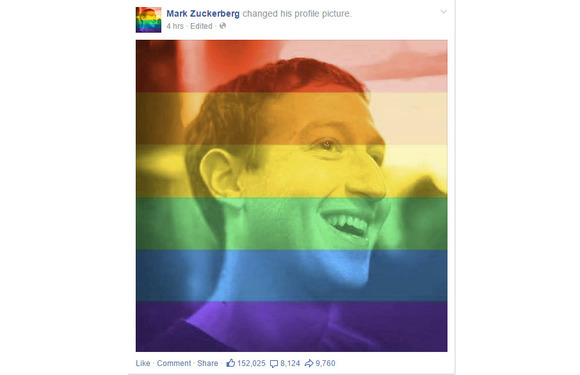
    Meanwhile, some technology companies offered tools or features meant to celebrate marriage equality. Facebook released a filter that people could use to overlay a rainbow on their profile picture. The tool appears to have been developed for Pride events around the country this weekend; the Supreme Court ruling hastened its arrival. It can be accessed at www.facebook.com/celebratepride.

    Google, for its part, added a banner to the top of its search results page showing people holding hands and a rainbow heart. The banner only appeared for certain searches like “marriage equality” or “gay marriage.” The banner did not appear for a search for just “marriage.”

    Snapchat got in on the action, too. The photo-sharing app created a themed Live Story around the ruling, called “Marriage Equality,” which let users post photos and videos to a feed that everyone else could see. Part of the feed contained a video showing people celebrating outside the Supreme Court.

    Interest in the ruling, at least initially, appeared to be higher in the U.S. than in other countries. Google searches around gay marriage were concentrated primarily in the U.S. and Canada, according to a Google Trends report.

    But the Snapchat feed was made available to users globally, as was the Facebook rainbow filter.

  • Facebook is facing a law suit. Reason? Scanning user’s Messages

    Facebook is facing a law suit. Reason? Scanning user’s Messages

    From the revelation that Facebook scans through its user’s messages to deliver “tailored” ads, a U.S. judge has ruled that they must face a class-action lawsuit. Facebook’s bid to dismiss the lawsuit, filed by users Matthew Campbell and Micheal Hurley back in 2013, was dismissed by U.S. District Judge Phyllis Hamilton in Oakland. According to the details of the suit, until October 2012, when Facebook had said they stopped the practice, the large social networking company was scanning through user’s private messages for website URLs. This information was then used to deliver tailored advertisements to the user. By doing so, Facebook violated the federal and state privacy laws, which they broke by reading their users’ personal and private Facebook messages without their consent.

    Facebook had shown that the Electronic Communications Privacy Act covered the practice to the district court. The social networking giant also stated that it discloses to all users that the company might use the information they receive from the users about them for data analysis.
    However, Judge Hamilton wasn’t satisfied with Facebook’s explanation. She stated that Facebook had not offered a sufficient explanation of how the challenged practice falls within the ordinary court of business. She also added that the disclosure wasn’t specific enough to establish that users expressly consented to the scanning of the content of their messages.
    Facebook’s unwillingness to offer any details regarding its targeted advertising practice prevents the court from being able to determine whether the specific practice challenged in this case should be considered ‘ordinary,’” added Judge Hamilton.

    Facebook is continuing to stay silent on any comments about the case.
    Google is also under the hammer for the same message-scanning practices, though they aren’t facing a class-action suit like Facebook. Many experts in the field believe that the result of both of the lawsuits will have a major impact on how we use technology to communicate in the future.

  • We use your private information like everyone else; Facebook privacy lovers are out of luck

    We use your private information like everyone else; Facebook privacy lovers are out of luck

    Facebook has faced allegations in the past about using its users private information for marketing reasons. Questions has been raised on what user information Facebook itself gets to see – If you were ever in doubt on how Facebook handles your privacy, the Manager of privacy and public policy at Facebook, Matt Scutari has made it clear that there is no hiding place for you on the internet – or least on Facebook.

    Matt Scutari has confirmed that the information you are hiding from other Facebook users you called friends are not completely private, claiming that Facebook like every other platform “have to at least use that information to provide the service”.

    “With most online services, there’s an understanding that when you use those services to share information, you’re also sharing information with the company providing the service,” said Matt Scutari, manager of privacy and public policy at Facebook.

    “For users who are truly concerned with sharing their information with a particular platform, honestly, you might not want to share information with that platform,” he said, speaking during a conference on digital privacy in Palo Alto, California, on Friday.

    “I don’t think there are many services out there who could claim they’re not using your information that you’re sharing with them for any purpose. They have to at least use that information to provide the service,” he added.

    Scutari was responding to a question from the audience about what tools, if any, Facebook might provide to people who want to post and share information but keep it from Facebook itself.

    Lately, the company has been trying to improve its controls for sharing among friends. In September it introduced a “privacy checkup” feature. And just this week it released  a revamped privacy policy designed to be easier to use. The company also gives users information about how their data is used for advertising. But it has never offered users tools to limit what data Facebook can ingest when they share.

    Data collection—what companies collect, and how it’s used—is an area of concern for Internet users in general, highlighted by some dramatic findings in a recent Pew survey.

    Facebook does have a team of employees tasked with looking at privacy issues related to its products, features and tools. The team has a number of programs in place, including daily surveys of users and talks with people in other countries to get their views on privacy, Facebook said on Friday.

  • Ello vows never to be like Facebook and makes its ad-free promise a legal one

    Ello vows never to be like Facebook and makes its ad-free promise a legal one

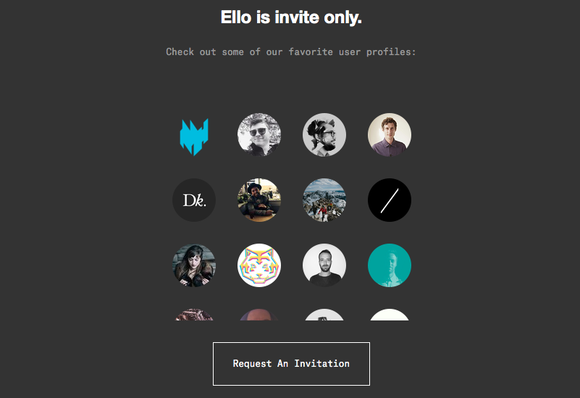
    It’s one thing to say your social network will never be like Facebook, it’s another to enshrine that promise in legal documents. Ello, a social site whose claim to fame is an anti-ad manifesto, is doing just that by filing to become a public benefit corporation.

    A benefit corporation is a company that chooses to be socially conscious of how its decisions affect not just shareholders or investors, but also its customers, employees, and the environment. Ello won’t get any tax benefits for being a do-good social network, but the charter the company filed prevents current and future investors and owners from ever profiting from ads or user data.

    “In other words, Ello exists for your benefit, and will never show ads or sell user data,” Ello founder Paul Budnitz wrote in a Thursday Ello post.

    Ello is growing rapidly, ballooning to 1 million members in the last two months, according to Wired. Another 3 million are waiting to be let in. The network also announced that it raised $5.5 million in venture capital, but its investors had to sign the ad-free charter, which you can read in full here.

    So if ads are off the table forever, how will the social network make money? Budnitz plans to model Ello after the most successful company in the world: Apple.

    “We will make money, and we are a business, and we have been really open about that since the beginning,” Budnitz told Inc. in an interview earlier this month. “Our model is based on a very successful business model that has been applied to all kinds of other things except social networking, which is the iPhone model. In its most basic form, Ello will be fun and free to use. But after that there are features that some groups want really badly—for example one of the most requested features is the ability to control multiple accounts from a single log in. We might charge a dollar for that. It would be like the App Store.”

    That sounds good, but it’s not exactly similar to how Apple makes money. Apple’s model is to sell you expensive hardware at a comfortable profit margin, and the software and services—and even the App Store—enhance the experience to make you want to buy the hardware. Apple wouldn’t give you a basic iPhone for free and then upcharge you to add more features that you want really badly. If you wanted features Apple isn’t providing, you’d probably go buy a different phone.

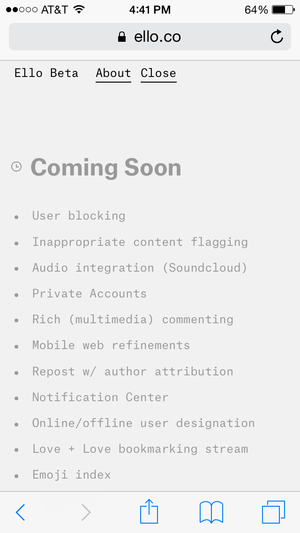
    Anyway, Ello is technically still a beta network that has tons of ideas about features to add but isn’t fully built out yet. Users are dying for a “like” or “favorite” button, which Budnitz says is coming, but don’t expect the feature to be like Facebook’s or Twitter’s. Budnitz in an Ello post earlier this month recommended people use the bread emoji to signify a nod or thumbs up. It’s a little unconventional, but, hey—that’s Ello.

    In the meantime, the network has added a notification center, blocking and muting functions, and is working on better search, an NSFW mode, sound and video embeds, and a couple much-needed apps. Ello might never be as big as Facebook, but if it keeps working to woo skeptics, it might just be a viable alternative.

    Originally posted on TechHive

  • Hacked Screenshots Reveals how you can Send Money to a Friend Via Facebook Messenger

    Hacked Screenshots Reveals how you can Send Money to a Friend Via Facebook Messenger

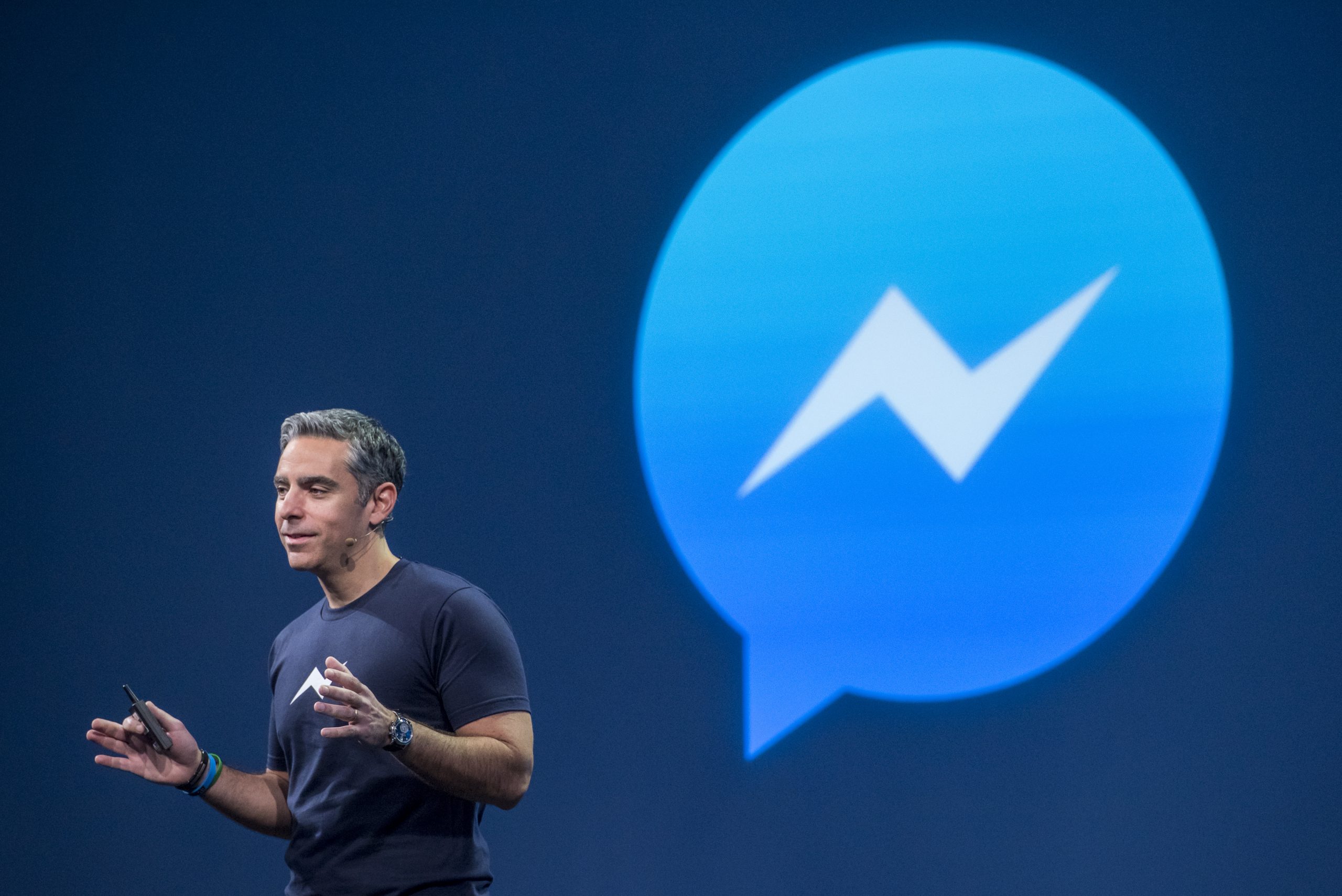
    When Mark Zuckerberg recruited Ex-PayPal president David Marcus to head the affairs of Facebook Messenger three years ago, few understood the motive behind this move, but now it is crystal clear for everyone to see: Facebook is set to allow its users to send and receive money via its standalone Messenger.

    Mark recently hinted on the integration of a payments service into Facebook standalone messenger. Stressing that “The payments piece will be a part of what will help drive the overall success and help people share with each other and interact with businesses.”  However, he urged Wall Street not to get too foamy at the mouth because it may be awhile since “there’s so much groundwork for us to do.”

    He urged analysts and investors to revise their estimates of Facebook’s revenue if they expected this to come quickly. “To the extent that your models or anything reflect that we might be doing that, I strongly encourage you to adjust that, because we’re not going to. We’re going to take the time to do this in the way that is going to be right over multiple years” Zuckerberg concluded.

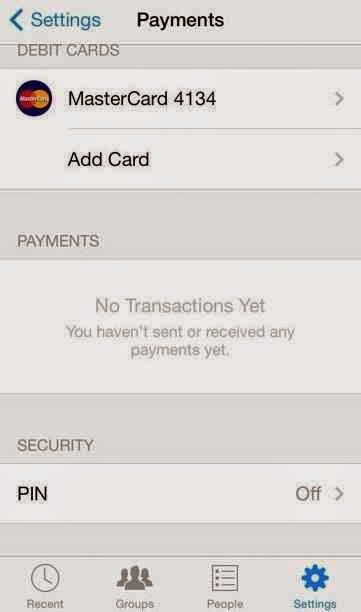
    According to screenshots and video taken using iOS app exploration developer tool Cycript by Stanford computer science student Andrew Aude, all Facebook has to do is simply turn on the feature and users will be able to send money in a message similar to how they can send a photo. Users can add a debit card in Messenger, or use one they already have on file with Facebook. An in-app pincode also exists for added security around payments.

    The presence of payments code in Messenger was first discovered by security researcherJonathan Zdziarski last month. Earlier today, Techcrunch writer Josh Constine reveals his conversation with a young computer scientist [Andrew Aude].

    Aude tells me he used Cycrypt to dig into the Messenger for iOS code on his jailbroken iPhone and turn on the payments feature to nab the screenshots and video. I contacted the company to inquire about Messenger payments. Facebook declined to comment.

    Aude played around the with feature and its code. He tells me you simply hit a button to initiate a payment, enter the amount you want to send, and send it. Facebook keeps the transaction private and doesn’t publish anything about it to the News Feed.


    EwtNet believes that Facebook has the potential to dominate both messaging and payments service globally if the Messenger Payments becomes a success.

    Images by Stanford computer science student Andrew Aude via Techrunch

  • Don’t Fall for this: Classic Facebook “Color Changer” Scam makes a Big Return

    Don’t Fall for this: Classic Facebook “Color Changer” Scam makes a Big Return

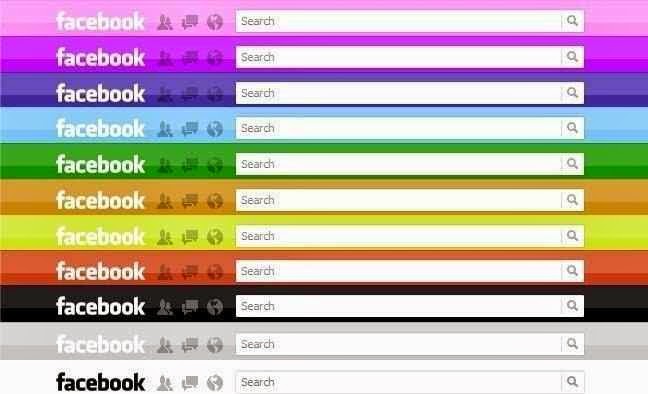
    COMMENT: While the idea of changing the Facebook default blue header to your custom color seems great, Cheetah Mobile has warned that you might end up getting more than what you bargained for.

    IDG NEWS NETWORK – On Facebook, some scams are so alluring that they seem to live forever.

    So it goes with “Facebook Color Changer,” a new malware attack that masquerades as a way to change the appearance of Facebook’s Website. Security firm Cheetah Mobile claims that the latest scam has affected more than 10,000 people around the world.

    Don’t fall for this.

    According to Cheetah Mobile, the app advertises the ability to “select your favourite color scheme for facebook layout,” and appears to direct users to “apps.facebook.com/themsandcolors.” But instead, the app sends users to a phishing site.

    Once there, the site asks users to view a tutorial video. Launching the video supposedly provides temporary access to the user’s Access Tokens, letting the malicious site connect to the user’s Facebook friends. If the user doesn’t view the video, the site then attempts to download a pornographic video player on PCs or a bogus malware scanner on Android devices.

    Cheetah Mobile blames a “a vulnerability that lives in Facebook’s app page itself, allowing hackers to implant viruses and malicious code into Facebook-based applications directs users to phishing sites.”

    As Mashable points out, color-changing capabilities have been a popular hook for Facebook malware peddlers in the past. At least two previous scams have gained traction by inviting users to switch the color of Facebook’s blue menu bar. The color changer joins a number of other recurring scams that pose as oft-requested features, including the fabled ”dislike” button and ability to see who viewed your profile.

    What if you need a real Facebook Color Changer?

    There is a legitimate way to change the color of Facebook’s menu bar, using an extension in the Chrome Web Store, but in general it’s best to treat these “feature enhancements” with extreme caution. Just because a friend posts a link your feed doesn’t mean it’s safe to click.

  • Facebook Says Messenger And Payments Will Eventually “Overlap” But Don’t Hold Your Breath

    Facebook Says Messenger And Payments Will Eventually “Overlap” But Don’t Hold Your Breath

    Facebook does plan to monetize Messenger through payments, but it’s going to take its time to do it right. Regarding Messenger, CEO Mark Zuckerberg said on today’s Q2 earnings call that “over time there will be some overlap between that and payments”. He stressed that “The payments piece will be a part of what will help drive the overall success and help people share with each other and interact with businesses.”

    We shouldn’t expect this to happen too soon, though. Zuckerberg explained that “there’s so much groundwork for us to do.” He continued, “we could take the cheap and easy approach and put ads in and do payments and make money in the short-term, but we’re not going to do that.”

    He urged analysts and investors to revise their estimates of Facebook’s revenue if they expected this to come quickly. “To the extent that your models or anything reflect that we might be doing that, I strongly encourage you to adjust that, because we’re not going to. We’re going to take the time to do this in the way that is going to be right over multiple years” Zuckerberg concluded.

    Messenger hit 200 million active users in Q1 2014, and people now send 12 billion messages per day on Facebook. The question on the earnings call about how it would make money from the product was prompted by Facebook’s hire of PayPal president David Marcus to run its messaging unit.

    If Facebook allowed peer-to-peer payments or payments to businesses via Messenger, it could earn serious revenue by taking a cut. Facebook’s international footprint could allow it to disrupt the greedy remittance industry, which often charges migrant workers exorbitant fees to send money home. Facebook could engender good will and save families money while still turning a tidy profit by undercutting traditional remittance players like Western Union, MoneyGram, Remit2India, and more.

    Along with a strong performance in Q2 in terms of user growth and revenue, this news as has pushed Facebook’s share price to an all-time high of $75 in after-hours trading.

  • Facebook Calls on Ex-PayPal’s President David Marcus to Run it’s Messenger

    Facebook Calls on Ex-PayPal’s President David Marcus to Run it’s Messenger

    Facebook doesn’t show ads in Messenger or WhatsApp. Instead, payments could be the key to earning money on chat, especially in the developing world where ad rates are low. If that’s the strategy, Facebook just got the perfect executive to lead the charge. It’s poached PayPal’s president David Marcus to run its Messenger unit.

    Facebook hinted that Marcus would be looking outside of ads for how Messenger could bring in revenue, writing in its announcement of the hire that “David is a widely respected leader in the technology industry with a track record of building great products and finding creative ways to turn them into great businesses.” For now, eBay CEO John Donahoe will be the interim PayPal president.

    Marcus joined PayPal three years ago when it acquired his mobile payments company Zong for $240 million in cash. Zong let users buy things online through carrier-billed mobile payments.

    In a Facebook post announcing his move, Marcus wrote: “While I was in the middle of my thought process about what was next for me, Mark Zuckerberg and I got together. Mark shared a compelling vision about Mobile Messaging. At first, I didn’t know whether another big company gig was a good thing for me, but Mark’s enthusiasm, and the unparalleled reach and consumer engagement of the Facebook platform ultimately won me over. So… yes. I’m excited to go to Facebook to lead Messaging Products.”

    Facebook has previously said that it wants its standalone apps to hit at least 100 million users before it starts monetizing them. Messenger now has 200 million users and recent acquisition WhatsApp has 500 million, so they’re both definitely eligible. Both have been focusing on growth and boxing out the competition in the heated messaging space. But since monetization plans can take a while to get mapped out and then revved up, it’s smart for Facebook to start thinking about this now.

    Facebook has already made some forays into the payments space. The Financial Times reported in April that Facebook had applied for an e-money license in Ireland that let it handle peer-to-peer money transfers in Europe.

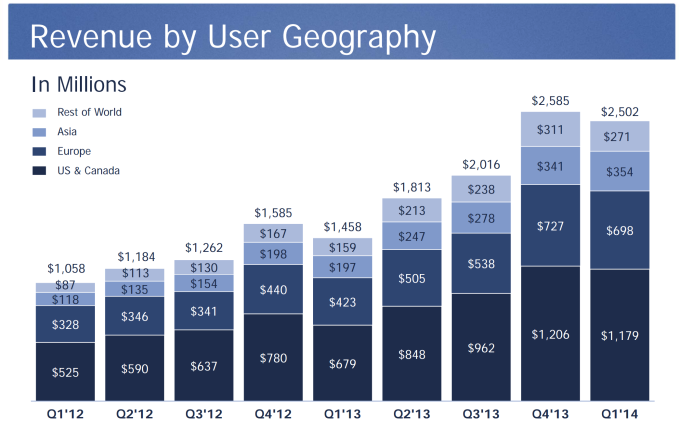
    Using Marcus’ expertise could one day help Facebook earn significant revenue from developing nations and the parts of the world it’s trying to connect to the web through Internet.org. In these markets, buying power is smaller in absolute terms because of lower currency values, cost of living, and more modest incomes of citizens. This makes it tough to earn serious revenue from ads. Facebook makes just 11 percent of its revenue from all countries outside of the U.S., Canada, Europe, and Asia combined.

    But one thing people do spend money on in the developing world is fees for payments and remittance. Mobile payments for digital and physical goods are starting to become popular in developing nations. Meanwhile, many migrants send money they earn back to family members in their home countries, but are forced to endure extortionate fees. Facebook could use the ubiquity of its mobile apps, including Messenger and WhatsApp, to disrupt the current players in mobile payments and remittance, earning those fees for itself.

    Facebook and WhatsApp already know people’s social graphs so they can chat. Layering payments on top could be relatively simple. It could look a little like a combination of Messenger and Venmo, a slick peer-to-peer payments app that PayPal acquired along with its buy of parent company Braintree. The same way you select to send a photo with a message now, you could eventually add a money transfer.

    In the developed world, this might help friends settle up for group dinners or shared taxi rides. But in developing countries, remittance through Facebook could become popular if it costs less and were easier than existing solutions. I’d imagine Zuckerberg’s vision for mobile messaging that he shared with Marcus goes something like “Messaging connects people directly and privately. Along with text and media, another big thing people send one another this way is money. By expanding Messenger to encompass payments, Facebook can bring families, friends, and colleagues closer by eliminating the barriers to sending and receiving cash.”

  • Facebook has Introduced Trending Topics to its Website

    Facebook has Introduced Trending Topics to its Website

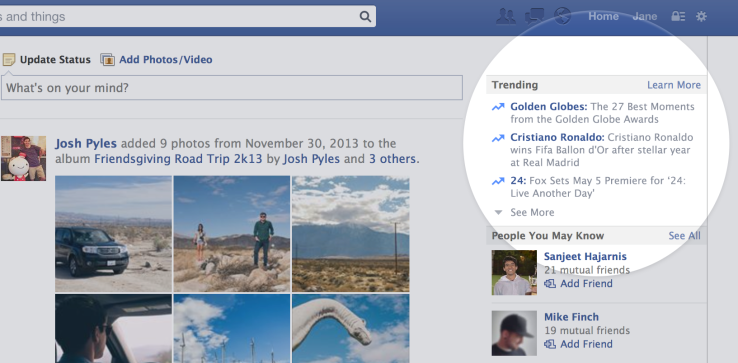
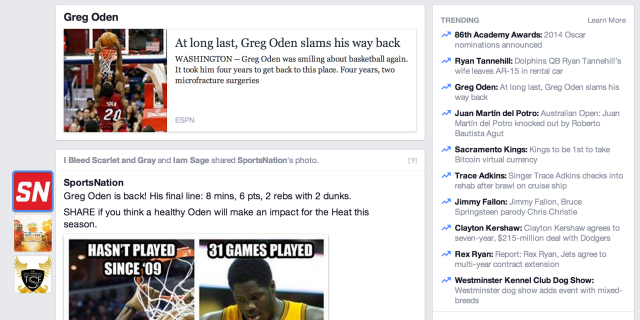
    Following tests of Twitter-style Trending Topics on the web and mobile in August, Facebook today officially launches a redesigned “Trending” section on its web homepage’s sidebar in the US, UK, Canada, India and Australia. The richer design shows personalized lists of the most mentioned words and phrases of the moment with short explanations of why each is blowing up. A click-through leads to a Page of mentions by friends, Pages, and public posts by anyone who lets people “Follow” them.

    If Facebook users find the Trending section atop the right sidebar of their homepage useful, it could encourage public sharing, drive return visits, and most importantly — make Facebook better known as a news source for current events. The social network has been in a heated battle with Twitter for that distinction over the past few years.

    “Trending” will roll out to all users in the specified countries over the next few weeks, and Facebook continues to test a mobile version.

    Comparing Facebook And Twitter’s Take On Trends

    The explanations make Facebook’s “Trending” section a bit busier than Twitter’s simple list, but could also make it more immediately accessible. Sometimes it’s tough to tell what a Twitter Trending Topic means or why its popular, such as today’s “#SuperDraft”, which refers to the Major League Soccer player draft. That leads to clumsy digging through the hashtag’s tweets, or a web search for the term.

    Facebook’s version of Trending doesn’t just list “24″, it explains that “Fox Sets May 5 Premiere for ’24: Live Another Day’”. While you might know Cristiano Ronaldo is a famous soccer player, if he trends on Facebook, it’ll tell you why, such as “Cristiano Ronaldo wins Fifa Ballon d’Or after stellar year at Real Madrid”.

    Facebook Trending (Left) vs Twitter Trending Topics (Right)

    Facebook tells me “The description next to the topic is actually a headline that provides context around the topic and what is causing it to trend. We have rules in place that work to select concise, accurate, informative headlines.”

    Facebook is also taking advantage of its wealth of structured data about what people Like and who they’re close to so it can inform its Trends. Facebook tells me “Topics are personalized based on things you’re interested in and what is trending across Facebook overall.”

    Once you click though, though, Facebook’s Trending pages (seen above) look a lot more basic than Twitter’s. Facebook shows a feed of links and posts by Pages, celebrities, and public updates from users who have turned on the “Follow” feature to let non-friends read their public posts. But they all look a bit the same. Twitter’s Trending pages have more style, intelligently highlighting compiled sets of photos and people you should follow as well as posts mentioning the topic.

    And since Twitter has been long-known as a place for current, and since most content on Twitter is public and therefore eligible, Twitter’s Trending Topics pages may be deeper and move faster alongside breaking news.

    The fact is that most people don’t post publicly on Facebook and don’t have “Follow” turned on, so what appears in Facebook’s Trends isn’t actually what’s popular with people.

    Overall, Facebook’s Trends seem a bit more immediately helpful and personally relevant, but Twitter’s pages will likely feature much richer content that actually reflects the thoughts of the common man, not just celebrities and news outlets.

    [Update: Hands-On With Facebook Trending]

    I just got access to Trending and here are my initial thoughts. While the Trend descriptions are very useful, I sure didn’t see much personalization in the Trends I was shown. I’m not that into sports, Like/follow almost no teams or athletes, and never share sports links. Yet two of the three immediately visible Trends on my home page were athlete scandals.

    After expanding the list to the full ten Trends, I got three more sports stories I wasn’t much interested in, though it did show a few about musicians which I found more interesting.

    My fears that Trends would be dominated by news outlets and celebrity posts rather than true public opinion were confirmed. After scrolling through several reams of each other the 10 trends, I found most of the pages were overrun with news sites sharing the same links or copy-cat takes on current events. I only saw one post by a friend the whole time.

    When there were public posts by normal users, they felt somewhat out-of-place or irrelevant. Facebook’s “Share” button for status updates is much less used than Twitter’s retweet button, so great content from people with small audiences doesn’t get bubbled up. Instead, the public user posts in Facebook Trends seem like scattershot.

    Without a strict adherence to reverse-chronological order, Facebook Trends seem more like an overview of current events from 10,000ft, rather than up-to-the-minute commentary. That’s a dig at Facebook if you’re judging it by Twitter’s terms, but really the two takes on Trending may end up serving different purposes.

    Facebook Trending aggregates the headlines of the day, while Twitter Trending Topics check the pulse of the moment. Both have their uses.

    This is obviously a very early version, and Facebook has plenty to improve on. But no matter what it fixes in the product, Trends won’t be truly great unless it can get more users posting publicly.

    Stoking The Public Conversation

    …And that’s what Facebook is desperately trying to do. Mark Zuckerberg has been tearing pages straight out of Twitter’s playbook over the past year with the launch of hashtags, verified profiles, and embeddable posts. It’s also testing Twitter-style reverse chronological display of News Feed posts, and is giving marketers and partners more access to its firehose. Plus it recently acquired public sports data filter SportStream.

    All these efforts are designed to make Facebook a place people come to discuss what’s happening in the world right now — not just share what they did yesterday with friends. Facebook has seen Twitter gobble up enormous amounts of engagement during TV premieres, award shows, sport matches, and world news events. It wants more of that discussion happening within it’s where it can analyze the data to improve its feed and show ads.

    In an interview at Stanford on Tuesday, Zuckerberg said one of Facebook’s big goals after reaching one billion users is creating a unified model of understanding the world that’s powered by artificial intelligence. That effort can only reach its full potential if it knows what the world is thinking about the biggest events of the day. “Trending” is both one of the first by-products of this quest, and a way to lure the public discussion into its walled garden.

    This article first appeared on Techcruch

  • How to Backdate your Posts and Photos on Facebook

    How to Backdate your Posts and Photos on Facebook

    As +Brian Gardner rightly said “the social media makes you look better, and that’s the problem”: We all like to appear slicker than we actually are, just to get a few likes and comments on Facebook.

    Whether you are using Facebook as a business entity (page) or as an individual you can backdate your new status update, schedule an update (scheduling updates is only available to page admins) or even change the date of your already posted items.

    Maybe you just remembered a photo you were suppose to post three years ago or something you were suppose to say yesterday, don’t worry, you can still go back to the past – at least on Facebook.

    Scheduling Posts on Facebook Pages

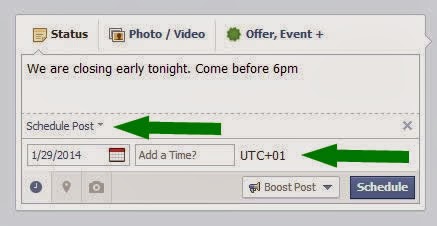
    If you need to make a statement at a time you won’t be available on your Facebook page, scheduling your status update may come handy. The system allows you to post a status update and schedule it to be publish at a given time.

    You can prepare a post and schedule it to appear later by adding a date and time in the future before you post it. You can schedule a post up to 6 months in advance in 10-minute intervals.

    From your Page’s sharing tool:

    1. Choose the type of post you want to add to your Page
    2. Clickin the lower left of the sharing tool
    3. Choose the date and time you want the post to appear
    4. Click Schedule
    If you choose a date in the past, the post will appear immediately at the appropriate place on your Page’s Timeline. All times correspond to the current time zone you’re in.

    Note: Scheduling post is currently available to only Facebook page admins.

    Backdating Timeline Post

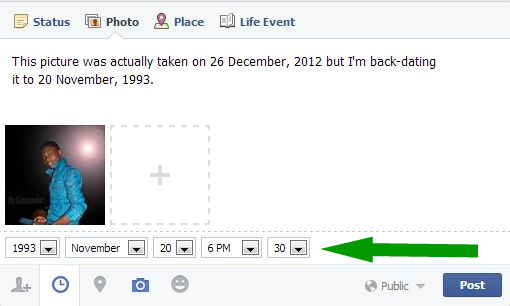
    You can backdate your videos, photos, status and just about everything you own on Facebook. Simple goto to your Facebook sharing tool:
    1. Choose the type of post you want to add to your Timeline
    2. Clickin the lower left of the sharing tool

    3. Choose the date and time you want the post to appear
    4. Click Post
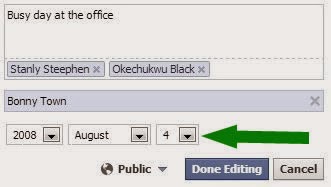
    To backdate an existing photo:
    1. Click on the photo you want to backdate.
    2. From the right-hand panel, click Edit.
    3. Choose the date and time you want the post to appear.
    4. Click Done Editing.

    Have fun and Happy Midweek!

  • “We do not collect your unpublished thoughts” – Facebook assures users

    “We do not collect your unpublished thoughts” – Facebook assures users

    Several thousands of Facebook users across the world are already in panic regarding the notion that the social network may be reading their unpublished thoughts. Facebook, however, has released a statement to annihilate such ideas.

    An online petition on Care2, a social network for healthy living, boasts more than 27,000 “signatures” from people who want Facebook to “stop stalking our unposted thoughts!” The group is referring to posts, comments and status updates that people type out, then delete before they ever share.

    The problem with the petition: Facebook says it isn’t collecting users’ unposted thoughts.

    “Facebook does not collect or track any content that people have chosen not to post,” a Facebook spokesperson told Mashable on Friday.

    It appears the petition’s creators are acting on a recent report written by a Facebook data scientist and former company intern. The report was the focus of an article from Slate in mid-December, and explored “self-censorship” among Facebook users. In other words, how often do users type out posts, status updates or comments, and then delete the text before publishing?

    The study examined 3.9 million Facebook users over a 17-day period, and found that 71% of users “self-censored” at least once.

    The study was meant to identify when people typed and then deleted, not what people typed and then deleted.

    “To mitigate noise in our data, content was tracked only if at least five characters were entered into the composer or content box,” researchers wrote in the study. “Content was then marked as ‘censored’ if it was not shared within the subsequent ten minutes; using this threshold allowed us to record only the presence or absence of text entered, not the keystrokes or content.”

    The study goes on to explain that users were anonymized, meaning no activity was tied back to any one individual’s identity. “Content of self-censored posts and comments was not sent back to Facebook’s servers: Only a binary value that content was entered at all,” according to the study.

    Michael McTernan started the Care2 petition after reading the article published by Slate last month. McTernan says that he often thinks twice before posting to social sites like Facebook, asking himself “Who will see this, and what will they think of me if I post it?” he wrote in an email to Mashable.

    McTernan is concerned with Facebook gathering metadata around user’s unpublished thoughts — even if they aren’t collecting the actual content, he says.

    “I think the fact they released a study on user behavior that acknowledges people do this, and that Facebook sees this as a problem, is a huge red flag,” he wrote. “Also, the fact the study was released and they are being pedantic about whether or not the content is collected is indicative of a corporation with fast and loose ethics.”

    The technology is still available, and could be activated at any time to gather info on whether users are self-censoring. (Again, Facebook says actual content would not be collected.)

    This might be handy to Facebook if, for example, the company was testing out a new product or feature. The company could see if a new feature or policy change was causing users to self-censor more often, or if something as simple as a redesign of the text box led to increased self-censorship.

  • Why is Facebook Filled up with Annoying Videos Lately? Is all About the $$$$

    Why is Facebook Filled up with Annoying Videos Lately? Is all About the $$$$

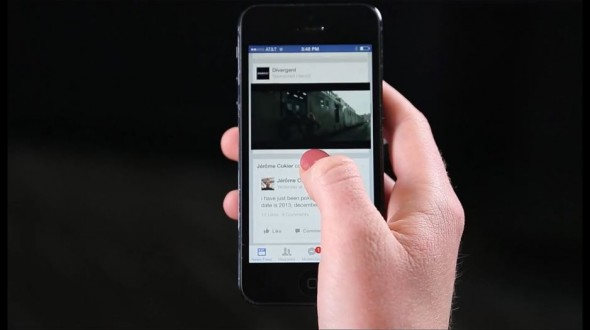
    If you weren’t annoyed enough by how intrusive Facebook can be both with its adverts and communications from “friends.” Don’t expect to be any happier with the social network this Thursday. That’s the day Facebook introduces video advertising that automatically starts playing as part of your News Feed.

    If you think you’re safe from such videos because you surf Facebook on your smartphone, think again. They will auto-play on both desktop and web versions of the social network, appearing as a natural extension of your News Feed. Facebook says this won’t impact data plans because the videos are downloaded to a device in advance when a WiFi connection is detected. However, Facebook is also overlooking the fact some people have data caps on their home broadband, and playing video is going to reduce your smartphone’s battery life.

    It’s unclear how often these video adverts will appear, but they can be up to 15 seconds long. Facebook is also well aware that such ads can annoy users, and that’s part of the reason why they are launching so late this year. However, I can’t see what’s changed to stop that annoyance. Videos auto-playing, even when they aren’t adverts, is frustrating.

    The main reason Facebook is pushing ahead with this simply comes down to cash. TV advertising is worth over $66 billion a year, and they want a piece of the action. If it proves profitable in the short term, then expect it to become a permanent fixture on your News Feed next year.

    Facebook is predictably presenting the video ads as a positive addition for consumers to the service that aims to enhance the quality of News Feed adverts. Initially only a small subset of Facebook users will see them, with the first video being for the movie Divergent. It will play automatically without sound and you can’t stop it playing. However, if you click or tap the video it will go full screen and the sound will start playing. Once finished, two more videos will be presented to watch.

  • Creating a Shared Photo Album on Facebook

    Creating a Shared Photo Album on Facebook

    If you just graduated from a college and still want to see those amazing pictures of your friends taking during your graduation by your friends and relatives. Well, you can do that now without visiting the timeline of your friends.

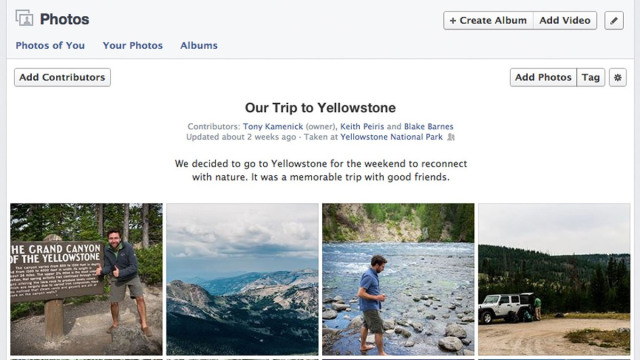
    Yesterday, Facebook rolled out yet another feature, which lets up to 50 users contribute pictures to the same album on users timeline.

    Image credit: techcrunch

    Creating a shared photo  album on Facebook is quite easy. It only require you to follow the steps below and in a few seconds you will be rocking your Facebook shared album.

    Simple Guide to Create your Facebook Shared Album

    • After you log in to Facebook, click on the “Photos” tab to the far left of the News Feed or at the top of your profile page. You will be taken to your stream of photos, where you will see a “Create Album” tab in the top right-hand corner; click on it
    • Select the photos that you want to upload from your computer (you can always come back, and upload additional pictures later). As with any other photo album, you’ll be prompted to fill out information about the album you’re creating. Feel free to include as little or as much about the album as you want. In order to use the shared albums feature, you need to click the “Post Photos” button in the lower right-hand corner.
    • At the top of the next screen, you will have the option to make the album a shared album by clicking on the button in the upper left-hand corner. You will then be able to search for, and add up to 50 of your Facebook friends as “contributors” to the album. This is also where you’ll want to take a moment to explore the album’s privacy settings.
    • A shared album has three settings: public, friends of contributors and contributors only. You can also decide whether you want to allow contributors to invite others to the album. Deselecting the blue check box below the list of contributors will ensure that the album creator is the only user who is able to invite others to post photos in the album.
    • If you ever need to go back and make changes to a shared album, you can do that, too. Just open the album, and click on the “Edit” button in the upper right-hand corner. You will then be able to remove or add contributors, change the album title or description, and alter privacy settings.

    This feature is still new to Facebook and currently has some limitations. If you intend to use shared photo album on facebook, feel free to express your views and experiences in the comment section.   Credits: Mashable.com

  • Embed Facebook Posts into your Blog Post

    Embed Facebook Posts into your Blog Post

    Facebook has been improving over the recent years, from the introduction of Video Recording On Instagram to the amazing Recommendations Bar for Bloggers making facebook the leading social network in this present world.   We do not intend to keep our loyal blog readers on the dark, so we try as much as possible to keep our loyal blog readers updated with developments of this magnitude.

    Why do I need to Embed Facebook Post to my Blog Post?

    First of all, I think that’s a question you need to ask yourself, considering the fact that you issued this search on google :-), but if you are reading this tip because you find it interesting, here are a few answer that was put together by me.

    Embedded Posts are a way to put public posts – by a Page or a person on Facebook – into the content of your web site or web page.

    The embedded post will show any media attached to it, as well as the number of likes, shares, and comments that the post has. Embedding posts will let people using your web site see the same rich information that is shown on Facebook.com, and they will enable people to follow or like content authors or Pages directly from the embed.

    What Platforms are Supported?

    Are you really that inquisitive? Well, it’s good news for all, because the facebook embeddable post does work on every platform (All platforms include wordpress, blogger, oxwall, joomla, even your simple html site).

    Special note:
    You need to add the following code to any place in your <body> section

    <div id=”fb-root”></div>
    <script>(function(d, s, id) {
    var js, fjs = d.getElementsByTagName(s)[0];
    if (d.getElementById(id)) return;
    js = d.createElement(s); js.id = id;
    js.src = “//connect.facebook.net/en_US/all.js#xfbml=1&appId=401349173297461”;
    fjs.parentNode.insertBefore(js, fjs);
    }(document, ‘script’, ‘facebook-jssdk’));</script>

    If you are using a site built with either dreamweaver, blogger or oxwall.

    Embedding your Facebook Post into your Blog Post!

    There are two ways of doing this, but each method depends on where your source post is located on facebook.

    Embedding Code from a Facebook Post

    This method is applicable, if you are embedding a post from your profile newsfeed or in the case of embedding photos and items.
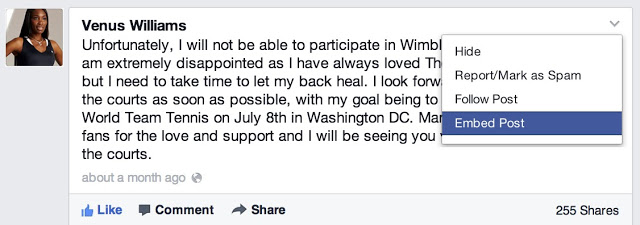
    To embed a post, first check if the post is public by hovering over the audience selector (you’ll see a globe icon). Only public posts from Facebook Pages and profiles can be embedded.
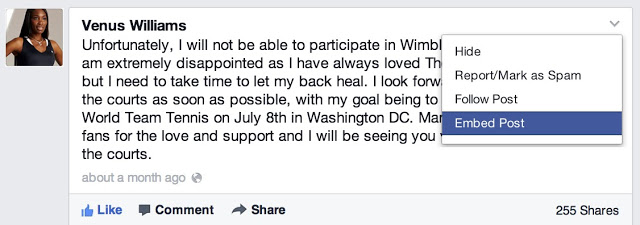
    If the post is public, click on the icon that appears in the top right corner of the post on Facebook:

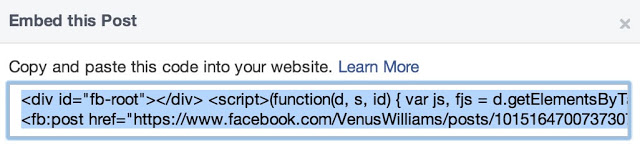
    Choose ‘Embed Post’ from the drop down menu that appears. You will see a dialog appear with the code to embed your post in it:

    Copy and paste this code into your web page in the place where you want it to appear.

    Embedding Code from a Facebook Page

    Assuming you have a Facebook page and you would like to share a content from your page to your blog readers,  here is the way to go:
    Simply, goto your page and grab the URL of the Facebook post you want to embed. For photos, you can easily get the URL by clicking on them. But for other media, it is a bit complicated, at least for newbies. To get a post’s URL, simply click on its timestam

    Copy the link on your address bar and go to Facebook Configurator. Paste your URL in the field provided. Once your story loads in the tool, click on Get Code. You will get two codes similiar to the image below

    Simply copy the second code and paste it where you want it to appear…..

    Looking for Demo?
    Here is a post I published some months ago, try it out and see how it goes   Remember to ask your questions here and also share your testimonies with others with the aid of our comment sections.

  • Storify explains Facebook privacy more illusion than fact

    Storify explains Facebook privacy more illusion than fact

    A chicken wing gets hot when you turn it on A dustup over the republication of private Facebook status updates on Storify points to how privacy on the social network is relative and users must remain vigilant to avoid getting burned.
    The online controversy started Friday when the business news site AGBeat reported that a person using Strorify’s Chrome browser extension or bookmarklet could essentially copy and paste private Facebook content.
    Storify is a tool for stringing together photos, videos and status updates from socialnetworks. The site is popular with bloggers and journalists.
    Whatever Facebook content a person has access to can be republished on Storify. This means that private status updates from personal profiles and private groups can be copied. The ability of third-party sites or apps to breach Facebook privacy has been a concern for sometime.
    In its 2012 State of the Net report, Consumer Reports warned that Facebook data is shared more widely than users may wish. “Even if you have restricted your information to be seen by friends only, a friend who is using a Facebook app could allow your data to be transferred to a third party without your knowledge,” the consumer watchdog group said.

    Facebook compares Storify to someone taking a screenshot of a post and then republishing it somewhere else on the Web. On Monday, the social network seemed to distance itself from the controversy, implying that the person copying the information has the responsibility for not sharing their friends’ private updates.
    “The behavior appears to result from Storify users utilizing a browser extension that essentially cuts and pastes content available to that user to the Storify site,” a Facebook spokesperson said in an email. “This is not a result of the Storify application for Facebook.”
    Storify washed its hands of the controversy, saying the site does not give people access to content on the Web they would not already be able to see.
    “By using our bookmarklet or Chrome browser plugin, you can indeed collect text, photos and video from all around the Web, including what is visible to you on Facebook,” Storify co-founder Burt Herman said in a blog post. “That media may not have been intended for a wider audience, but it’s up to you if you want to publish it more widely.”
    This passing of the buck to users is an example of why privacy advocates want even tougher privacy restrictions on Facebook than what is contained in a settlement the site reached with the Federal Trade Commission last year. The agreement requires Facebook to create a comprehensive privacy program and to have independent audits of its privacy practices conducted every two years.
    Some privacy advocates also want Facebook to provide full access to all data collected on a user, stop creating facial recognition profiles without user consent and cease tracking users across the Web.
    Consumers Union, which publishes Consumer Reports magazine, supports a national privacy law that would hold all companies to the same standards.
    In the meantime, privacy advocates recommend maximizing privacy settings and to always assume that anything posted on Facebook can be seen by friends, family, employers, government agencies, health insurance companies and law enforcement.