Author: Ebenezer Obasi

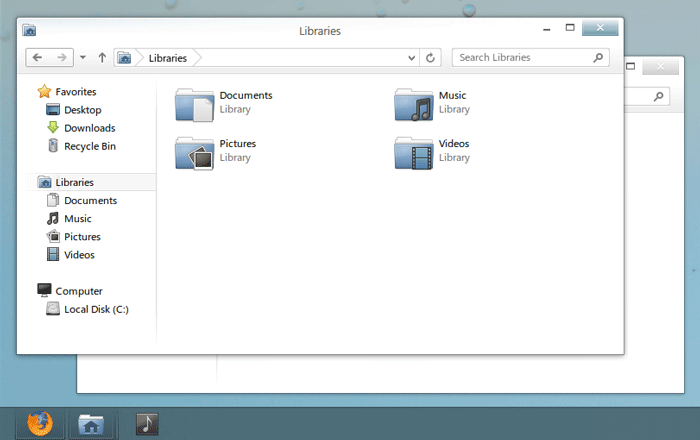
  • 25 Best ‘Free’ Elegant Windows 8 Themes

    25 Best ‘Free’ Elegant Windows 8 Themes

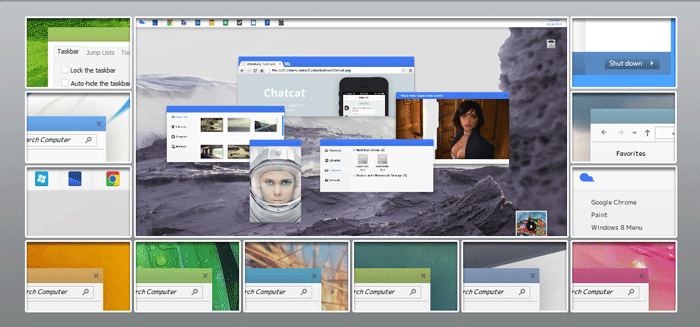
    Bill & Microsoft has made many structural changes by implementing Metro UI and Start Screen in Windows 8. But the PC side of Windows 8 has not seen any dramatic changes except the removal of Start Menu and Aero Glass Transparency feature. Windows 8 like Windows 7 and others before them, has a lot of customization features that helps you define an entirely new look for your Windows PC .

    Sometimes, the quest for customizing the desktop look can consume a lot of time; so you don’t have to actually customize your windows 8 PC, rather you can download many custom windows 8 themes and use them on your windows 8 PC (Check out 25 best themes for Windows 7)  .

    Most of these windows 8 themes are the products of talented artists/developers who make these themes available as a free download for everyone . But like most windows programs , windows 8 themes download from un-trusted sites might contain malware in them . So it is always advisable to download windows 8 themes from reputed sources only .

    As a tradition that has been laid by the predecessors, Windows 8 does not allow the installation of third-parties themes by default, hence, it is recommended you read How to Install Third-Party Windows 8 Themes before you proceed to the next section of this article.

    Image

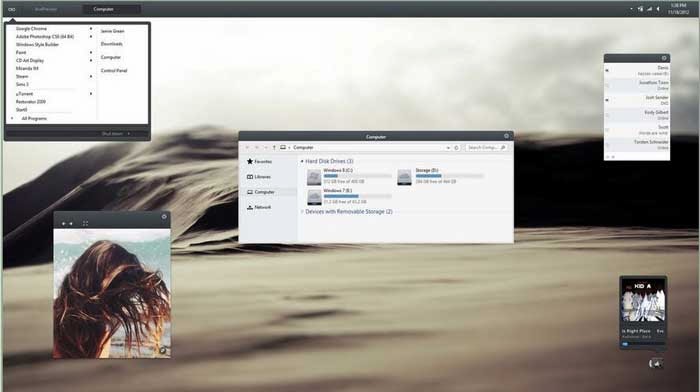
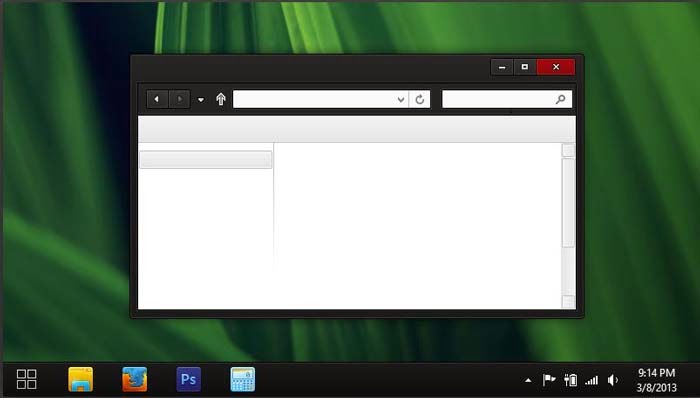
    In this article, we shall consider the top 25 most-outstanding Windows 8 themes you can apply on your desktop.

    1) Space Blueberries 4.8

    Image

    Theme Name: Space Blueberries 4.8
    OS Version: Windows 8
    Artist: Neiio

    DOWNLOAD

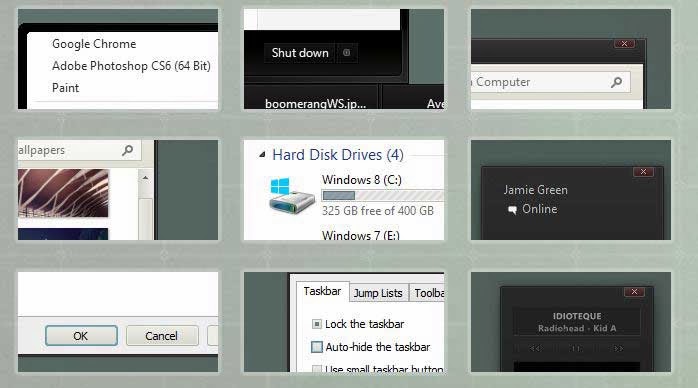
    Description: Space Blueberries is an awesome Windows 8 theme which has dark shadowed visual style and has design tweaks.

    2) Base for Windows 8

    Theme Name: Base for Windows 8
    OS Version: Windows 8
    Artist: Link6155

    DOWNLOAD

    Description: Base for Windows 8  is pixel perfect quality Windows 8 Dark Theme which offers a nice set of Metro Icons and dark style skins.  

    3) Work for Windows 8

    Theme Name: Work for Windows 8
    OS Version: Windows 8
    Artist: Neiio

    DOWNLOAD

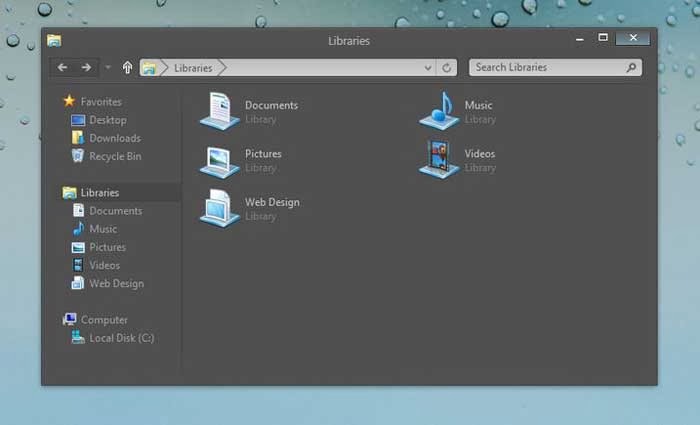
    Description: Work is one of the best Windows 8 theme which has glowing dark interface. It gives you breathing space while working on multiple documents.  

    4) Snow Leopard glass

    Theme Name: Snow Leopard glass
    OS Version: Windows 8
    Artist: Sagorpbd

    DOWNLOAD

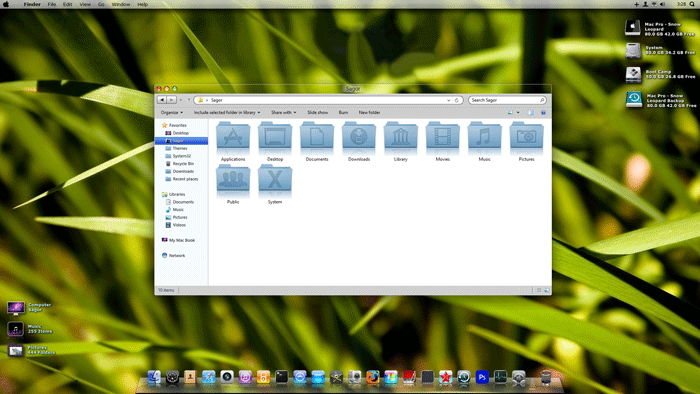
    Description: Snow Leopard glass is an elegant Windows 8 theme with clean and simple layouts. Quite an ideal theme for ‘simplicity’ fans.  

    5) Incomplete VS

    Theme Name: Incomplete VS
    OS Version: Windows 8
    Artist: Sinopt

    DOWNLOAD

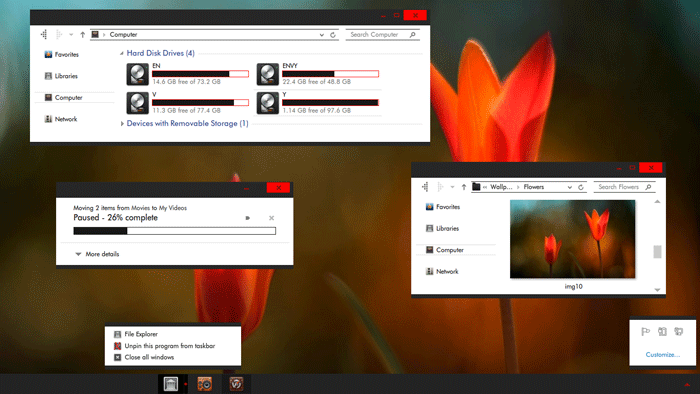
    Description: Incomplete VS is a simple theme but cute Windows 8 desktop theme with red & black color scheme.

    6) Snowy V 3.0

    Theme Name: Snowy V 3.0
    OS Version: Windows 8
    Artist: Carborunda

    DOWNLOAD

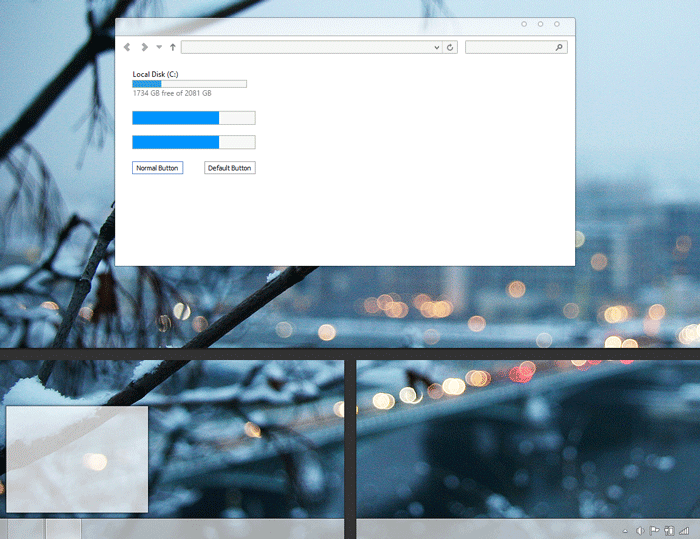
    Description: Snowy is a nice Glossy Windows 8 Theme which supports all colors of Windows 8. Snowy has the Minimalistic design and looks soft for eyes.

    7) WhiteDior

    Theme Name: WhiteDior
    OS Version: Windows 8
    Artist: Ridkurn

    DOWNLOAD

    Description: WhiteDior is a nice Minimalistic Windows 8 Theme With icon sets and skins.

    8) Win 8 – Thrives

    Theme Name: Win 8 – Thrives
    OS Version: Windows 8
    Artist: Neiio

    DOWNLOAD

    Description: Another good work by Neiio. The Win 8 – Thrives Window 8 theme is made up of basic color scheme and attractive layout.

    9) Aero8 Glow

    Theme Name: Aero8 Glow
    OS Version: Windows 8
    Artist: Mrgrim01

    DOWNLOAD

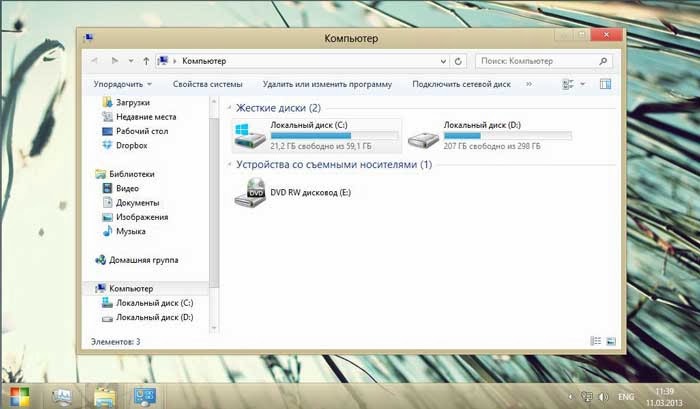
    Description: Aer08Glow is a port of the default Windows 7 theme with a few modifications. This theme has glow on the caption buttons and 2 styles: one with square corners and one with rounded corners. To use this theme with rounded corners you have to enable Aero Glass Transparency in Windows 8.

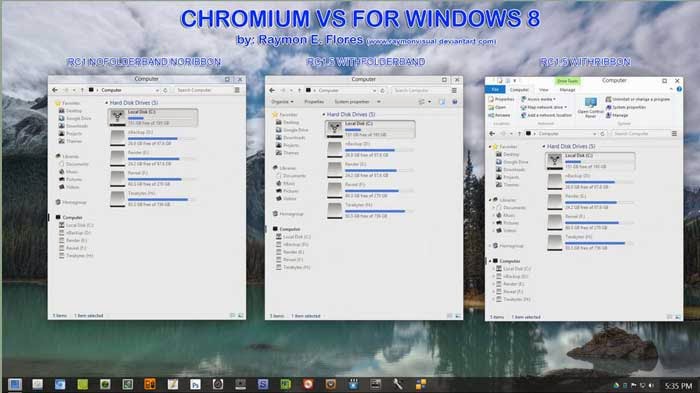
    10) Chromium

    Theme Name: Chromium
    OS Version: Windows 8
    Artist: Reymonvisual

    DOWNLOAD

    Description: Transform your Windows 8 system  to Google’ Chromium OS Style.

    11) Simplex RC

    Theme Name: Simplex
    OS Version: Windows 8
    Artist: Link6155

    DOWNLOAD

    Description: Simple Windows 8 theme which features a new frame, search & address bar, taskbar, and various of other changes.  

    12) Glow Dark

    Theme Name: Glow Dark
    OS Version: Windows 8
    Artist: Seahorsepip

    DOWNLOAD

    Description: It won’t be long before darkness falls: The Glow Dark Windows 8 theme lightens your way amidst of darkness.  

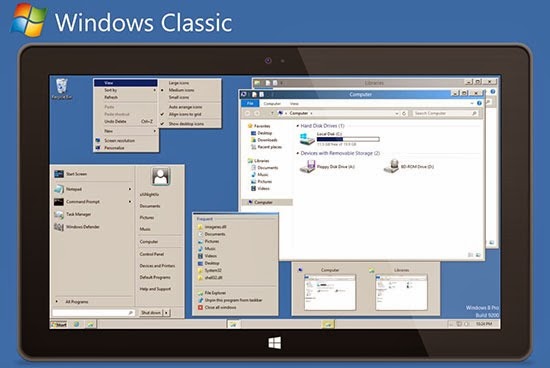
    13) Windows Classic Vs

    Theme Name: Windows Classic Vs
    OS Version: Windows 8
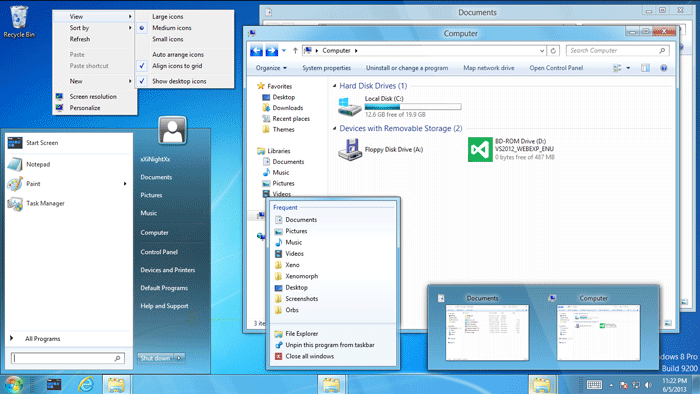
    Artist: xXiNightXx

    DOWNLOAD

    Description: Begin from the beginning with Windows Classic Vs: Windows 8 theme. Bring back the old memories of older Windows!

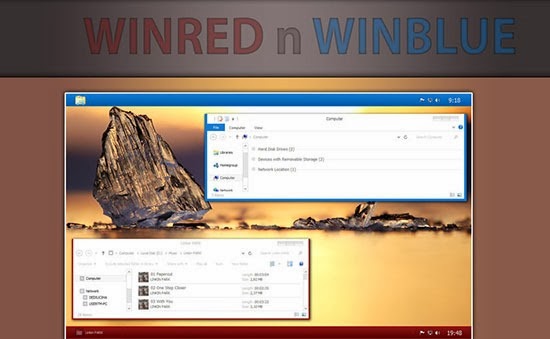
    14) Win Blue n Red

    Theme Name: Win Blue n Red
    OS Version: Windows 8
    Artist: S4r1n994n

    DOWNLOAD

    Description: Be greeted by the sweetness of the rising sun every moment your PC is booted. Win Blue n Red Windows 8 theme is the perfect blend for ‘red’ in ‘blue’, with a perfect ‘black’ to see off the dark sides.

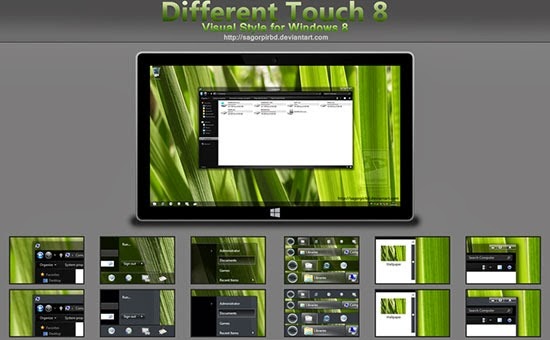
    15) Different Touch 8

    Theme Name: Different Touch 8
    OS Version: Windows 8
    Artist: Sagorpirbd

    DOWNLOAD

    Description: Different Touch 8 is a dark Windows 8 theme with clean surface, cute icons and soft to the eye.  

    16) White Update

    Theme Name: White Update
    OS Version: Windows 8
    Artist: s4r1n994n

    DOWNLOAD

    Description: Enough cannot be said on this exclusive Windows 8 theme: “Experience”, they said, “it’s the best teacher”.  

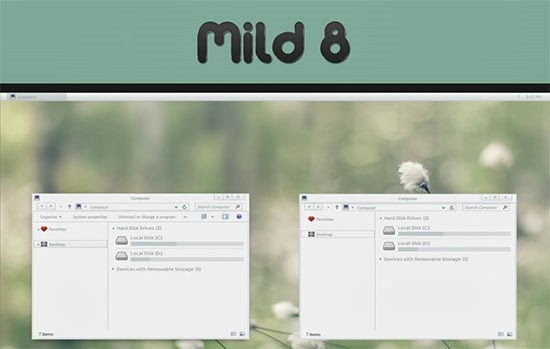
    17) Mild 8

    Theme Name: Mild 8
    OS Version: Windows 8
    Artist: dIzzEE94

    DOWNLOAD

    Description: Gentle, easy-going, and low temper is the true definition of this Windows 8 theme. Cut your edges clean and enjoy the cool atmosphere.  

    18) Gray8 new red

    Theme Name: Gray8 new red
    OS Version: Windows 8
    Artist: gsw953onDA

    DOWNLOAD

    Description: Darkness has overshadowed light! The new ‘red’ brightens the appearance of your Windows 8 theme. Gray8 new red is an easy going theme with boundless customization.

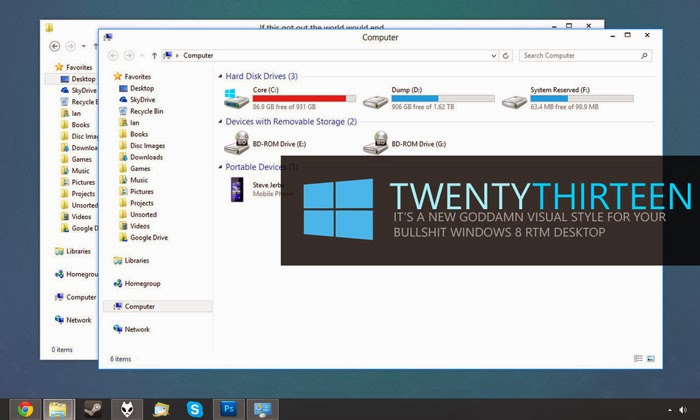
    19) Twentythirteen

    Theme Name: Twentythirteen
    OS Version: Windows 8
    Artist: sand-and-mercury

    DOWNLOAD

    Description: Twentythirteen is a new Goddamn visual style for your bullshit Windows 8 RTM desktop.

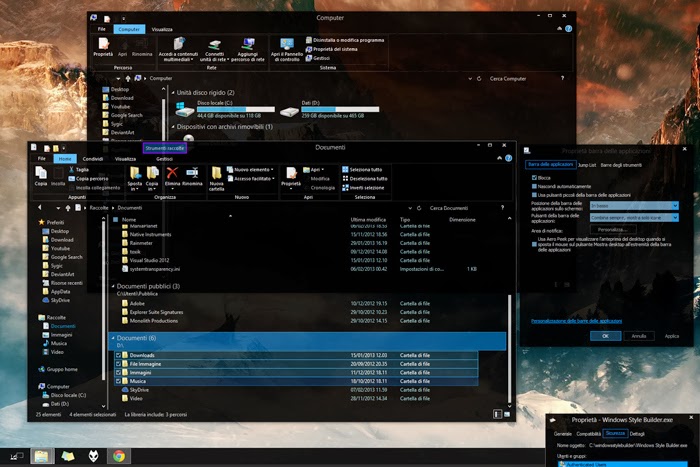
    20) Abisso

    Theme Name: Abisso OS Version: Windows 8 Artist: Ezio   DOWNLOADDescription: Abisso is one word for ‘true transparency’: The Windows 8 theme has a clean dark background with blue color scheme.

    21) Elune

    Theme Name: Elune
    OS Version: Windows 8
    Artist: Neiio

    DOWNLOAD

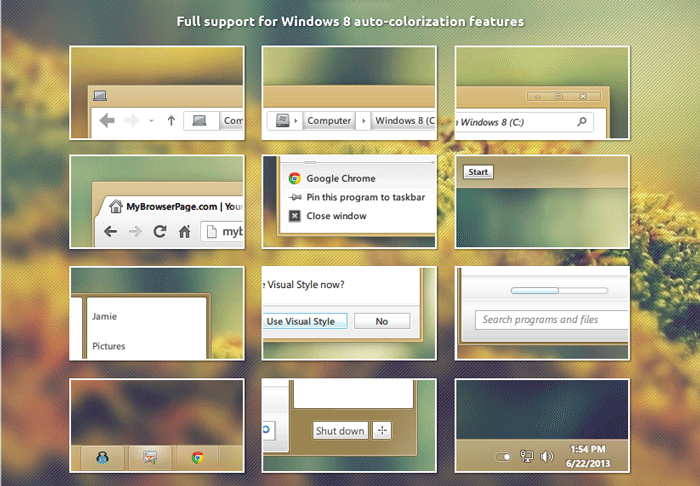
    Description: Elune is an easy going Windows 8 theme with full support for Windows 8 auto-colorization features.

    22) duMBaSS Windows 8 themes

    Theme Name: duMBaSS Windows 8 themes
    OS Version: Windows 8
    Artist: Neiio

    DOWNLOAD

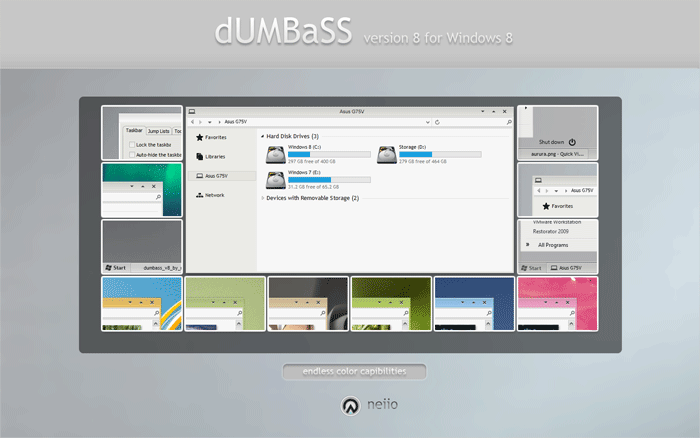
    Description: Get kicked in the ass with this amazing Windows 8 theme.

    23) Ourea windows 8 themes

    Theme Name: Ourea windows 8 themes
    OS Version: Windows 8
    Artist: Neiio

    DOWNLOAD

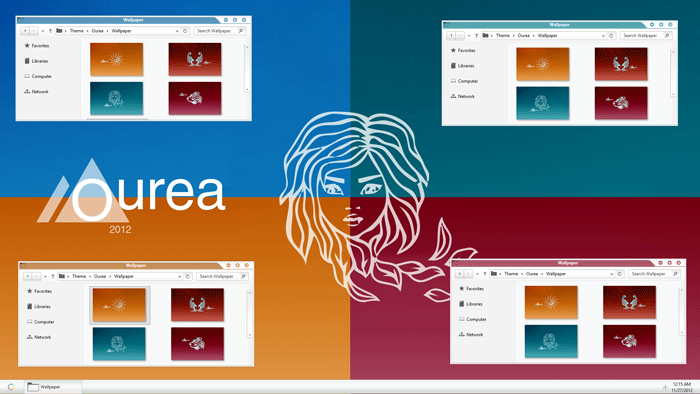
    Description: Gradually drift away from the original look of Windows 8. With Ourea windows 8 themes; the future is in your hands.

    24) Alduin Windows 8 themes

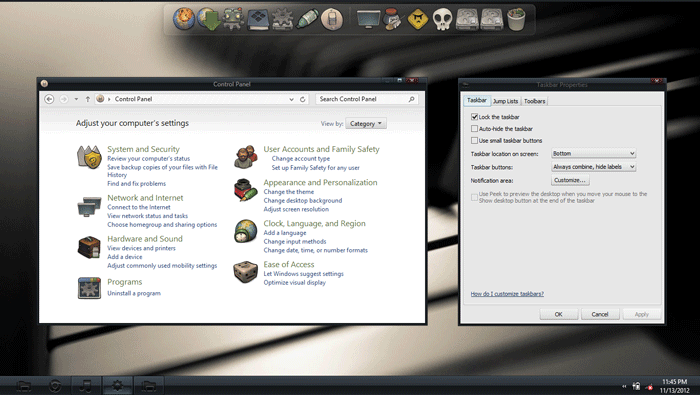
    Theme Name: Alduin Windows 8 themes OS Version: Windows 8 Artist: Charleston2378   DOWNLOADDescription: This list cannot be completed without the inclusion of the beautiful work of Charleston. Alduin is a Windows 8 minimalistic theme with deep dark background.  

    25) Nimbus

    Theme Name: Nimbus
    OS Version: Windows 8
    Artist: Neiio

    DOWNLOAD

    Description: Closing our list of top 25 elegant Windows 8 themes today is: Nimbus. This theme has an extra-ordinary layout that allows you to choose from various color schemes and background.

  • How to Install Third-Party Windows 8 Themes

    How to Install Third-Party Windows 8 Themes

    When it is down to the customization of your Windows PC, it goes beyond the changing of icons and wallpaper. Windows 8, 7, XP and those before them, allows you to install custom themes of your preference, however, due to the fact that most of the themes developed by third-parties developers may contain malwares which are harmful to your PC; Microsoft has disallowed the ability to install themes from third-parties developer, hence, this tutorial.

    With this tutorial, you will be able to install any third-party theme on Windows 8 PC, however, it is essential to only install themes from trusted websites and developers (Check out 25 best themes for Windows 8 from trusted developers).

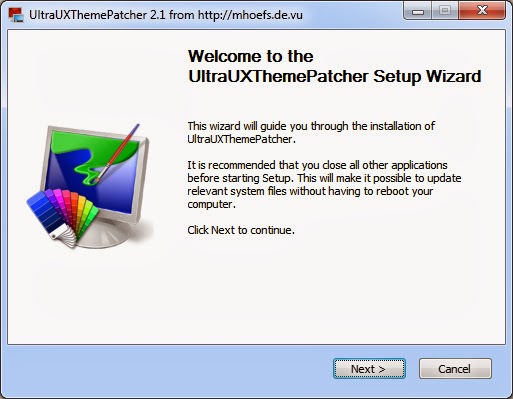
    Image

    Among our numerous contenders, Ultra UXTheme Patcher stands out as the best Windows 8 Themes application program. All you have to do is install it on your system and it will automatically modify the required items.

    Once you have installed the program you can then use any custom Windows 8 themes on your PC . Just download any custom windows 8 themes  and copy it over to this directory in your windows PC:

    C:WindowsResourcesThemes

    Note: Some themes might require a few additional instructions to install . Check the description of the themes  for any addition instructions .

  • New: Save your Message Attachments on Google Drive via your Gmail Interface

    New: Save your Message Attachments on Google Drive via your Gmail Interface

    Today, Google officially announced the release of a new update for Gmail users. The new update is set to allow users to view and save attachments to Google Drive directly from their mailbox.

    For those of you who are yet to use  Google Drive: It is a product that grants Google account owners free cloud service, that allows you to store upto 5GB data(s) in your free Google account and unlimited data for premium Google accounts.

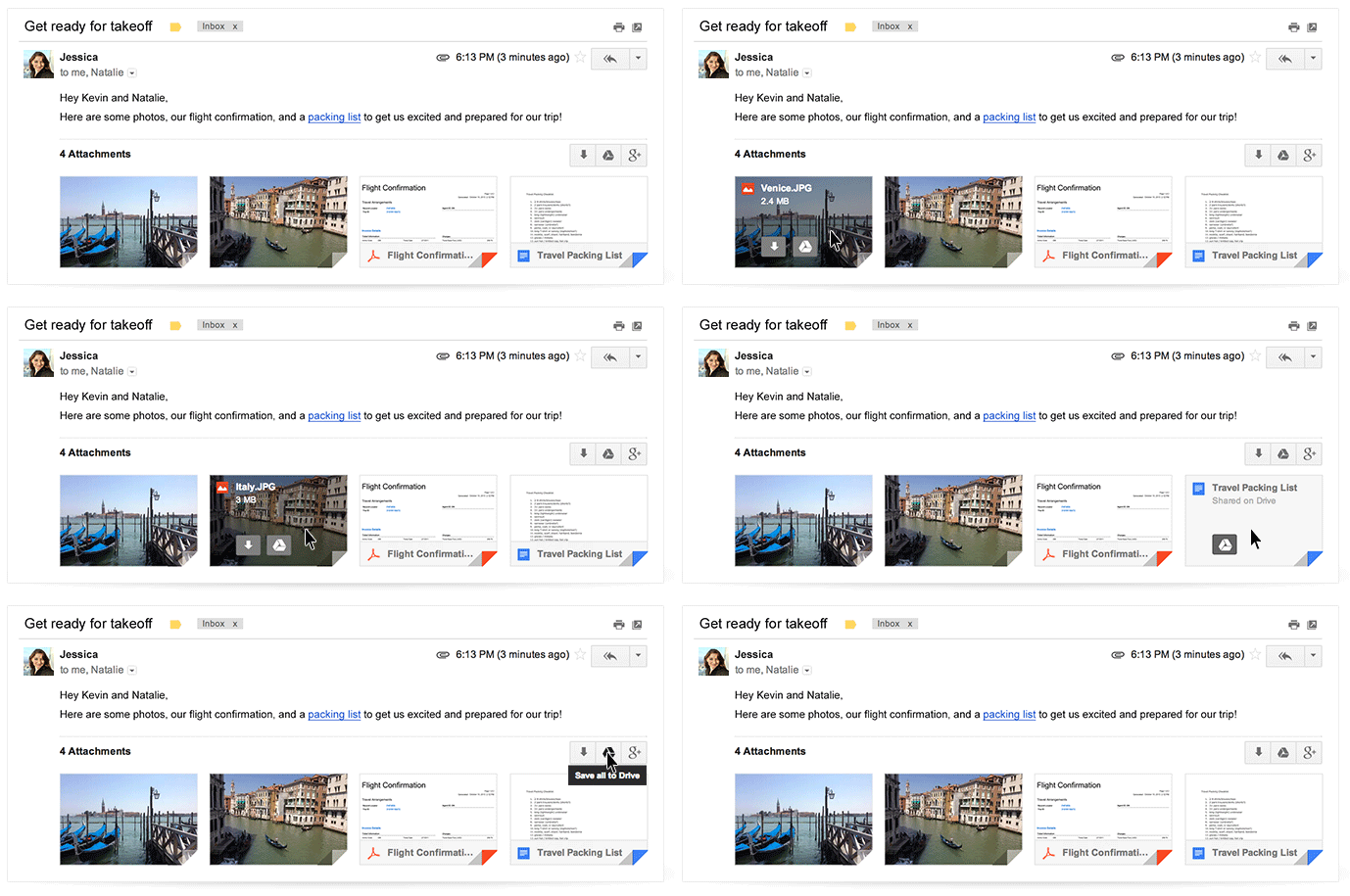
    According to a statement by Scott Johnston in the Google official blog ” The next time you open an email with attachments, you’ll see new previews of the files at the bottom of the email, from photos and videos to spreadsheets and PDFs.”
    image
    With the new Gmail interface, you can now access your email attachments from any device such as your mobile phone and tablets and save them in your Google Drive, hence, making them accessible via any other device, anywhere, anytime.

    The new Gmail also let you navigate through multiple attachments right through your inbox and of-course read and even search for a particular phrase.

    How to Save your Attachments to Google Drive

    To save your attachments:

    • Hover on the attachment preview
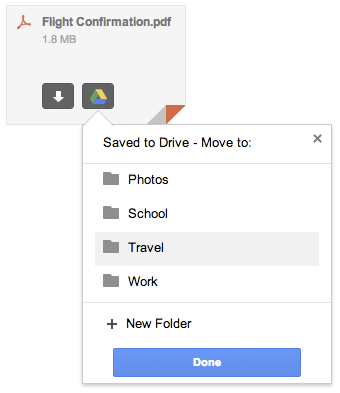
    • Click on the Google Drive icon that appears when you hover on the attachment.
    • Choose or create a folder for your attachment and click done
    image

    If you wish to save the attachment directly to your device, simply click the arrow icon (See image above).

    “This new attachment experience is available on desktop and will be rolling out over the next week. If you’re one of the more than 120 million active Drive users, you know that saving your files to Drive lets you get to them from any computer, phone or tablet. And if you aren’t taking advantage of Drive just yet, give it a try with your next Gmail attachment.” Scott added.

  • Say Hello to Google Helpouts

    Say Hello to Google Helpouts

    It’s been a long time coming, we have always known that somewhere at the middle, Google is just going to introduce a freelancing site. And yes! Google, yesterday officially announced their latest product called “Helpouts” .


    Helpout according to Emily Wood, is the new way people can get help from anywhere at anytime from real people at their own convenience.

    He wrote on Google official blog: “Help might be a quick answer to a problem you’re having right now, like how to fix your garage door, or how to remove a computer virus; or it might be guidance completing a project, like building a deck. It might be learning a new skill, like how to speak conversational French or how to draw cartoons; or it might be general advice on how to improve your fitness or your writing (I could use this right now).”
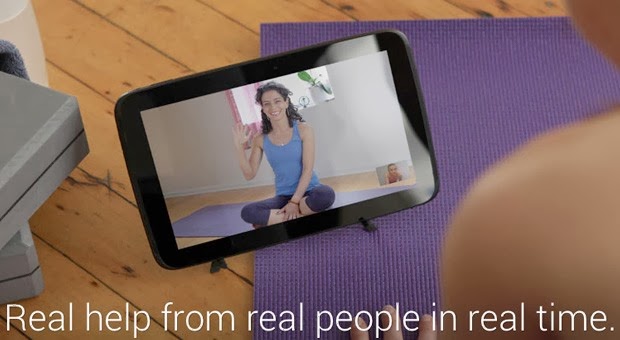
    Google Helpouts, is believed to be another freelancing site to find professionals with adequate qualifications to help you out with any problem you are having at the moment. “With Helpouts, you can choose who you get help from based on their qualifications, their availability, their price, their ratings and reviews. You can connect instantly or book in advance. You can get help from individuals or from brands you already know and trust, like Sephora, One Medical, Weight Watchers, Redbeacon (a Home Depot company), and Rosetta Stone. Once you’re in a Helpout, you can do more than just talk—you can share your computer screen, collaboratively edit a presentation, or record your Helpout. And if the experience doesn’t meet your expectations, we offer a full money back guarantee.” Emily Wood added.

    You can watch the video above, to see how Google Helpouts works.
    It’s been a long time coming, we have always known that somewhere at the middle, Google is just going to introduce a freelancing site. And yes! Google, yesterday officially announced their latest product called “Helpouts” .


    Helpout according to Emily Wood, is the new way people can get help from anywhere at anytime from real people at their own convenience.

    He wrote on Google official blog: “Help might be a quick answer to a problem you’re having right now, like how to fix your garage door, or how to remove a computer virus; or it might be guidance completing a project, like building a deck. It might be learning a new skill, like how to speak conversational French or how to draw cartoons; or it might be general advice on how to improve your fitness or your writing (I could use this right now).”

    Google Helpouts, is believed to be another freelancing site to find professionals with adequate qualifications to help you out with any problem you are having at the moment. “With Helpouts, you can choose who you get help from based on their qualifications, their availability, their price, their ratings and reviews. You can connect instantly or book in advance. You can get help from individuals or from brands you already know and trust, like Sephora, One Medical, Weight Watchers, Redbeacon (a Home Depot company), and Rosetta Stone. Once you’re in a Helpout, you can do more than just talk—you can share your computer screen, collaboratively edit a presentation, or record your Helpout. And if the experience doesn’t meet your expectations, we offer a full money back guarantee.” Emily Wood added.

    You can watch the video above, to see how Google Helpouts works.
    It’s been a long time coming, we have always known that somewhere at the middle, Google is just going to introduce a freelancing site. And yes! Google, yesterday officially announced their latest product called “Helpouts” .


    Helpout according to Emily Wood, is the new way people can get help from anywhere at anytime from real people at their own convenience.

    He wrote on Google official blog: “Help might be a quick answer to a problem you’re having right now, like how to fix your garage door, or how to remove a computer virus; or it might be guidance completing a project, like building a deck. It might be learning a new skill, like how to speak conversational French or how to draw cartoons; or it might be general advice on how to improve your fitness or your writing (I could use this right now).”

    Google Helpouts, is believed to be another freelancing site to find professionals with adequate qualifications to help you out with any problem you are having at the moment. “With Helpouts, you can choose who you get help from based on their qualifications, their availability, their price, their ratings and reviews. You can connect instantly or book in advance. You can get help from individuals or from brands you already know and trust, like Sephora, One Medical, Weight Watchers, Redbeacon (a Home Depot company), and Rosetta Stone. Once you’re in a Helpout, you can do more than just talk—you can share your computer screen, collaboratively edit a presentation, or record your Helpout. And if the experience doesn’t meet your expectations, we offer a full money back guarantee.” Emily Wood added.

    You can watch the video above, to see how Google Helpouts works.
    It’s been a long time coming, we have always known that somewhere at the middle, Google is just going to introduce a freelancing site. And yes! Google, yesterday officially announced their latest product called “Helpouts” .


    Helpout according to Emily Wood, is the new way people can get help from anywhere at anytime from real people at their own convenience.

    He wrote on Google official blog: “Help might be a quick answer to a problem you’re having right now, like how to fix your garage door, or how to remove a computer virus; or it might be guidance completing a project, like building a deck. It might be learning a new skill, like how to speak conversational French or how to draw cartoons; or it might be general advice on how to improve your fitness or your writing (I could use this right now).”

    Google Helpouts, is believed to be another freelancing site to find professionals with adequate qualifications to help you out with any problem you are having at the moment. “With Helpouts, you can choose who you get help from based on their qualifications, their availability, their price, their ratings and reviews. You can connect instantly or book in advance. You can get help from individuals or from brands you already know and trust, like Sephora, One Medical, Weight Watchers, Redbeacon (a Home Depot company), and Rosetta Stone. Once you’re in a Helpout, you can do more than just talk—you can share your computer screen, collaboratively edit a presentation, or record your Helpout. And if the experience doesn’t meet your expectations, we offer a full money back guarantee.” Emily Wood added.

    You can watch the video above, to see how Google Helpouts works.
    It’s been a long time coming, we have always known that somewhere at the middle, Google is just going to introduce a freelancing site. And yes! Google, yesterday officially announced their latest product called “Helpouts” .


    Helpout according to Emily Wood, is the new way people can get help from anywhere at anytime from real people at their own convenience.

    He wrote on Google official blog: “Help might be a quick answer to a problem you’re having right now, like how to fix your garage door, or how to remove a computer virus; or it might be guidance completing a project, like building a deck. It might be learning a new skill, like how to speak conversational French or how to draw cartoons; or it might be general advice on how to improve your fitness or your writing (I could use this right now).”

    Google Helpouts, is believed to be another freelancing site to find professionals with adequate qualifications to help you out with any problem you are having at the moment. “With Helpouts, you can choose who you get help from based on their qualifications, their availability, their price, their ratings and reviews. You can connect instantly or book in advance. You can get help from individuals or from brands you already know and trust, like Sephora, One Medical, Weight Watchers, Redbeacon (a Home Depot company), and Rosetta Stone. Once you’re in a Helpout, you can do more than just talk—you can share your computer screen, collaboratively edit a presentation, or record your Helpout. And if the experience doesn’t meet your expectations, we offer a full money back guarantee.” Emily Wood added.

    You can watch the video above, to see how Google Helpouts works.
    It’s been a long time coming, we have always known that somewhere at the middle, Google is just going to introduce a freelancing site. And yes! Google, yesterday officially announced their latest product called “Helpouts” .


    Helpout according to Emily Wood, is the new way people can get help from anywhere at anytime from real people at their own convenience.

    He wrote on Google official blog: “Help might be a quick answer to a problem you’re having right now, like how to fix your garage door, or how to remove a computer virus; or it might be guidance completing a project, like building a deck. It might be learning a new skill, like how to speak conversational French or how to draw cartoons; or it might be general advice on how to improve your fitness or your writing (I could use this right now).”

    Google Helpouts, is believed to be another freelancing site to find professionals with adequate qualifications to help you out with any problem you are having at the moment. “With Helpouts, you can choose who you get help from based on their qualifications, their availability, their price, their ratings and reviews. You can connect instantly or book in advance. You can get help from individuals or from brands you already know and trust, like Sephora, One Medical, Weight Watchers, Redbeacon (a Home Depot company), and Rosetta Stone. Once you’re in a Helpout, you can do more than just talk—you can share your computer screen, collaboratively edit a presentation, or record your Helpout. And if the experience doesn’t meet your expectations, we offer a full money back guarantee.” Emily Wood added.

    You can watch the video above, to see how Google Helpouts works.
    It’s been a long time coming, we have always known that somewhere at the middle, Google is just going to introduce a freelancing site. And yes! Google, yesterday officially announced their latest product called “Helpouts” .


    Helpout according to Emily Wood, is the new way people can get help from anywhere at anytime from real people at their own convenience.

    He wrote on Google official blog: “Help might be a quick answer to a problem you’re having right now, like how to fix your garage door, or how to remove a computer virus; or it might be guidance completing a project, like building a deck. It might be learning a new skill, like how to speak conversational French or how to draw cartoons; or it might be general advice on how to improve your fitness or your writing (I could use this right now).”

    Google Helpouts, is believed to be another freelancing site to find professionals with adequate qualifications to help you out with any problem you are having at the moment. “With Helpouts, you can choose who you get help from based on their qualifications, their availability, their price, their ratings and reviews. You can connect instantly or book in advance. You can get help from individuals or from brands you already know and trust, like Sephora, One Medical, Weight Watchers, Redbeacon (a Home Depot company), and Rosetta Stone. Once you’re in a Helpout, you can do more than just talk—you can share your computer screen, collaboratively edit a presentation, or record your Helpout. And if the experience doesn’t meet your expectations, we offer a full money back guarantee.” Emily Wood added.

    You can watch the video above, to see how Google Helpouts works.
    It’s been a long time coming, we have always known that somewhere at the middle, Google is just going to introduce a freelancing site. And yes! Google, yesterday officially announced their latest product called “Helpouts” .


    Helpout according to Emily Wood, is the new way people can get help from anywhere at anytime from real people at their own convenience.

    He wrote on Google official blog: “Help might be a quick answer to a problem you’re having right now, like how to fix your garage door, or how to remove a computer virus; or it might be guidance completing a project, like building a deck. It might be learning a new skill, like how to speak conversational French or how to draw cartoons; or it might be general advice on how to improve your fitness or your writing (I could use this right now).”

    Google Helpouts, is believed to be another freelancing site to find professionals with adequate qualifications to help you out with any problem you are having at the moment. “With Helpouts, you can choose who you get help from based on their qualifications, their availability, their price, their ratings and reviews. You can connect instantly or book in advance. You can get help from individuals or from brands you already know and trust, like Sephora, One Medical, Weight Watchers, Redbeacon (a Home Depot company), and Rosetta Stone. Once you’re in a Helpout, you can do more than just talk—you can share your computer screen, collaboratively edit a presentation, or record your Helpout. And if the experience doesn’t meet your expectations, we offer a full money back guarantee.” Emily Wood added.

    You can watch the video above, to see how Google Helpouts works.
    It’s been a long time coming, we have always known that somewhere at the middle, Google is just going to introduce a freelancing site. And yes! Google, yesterday officially announced their latest product called “Helpouts” .


    Helpout according to Emily Wood, is the new way people can get help from anywhere at anytime from real people at their own convenience.

    He wrote on Google official blog: “Help might be a quick answer to a problem you’re having right now, like how to fix your garage door, or how to remove a computer virus; or it might be guidance completing a project, like building a deck. It might be learning a new skill, like how to speak conversational French or how to draw cartoons; or it might be general advice on how to improve your fitness or your writing (I could use this right now).”

    Google Helpouts, is believed to be another freelancing site to find professionals with adequate qualifications to help you out with any problem you are having at the moment. “With Helpouts, you can choose who you get help from based on their qualifications, their availability, their price, their ratings and reviews. You can connect instantly or book in advance. You can get help from individuals or from brands you already know and trust, like Sephora, One Medical, Weight Watchers, Redbeacon (a Home Depot company), and Rosetta Stone. Once you’re in a Helpout, you can do more than just talk—you can share your computer screen, collaboratively edit a presentation, or record your Helpout. And if the experience doesn’t meet your expectations, we offer a full money back guarantee.” Emily Wood added.

    You can watch the video above, to see how Google Helpouts works.
  • Ultimate Guide to Jailbreak iPad, iPhone and iPod with Sprint

    Ultimate Guide to Jailbreak iPad, iPhone and iPod with Sprint

    Before we proceed to this topic proper, I will like to explain what jailbreaking your device means.Naturally, Apple’s rules for AppStore are way too limiting. Some apps are not allowed to be listed in the AppStore since they break one or more of Apple’s rules. These rules keep control of the device platform in Apple’s control. Some of these rules include: patching system files such as SpringBoard, allowing apps to run in the background, running apps out of the “sandbox”, and simply doing things Apple decided that they don’t want you to do often for reasons to their benefit, not yours (such as tethering).

    Jailbreaking is not unlocking! It is risk free and totally legal. Everything that works before jailbreaking continues to work after. Jailbreaking only adds features. Jailbreaking is risk free and cannot void your warranty. You can simply restore in iTunes at anytime to get back to a factory state. You are not alone, many people are doing it.

    If you ever consider jailbreaking your Apple’s iPad, iPhone or iPod Touch then Sprint should be your prominent choice. It offer the most easiest and quickest jailbreak  ever as Sprint takes the process to a whole new level compare to what other software like JailbreakMe has to offered. After you follow the step below to jailbreak your iDevice you will have the ability to install unapproved, third-party applications which are unavailable in the Apple’s iTunes App Store.

    What You Need to Know about Spirit Before Jailbreak

    Spirit is an untethered jailbreak for iPad, iPhone, and iPod Touch on firmware 3.1.2, 3.1.3, and 3.2.
    Your iPhone, iPod Touch, or iPad must be activated.
    Your device must not be stuck on the Connect to iTunes logo or emergency call screen.
    It will work on any version of iTunes 9 (including 9.1.1).
    Spirit will not unlock your iPhone.
    If you are currently using a tethered jailbreak, you have to restore in order to use Spirit.
    Do not upgrade if you unlocked your iPhone 3G or 3GS (if you have the SHSH blobs for 3.1.2, you can restore to it).
    While Spirit is stable for all devices, your iPad may act a little funny due to packages that have not been updated for it yet.

    Step by Step Jailbreak Instruction

    • Download the jailbreak application from Sprint.
    • Connect your iPad / iPhone / iPod Touch to your PC using USB cable.
    • Back up your iDevice to your iTunes library, and sync it. (make sure that your iTunes revision is at least version 9)
    • If you are using Windows 7, Right Click on Spirit.exe and Select Compatibility mode to “Windows 98/ME”.
    • Now double click the Spirit.exe and click on “Jailbreak”.
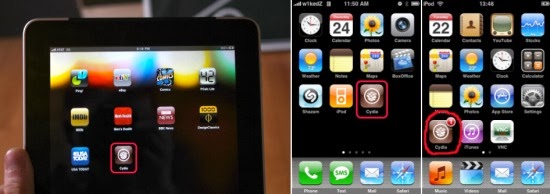
    • In a few seconds your iDevice will reboot and you will be presented with jailbroken “Cydia” icon on your springboard, See Screenshot below. From here, you have access to all the unapproved, third-party applications.

    Congrats, you have just jailbroke your iPad / iPhone / iPod Touch using Spirit.

    Error and Troubleshooting

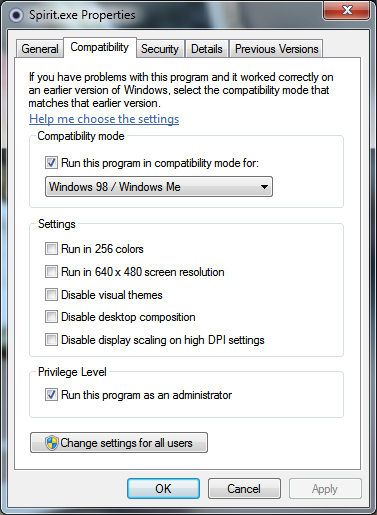
    Windows Vista or Windows 7 users may get the error code c0000005 while performing the action. To avoid this error, you have to run Spirit.exe in compatibility mode. Follow the step as below:

    1. Right click on Spirit.exe and select Properties
    2. Select the compatibility tab
    3. Check the “Run this program in compatibility mode for” box and select Windows 98 / Windows ME

    Note: Spirit is not a “carrier unlock” which allows the iPhone to be used with carriers other than AT&T. It is a jailbreak only. Source: iPhone Download Blog

  • How LG Pimped Motorola in Building Nexus 5

    How LG Pimped Motorola in Building Nexus 5

    Google’s Nexus phones have become irrelevant for all but the most ardent Android fanboys. Although the Nexus program was launched three years ago to show off the very best that Android has to offer, Google’s newly announced Nexus 5 doesn’t push the envelope as much as earlier Nexus phones.

    Google is stuck between a rock and a hard place: Its hardware partners don’t want to innovate when building the company’s Nexus phones; they want to save all the cool stuff for their own brands. But Google can’t just use its Motorola division to build cutting-edge phones with exciting new features without burning bridges with Samsung, LG, Sony, and HTC. Those guys are already trying to build their own ecosystems and Google doesn’t want to push them even further over the edge.

    More of the same

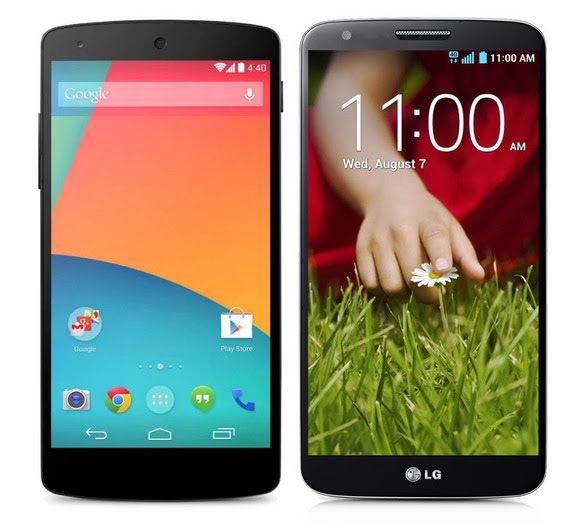
    In terms of hardware alone, Nexus 5 doesn’t seem like a bad phone—its high-end specs ensure it will be relevant for at least a year. But it’s essentially identical to recent phones released by Samsung and LG. In some ways the Nexus 5 is an inferior product because LG, which built the handset for Google, released its own phone with all the same hardware but more software enhancements. Under the hood, the Nexus 5 is a stripped-down version of the LG G2, just like the Galaxy Nexus was a stripped-down version of the Samsung Galaxy S III.

    Nexus 5 (left) and LG G2 (right)

    The biggest draw of Nexus phones is that they get timely Android updates directly from Google, but the market has shown that most people don’t really care about that. Ever since Android 4.1 Jelly Bean, most of the updates to Android have been minor tweaks that don’t deliver much in the way of new, consumer-facing features. Instead, Google has slowly started spinning off key components of the OS to the Google Play Store as standalone apps. So, as long as you bought your Android phone in the last year or two, you’ll still have access to the latest version of Gmail, Maps, and Google Now.

    Indeed, without any killer, exclusive features, you have very few reasons to buy a Nexus 5. Unless you’re a developer who needs constant access to the latest version of Android, or insist on buying an unlocked phone, the Nexus 5 is no better than any of the other high-end phones already released this year. In many ways it’s just another Android phone, and would fade into obscurity if it weren’t for the big, bold NEXUS on its back.

    It’s becoming increasingly obvious that the companies Google partners with to make Nexus phones are reserving all the coolest features and innovations for their own branded handsets. Of course Google owns Motorola, but has held back on using its acquisition to build its Nexus devices for fear of upsetting its hardware partners. But maybe it’s time to start playing favorites.

    Time to use Motorola

    Motorola and Google collaborated on the Moto X, one of the most innovative phones available. Note that it’s not a “Nexus,” even though the OS bloatware and customizations are minimal—it’s rocking nearly stock Android. The kicker? You can get it on pretty much any carrier and there’s a developer version available for people who want it. The Moto X deserves the title of Nexus more than the Nexus 5, as it introduced a lot of the Nexus 5’s ostensible innovations first. (Take, for instance, touchless controls.)

    The Moto X is one of the most innovative phones ever released.

    In releasing Nexus devices via its Motorola arm, Google could more directly shape the Android experience. It could dictate all aspects of the phone, creating cutting-edge new hardware features to go hand in hand with new Android software features. KitKat introduces a lot of under-the-hood improvements that allow it to run better on low-end hardware, but manufacturers will continue to cram as many processing cores as they possibly can into their phones in an effort to win an imaginary specs war, making the optimizations almost meaningless. So Google could build a phone showing that you don’t need a quad-core processor and 2GB or RAM to run simple apps without lag. And your battery wouldn’t be eaten up due to poorly written radio drivers.

    It would essentially be the Apple approach to making smartphones, an approach that’s proven to work and often leads to a better device. And if Google decided to compete directly with Samsung and others via Motorola, it would push the other Android manufacturers to make better phones and set the bar for Android devices—just like the Nexus One was originally intended to do. Microsoft is trying a similar tactic by purchasing the devices division of Nokia, while Google lets its $12 billion Motorola purchase go to waste.

    We’re never going to see a truly revolutionary Nexus phone again until Google decides to take a stand against the other Android smartphone manufacturers. The more the company attempts to placate Samsung, HTC, LG, and Sony, the more meaningless the term “Nexus” becomes. It’s time for Google to drive Android forward with a more holistic hardware-and-software approach, and make Nexus mean something again.Adapted from PC WORLD

  • Apple & Microsoft-Backed Rockstar Consortium Battles Google and Samsung Over 7 Nortel Patents

    Apple & Microsoft-Backed Rockstar Consortium Battles Google and Samsung Over 7 Nortel Patents

    Well, at the moment, it does look like a ‘never ending’ war between this two parties. “The Rockstar consortium is an organization backed by Apple, Microsoft, BlackBerry, Ericsson and Sony. It purchased patents off of the defunct telecommunications company Nortel in 2011, in a bidding war with Google.

    Now, the consortium has filed suit against Google, ASUSTek, HTC, Huawei, LG, Pantech and ZTE over those patents. The suit was filed in a U.S. District Court of Eastern Texas today.

    “Google placed an initial bid of $900,000,000 for the patents-in-suit and the rest of the Nortel portfolio. Google subsequently increased its bid multiple times, ultimately bidding as high as $4.4 billion,” the filing states. “That price was insufficient to win the auction, as a group led by the current shareholders of Rockstar purchased the portfolio for $4.5 billion. Despite losing in its attempt to acquire the patents-in-suit at auction, Google has infringed and continues to infringe the patents-in-suit.”

    Google famously bid some not-so-random numbers before the end, including ‘pi’. The suit also involves a licensee of the ‘Associative Search Engine’ 6,098,065 patent, NetStar, Inc.

    The other patents are US 7,236,969, 7,469,245, 7,672,970, 7,895,178, 7,895,183 and 7,933,883. They’re mostly fairly dry stuff related to database searches, relevance in advertising presentation and data sorting, but exactly the kind of stuff that makes Google’s special sauce work. We can’t speak to the strength of the patents, but they certainly appear to be relevant.” said techcrunch on their website, “Google lost out in a heated bidding war against Rockstar and went on to acquire Motorola, a move that many attributed to a patent grab, but that was also about hardware in a lot of ways.

    Notably, HTC has a cross-licensing agreement with Apple on some patents, but apparently not these. News of the suit was first reported by Reuters today.”

  • Google App Indexing Can Improve your Search Results -Tech Crunch

    Google App Indexing Can Improve your Search Results -Tech Crunch

    A report ot techcrunch has explained how Google’s Search Results Can Deep-Link To Your Android Apps. Read the details below:


    “It should be clear by now that there’s much more at play in Android 4.4 KitKat than some early reports alluded to, and one of the more interesting (to me, anyway) tidbits managed to escape the early leak treatment.

    Tucked away toward the tail-end of Google’s Nexus 5/KitKat presentation was a mention of a feature called App Indexing that should get companies (and the Android app developers that work for them) a little worked up. That’s because Google has developed a way to deep-link to the contents of an app from within a user’s Google search results with a feature it calls App Indexing.

    Tucked away toward the tail-end of Google’s Nexus 5/KitKat presentation was a mention of a feature called App Indexing that should get companies (and the Android app developers that work for them) a little worked up. That’s because Google has developed a way to deep-link to the contents of an app from within a user’s Google search results with a feature it calls App Indexing.

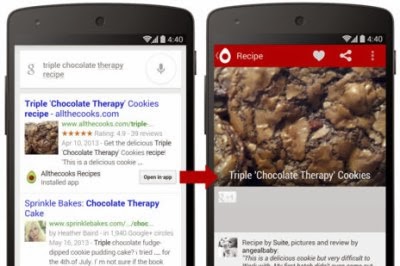
    Here’s how it works. Say you’re using the Google Search app to dig up some dirt on that Ender’s Game movie that doesn’t look very good. If you happen to have the IMDb app installed on your device while you search, you’ll be treated to an info card in that results stream that includes an “Open in app” button. Give it a quick tap and the IMDb app will spring to life and immediately direct you to its Ender’s Game listing.

    Naturally, the feature isn’t just limited to showing off movie details — so far the full list of supporters includes Allthecooks, AllTrails, Beautylish, Etsy, Expedia, Flixster, Healthtap, IMDb, Moviefone, Newegg (yes!), OpenTable, and Trulia.

    The way Google sees it, the move is all about providing these companies with a choice. If they think their mobile interfaces are enough to keep users engaged, they can simple go about their business. But if they already have an Android app (or are in the process of building one) that can do a better job of engaging with its users, a little extra work to implement those deep links may be well worth it.

    It’s not hard to look at this as a move to bolster Android app development, either. There’s little doubting that Android is a global force — which may be only compounded by the fact that Android 4.4 KitKat may drive device sales in developing markets by bringing a more advanced feature set to cheap hardware — and in many cases the Google Search app is going along for the ride. That means that with any luck, huge swaths of the global Android community will be searching for stuff using the Google search app and seeing those deep-linked “Open in app” buttons when they’ve got the right apps installed. Tell me that’s not a compelling reason for a company to develop an Android app if they haven’t already.

    Despite the buy-in from all those app partners, it’ll be some time before users like me will actually start getting those results in the wild. Google is testing the feature with those previously listed partners, but the updated cards that will display that information won’t actually roll out until some time in November.”

    A report ot techcrunch has explained how Google’s Search Results Can Deep-Link To Your Android Apps. Read the details below:


    “It should be clear by now that there’s much more at play in Android 4.4 KitKat than some early reports alluded to, and one of the more interesting (to me, anyway) tidbits managed to escape the early leak treatment.

    Tucked away toward the tail-end of Google’s Nexus 5/KitKat presentation was a mention of a feature called App Indexing that should get companies (and the Android app developers that work for them) a little worked up. That’s because Google has developed a way to deep-link to the contents of an app from within a user’s Google search results with a feature it calls App Indexing.

    Tucked away toward the tail-end of Google’s Nexus 5/KitKat presentation was a mention of a feature called App Indexing that should get companies (and the Android app developers that work for them) a little worked up. That’s because Google has developed a way to deep-link to the contents of an app from within a user’s Google search results with a feature it calls App Indexing.

    Here’s how it works. Say you’re using the Google Search app to dig up some dirt on that Ender’s Game movie that doesn’t look very good. If you happen to have the IMDb app installed on your device while you search, you’ll be treated to an info card in that results stream that includes an “Open in app” button. Give it a quick tap and the IMDb app will spring to life and immediately direct you to its Ender’s Game listing.

    Naturally, the feature isn’t just limited to showing off movie details — so far the full list of supporters includes Allthecooks, AllTrails, Beautylish, Etsy, Expedia, Flixster, Healthtap, IMDb, Moviefone, Newegg (yes!), OpenTable, and Trulia.

    The way Google sees it, the move is all about providing these companies with a choice. If they think their mobile interfaces are enough to keep users engaged, they can simple go about their business. But if they already have an Android app (or are in the process of building one) that can do a better job of engaging with its users, a little extra work to implement those deep links may be well worth it.

    It’s not hard to look at this as a move to bolster Android app development, either. There’s little doubting that Android is a global force — which may be only compounded by the fact that Android 4.4 KitKat may drive device sales in developing markets by bringing a more advanced feature set to cheap hardware — and in many cases the Google Search app is going along for the ride. That means that with any luck, huge swaths of the global Android community will be searching for stuff using the Google search app and seeing those deep-linked “Open in app” buttons when they’ve got the right apps installed. Tell me that’s not a compelling reason for a company to develop an Android app if they haven’t already.

    Despite the buy-in from all those app partners, it’ll be some time before users like me will actually start getting those results in the wild. Google is testing the feature with those previously listed partners, but the updated cards that will display that information won’t actually roll out until some time in November.”

    A report ot techcrunch has explained how Google’s Search Results Can Deep-Link To Your Android Apps. Read the details below:


    “It should be clear by now that there’s much more at play in Android 4.4 KitKat than some early reports alluded to, and one of the more interesting (to me, anyway) tidbits managed to escape the early leak treatment.

    Tucked away toward the tail-end of Google’s Nexus 5/KitKat presentation was a mention of a feature called App Indexing that should get companies (and the Android app developers that work for them) a little worked up. That’s because Google has developed a way to deep-link to the contents of an app from within a user’s Google search results with a feature it calls App Indexing.

    Tucked away toward the tail-end of Google’s Nexus 5/KitKat presentation was a mention of a feature called App Indexing that should get companies (and the Android app developers that work for them) a little worked up. That’s because Google has developed a way to deep-link to the contents of an app from within a user’s Google search results with a feature it calls App Indexing.

    Here’s how it works. Say you’re using the Google Search app to dig up some dirt on that Ender’s Game movie that doesn’t look very good. If you happen to have the IMDb app installed on your device while you search, you’ll be treated to an info card in that results stream that includes an “Open in app” button. Give it a quick tap and the IMDb app will spring to life and immediately direct you to its Ender’s Game listing.
    Naturally, the feature isn’t just limited to showing off movie details — so far the full list of supporters includes Allthecooks, AllTrails, Beautylish, Etsy, Expedia, Flixster, Healthtap, IMDb, Moviefone, Newegg (yes!), OpenTable, and Trulia.

    The way Google sees it, the move is all about providing these companies with a choice. If they think their mobile interfaces are enough to keep users engaged, they can simple go about their business. But if they already have an Android app (or are in the process of building one) that can do a better job of engaging with its users, a little extra work to implement those deep links may be well worth it.

    It’s not hard to look at this as a move to bolster Android app development, either. There’s little doubting that Android is a global force — which may be only compounded by the fact that Android 4.4 KitKat may drive device sales in developing markets by bringing a more advanced feature set to cheap hardware — and in many cases the Google Search app is going along for the ride. That means that with any luck, huge swaths of the global Android community will be searching for stuff using the Google search app and seeing those deep-linked “Open in app” buttons when they’ve got the right apps installed. Tell me that’s not a compelling reason for a company to develop an Android app if they haven’t already.

    Despite the buy-in from all those app partners, it’ll be some time before users like me will actually start getting those results in the wild. Google is testing the feature with those previously listed partners, but the updated cards that will display that information won’t actually roll out until some time in November.”

  • Review: Android 4.4 KitKat & Why it Matters

    Review: Android 4.4 KitKat & Why it Matters

    The speculation sourounding  Android 4.4 KitKat can finally be put to rest. While users and developers are allowed to have their  opinion, you need to base your criticism or appluas on a good ground and the contents below could prove an avenue for such ground.

    Just incase you haven’t heard, Google has pulled the curtain on Android 4.4 KitKat on Thursday, announcing the new mobile OS will appear first on the forthcoming Nexus 5 handset, which goes on sale for $349.

    While we weren’t expecting a hefty update, some of the features announced in KitKat—like the newly revamped interface and new messaging features in the Hangouts app—were on our wish list. Other features, like optimization updates to help KitKat run on low-end phones, simply remind us that Google is still battling all the issues that lead to device fragmentation.

    Regardless, let’s walk through some of the key features of KitKat and what you can expect when you finally get your hands on the new OS (whenever that is, because as we know, Android updates can take a long time to roll out).

    A better phone dialer

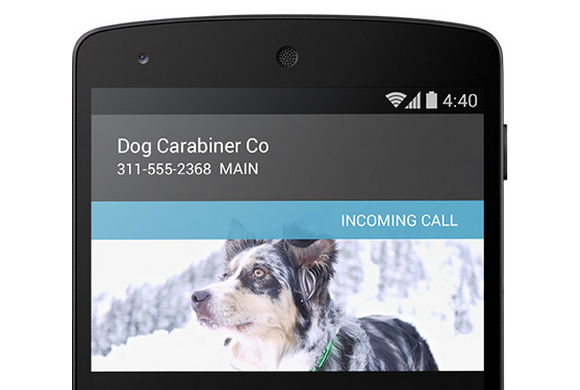
    No more surprises: Google will provide info to let you know who is calling you.

    You wouldn’t expect an overhaul of a dialer application to be a marquee feature, but Google has achieved the near impossible. When you’re in the dialer interface, now you can type just the first few letters of who or what you’re looking for—whether it’s a business or a friend—and the dialer will immediately bring it up. You won’t have to venture into Contacts for this essential information.   If this search functionality sounds familiar, that’s because some manufacturers already offer this feature in their own version of the Android dialer. Samsung’s TouchWiz UI, for example, helps you find the name of the person you want to call by letting you key in the first few letters of his or her name on the number pad. So perhaps the bigger news isn’t that Google overhauled its dialer applications, but that it’s looking to what third-parties are doing to give consumers what they want.   KitKat also provides a novel form of caller ID, fetching the location information of unknown numbers that call you to provide a better glimpse into who might be calling and where they’re located. This is an especially helpful addition when you consider the number of telemarketer calls that aren’t routed through an 800 number.

    Fabulous interface makeover

    That navigation bar will look translucent, which should prettify the slightly doldrum Android interface.

    Stock Android doesn’t have to be plain and simple. As some developers posited in our Android retrospective, KitKat includes a slightly revamped interface design. You’ll see better use of screen real-estate in applications that utilize the new “immersive” full-screen abilities, like Google Music and Books. And the new navigation bar is now translucent, so your wallpaper won’t be cropped by a colored menu bar. KitKat also sports a new condensed font.   Unfortunately, these interface changes won’t necessarily be exposed on non Nexus devices—meaning pretty much the entire universe of Android hardware. You’ll still be held hostage to whatever interface the manufacturer wants you to look at if you’re not using the developer edition of a phone.   It’s unclear how these design changes could affect interfaces like HTC’s Sense or Samsung’s TouchWiz UI, but we’re not holding our breath for substantial KitKat additions to those UIs. Third-party manufacturers will likely continue to push interfaces that match their brand, and for companies like Samsung that means gaudy icons and blue everything.


    Never carry cash again

    As leaks suggested, Android 4.4. KitKat will enable Google Wallet right off the bat—without the need for your carrier’s approval. And because Android is actually storing your payment information within KitKat, you won’t have to rely on NFC security elements to make a transaction.   But that’s not all: Not only will you be able to manage your credit card information from within the Settings panel and more easily pay for items anywhere NFC and Wallet is supported, but you’ll also be able to send money to friends without annoying transaction fees.   Google enabled the payment settings from within the OS to help people on Verizon, T-Mobile, and AT&T take advantage of its Wallet offerings, as those three carriers have banded together to use Isis as the default NFC-payment platform. We won’t know more about how Wallet works in KitKat until we physically have an Android 4.4 device in our hands, but at first glance the update looks like a win.

    Okay, Google Now

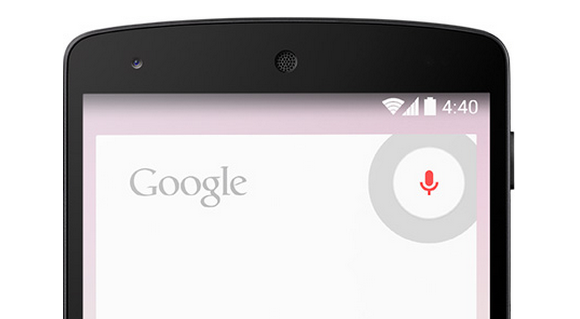
    Launch Google Now any which way.

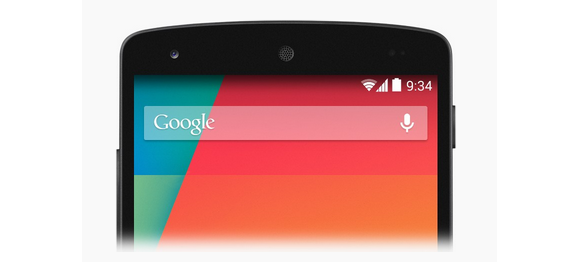
    How you access Google Now varies from phone to phone. Do you hold down the home button? Do you swipe up from the bottom of the screen? Do you shake your phone vigorously while shouting at it? Hoping to simplify things a bit, Google has put Google Now front and center by adding it to the Home screen. Now, instead of entering in some variable command, you can just swipe from left to right to quickly access Google’s handy service.   The new OS also supports launching Google Now by saying, “Ok Google” while on the homescreen. It should be a helpful feature if your hands are tied up, or you would rather dictate than type. It’s kind of like the Touchless Controls on the Moto X, but with a few more hoops to jump through. Unfortunately the functionality is currently limited to the Nexus 5, so your current phone probably won’t get the feature. (But your next phone might!)

    Also, Google Now can now access apps when it exposes information in its search results. Let’s say you’re looking for a particular restaraunt. Not only will you get the usual Google results, you could also get an invitation to book a reservation via, say, the OpenTable app. This function has to be supported on the app level, but suggests an exciting new expansion of Google’s digital assistant.   Indeed, by enabling easier access to Google Now, third-party manufacturers like Samsung won’t be able to hide it behind its own proprietary services. (Ever try to get to Google Now on a Galaxy S 4, only to be defaulted to S-Voice?) Google just wants you to stick with it for all of your queries.

    Hangouts

    You can chat with your friends through SMS in the Hangouts app.

    Finally! A few days ago, Google updated its Hangouts app to let you send both SMS, MMS, and chat messages from one application. It’s the right idea, but Google is merely playing catch-up, since Apple released the all-encompassing Messages application in iOS 6 over a year ago. Google wrote in its official blog post that its intention for combining all the communication functionality into one was for added convenience.

    Faster Android for aging phones

    Okay, so maybe your hardware isn’t exactly top tier compared to the ones running quad-core Snapdragon processors and massive amounts of memory. Google understands your plight and has introduced a new way for manufacturers to take advantage of all the latest Android features without the typical slow downs that plague most aging hardware.   It’s called Project Svelte and it’s designed to make KitKat run smoothly and efficiently even on low-end devices with as little as 512MB of RAM. As a result, Kit Kat uses 16 percent less memory than its predecessor, Jelly Bean, and there are additional features that allow developer to disable any features that use up more memory than needed.   This may help developers make apps for low-end devices, but that doesn’t necessarily mean that all old hardware will be able to run KitKat. Not even the Galaxy Nexus will be eligible for an update, and that device is barely a year and a half old. However, the under-the-hood improvements should help the current generation of devices handle applications a bit better, like the now-aging Nexus 7 and Nexus 4. This means an overall smoother Android experience if you’re running those devices.

    Under-the-hood enhancements

    You may not reap the benefits of some of the other features just yet, but that’s because they’re intended for developers to embed into applications.

    There’s some weird irony in the phrase “Stay fit with KitKat.”

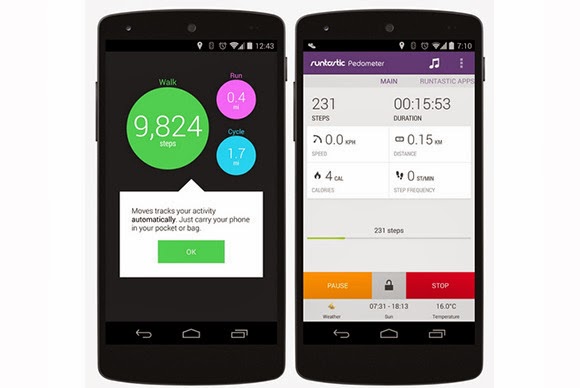
    If you walk to work everyday, you might appreciate that Google introduced a nifty new low-power step detector that enables you to track the number of steps you walk in a day without having to leave the screen on. Developers can also take advantage of system-wide captioning abilities that can display closed captions for various content, which is a nice enhancement for the hearing impaired—and when you want to watch a video but don’t headphones nearby.   As for that printer collecting dust in the corner, if it’s Google Print-compatible you can now send documents directly to it with the built-in cloud print functionality. Android apps can print anything over Wi-Fi or from cloud-hosted services. You can also discover any available printers, change paper sizes, and choose specific pages to print.   Article Credit: PC World

  • Native MySQL Connection Using Google Cloud SQL

    Native MySQL Connection Using Google Cloud SQL

    The article published about hosting your files on google drive prompted a mix reaction between webmasters and app developers, a few of the readers hinted at the lack of MySQL support in Google cloud server.

    A report on tech crunch has confirmed that Google Cloud SQL now supports native MySQL connections, a move that is intended to make it easier to integrate third-party applications. With the support, native MySQL apps can be plugged into Cloud SQL, allowing the customer to leave system administration and management for Google.

    Through MySQL Wire Protocol, the standard connection protocol for MySQL databases, Google maintains that CloudSQL allows for low latency connections for applications running on Google Compute Engine and Google App Engine. Customers can use popular tools such as MySQL Workbench, Toad and the MySQL command-line tool to manage Cloud SQL instances. It also supports standard drivers, such as Connector/J, Connector/ODBC, and Connector/NET.

    The native connectivity also means that data can be replicated with control over managing and deploying cloud databases. For example, Google notes in its post that data can be replicated between Cloud SQL and on-premise databases — including Oracle, SQL Server, and DB2.

    The support demonstrates how connectors like MySQL Wire Protocol will help create transparency between cloud services and any on-premise application. It’s a service that should attract those looking for the level of managed services that Google provides.

    Google is starting to offer features that Amazon Web Services (AWS) has had for a few years. While Google launched the core of its CloudSQL service in June, AWS launched its MySQL service in 2009 and in 2012 began offering support for Oracle Database.

    Then there is the pricing. According to the InfoQ blog, AWS RDS is “cheaper than corresponding Google Cloud SQL pay-per-hour options, but one needs to consider other costs such as data storage and transfer fees, etc.”

    The article published about hosting your files on google drive prompted a mix reaction between webmasters and app developers, a few of the readers hinted at the lack of MySQL support in Google cloud server.

    A report on tech crunch has confirmed that Google Cloud SQL now supports native MySQL connections, a move that is intended to make it easier to integrate third-party applications. With the support, native MySQL apps can be plugged into Cloud SQL, allowing the customer to leave system administration and management for Google.

    Through MySQL Wire Protocol, the standard connection protocol for MySQL databases, Google maintains that CloudSQL allows for low latency connections for applications running on Google Compute Engine and Google App Engine. Customers can use popular tools such as MySQL Workbench, Toad and the MySQL command-line tool to manage Cloud SQL instances. It also supports standard drivers, such as Connector/J, Connector/ODBC, and Connector/NET.

    The native connectivity also means that data can be replicated with control over managing and deploying cloud databases. For example, Google notes in its post that data can be replicated between Cloud SQL and on-premise databases — including Oracle, SQL Server, and DB2.

    The support demonstrates how connectors like MySQL Wire Protocol will help create transparency between cloud services and any on-premise application. It’s a service that should attract those looking for the level of managed services that Google provides.

    Google is starting to offer features that Amazon Web Services (AWS) has had for a few years. While Google launched the core of its CloudSQL service in June, AWS launched its MySQL service in 2009 and in 2012 began offering support for Oracle Database.

    Then there is the pricing. According to the InfoQ blog, AWS RDS is “cheaper than corresponding Google Cloud SQL pay-per-hour options, but one needs to consider other costs such as data storage and transfer fees, etc.”

    The article published about hosting your files on google drive prompted a mix reaction between webmasters and app developers, a few of the readers hinted at the lack of MySQL support in Google cloud server.


    A report on tech crunch has confirmed that Google Cloud SQL now supports native MySQL connections, a move that is intended to make it easier to integrate third-party applications. With the support, native MySQL apps can be plugged into Cloud SQL, allowing the customer to leave system administration and management for Google.

    Through MySQL Wire Protocol, the standard connection protocol for MySQL databases, Google maintains that CloudSQL allows for low latency connections for applications running on Google Compute Engine and Google App Engine. Customers can use popular tools such as MySQL Workbench, Toad and the MySQL command-line tool to manage Cloud SQL instances. It also supports standard drivers, such as Connector/J, Connector/ODBC, and Connector/NET.

    The native connectivity also means that data can be replicated with control over managing and deploying cloud databases. For example, Google notes in its post that data can be replicated between Cloud SQL and on-premise databases — including Oracle, SQL Server, and DB2.

    The support demonstrates how connectors like MySQL Wire Protocol will help create transparency between cloud services and any on-premise application. It’s a service that should attract those looking for the level of managed services that Google provides.

    Google is starting to offer features that Amazon Web Services (AWS) has had for a few years. While Google launched the core of its CloudSQL service in June, AWS launched its MySQL service in 2009 and in 2012 began offering support for Oracle Database.

    Then there is the pricing. According to the InfoQ blog, AWS RDS is “cheaper than corresponding Google Cloud SQL pay-per-hour options, but one needs to consider other costs such as data storage and transfer fees, etc.”

  • Get Ready for 10-Gbit Cable modems connections with new specs

    Get Ready for 10-Gbit Cable modems connections with new specs

    Your 16-Mbit cable connection is going to look awfully puny when a new generation of 10-Gbit cable modems enters the scene—whenever that turns out to be.

    On the other hand, there’s good reason to believe that eventually you and your family will be able to simultaneously download multiple 4K streams. CableLabs, the testing and interoperability arm of the cable industry, released the DOCSIS 3.1 specifications this week, implying that its member companies will eventually support it.

    Technically, the new specification allows for 10 Gbps downstream and 1 Gbps upstream, back to the provider. Additional features include Active Queue Management, a sort of quality-of-service protocol that CableLabs promises will minimize delays inside the home and help out with tasks such as online gaming.

    “Based on the significant contributions from our members and technology suppliers, CableLabs has developed the technology foundation for the delivery of next generation broadband services over HFC networks,” said Dan Rice, senior vice president of access network technologies at CableLabs, in a statement.

    Most of the world’s cable companies—Atlantic Broadband, Cox, Comcast, Rogers, and others—are members of CableLabs. But unfortunately, the dream of downloading more than 98 terabytes per day will have to wait a bit.

    Faster download speeds may necessitate wired networking, at least until wireless catches up.

    Since the specification is just a paper document at this point, for example, we’ll have to wait until semiconductor manufacturers begin implementing the technology inside their own components. Then modem manufacturers will have to build the modems themselves. Finally, the cable companies themselves will have to support the increased bandwidth tiers.

    The DOCSIS 3.0 rollout provides some measure of comparison—and hope. DOCSIS 3.0 was announced in 2006, with support for 160 Mbps down, and 120 Mbps up. But six years after the launch, in 2011, Comcast began offering its 105-Mbps “Extreme” tier, for customers with compatible modems. Other localized cable companies like Shaw and Videotron began offering similar services.

    Regardless of when the new DOCSIS technology rolls out, however, it’s up to you to make sure that you’re up to date. It’s possible that your cable provider will alert you of new services and the need to upgrade your modem—or perhaps not.

    Most cable customers lease their modems, which mean that if you signed up with a cable company long ago, your modem is likely out of date. And if a DOCSIS 1.0 modem is serving as the gateway for your home services, the stream of bits you’re paying for may be dammed up behind your cable modem, unable to flow at its full capacity.

    How can you tell? Comcast offers this page that asks you for your Internet speed tier and then allows you to check to see whether your modem is in fact compatible. Cox offers a similar page. Comcast will ship you an upgraded modem for a fee (and probably try to upsell you in the process) or else you can swap your modem for free at a local shop.

    Another option is to simply buy your own modem, eliminating rental or lease charges altogether; Comcast charges several dollars per month, but you can buy a compatible Motorola SURFboard 6121 modem for $70 online. The savings can add up quickly.

    Regardless, faster broadband is en route. We’ll just have to wait a bit—something we won’t have to do after the speedier standard arrives.Source: Tech Hive

  • Twitter Users Discontent with the New Twitter’s photo previews

    Twitter Users Discontent with the New Twitter’s photo previews

    Change they said, is difficult to accept and twitter users are no exception to this true saying: An extract from Tech Hive has confirmed that Some Twitter users are complaining about a change that puts photo previews front and center in their streams, and offering advice to others on how to turn it off.

    Apparently some users like viewing photos on Twitter but don’t want image previews appearing automatically in their stream, which is what happens with a change to the service rolled out Tuesday.

    “I was perfectly happy with that one extra step of ‘show picture’ for the ability to see a picture that I want to see,” one user wrote on Twitter’s developer forum.

    “I do not necessarily want to see every picture that every person I follow posts, right on my timeline,” the person wrote.

    Another Twitter user wondered if he had “ticked something somewhere” without realizing it.

    “Wow, Twitter is suddenly unscannable. What is this crap in the feed and how do I turn if off?” asked another.

    The update means users no longer have to click a link to view the photos, so scrolling through Twitter can now mean scrolling past a lot of photos. It’s been activated on the desktop version of Twitter and is included with an update for the iOS and Android apps. It only works with images posted on Twitter itself, or videos posted on Twitter’s Vine service, however.

    Twitter is apparently keen for users to see a lot more images in their Twitter streams. Photography is a key service for social networks, and Google updated its photo features on Google+ Tuesday as well.

    Showing photos in Twitter without needing to click on them can have unintended consequences, though. A search for “twitter photo previews” on Twitter Tuesday revealed at least one explicit pornographic image.

    Some users provided advice on how to disable the feature, posting screenshots of how to turn it off within the Twitter app on mobile devices. The image previews can’t be disabled on the desktop, however. (Here’s an advice on turning off online images in the mobile version of Twitter.)

    It’s not uncommon for users to complain about changes to online services, as Facebook, Yahoo and others know too well.

    One user suggested this is a fight Twitter can’t win. “Y’all complained when Twitter wasn’t visual. Today, y’all are complaining it has photos in your stream?”

  • How to turn off inline images using Twitter’s mobile app

    How to turn off inline images using Twitter’s mobile app

    For those of you who feel like ripping of twitter’s head, well, here are some Tech Hive solution that may help cool things down.

    For some Twitter power users, the day of reckoning has come: On Tuesday, Twitter updated its mobile app and website to show inline previews of photos and videos in tweets instead of requiring you to click a link or expand the tweet. And lo, Twitter erupted with anger and, well, the obligatory snark.

    If you view tweets using the Twitter website, you’re pretty much stuck with the inline image previews: As of this writing, there’s no way to turn them off through Twitter.com. But you do have a couple options at your disposal.

    Just say no. No no no. Turning off Image
    Previews in Twitter’s mobile app is just a swipe away.

    Disable inline images in Twitter’s mobile app

    If you use Twitter’s official client app for iOS and Android, you can easily turn off the inline image previews. iOS, it’s represented by a toggle switch; on Android, it’s a checkbox).

    Open the app, tap Me in the toolbar, then tap the gear icon. Tap it, then tap Settings from the menu that appears. Scroll down to Image Previews, and tap the toggle to turn it off (on

    Once you do this, you should no longer see the inline image previews in Twitter’s app from the Home tab. Unfortunately, this setting only applies to the mobile app—if you go to Twitter’s website, you’ll still get the image previews in your timeline.

    Use a third-party client

    Countless Twitter clients exist for just about every major platform out there—Mac OS X, Windows, iOS, Android, Windows Phone—and they usually don’t show large inline image previews (though some may show small thumbnails). Do a search on your operating system’s app store for Twitter apps to get an idea of what’s out there.

    Take a look at TweetDeck and Hootsuite for OS X and Windows. We also like Tweetbot, a fun, easy-to-use app for Mac OS X ($20) and iOS ($5).

    If Twitter’s inline content still grinds you gears—even if you can’t see it—maybe it’s time to jump ship to another social network. We hear Google+ has some very nice features…

  • Samsung ridiculous plan to convert you to its mobile app theology

    Samsung ridiculous plan to convert you to its mobile app theology

    Tech Hive – Don’t be alarmed. Samsung’s leadership is launching a religious movement, but its goal isn’t to change everything you believe about good, evil or the meaning of life. It simply wants control of all your mobile platform needs.

    It’s an ambitious plan, and Samsung needs true believers—an army of street soldiers who can evangelize the mission, and indoctrinate new converts. The company began assembling the ranks when it introduced Samsung Apps, its own Android app store, with the release of the Galaxy S4 Smartphone earlier this year. And to further increase its headcount, the company held its first annual Samsung Developers Conference this week in San Francisco to entice startups and indie developers to build apps specifically for Samsung devices.

    The goal wasn’t just to evangelize and showcase what the company has accomplished with its partnerships, but also to demonstrate that Samsung is serious about building its own full-fledged app ecosystem—a marketplace it wants you to visit before you drop into Google Play.

    The world has gone app store crazy, and Samsung would be damned if it has to play second fiddle to anyone. And it really doesn’t have to, since it already has a solid hardware foundation built on every imaginable phone and tablet screen size from the 4.3-inch Galaxy S4 Mini to the 6.3-inch Galaxy Mega to the 10.1-inch Galaxy Note 10.1. At this point, Samsung really only needs to increase its flock of developers.

    Hence the recruiting drive at the Samsung Developers Conference. It’s the one true path to mobile salvation.

    Enticing devs with carrots

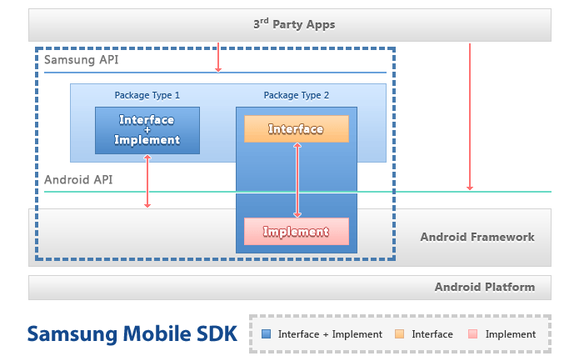
    Samsung launched its Mobile SDK to get developers to make apps specifically for its mobile devices.

    In its conference keynote, Samsung hit developers with two compelling arguments in support of native app development: The company has tremendous reach around the world, including footholds in China, Southeast Asia, Japan, and Australia, and it’s also the number one Smartphone maker in most of those markets.

    The message resonated with Matt Nutt, VP of Business Development and Operations of Cie Games, an independent mobile game company that was featured as a part of an introductory video during the keynote. “They do have many devices, but they’re doing a lot to reduce the fragmentation of devices in terms of share on the Android marketplace,” Nutt told TechHive. “[We can’t ignore] any opportunities to leverage the marketing prowess of somebody like Samsung.”

    But before you can get developers to populate your app store, you have to give them something to work with. So during its keynote, Samsung introduced five new APIs. These include a multi-screen gaming API that puts mobile games on TV screens; a Smart TV SDK that helps share mobile device content with Samsung TVs; and an SDK that supports more S-Pen controls, better handwriting recognition, and an improved multi-window feature.

    If developers take advantage of the SDKs, it means you’ll find more features and apps for your Samsung devices—along with more incentive for you, the consumer, to stick with Samsung hardware. And it’s all a blueprint for ecosystem propagation, where software boosts hardware sales, and hardware sales give life to more software downloads. Connect all the dots, and it begins to seem amazing that Samsung is only holding its first developer’s conference in 2013.

    A leg up on Google with the little things

    To help show would-be converts all the benefits of playing on Team Samsung, the company has been busy making native apps of its own. And some of them are ahead of native Android features, at least in terms of introducing new tricks to the mobile game.

    Samsung Wallet has all the
    functionality that Google Wallet doesn’t.

    Take Samsung’s ChatON messaging applications, which let users chat with one another across all mobile and desktop platforms, send group messages, and chat in other languages with an auto-translate function. While Google has added features like SMS messaging to its Hangouts app, Android is still behind in features when compared to iOS’s iMessage, and Hangouts is only usable between the web and Android devices.

    Google Wallet must also play catch-up to match Samsung’s Wallet 2.0, which borrows much of its aesthetic and functionality from Apple’s Passbook. Samsung’s mobile payments app was released earlier this year on the Google Play store with features like the ability to store loyalty and gift cards (which Google just recently took out of its Wallet app). Samsung’s wallet app also enables geo-fencing for coupons to pop up when you’re near a store. Samsung’s app is also available to users overseas, while Google’s services are still limited to the United States, and only from specific carriers, like Sprint and US Cellular (which aren’t a part of the Isis mobile payment alliance formed by AT&T, Verizon, and T-Mobile).

    While Samsung’s in-house app development team may not match Google’s in size, it can still get developers with great ideas to work on features that Google doesn’t offer. Case in point: Samsung has partnered with Rabbit, an online video platform that lets you not only video chat with friends, but also watch video with them on external services like Hulu—all in real-time from your computer and (in due time) mobile devices. The upshot is that Rabbit will be featured front-and-center on Samsung hardware, and its neat features might make you consider it over Google’s own video-chat services on Android. Rabbit also trumps Google Hangouts in group conversations by allowing up to 20 people to chat in a room.

    And from ecosystem success flows… money

    Samsung to devs: Stick with us and we’ll get your app far.

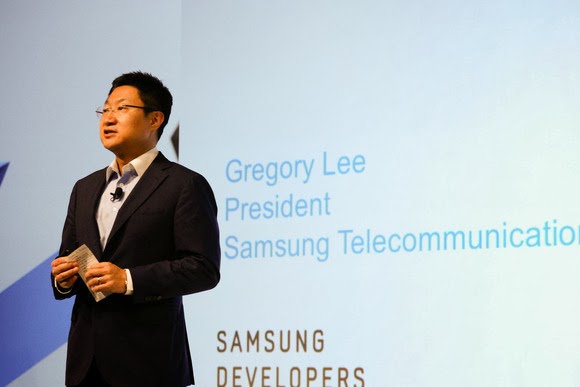
    At the beginning of his Monday keynote, Gregory Lee, President of Samsung Telecommunications of America, was excited. “We never expected a big crowd,” he told the audience. “We expected a small one.”

    According to Nicholas Reichenbach, co-founder and president of Rabbit, there’s a reason for the positive turnout. “Samsung’s marketshare had a lot to do with the attendance,” he said in a phone call. “Whatever Samsung is doing is very attractive to developers.”

    And what can be more “attractive” to an up-and-coming app developers than sales revenue? As Smartphone users, we often scoff at the apps that device manufacturers load on our phones. And we often bristle when we’re asked to visit yet another app marketplace, when we already have Google Play. But Reichenbach says one of the key attractions of Samsung Apps is that developers are seeing better monetization through Samsung’s mobile products.

    ”It’s always been difficult to monetize [on the Android] platform,” he says, “but with Samsung devices, we’re starting to see the monetization equal to other platforms.” And since Samsung’s high unit sales means it has more marketshare, app developers have more chances to make more money. “It’s starting to grow—potentially even greater than other platforms that are leading the market,” Reichenbach says.

    How much disruption makes sense?

    With more than 1,300 attendees at this week’s conference, it’s obvious there are at least a few developers who are interested in building for Samsung’s ecosystem. Indeed, Samsung can offer small, independent developers something that Google can’t right now: Prominent positioning in an app store that’s a lot less crowded than Google Play. So one can see why so many lost souls are interested in joining the Samsung effort.

    But where Samsung could really have a winning hand is not in courting small, independent developers, but in striking exclusive deals with big-name app powerhouses. It’s already teamed up with triple-A app developers like Twitter and Flipboard, and similar deals could compel you to buy the next Galaxy phone instead of a handset from HTC.

    Samsung is clearly forging full-steam ahead in its effort to become more than a device manufacturer, but it needs to figure out how to do so without continually disrupting the current Android marketplace. It may be helping to reduce friction within its own device family, but by branching off into its own ecosystem, it will just make fragmentation worse for Android as a whole.

    But maybe that’s the point. You can only have one religion—and Samsung wants to be yours.

  • Basic Privacy Tips for Internet & Social Media

    Basic Privacy Tips for Internet & Social Media

    PC WORLD – Recent headlines about shadowy government agencies, high-profile hack attacks, and your face in Google ads drive home a crucial point: Your online privacy is best protected when you keep an iron grip on the information you’re handing out. If your info is on a server somewhere, it’s not truly yours.

    So many core aspects of our lives have shifted to the cloud, mostly to our great benefit: Gmail and Outlook.com maintain our email archives. Dropbox and SkyDrive make your files available anywhere, anytime. Windows 8.1 searches include Bing results by default. Google Now dishes out the information you need before you even know you need it.

    But every gain in convenience comes with a loss of control, and that loss of control all too often comes bundled with privacy or security woes.

    You can take some simple precautions to minimize the amount of personal information that you have online. But before we get started, remember that this data checkup is about what you’re comfortable with. You could follow all the tips in this post, tighten up on just a few of the practices mentioned below, or go even farther down the rabbit hole than the suggestions offered here. Digital privacy is not a zero-sum or a one-size-fits-all proposition. If nothing else, this article can help you make better decisions about the information you share with the services you love.

    Giving Google the cold shoulder

    When it comes to minimizing your digital footprint, we have to start with Google. Just imagine the dossier the company has on you: search history, sites you visit, Google Play purchases, location data from Android and Chrome and Maps, your Google Drive documents…it looks like a lot when it’s all spelled out like that, doesn’t it?
    To its credit, Google takes data security seriously, receiving fairly good marks in the Electronic Frontier Foundation’s annual “Who has your back?” survey. But Google also makes heavy in-house use of your data, a point that touched a nerve with announcements of the company’s plans to use your real name and face in online advertising (not to mention Microsoft’s “Scroogled” campaign).
    Divorcing Google isn’t a realistic option for most people, though, given its superior services and sheer ubiquity. Switching to Microsoft’s services still leaves your information in the cloud. So what can you do if you want to reduce the amount of data you’re sharing with either online monolith?
    Firefox’s private browsing mode kills cookies dead.
    To start, you can keep Google from collecting and sharing your data as much as possible. Using your browser’s private/incognito mode will erase tracking cookies, including Google’s, when you close it. You can also tell Google to stop trailing you in your account’s Web History page (at the expense of Google Now features) and take a minute to tweak your general Google privacy settings.
    Another solution is to replace what Google services you can with more private alternatives. Do you use Google Docs but don’t really need its online capabilities? Try the open-source Libre Office suite. If you need only basic image-editing capabilities, skip Picasa and stick to Paint.net. What about Google Drive’s on-the-go docs? We’ll talk more about cloud storage later.
    And if you can cut the Google cord completely, there’s always the nuclear option. (Here’s how to shutter your Microsoft account for good measure.)

    Facebook

    Google may have a wide reach, but when it comes to mapping your social connections, no company knows more than Facebook. And just like Google, Facebook is practically impossible to shut out of your life. You need it to sign in to your favorite services, play games, chat, and keep in touch with pals.
    Tweaking your Facebook profile’s privacy settings can keep other people’s eyes at bay—but Facebook itself has a reputation for questionable user data decisions. How to give Zuck the cold shoulder without divorcing Facebook completely?
    You don’t want to be among the first Graph Search results for “Males in New York that like Drugs and Marijuana” or anything similar. Mind those Likes, and those privacy preferences.
    Easy: Stop hitting that “Like” button so much and consider removing past thumbs-ups. Don’t add extra information to your profile such as life events, places you’ve lived, and so on. (Below’s a video on deleting life events.)
    Finally, decide whether you want to continue sharing your photo library online. Is anybody really looking at them, or are they just fodder for Facebook’s face-detection algorithms?
    Facebook also tracks you as you travel from site to site, using the Like buttons embedded on each. Make sure you’re signed out of Facebook to prevent that from happening, or use your browser’s private mode.
    You can delete your Facebook account if you’re able (and willing) to cut the socialite cord completely.

    Cloud storage

    If you slap your files in a cloud-storage locker for anytime, anywhere access, you probably don’t want to give up that convenience. You can, however, seize control of your cloud documents by encrypting them, which helps protect against the data breaches (such as two that happened to Dropbox and Apple) and government information requests faced by many cloud providers.
    Note that while many services (such as Dropbox) encrypt your data on their servers, they control the encryption keys in most cases. That means you are not in control of when or for whom that encrypted data is unlocked, but it also makes using the service easier—just enter your login information and go!
    A truly “zero-knowledge” cloud provider such as SpiderOak or Wuala, on the other hand, never has access to your encryption key, meaning that only you can unlock your data. (Don’t lose the key!) Alternatively, you could manually encrypt files bound for SkyDrive, Google Drive, Dropbox, SugarSync, or any other cloud service, using a tool like TrueCrypt or the cloud-focused BoxCryptor.
    Western Digital’s My Cloud connected storage drive lets you build your own private cloud.
    Or, if you want anytime, anywhere access to your files but don’t want to entrust your stuff to anyone else, you could use a Net-connected storage drive like Western Digital’s My Cloud to create your own personal cloud-storage solution.

    All the rest

    We’ve taken care of your major online accounts, but what about all those random accounts you have connected to your social networks? Go through the settings of your Facebook, Twitter, and Google+ accounts to see the list of apps and services connected to them. Then simply remove access permissions for the ones you no longer use.
    Speaking of apps and services, part of good data hygiene is regularly deleting accounts you’ve left by the wayside. Go ahead: Close that MySpace profile and kill your Klout score if you’re not using them.

    The tip of the iceberg

    Now that you have at least some of your data under control, you could look at numerous other things, as well.
    We briefly touched on restricting who can track your browsing while online. For a real eye-opener, try using Abine’s DoNotTrackMe add-on for a week and see how many tracking cookies the add-on blocks. You could also use a stand-alone email program configured using the POP3 protocol to save your email locally and wipe your messages from your provider’s servers. (Here’s the info you need to do just that with Outlook.com, Gmail, and Mozilla’s Thunderbird client.)
    For an even more comprehensive look at the topic, check out Macworld’s seven-part series on protecting your online privacy—but note that some of the tips apply only to Apple’s ecosystem.
    Going off-grid online is borderline impossible these days, but taking just a short time to tidy up your online footprint can pay big dividends for your security and your privacy. And remember: It’s up to you just how far down the rabbit hole you go. Happy deleting!
  • Top 5 Sites for Freelancers and Buyers

    Top 5 Sites for Freelancers and Buyers

    Over the years doing some spare time job has been a very good way of financing  your education or buying a cup of coffee for your troubles, exploring the web for business exposure has become a second nature to most of us, so the need of having an avenue for such exposure becomes a must. Discover the secret of how I scaled through my limitation as a student/passionate blogger and earn quite handsomely through freelancing.

    As a student, I didn’t have so many options to earn online; most  ‘part time’ job I came across online are a whole bunch of scam, so I decided to ride my luck, viz.. Monetize my skills.

    Freelancing is the act of rendering a particular service to individuals or group of individuals as a ‘free man’ (not committed to any employer long term). This service may include article writing, web design, health solutions, graphic, SEO help or any skill you feel you can deliver online.

    If you a free man just like me: Self employed (student) and not committed to any employer long term, looking for where to showcase your products and services or you are just an individual/organization looking for where to acquire the product/services of an expert . Whichever you are here is the list of the top 5 of such sites.

    Top Five Sites For Business Exposures

    1. SEOClerks

    SeoClerks is probably the cheapest place to get any job done. Just recently, I purchased 1,000 US human visitors for just $2, the seller provided me with a google analytics url as a prove to confirm that they were real human. The delivery was quite on time and enjoy the level of interaction allowed between buyers and sellers on this site. The website functions are pretty much like fiverr’s but there is no limit for a range of prices charged for gigs. Sellers are either online, then you will get the work within 8 hours, or offline, then you will get the work in 48 hours. Release the cash and await the job. You are also given an option to place a guarantee on your gig and create discount coupon codes for gigs.

    2. Fiverr

    For the past few years fiverr gigs have represented an icon for freelancers. Though sites with more features has arisen, no-one has really surpassed the credibility and originality that fiverr has always boasted of. Dealings in fiverr are called gig i.e. 1gig = $5.

    3. Onedollarr

    Task in onedollarr is called gig and is best for buyers who want to acquire services at a very cheap rate.    Do not let the $1 fool you, as you can as well add extras to your gig without a specified amount.

    4. Gigbucks

      Sell or purchase products/services rate between $5-$50

    5. Fourerr

    Is always nice to some do something different and that’s exactly what fourerr has done. They have got a very good track record over the past two years and seems pretty much like the next big thing. I really recommend every freelancer try out this site and give your testimonies.

  • Role of Technology in Business Expansion

    Role of Technology in Business Expansion

    Technology plays a very important role in the expansion of a business. Business technology such as social networks, virtual office technology as well as video conferencing helps in removing boundaries at work place that limit business expansion. Technology in business helps in targeting a wider customer base that help an organization grow to higher levels. Therefore, choosing, deploying and managing the information technology which is necessary for business expansion is important. This article provides information on the role of technology in business expansion as explained in the following paragraphs;


    Diversification

    The use of technology serves the purpose of opening doors to different types of people globally in the work place together with different perspectives to projects. Diversification is an essential function that a business must have to be able to compete in the global market. Through diversification a business will expand in different ways including;

    • Opening opportunities for the business to expand and operate globally.
    • Bringing people from different countries and cultures – this offers a different perspective to business projects and environment. It gives a wide variety of diverse, creative as well as unique views that helps in growth and expansion of the business.
    • A new approach of business gives the institution a competitive edge which is beneficial for growth and increased sales.

    Efficiency in Communication

    Effective communication is a basic necessity to achieve business expansion. Technology works to improve communication in the workplace. Business expansion is achieved through;

    • Interactive communication among workers in attending to clients’ needs through phone calls
    • Workers are able to use electronic mails instantly to reply and sell business products without interrupting the recipient
    • Improved communication with business partners using multiple channels of communications is an advantage for the business. This is an assurance that a business will expand at the end.

    Information Storage

    Safety and accessibility of a company’s information is important. The prospects generated and their use for the company needs to be stored safely and should be accessible to people who need it. This information will be used by;

    • Workers in the office as reference material to sell company’s products
    • Sales people use this information to teach new and existing clients about the business and its products
    •  Other business executives need to use this information even outside regular business hours

    Accessibility of business information is very important when it comes to selling its products. So, technology serves a good purpose to ensure this information is safe for future use. Deploying IT systems plays an important role in expanding companies.

    Mobility

    The use of technology in a business allows more movement of people. Business partners do not need to meet in one room to discuss essential matters concerning the business. The use of video conferencing has made the operation of business easier in the following ways;

    • It has enabled businesses all over the world to interact with one another.
    • Businesses save time, expenses and space
    • People can set up virtual meetings and distribute data without the need to be in the same room.
    • With technology businesses can establish a global presence at a fraction of the cost.
    Andrea Jayson

    Author Biography:


    Andrea is a Blogger and Write from UK. She loves to write articles on various categories like Finance, Technology, Travel and Health. As If not she is doing a research work on ukba.

  • Cloudup has been Acquired by Automatic

    Cloudup has been Acquired by Automatic

    Automatic, the renown owners of WordPress.com have taken a great step to improve blogging on WordPress.com by acquiring Cloudup.

    Cloudup is a fast, dead-simple way to share and view files on any platform (Without The Folders). In today’s world of email, social networks, SMS, chat applications and cloud services, there are plenty of ways to share share a file, folder, photo or video. And as intelligent devices and cloud computing infrastructure proliferate, and processing power and capacity improve, we expect file transfer and sharing to be speedy — and simple. Everything is about “real time” and accessibility these days (not that we’re complaining, but thanks to Twitter). Yet, file-sharing still isn’t quite there. Even with all the options — whether it be the Skypes, Facebooks, Google Drives, WeTransfers and YouSendIts of the world or the Dropboxes, etc. — We’ve still got one eye out for a better way. (Here’s xkcd putting a fine point on it.) The file sharing service to end all file sharing services.

    Dropbox has gotten the closest, gobbling up a ton of mindshare as a result, but its layout and presentation is more storage service than a simple sharing tool. In other words, you may store your photos there, but it’s probably not where you’ll go if you want to show them off. On the June 21st, 2013, CloudUp became the latest to join a younger group of services that are pushing the conversation forward when it comes to speed and simplicity — and nibbling at the heels of the incumbents.

    What’s cool about CloudUp (and distinguishes it from most apps out there) is that it focuses on converting the design of file transfer from one that makes it clear that “THIS PRODUCT IS JUST A UTILITY” to one that’s elegant and minimalist, Jony Ive-style. But the minimalism isn’t there for the sake of itself (sorry hipsters), it’s meant to bring more of the focus to consumption — to make the content the focus, not the app itself.


    Today, Cloudtop announced on their official blog that they have been acquired by Automatic (the owners of WordPress.com).

    “Today we are extremely excited to announce that Automattic, the brilliant company behind WordPress.com, has acquired Cloudup.”

    This is followed up by a blog post confirming the story on WordPress.com Blog.

    “Today we’re delighted to announce we’re acquiring Cloudup, a company that’s as fanatical about these core experiences as we are. Cloudup‘s built some fantastic technology that we can’t wait for you to try out.”

    Not only will this new service improve the quality of bloggers on WordPress.com, Automatic is set to spread their tentacles accross other services owned by the company. This means that you can as well use this service in your self-hosted wordpress blog (WordPress.org) as long as you are using the jetpack plugin.

    Credits:techcrunch ImageCredit:Cloudtop

  • EWT Quick Guides to Arvixe Hosting

    EWT Quick Guides to Arvixe Hosting

    Recently recognized as the 10th fastest growing company in the IT sector by Inc. Magazine, Arvixe has gradually made its name in the web development world.

    Notably, the Arvixe Web Hosting Company has been the most recommended hosts, offering reliable but affordable hosting plan for Oxwall and WordPress hosting. It is therefore no surprise at the number of contacts I receive everyday asking for guides on how to setup their Arvixe hosting account.

    Some Unique Features of Arvixe

    Arvixe is largely popular with WordPress users partly because it fully adheres to all WordPress hosting system requirements (basically the same story with every other cms out there). Also the compatibility issues with Joomla 3.0 has been fixed as it is now fully compatible with Joomla 3.0!

    The prices are quite affordable, here at EWT we have rounded up a few coupon codes that will enable you to purchase cheap hosting services from Arvixe (as low as $0.01 for the first month and 20% discount for every purchase) you may check it out at the Arvixe coupon page.

    Less I forget, it is unlimited data transfer, 99% uptime, unlimited disk space, 1 free domain name for life, you know them right? Without wasting much time lets go down to the main business:

    Getting Started

    The moment you click here should take you to the Arvixe landing page. Kindly follow the steps below to setup your hosting account.

    • Domain Search: On the top-right hand side of your screen, you will see a box label ‘Domain Search’. This is where you look up domain names. Kindly type a domain name (e.g. www.yourwebsitereg) into the box and select a TLD (e.g. .com, .net, .org etc) from the dropdown just beside the input box.
      Now click on the ‘Check Availability’ button. Please Note that the same method is applicable for both new domain registration and domain name transfer. The next page contains a list of TLD available for registration in regards to your search. If a domain name is available for registration, a Register button is placed just under it, you can simply click on this button to register the domain name. A Not Avail button is used to denote that a TLD is neither available for new registration or for domain transfer.
    • Domain Transfer: A Transfer button is placed below a TLD to signify that the domain name is not available for new registration but can be transferred to the Arvixe hosting account. You can also use this option if you are trying to transfer your domain name from a different domain name provider to Arvixe (Remember that Arvixe allows you to register 1 free domain name for life), so it’s quite a tempting offer for everyone.

    • Now when you are done by selecting the options that fits your motives, you can proceed to the billing center by clicking on the next button at the top-right of the screen.
    • Fill the required information on the billing form and click the next button.
    • Select your hosting plan, eg. Personal Class, Personal Class Pro etc.
    • From the drop down option choose a your model of payment e.g. 2years, 1year or payment on a monthly basis. Then click on Add to Cart to continue.
    • The next page that comes up is where you select the services your opting for. You can choose whether you want to register a new domain name, transfer a domain name to Arvixe or simply point your domain name to Arvixe hosting. To do that, simply select the radio button corresponding to what you want to do and fill in your login details. Check the auto renew box if you want your account to be automatically renewed after expiration. Finally, click on next.
    • Using Coupons: The coupon codes one way or the other minimize the cost of transaction for your hosting account. (Here at EWT we generate lots of coupon codes that offers you up to 20% discount for every purchase you make on Arvixe. You may check out this page for free Arvixe coupon codes). To use Promo/Coupon Code, paste your coupon code in the box at the top-right hand side of the screen and click use Note that to use a coupon code, you need to do this before the above step (before clicking next in the previous step).
    Some Problems you are Likely to Encounter while Signing Up

    “Good things” they said, “don’t come so easy”, as a young man I don’t think I’d totally agree with that saying but creating an Arvixe account doesn’t come on a silver platter. You are bound to get stuck on the way and that is why I’m writing this step to step guide.

    You are a Fraud

    If you have just completed the above step and receive a welcome message telling you that your account is a fraud. Well, don’t panic over this, as Arvixe tends to dislodge any registration from some countries outside the US. In this state your account status should be showing ‘Unverified’, all you have to do is to verify your account.

    How to Verify your Arvixe Account

    In Arvixe, you can verify your account regardless if you have purchased a plan already or not. This to ensures that there is no interruption of service most especially if you have already set up your website after receiving your Hosting Account Information via e-mail.

    Arvixe Verification Process

    There are two types of verification. The first one is Manual. Manual verification requires a customer to submit a scanned copy of one valid ID and a proof of payment.

    Manual Verification For credit card payments, a scanned copy of the front side of the card showing the name and the last four-digits are required. The rest should be masked for security (recommended) If you paid using other payment methods such as PayPal, Skrill, or Google Checkout, you may chat with the billing support to ask the required documents for verification. They can help you verify your account quickly. Alternatively, you can verify your account over the phone. Phone verification is the easiest way to validate an account. The procedure is automated. You  just need to provide a working phone number then Arvixe will call it. A unique verification code will be provided at the same time. Key-in the code within the allowed time to complete the verification.

    Phone Verification To verify your account through the phone, go to Arvixe Verification page. This link will be provided to you via email after creating a billing account. If the code is correct, the automated voice prompt will confirm the account activation then ends the call immediately. If not, you can initiate phone verification again and a new code will be provided. The same phone number can be used. The code will appear in the top portion of the Arvixe Verification webpage so keep an eye on the page when you received the call. ‘That account is already verified.’ will show once verification is completed. Refresh the page to see the confirmation. Credit:starrguide.com

    If you are signing up from Nigeria, just give them a scan copy of your Voter’s Card/National ID/Driving Licence and a scan copy of your Visa card. That should be all.

    If you are transfering to Arvixe, the whole process should take less than 48hours to complete. New registrars can proceed to their cpanel (your cpanel details will be mailed to you) and initiate the awesome!

    Thanks for reading and Happy Sharing! Remember to contact the arvixe support should you ecounter any problem (those guys are ever ready to help out), if you have any question, contribution or suggestion feel free to use the comment box below, Nice to have you in our blog today 🙂

  • Top 5 Technology Trends Which Will Govern The Future

    Top 5 Technology Trends Which Will Govern The Future

    Trends get a bad blow, mostly since they are frequently associated with fashions. However trends can be significant, particularly those long in the making. If a lot of clever individuals are ready to spend years of their lives and millions of dollars on an idea, there is perhaps something to it.

    Currently, we are on the edge of a new digital paradigm, where the abilities of our machinery are beginning to outshine our own.

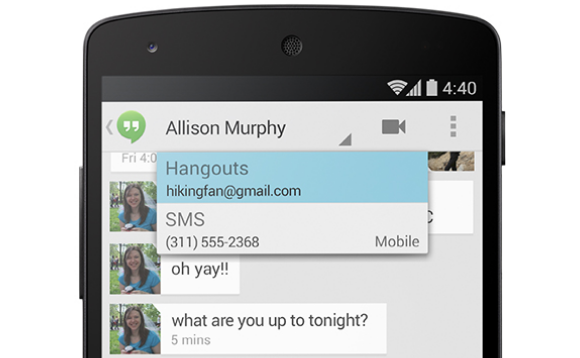
    Computers are deciding which products to store on shelves, carrying out legal detection and even winning game shows. Very soon they will be driving our cars and making medical diagnoses. Here are 5 trends that are driving it all.

    #1. No-Touch Interfaces:

    We have become accustomed to the notion that computers are machines which we control with our hands. Just as the Generation X became contented with keyboards and mouse, today’s millennial peer group has learned to text at an extremely high speed. Every new restatement of technology has required new abilities to use it competently. That is why the new trend towards no-touch lines is so basically different. From Microsoft’s Kinect to Apples Siri to Google’s Project glass, people are beginning to expect the computers to get used to them instead of the other way round.

    #2. Native Content:

    Though over the past several years technology has become more indigenous, social and portable, the new digital combat zone will be fought in the sitting room with Netflix, Amazon, Microsoft, Google, Apple and the cable companies all competing to create a leading model for delivering customer entertainment.  One developing approach is to develop unique programming so as to attract and uphold a subscriber base.

    #3. Massively Online:

    In the last decade, enormously multi-player online games for instance World of Warcraft became all the rage. Instead of simply playing against the computer, you could play with thousands of others in real time. It can be extremely interesting, though somewhat disturbing when you realize that the spiteful Philistine you have been prowling around with is in fact a 14 year-old girl. The massively online trend has even entered into politics, with President Obama recently reaching out to average voters through Google Hangouts and twitter.

    #4. The Web of Things: 

    This is perhaps the most universal trend, where almost everything we interact with becomes a quantifiable unit. Our homes, cars and even items on the street will intermingle with our Smartphones and with each other, perfectly. What will drive the trend in the future are two corresponding technologies: Near Field Communication, which lets for reciprocal data communication with close devices and ultra-low power chips that can harvest energy in the environment, which will put quantifiable objects just about everywhere you can think of. Still, as computing stops to be something we do seated at a desk and becomes an ordinary, typical way of relating to our environment, you cannot tell what the effect will be.

    5. Consumer Driven Supercomputing:

     Everyone knows the frustration of calling a customer service line and having to cope with computerized interface. They work very well, though it takes some determination.  There lies the next great challenge of computing. While we used to wait for our desktop computers to process our commands and then waited for what seemed like infinity for web pages to load, we now struggle with ordinary language boundaries that just can’t quite work like we would like them to.

    In conclusion, technology companies are becoming more and more consumer-driven, capitalizing on things like native content in order to get us aboard their platform, from which we will sign onto enormously online services to amuse and educate ourselves. The future of technology is, paradoxically, all too human.

    Andrea Jayson

    Author Biography:


    Andrea is a Blogger and Write from UK. She loves to write articles on various categories like Finance, Technology, Travel and Health. As If not she is doing a research work on ukba.