Tag: Automobile

  • Google plans to add Android directly into your vehicle

    Google plans to add Android directly into your vehicle

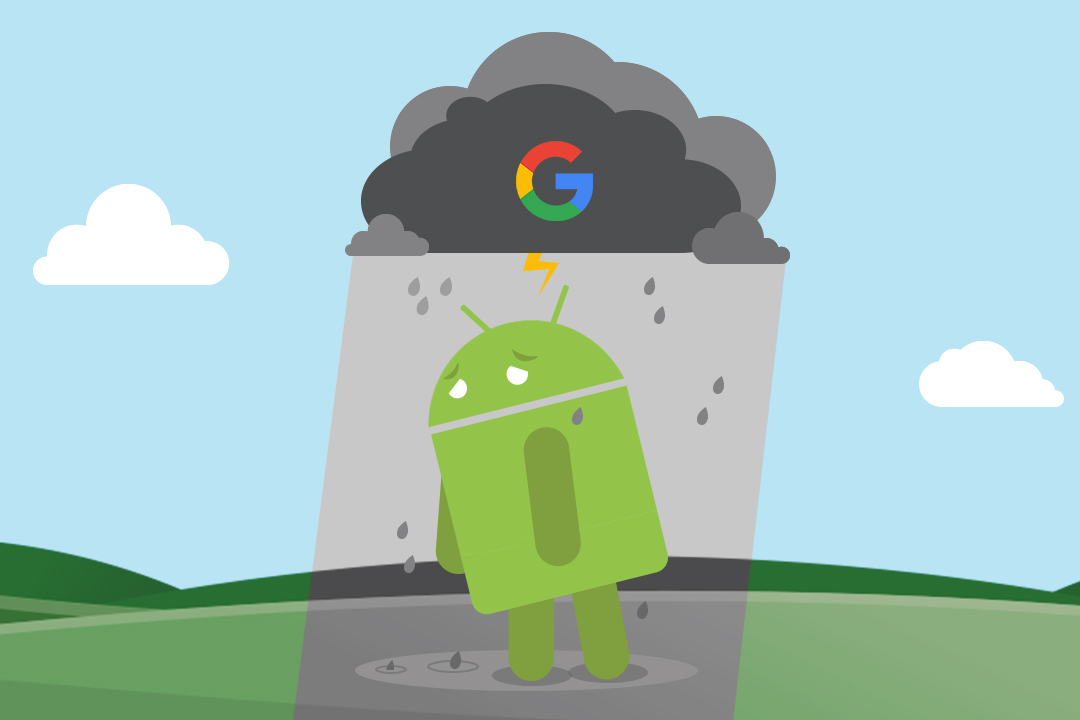
    The company is working on a new Android version that will power a car’s entertainment and navigation systems, connect it to the Internet, and integrate with the vehicle’s sensors, a Reuters report says.

    Sometime in the not-too-distant future, cars from many automakers could feature a version of Google’s Android operating system built directly into the vehicles.
    If Google’s plans take shape, its operating system will power the car’s entertainment and navigation systems, connect it to the Internet, and integrate with the vehicle’s sensors, camera, fuel gauge and other components.

    That’s according to a report by Reuters Dec. 19 that it said was based on conversations with two unnamed officials with knowledge of the matter. According to Reuters, Google could announce plans for integrating Android directly into cars when it rolls out Android M, the successor to its recently released Android 5.0 Lollipop operating system, sometime next year.
    Google did not confirm or deny the report. In an email, the company merely noted that it does not comment on rumors and speculation.

    But if Google were indeed to integrate Android directly into vehicles someday, that would mark a significant step forward for the company.  At the I/O conference this year, Google announced Android Auto, software that will allow drivers to basically stream most of their smartphone’s functions to the in-car display. Android Auto is expected out next year. It will allow drivers to take advantage of Google Maps, Google Now and other Android applications more easily when driving using simple voice commands and touch commands.

    With the new version of Android that Google is reportedly working on, drivers will no longer be required to connect their phones to the vehicle. Instead, a lot of the same functionality that is currently available on Android smartphones will be accessible directly from the vehicle in a manner that is optimized for in-vehicle use.

    Google’s big challenge though will be to persuade automakers to integrate its technology into their vehicles. Google has said that Android Auto will be available in vehicles from several major domestic and international automakers, including Ford, Chrysler, Honda and Audi.
    However, some automakers may be wary of giving the company too much access to internal components for safety reasons and because of branding concerns, Reuters noted.
    Google will also have to deal with the myriad safety concerns that have been expressed over connected cars recently. Security researchers have already shown how hackers can exploit a connected vehicle’s electronic control unit and take remote control of functions like steering, braking and acceleration.

    The National Highway Traffic Safety Administration highlighted several of those concerns in a report on connected cars earlier this year while advocating the need for intrusion detection, access control and other security technologies in vehicles over the next few years. One of the areas of concerns highlighted in the report has to do with in-vehicle entertainment and navigation systems becoming potential attack vectors in connected cars of the future.

    For safety-conscious automakers to allow any version of Android to be integrated into their vehicles, Google will likely have to first considerably bolster the security of the operating system. Currently, Android is one of the most attacked operating systems in the world, with more malware targeting it than any other mobile operating system.

    via eWeek
  • Feds pave the way for cars that can talk to one another

    Feds pave the way for cars that can talk to one another

    The Department of Transportation (DOT) said Monday that it plans to require vehicle-to-vehicle communications in future generations of cars, eventually making the technology as ubiquitous as seat belts.

    Specifically, the DOT said that it will prepare a report on its findings on vehicle-to-vehicle (V2V) communications for publication in the coming weeks. That report will become the foundation for a new V2V regulatory framework, to be published later.

    Google has said that its self-driving cars will use 
    V2V communications in addition to its LIDAR systems.

    The National Highway Traffic Safety Administration (NHTSA), part of the DOT, “will then begin working on a regulatory proposal that would require V2V devices in new vehicles in a future year, consistent with applicable legal requirements, Executive Orders, and guidance,” the DOT said in a statement Monday. The DOT said it believes that the signal this announcement sends to the market will significantly enhance development of this technology and pave the way for market penetration of V2V safety applications.

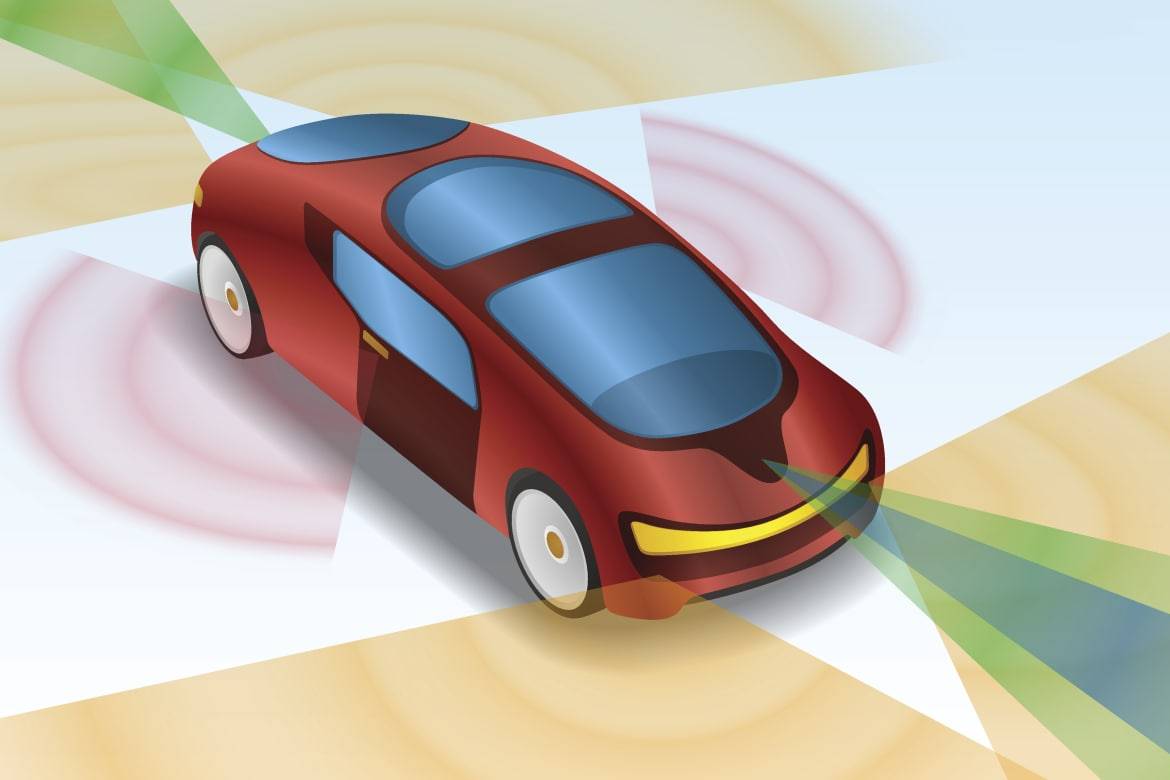
    Vehicle-to-vehicle communications refers to the emergence of Wi-Fi-like radios that could be mounted in cars and communicate with one another. Also known as Dedicated Short-Range Communications, V2V car-mounted radios would constantly communicate with other vehicles within range, providing speed and directional data to other cars’ safety and navigation systems. The idea is that a car racing around a blind curve would “know” that a car was heading in the opposite direction, or a car would receive warnings that cars ahead were coming to an unexpected stop.

    In August, 2012, DOT launched what it called the Safety Pilot “model deployment” in Ann Arbor, Mich., where nearly 3,000 vehicles were deployed in the largest-ever road test of V2V technology. DOT testing demonstrated the interoperability of V2V technology among products from different vehicle manufacturers and suppliers and has demonstrated that they work in real-world environments, it said.

    “V2V crash avoidance technology has game-changing potential to significantly reduce the number of crashes, injuries and deaths on our nation’s roads,” said NHTSA’s acting administrator, David Friedman, in a statement. “Decades from now, it’s likely we’ll look back at this time period as one in which the historical arc of transportation safety considerably changed for the better, similar to the introduction of standards for seat belts, airbags, and electronic stability control technology.”

    At this point, the DOT doesn’t envision that the V2V data would do anything more than sound an alert, rather than trigger the braking or steering systems. The DOT also said that the data would not be used to track drivers. “In fact, the system as contemplated contains several layers of security and privacy protection to ensure that vehicles can rely on messages sent from other vehicles and that a vehicle or group of vehicles would be identifiable through defined procedures only if there is a need to fix a safety problem,” the DOT said.

    This enthusiastic wing-pup may someday be out of a job, if V2V systems start communicating location and speed data directly from car to car.

    Vehicle communications systems have been in place for some years, with bus systems in London, the San Francisco Bay Area’s BART system, and others broadcasting their estimated times of arrival at the next station, based upon their location data. It’s this vision of the future that Scott F. Belcher, president and chief executive of the Intelligent Transportation Society of America (ITS America), said he endorsed.

    “Thanks to the strong commitment by U.S. DOT and automotive leaders, and years of investment by countless innovators and industry pioneers, the vision of ‘talking’ cars that avoid crashes is well on the way to becoming a reality,” Belcher said in a statement. “And we’re not just talking about cars talking to cars, but about cars talking to bikes, trucks talking to motorcycles, and even buses talking to pedestrians. This promises to significantly reduce the number of deaths and injuries on our nation’s roads while unleashing a new wave of innovation from advanced traffic management systems and smart mobility apps to real-time traffic, transit and parking information. We look forward to working with U.S. DOT, the automakers, and high-tech industry to ensure that issues such as security and privacy are addressed as we work toward full scale adoption of this life-saving technology.”

    Credit: IDG News Service – PC World. View from original source.

  • The smartest cars may need 5G networks, Ericsson says

    The smartest cars may need 5G networks, Ericsson says

    IDG News Service – Some of the most futuristic features envisioned in networked cars will depend on 5G mobile technology that probably won’t be available in full until 2020, according to Ericsson’s chief technology officer.

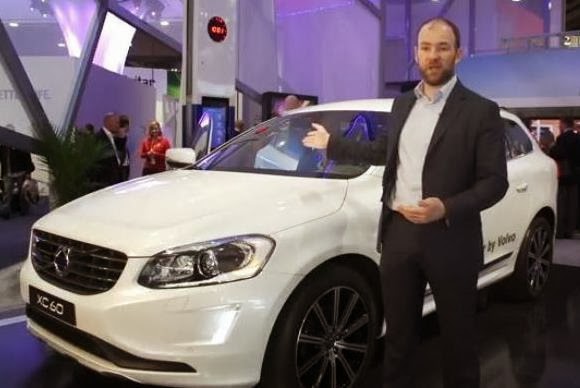
    There’s a bright future for cellular in cars, according to Ulf Ewaldsson, who is the mobile gear vendor’s senior vice president and chief technology officer and head of Group Function Technology. He spoke with IDG News Service following a big automotive push by Ericsson at International CES earlier this month. Among other things, the company showed off its CVC (Connected Vehicle Cloud), designed to deliver applications in a car for information, entertainment, making service appointments and other needs. Ericsson announced partnerships with both a carrier (AT&T) and a carmaker (Volvo).


    But more advanced networked-car visions, up to and including self-driving cars, will rely on capabilities that Ericsson sees coming in the as-yet-undefined 5G technology that will augment today’s 4G networks, Ewaldsson said. Ericsson and others are already talking about what to include in 5G, but Ericsson has said it expects commercial deployments of the future specification starting in 2020.

    Connected to a 5G network, cars could warn drivers of an impending collision or even be guided through traffic automatically with no driver behind the wheel, Ewaldsson said.Demonstrations at CES showed off both of those types of capabilities. But making those kinds of services work would require guaranteed performance all the way from the cloud that runs the service to the car, and back again.

    ”The networks that we have today have nowhere near that quality-of-service guarantee,” Ewaldsson said. Instead, 4G systems treat all data as “best-effort” traffic. Even though 4G radios, at their best, have a latency of just 20 milliseconds (a big improvement from 35 milliseconds on 3G), the critical thing is being able to predict and control those delays for each application, he said.

    ”A car is a good example of something that will have very different demands on different bitstreams,” Ewaldsson said. For example, a child watching a movie in the back seat may be getting that video stream over the same cellular network that’s responsible for real-time warnings and vehicle commands. Future networks will have to be able to tell the difference between them and prioritize one application over another, he said. “Maybe we don’t want to do this right now. Maybe we want to do this six microseconds later.”

    In addition to prioritizing packets and using low-latency radios, 5G networks should be able to communicate the service levels for different traffic types to the clouds that will run the applications, Ewaldsson said. That calls for software-defined networking, an emerging set of technologies that shifts control away from traditional routers and switches and into software running on various platforms.

    If all this work makes smarter cars sound like an impossible dream, Ewaldsson did say some elements of 5G would be implemented sooner than others. In addition, there is a parallel development track in the industry pursuing the same results without network assistance, he said, though he thinks everything disconnected eventually will hook up to the network.

    Ewaldsson defended the lengthy process of completing global telecommunications standards.

    ”That model has been very successful. It has globalized technology faster than the super-competitive model, if you compare it to the IT industry,” he said. The alternative can create “redundant” innovation by competing companies that each try to make their approach dominant through their weight in the market, he said.