
Flavor bans, especially those targeting flavored tobacco products, have been effectively used in many countries around the world as a public health measure to address addiction to tobacco products. While these flavor bans may reduce the consumption of certain tobacco products, they could potentially cause people to switch to non-flavored or alternative products.
Impact on Smoking Cessation Programs
These bans in a way mitigate the intended impact of smoking cessation programs. Certain programs for cancer patients have learned to modify their strategies. They eliminate tobacco alternatives that could substitute the banned products for people trying to stop. These programs’ comprehensive strategies often combine medication and behavioral assistance to address the psychological as well as the physical aspects of tobacco addiction.
As more smoking cessation programs develop, the effectiveness of these flavor bans can be directly analyzed through the number of enrollment and success rates. These programs have to focus on personalized support that corresponds to each participant’s needs to deal with the complex issues of addiction and deliver the best results possible for those who are seeking help.
Monitoring and Evaluation
Flavor bans have to be continuously monitored and evaluated to be deemed effective. Through extensive data collection and analysis, interested parties can assess the practical implications of these policies. Monitoring tobacco consumption rates, consumer preferences, enrollment in cessation programs, and long-term health outcomes following adoption are all part of this.
Policymakers may improve their strategies and ensure that tobacco control measures, such as CA Tobacco, are flexible policies that can be modified in response to new data as well as growing trends by establishing strong evaluation frameworks. The basis of developing responsive public health policies is an endless cycle of monitoring, evaluation, and adjustments.
Broader Public Health Strategies
Bans on certain flavors are merely a part of public health initiatives targeted at reducing tobacco consumption. These strategies include a broad spectrum of approaches, from public health campaigns that try to change the public’s views of smoking to legislative measures like increased taxes and prohibitions on smoking in public places.
For these strategies to be effective, they must work in concert. While flavor bans limit the appeal of tobacco products, educational initiatives and accessible cessation support help people take control of their health. It is possible to fully reap the rewards of public health initiatives by using this multifaceted approach.
International Cooperation in Tobacco Control
Since the tobacco epidemic affects the entire world, global collaboration is indispensable in the fight against tobacco use. By sharing effective policies, research, and practices, countries could help both personal and societal responses to tobacco use. Flavor bans often get acknowledged following positive outcomes in certain regions or countries.
Organizations like the World Health Organization facilitate such cross-border collaboration through initiatives like the MPOWER measures, designed to assist in the country-level implementation of effective interventions to reduce the demand for tobacco as countries share their success stories and challenges.
Navigating Consumer Rights and Public Health
The implementation of flavor bans often causes conflict between the objectives of public health and consumer rights. While advocates of public health stress the benefits of lower tobacco consumption, those in support of consumer choice contend that consumers should have access to the full variety of products. It’s a delicate balance requiring policies that uphold people’s rights while prioritizing the welfare of the community.
Striking this balance demands dialogue and an understanding of the nuanced trade-offs involved. It also requires clear communication about the reasons behind flavor bans and the public health evidence supporting them. A middle ground can be sought through policy-making and open conversation where public health and consumer rights are considered.
Tobacco Industry Marketing Tactics
The tobacco industry often adapts its marketing tactics in response to flavor bans and other regulatory measures. These can range from introducing new branding strategies to finding ways to circumvent legislation. Understanding these tactics is essential for public health advocates, as it allows them to anticipate industry behavior and prepare countermeasures to ensure effective regulations.
Studying marketing tactics also provides insight into how the industry targets different demographics, particularly vulnerable groups such as youth or low-income populations. Awareness and vigilance against such tactics help to protect these groups and maintain the integrity and aims of public health policies like flavor bans.
Focus on Nicotine Addiction
At the heart of the debate around tobacco use is the highly addictive nature of nicotine. Flavor bans seek to address this by making tobacco less attractive to potential new users, who might become addicted to nicotine through flavored products. However, addressing nicotine addiction itself is a broader and more significant challenge within tobacco control efforts.
As efforts to combat smoking continue, the focus on understanding and treating nicotine addiction must be sharpened. Research into how addiction works, its effects on the brain, and the behavioral patterns it creates will be integral to developing more effective cessation programs and policies. It is here, in the science of addiction, that progress in the war against tobacco use will ultimately be won or lost.
Toward a Tobacco-Free Future
Achieving a tobacco-free future is a universal goal of public health efforts. Flavor bans represent a clear commitment to this goal, reflecting a dedication to removing the appeal of a harmful product. Working towards such a future requires a synergy of policies, educational efforts, and community support, all anchored by a commitment to the health and well-being of populations.
As society advances towards this vision, the importance of continued innovation in policy-making and health promotion becomes ever more apparent. A tobacco-free future is not simply an optimistic goal but an attainable one, built on the principles of dedication, knowledge, and concerted public health action.






 Starting a diet is easy; staying on a diet is another story. Free for Android and iOS, My Diet Coach can help you stay motivated and on track with its personal cheerleader approach to dieting. My Diet Coach is more about keeping you motivated than worrying about the nitty-gritty details of your actual diet and exercise plan. The app lets you set up automated text reminders to help keep you on track, such as “take my healthy snacks with me before I leave for work,” or “don’t eat five chocolate bars before bed.” The app also has a section for adding motivational photos (of yourself or of anything that inspires you to lose weight), a tips section for combating emotional eating and diet slip-ups, and daily challenges (such as drinking eight glasses of water) to help you stay healthy. This app is a little cheesy, but don’t knock the power of little nudges throughout the day. My Diet Coach’s reminders will make you think twice about eating that extra cookie, and will help you remember to stop at the health food store on the way home from work. The free version of My Diet Coach has all the motivational tools, but if you want more functionality—such as the ability to log and track food and exercise—you can upgrade to the Pro version of the app for $4.
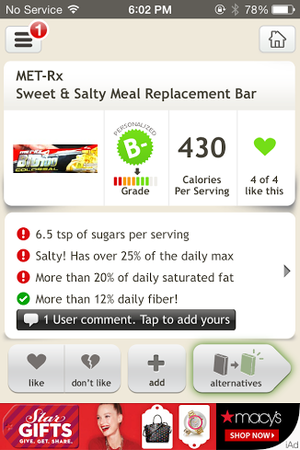
 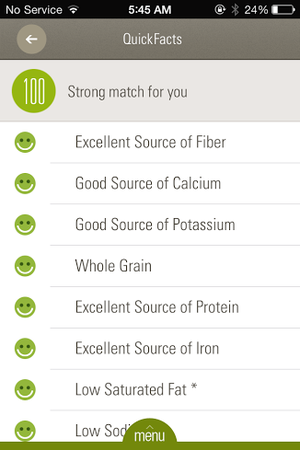 Fooducate is a useful app if you need a quick snapshot of a food’s general nutritional value, but ShopWell takes food look-up one step further. ShopWell is a free app that rates foods based on your personal profile, taking into account lifestyle choices, dietary needs, and allergies. ShopWell asks you to first fill out a comprehensive nutrition profile, including which nutrients, minerals, and vitamins are important in your diet, as well as which nutritional pitfalls (such as artificial sweeteners or refined grains) you want to avoid. The app also asks which foods you’re allergic to or cannot otherwise tolerate. Then, the app takes this information and rates foods based on your information. ShopWell gives each food a score from 1 to 100 (100 is the highest), and tells you whether the food is a strong match, a medium match, or a weak match for your profile. You can click on the score to find out why the food is a strong/medium/weak match—for example, Bridgford Beef Jerky is a weak match for me because it has lots of added sugar. ShopWell also shows nutrition information and ingredients for each food, as well as suggestions that are similar but “better” for you based on your ShopWell profile. ShopWell is an excellent app for tracking specific aspects of your diet, such as nutrients or sugar intake, which is great for diabetics. The app lacks a built-in calorie-counter, but it does have some nifty extra features such as lists (add favorite foods to lists for future reference), popular foods (find foods that are popular with people who have similar profiles to yours), and missions and achievements to keep you motivated.
 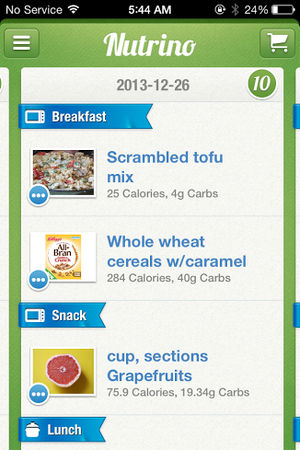 If you’re not sure where to start with your diet plan, Nutrino is the app for you. This free iOS app is like a personal nutritionist in your pocket. Nutrino is a food recommendation app that creates a custom, personalized daily menu for you based on your profile, preferences, and goals. Like ShopWell, Nutrino needs some personal information to create your custom meal plan. The initial profile setup includes answering basic questions (gender, age, height, weight, general activity level) and setting goals such as target weight and diet intensity. Nutrino also asks how large you like each meal to be, how you like to prepare each meal, and whether you have any special restrictions, such as gluten-free or vegetarian. Taking into account your profile, preferences, and nutritional goals, Nutrino creates a daily meal plan for you. The meal plans includes nutritional information, recipes, and a grocery list with all the necessary ingredients. If you don’t like a dish Nutrino has picked for you, just tap it and tap Change Dish to find a similarly healthy replacement . Swipe up to scroll through your meal plan, and swipe down to see a summary of your day, including protein, carb, fiber, and fat intake, as well as daily calories. Swipe to the left to see future days’ plans. In one sense, Nutrino is more difficult to use than other diet apps, since its success banks on your ability to follow its meal plan to a T. On the other hand, if you’re willing to put in the legwork and you want an app that will do everything for you (including counting calories), Nutrino is worth a look.
You must be logged in to post a comment.