Category: Digital Marketing

  • How Social Commerce is Changing Business in Nigeria

    How Social Commerce is Changing Business in Nigeria

    Social media has come a long way, leaving its impact even in the tiniest hole you’d find on the ground. Almost every aspect of modern life, including commerce, can’t deny this fact.

    This innovation has led to the dawn of social commerce, seamlessly blending social media engagement with e-commerce transactions.

    Forbes says online retail will account for 23% of all purchases by 2027 and before then, Statista reveals that by 2025, revenue in Nigeria’s e-commerce market is expected to reach $7.04 billion, with an annual growth rate of 7.81% (2025-2029). This will ultimately hit $9.51 billion by 2029.

    Stressing how much individuals will rely on digital platforms for e-commerce, particularly social commerce, Statista also disclosed that the number of online shoppers is projected to grow to 28.6 million users by 2029. User penetration will increase from 13.3% in 2025 to 15.0% by 2029.

    Even e-commerce giant Jumia agrees to this, noting the necessity of integrating social commerce for business growth. Revealing the top e-commerce trends for 2025,  the company wrote:

    In 2025, e-commerce companies must leverage social commerce to engage with younger, tech-savvy audiences in authentic ways.

    “Businesses that incorporate storytelling, user-generated content, and interactive shopping experiences will benefit from increased brand affinity and higher sales. Importantly, small and medium enterprises (SMEs) can capitalize on social commerce to reach niche markets without substantial investments in traditional e-commerce infrastructure.”

    The number of internet users and a mobile-first population has increased commendably in Nigeria, enabling the digital economy to transition into a more efficient and enjoyable space for shopping on platforms like Instagram, Facebook, and TikTok.

    Social Commerce

    What is Social Media Commerce?

    It is the direct buying and selling of goods and services through social media platforms like Facebook, Instagram, WhatsApp, and TikTok. 

    This blend of social media and online shopping makes impulse purchases easier than ever before.

    Compared to traditional e-commerce, which requires users to utilize a separate website, social commerce brings shopping right into your social networking space. 

    All you need is a few taps to see a product in a video, click a link, and complete purchases, without leaving the app.

    For businesses, particularly small and medium-sized enterprises (SMEs), this is a huge innovation. They don’t need a full-scale online store to sell; their social media page becomes their storefront.

    Why Social Commerce Works

    Social media thrives on engagement, and engagement drives sales. Compared to traditional e-commerce, where buyers rely on descriptions and reviews, social commerce builds trust through direct interaction.

    • Instant connections: Businesses respond to queries in real time via comments or direct messages.
    • User-generated content: People trust other customers more than brands. Seeing a real person using a product in a TikTok video or Instagram story is more convincing than an ad.
    • Seamless experience: No need to open multiple tabs or remember discount codes—everything is simplified.

    Data backs this up. Conversion rates from social media are climbing, thanks to features like in-app checkouts and AI-driven recommendations. 

    In Nigeria, where mobile-first internet usage is scaling, platforms like WhatsApp Business, Instagram Live Shopping, and TikTok product links have made it easy for sellers to reach buyers quickly and make instant purchases.

    Most Leveraged Social Media Commerce Platforms in Nigeria

    Facebook shops allow merchants to create digital storefronts on Facebook and Instagram, while users or potential buyers browse and purchase without leaving the app. 

    In order to make things even better for sellers, you’d find features like customizable catalogs, messenger integration for customer service, and targeted ads for boosting visibility.

    Instagram, which used to be just a photo-sharing platform, is now a marketplace with features like product tagging, checkout integration, and influencer promotions that make it a must-use tool for brands.

    With short-form videos being the most preferred when it comes to content consumption, TikTok Shop enables sellers to showcase products through engaging clips. Live shopping events and hashtag challenges amplify visibility.

    Nigeria’s SMEs swear by WhatsApp Business. It allows brands to list products in a catalog, interact with customers, and even process payments, all through a simple chat interface.

    Social Commerce

    The Power of E-Commerce Social Media Advertising

    Social commerce doesn’t just rely on organic reach. Paid advertising supercharges visibility. Platforms like Facebook, Instagram, and TikTok provide highly targeted ad solutions, ensuring products reach the right audience.

    Best Practices for Social Commerce Advertising:

    1. Influencer partnerships: Collaborating with content creators builds credibility and extends reach.
    2. Short-form video marketing: Engaging, digestable content drives conversions, especially on TikTok and Instagram Reels.
    3. Mobile-first optimization: Most purchases happen on smartphones. Ensuring a seamless mobile experience is highly important.
    4. Community engagement: Replying to comments and messages shouldn’t be left to just customer service, it’s part of the sales funnel.

    So, if you are a business owner looking to become a social commerce giant:

    • You can host Live Product Showcases; this can boost engagement and trust;
    • Again, Encouraging User-Generated Content will go a long way; reviews and testimonials from real customers can also build authenticity;
    • Lastly Integrating Local Payment Solutions through the use of platforms like Paystack and Flutterwave. This ensures smooth checkout for customers.

    The Future of Social Commerce in Nigeria

    Social commerce is only getting started. AI-powered recommendations, augmented reality (AR) shopping, and deeper influencer-brand integrations will drive the next phase. By 2027, online retail is expected to account for 23% of all purchases—businesses that embrace social commerce now will be ahead of the curve:

    • AI-driven product recommendations will thrive: Personalised suggestions based on browsing history.
    • AR will make shopping experiences better: Virtual try-ons for beauty, fashion, and accessories.
    • Influencer-led commerce will be king: More brands will rely on content creators to drive sales.

    Social commerce is the future of online shopping, and moving from static e-commerce sites to dynamic, interactive storefronts on social media has changed how consumers buy. Businesses that adapt to this growth will stay relevant, while those that ignore it face the risk of falling behind.

    For entrepreneurs and SMEs, the opportunity is huge. Contributing factors like high mobile penetration, deep social media engagement, and digital payment must be leveraged. 

    Social commerce might take over the e-commerce sector faster than anticipated, and now is the time to build, experiment, and sell on social media where people spend most of their time.


  • 10 Best Alternative Search Engines to Google

    10 Best Alternative Search Engines to Google

    When someone thinks of internet searches, Google is often the first name that comes to mind. Since Google’s launch in 1998, it has steadily grown to become the undisputed leader in multiple areas of technology and digital services. It dominates the global search engine market and leads in online advertising through Google Ads.

    Google also powers the world’s most widely used mobile operating system, Android, and its Chrome browser is the market leader. In addition, Google has a strong presence in cloud computing with Google Cloud, and in video streaming through YouTube. Its services like Gmail and Google Maps are globally popular, and it is one of the top corporations in AI and machine learning technologies, as well as smart home devices through Google Nest.

    Even with over 90% market share, Google’s presence in the search engine market does not stop users from seeking alternatives. Multiple persons have argued the growing concerns over privacy, data collection, and not just the monopolization of information.

    While Google’s dominance is unlikely to wane soon from the search engine space, these 10 best alternative search engines to Google will help you minimize your digital footprint(if you want) and enhance privacy.

    Best Alternative Search Engines

    Best Alternative Search Engines to Google - Microsoft Bing, Qwant, Startpage, Mojeek, Swisscows, Presearch, Gibiru, Ecosia, Brave Search
    1. Microsoft Bing

    Price: Free

    Bing, powered by Microsoft, holds 6.04% of the global search engine market. It’s known for providing multimedia results and AI tools, and its tight integration with Microsoft’s ecosystem makes it a powerful alternative to Google. Additionally, Bing’s Rewards Program lets users earn points redeemable for gift cards.

    Key features: Advanced image and video search, built-in AI functionalities, and extensive search integration with Windows and Microsoft 365.

    1. DuckDuckGo

    Price: Free

    DuckDuckGo has made its name as the go-to search engine for people who love privacy, as it does not track or store user data. While its global market share is less than 1%, its reputation continues to grow due to rising concerns about online privacy.

    Key features: Private, non-tracked searches, no ad-targeting, and anonymous browsing.

    1. Brave Search

    Price: Free

    Brave Search is the engine for users who prioritize privacy and independent results. Launched by the creators of the Brave browser, this search engine boasts complete anonymity, with no user tracking, and has gained 40 million active users as of 2023.

    Key features: customization, AI-powered summaries, and ad-free experience for paid version.

    1. Ecosia

    Price: Free

    Ecosia is an ethical search engine that donates its profits to environmental causes, particularly reforestation. With over 170 million trees planted by 2024, it appeals to environmentally conscious users who want to make a positive impact through their searches.

    Key features: Privacy-focused and powered by Bing.

    1. Qwant

    Price: Free

    Qwant, based in France, is a privacy-centric search engine that offers a powerful music search feature as well as maps. It adheres to stringent European privacy laws, ensuring that no user data is stored or sold.

    Key features: No tracking or personalized ads, integrated maps and music search, and GDPR compliance for users in Europe.

    1. Swisscows

    Price: Free

    Swisscows is a Swiss-based search engine, well-known for its family-friendly content filtering. With servers based in Switzerland, it adheres to some of the strongest privacy laws in the world, ensuring user data is not tracked or stored.

    Key features: Semantic search technology, privacy guarantees, and a focus on music search and other media-based queries.

    1. Startpage

    Price: Free

    Startpage combines the accuracy of Google’s search results with enhanced privacy features. It functions as a proxy search engine, allowing users to browse without being tracked by Google, and is subject to EU privacy laws.

    Key features: Google-powered results without data tracking, anonymous proxy for extra privacy, and EU privacy compliance.

    1. Mojeek

    Price: Free

    Mojeek is a UK-based search engine with an innovative approach. It ranks results based on emotional sentiment, allowing users to filter search results by emotions like positive or negative tones.

    Key features: No tracking, independent search index, and emotion-based result filtering.

    1. Presearch

    Price: Free

    Presearch is a decentralized search engine that allows users to earn cryptocurrency (PRE tokens) for their searches. With a focus on Web3 technology, it provides an alternative for users interested in blockchain-based search engines.

    Key features: Earn rewards for searches, community-driven moderation, and decentralized search infrastructure.

    1. Gibiru

    Price: Free

    Gibiru offers uncensored, private search results while still drawing on Google’s powerful search infrastructure. It strips out the tracking and personalization that normally comes with Google searches, allowing for anonymous results.

    Key features: Unfiltered Google results without tracking, prioritizes user privacy, and delivers fast, unbiased search results.

    Other Alternative Search Engines

    • Yahoo Search: remains relevant due to its integration with Yahoo Finance, Yahoo News, and its long-standing user base.
    • Seekr Search: ranks search results based on reliability and political bias, offering transparency for users concerned with misinformation.
    • Seva Search: allows users to contribute to charitable causes through searches, much like Ecosia but with a broader focus on philanthropy.
    • Yep Search: a search engine that directs 90% of its ad revenue towards content creators, providing a financial incentive for those producing original online content.
  • How to Become a Social Media Manager Professionally

    How to Become a Social Media Manager Professionally

    The role of a Social Media Manager is important for businesses aiming to thrive. Corporate enterprises, celebrities, influential personalities, and high-growth startups have all realized how social media management can boost brand presence, convert leads to sales, and build relationships.

    Understanding the Role of a Social Media Manager

    How to Become a Social Media Manager Professionally - Understanding the role of social media manager

    According to a report by Statista, social media ad spending is projected to reach $358 billion by 2027, indicating the critical role social media plays in modern business marketing strategies. As businesses prioritize digital presence, skilled Social Media Managers are in demand across all industries.

    A Social Media Manager is responsible for the planning, development, and execution of social media strategies across platforms such as Facebook, Instagram, Twitter, LinkedIn, TikTok, and more. 

    This role is not only about content creation. As digital marketing becomes more data-driven, the Social Media Manager role has transformed from simply posting content to a strategic field.

    A Social Media Manager is also responsible for analyzing metrics, engaging with followers, and building community. 

    How Much Does a Social Media Manager Earn?

    how much does social media manager get paid? How to Become a Social Media Manager Professionally

    The salary of a Social Media Manager varies depending on location, experience, industry, and the size of the organization. According to the latest reports, in the U.S, Social Media Managers earn an average salary of $56,000 to $72,000 per year. However, compensation can rise for professionals with advanced skills, and, or those managing social media for large brands or high-profile clients.

    Many companies, especially larger organizations, offer bonuses, stock options, and other perks such as flexible work hours, remote work opportunities, and healthcare benefits, which significantly increase the total compensation package for a Social Media Manager.

    How to Become a Freelance Social Media Manager

    How to Become a Social Media Manager Professionally - how to become a freelance social media manager

    Many Social Media Managers opt to work as freelancers or consultants. Rates for freelance Social Media Managers typically range between $25 and $100 per hour, depending on experience, specialization, and project scope. For instance, a freelancer managing social media for a small business may charge less than someone managing digital strategies for a Fortune 500 company or a celebrity brand.

    According to Upwork, a popular freelancing platform, top-tier freelancers in social media management can earn up to $120 per hour, especially if they bring additional expertise in areas like SEO, content strategy, or paid advertising.

    Skills Needed to Become a Social Media Manager

    How to Become a Social Media Manager Professionally

    Strategic Planning
    Successful Social Media Managers are adept at crafting comprehensive social media strategies that align with broader business goals. This requires understanding market trends, audience segmentation, and platform algorithms.

    Content Creation & Curation
    With over 4.9 billion social media users globally, the ability to create engaging, relevant content is important. From written posts to video storytelling, content needs to resonate with target audiences.

    Data Analysis & Reporting
    Social media is driven by data, from tracking engagement metrics to monitoring ROI. Proficiency in platforms like Google Analytics, Hootsuite Insights, and native tools such as Facebook Insights is essential.

    As HubSpot reports, a lot of marketers say they use data to drive their social media campaigns, showing the importance of this skill.

    Community Management & Customer Service
    Managing a brand’s reputation online involves nurturing relationships with followers, responding to comments, and ensuring customer satisfaction. Social media is often the first point of contact for customers, requiring a combination of empathy and professionalism.

    SEO & Digital Marketing Knowledge
    While SEO may seem separate from social media, search engines index public posts from platforms like Twitter, LinkedIn, and YouTube. Optimizing social content using SEO best practices—such as keyword integration, hashtags, and backlinks—can boost visibility.

    Backlinko has shown that posts with relevant keywords tend to have a higher chance of appearing on search engine results pages (SERPs).

    How to Become a Social Media Manager Professionally

    How to Become a Social Media Manager Professionally

    Breaking into social media management without prior experience may seem daunting, but it’s entirely achievable. Here’s a step-by-step guide to becoming a Social Media Manager with no experience.

    1. Build a Solid Foundation in Digital Marketing

    Social media management is closely tied to broader digital marketing strategies. Learning digital marketing fundamentals, including SEO, email marketing, and paid social advertising, will give you a competitive edge.

    A comprehensive digital marketing course can be beneficial here. According to a report by LinkedIn, top digital marketers possess at least some background in formal education in digital marketing.

    2. Master Platform-Specific Skills

    Different social media platforms cater to different audiences. For instance, LinkedIn is more professional and B2B-focused, while Instagram and TikTok cater to younger, B2C audiences.

    Social Media Managers must understand the nuances of each platform. This involves knowing the best content formats, posting schedules, and engagement tactics.

    Key Insights:

    • Facebook remains the largest social platform with over 2.9 billion monthly active users. Knowing its advertising model and algorithm updates is crucial.
    • Instagram’s Reels and YouTube’s Shorts are growing as video content becomes increasingly important, with video marketing predicted to represent 82% of all online traffic by 2025.

    3. Develop Your Personal Brand

    To showcase your expertise, build your personal brand on platforms such as LinkedIn and Twitter.

    Regularly share valuable insights, participate in industry discussions, and connect with professionals in your field. This will position you as a thought leader in social media management.

    4. Gain Experience and Build a Portfolio

    Start by managing the social media accounts of smaller brands or personal projects. Document your work, including engagement statistics, follower growth, and successful campaigns. A well-rounded portfolio with proven results is key when applying for more prestigious roles.

    5. Stay Updated on Trends & Tools

    Social media is an ever-evolving landscape. Staying current on trends, new platforms, and tools like Buffer, Hootsuite, Sprout Social, and Canva is essential.

    Following top digital marketing blogs such as Neil Patel’s blog or the HubSpot Marketing Blog can provide valuable insights into emerging strategies.

    6. Network and Collaborate

    Building a strong network of industry peers, influencers, and marketers can lead to valuable opportunities. Attend conferences, webinars, and workshops, both in-person and online. Collaborating with other marketers on projects can also expand your experience and visibility.

    Tips on How to Become a Social Media Manager With No Experience

    Tips on How to Become a Social Media Manager With No Experience
    • The first step is to familiarize yourself with social media platforms. Use your own social media profiles or create mock accounts to experiment with different content formats, posting strategies, and engagement tactics.
    • Understanding what type of content works best on each platform is important. Each platform has unique features, algorithms, and audience demographics.
    • Stay updated by reading blogs, watching tutorials, and subscribing to newsletters from sources like Hootsuite, Buffer, and Sprout Social.
    • Analyze what successful brands in your target industry are doing on social media. Observe their strategies for audience engagement, content types, and tone of voice.
    • Take free online courses on the fundamentals of social media management, digital marketing, and content strategy. Many of these courses provide certifications that you can add to your resume.
    • Choose a topic you are passionate about or have some expertise in, whether it’s fitness, personal finance, fashion, or tech. Share valuable content within that niche to attract an audience.
    • Develop a consistent posting schedule that aligns with your audience’s preferences. Use tools like Hootsuite or Buffer to schedule your posts.
    • Respond to comments, participate in discussions, and collaborate with others in your niche to grow your online presence organically.
    • One of the best ways to build a portfolio without experience is by offering your services for free or interning with small businesses, startups, non-profits, or local organizations.
    • After gaining some initial experience, either through internships or free services, you can start offering your skills as a freelancer. Platforms like Upwork, Fiverr, and Freelancer are great for connecting with clients in need of social media management.

    Trends in Social Media Management

    Trends in Social Media Management

    1. AI-Driven Social Media Tools

    Artificial Intelligence (AI) is revolutionizing how we manage social media. AI-powered tools for scheduling posts, creating content, and analyzing data help optimize social media strategies.

    ChatGPT and Jasper.ai are examples of AI-driven content tools that can generate high-quality copy for social media posts.

    2. Increased Focus on Video and Interactive Content

    With 85% of internet users in the U.S. watching online video content monthly, the demand for video-focused content managers is high. Interactive features, such as polls and live streaming, are also growing in popularity, enhancing user engagement.

    3. Social Commerce Growth

    Social media platforms are evolving into shopping destinations. As per Statista, global social commerce sales are projected to reach $1.3 trillion by 2025. Social Media Managers will need to understand this shift and create strategies that integrate e-commerce functionalities seamlessly.

    4. Data Privacy and Compliance

    In light of growing privacy concerns and regulations such as the General Data Protection Regulation (GDPR) and California Consumer Privacy Act (CCPA), Social Media Managers must be knowledgeable about compliance. Ensuring that social media campaigns respect user privacy is essential for legal protection and maintaining customer trust.

    Becoming a Social Media Manager is more than just understanding social media platforms—it requires strategic thinking, content creativity, data analytics, and a deep understanding of digital marketing. Mastering these key areas can help you establish yourself as a successful Social Media Manager even without a degree.

  • SEO Best Practices for Small Businesses: Comprehensive Guide

    SEO Best Practices for Small Businesses: Comprehensive Guide

    Unlike large corporations with massive marketing budgets, small businesses must leverage smart, cost-effective strategies to increase visibility and attract customers. Mastering SEO (Search Engine Optimization) is crucial for small businesses aiming to do this.

    SEO involves optimizing your website to rank higher on search engine results pages (SERPs), making it easier for potential customers to find you. With more than 90% of online experiences starting with a search engine, being visible is important.

    Implementing the following effective SEO best practices for small businesses can help your business dominate search engine rankings, drive traffic to your website, and increase revenue.

    Keyword Research

    Start with thorough keyword research to identify the terms your potential customers are using to search for your products or services.

    Use Tools: Utilize keyword research tools like Google Keyword Planner, Ahrefs, or SEMrush to find high-volume, low-competition keywords relevant to your business.

    Long-Tail Keywords: Focus on long-tail keywords—specific, longer phrases that visitors are more likely to use when they’re closer to making a purchase. These are less competitive and can drive highly targeted traffic.

    Analyzing Competitor Keywords

    Identify keywords your competitors are ranking for to find gaps in your strategy. Tools like SpyFu and Moz can help you analyze competitor keywords and refine your own strategy accordingly.

    On-Page SEO

    SEO Best Practices for Small Businesses -  Quality Content and Keyword research

    Quality Content Creation

    On-page SEO involves optimizing individual pages to improve their search engine rankings and content is king in the SEO world. Your content should be:

    • Relevant and Valuable: Provide useful information that addresses the needs and answers the questions of your target audience.
    • Well-written and Engaging: Keep your readers engaged with clear, concise, and well-structured content. Regularly update your blog with informative articles, how-to guides, and industry news. Google rewards websites that provide a great user experience, so focus on writing content that keeps visitors on your site longer.
    • Original: Avoid duplicate content, which can harm your rankings.

    Keyword Optimization

    Incorporate these keywords naturally into your website content, including titles, headings, meta descriptions, and throughout the body text. Avoid keyword stuffing, which can lead to penalties from search engines. Focus on including keywords in:

    • Title Tags and Meta Descriptions: Craft compelling and keyword-rich title tags and meta descriptions that accurately describe your content and entice users to click.
    • Header Tags (H1, H2, H3): Use header tags to structure your content, making it easier for search engines and users to read.
    • URL Structure: Create clean, keyword-rich URLs that are easy for users and search engines to understand.

    Optimizing Images

    Images can enhance user experience but also need to be optimized for SEO:

    • Alt Text: Use descriptive alt text for all images, incorporating relevant keywords.
    • File Names: Name your image files descriptively rather than using generic names like “image1.jpg.”
    • File Size: Compress images to reduce loading times without compromising quality.

    Technical SEO

    SEO Best Practices for Small Businesses - Technical SEO

    Mobile Optimization

    With mobile devices accounting for over half of all web traffic, ensuring your website is mobile-friendly is crucial. Google uses mobile-first indexing, meaning it predominantly uses the mobile version of your site for ranking and indexing. Use responsive design to ensure your site looks and functions well on all devices. Test your website’s mobile-friendliness with Google’s Mobile-Friendly Test tool and make necessary adjustments.

    Page Speed and Performance

    A fast-loading website enhances user experience and improves rankings. Use tools like Google PageSpeed Insights to test your website’s speed and get recommendations for improvement.

    Secure Your Website

    Security is a ranking factor. Ensure your site uses HTTPS instead of HTTP by obtaining an SSL certificate. This not only helps with rankings but also builds trust with your visitors.

    Fix Broken Links

    Regularly check for and fix broken links on your website. Tools like Screaming Frog can help identify 404 errors and other broken links that need attention.

    Local SEO: Capturing Nearby Customers

    SEO Best Practices for Small Businesses - Local SEO: Capturing Nearby Customers
    Local SEO: Capturing Nearby Customers

    For small businesses, local SEO is essential to attract nearby customers.

    Google My Business

    Claim and optimize your Google My Business listing:

    • Complete Your Profile: Fill out all fields, including your business name, address, phone number, and hours of operation.
    • Add Photos: Include high-quality photos of your business, products, and services.
    • Collect Reviews: Encourage satisfied customers to leave positive reviews.

    Local Keywords

    Incorporate local keywords into your content, such as “best pizza in [city]” or “top-rated salon in [neighborhood].” This helps you appear in local searches and attract nearby customers.

    Local Citations

    Ensure your business information is consistent across all online directories and citation sites. Inconsistent information can confuse search engines and hurt your rankings.

    Off-Page SEO: Building Authority

    Off-Page SEO: Building Authority

    Backlinks

    Building high-quality backlinks from reputable sites is vital for SEO. Consider these strategies:

    • Guest Blogging: Write guest posts for industry blogs to gain exposure and backlinks.
    • Content Marketing: Create shareable content, such as infographics or in-depth guides, that others will want to link to.
    • Networking: Build relationships with industry influencers who can link to your site.

    Social Media

    While social media signals don’t directly impact rankings, having an active social media presence can drive traffic to your site, increase brand awareness, and indirectly benefit your SEO efforts.

    Monitoring and Analytics

    Google Analytics

    Use Google Analytics to track your site’s performance. Monitor metrics like organic traffic, bounce rate, and conversion rate to understand how your SEO efforts are paying off.

    Google Search Console

    Google Search Console provides insights into how Google views your site. Use it to monitor your search performance, fix issues, and understand your keyword rankings.

    Regular Audits

    Conduct regular SEO audits to identify and fix issues that could be affecting your rankings. Use tools like Ahrefs, SEMrush, or Moz to perform comprehensive audits.

    SEO is a critical component of a successful digital marketing strategy for small businesses. By implementing these best practices—ranging from keyword research and on-page optimization to local SEO and building backlinks—you can enhance your online presence, attract more customers, and grow your business.

  • How to Use LinkedIn for Networking and Marketing

    How to Use LinkedIn for Networking and Marketing

    Everybody wants to be on Facebook, Instagram, and Twitter, the platforms companies and businesses use for trendy advertising and marketing. However, investing so much time and effort in platforms that don’t benefit your career is unnecessary. A lot of people overlooked LinkedIn in the past. Ignorant of the many opportunities abundant on this site. There are life-changing opportunities for those looking for jobs, entrepreneurs, startups, investors, or fresh graduates. Here are some pointers on how to use LinkedIn for networking and marketing.

    Marketing/Networking on LinkedIn

    Just as a strong first impression counts in in-person encounters, so too does having an impressive LinkedIn profile for successful online networking. Before engaging in any LinkedIn networking activity, make sure your profile is complete and optimized.

    Build an Impressive LinkedIn Profile

    Start by including a professional-looking profile photo, as this has a big influence on profile visibility and interaction. The next detail to add is your headline. Creating an attention-grabbing headline for your LinkedIn page is similar to creating a CV. This title should communicate your areas of expertise and must be professional.

    Next is a profile description that will help you build your brand by, outlining your strengths and how you can bring value to potential clients or employers. It’s best to keep the summary brief and simple to read. Include relevant keywords to improve visibility in your area of interest. Avoid copying and pasting information from your CV while summarizing your work history on LinkedIn. Rather, concentrate on experiences that are relevant to your business or your desired career path.

    Add reputable recommendations and endorsements to your profile to increase its credibility. You can ask for referrals from people you’ve had good working connections with, such as clients, supervisors, and coworkers. These recommendations build your authority and trustworthiness and even serve as employment references. Getting more recommendations also makes you appear more credible to other users on LinkedIn.

    Make Connections

    It’s time to interact with other users on LinkedIn after building your professional presence. Refrain from adding connections randomly. Make connections with individuals in the field that you might want to collaborate with in the future or who might offer useful information on your business or career.

    When sending a connection request, make sure to add a customized statement and stay away from sending an automatic LinkedIn invitation. You can build connections with your new contact by sending a brief message introducing yourself or outlining your reasons for wanting to connect. By doing this, you’ll avoid giving the impression that you’re just adding things at random to increase your numbers. Remember, potential recruiters on LinkedIn are watching.

    As soon as your requests get accepted, you have to start forming personal or professional connections. You can engage their posts, celebrate a milestone, or simply reach out to them. Make an effort to reply to every communication you get on LinkedIn, and don’t ignore people trying to connect. To strengthen and build relationships, ask contacts to meet you offline at an event that’s open to the public.

    Create Posts/Join Groups

    Posting on LinkedIn is an important part of growing your career. Whatever your niche or industry, always make posts that engage and inform. You can start by writing your thoughts linking to your websites, and reposting pieces from others. As you grow, you can run ads on LinkedIn posts. To help people learn more about you and your business, think about providing a link to your blog to contacts. Provide a link to your subscription pages in your posts to your connections and followers.

    Become a member of industry-related LinkedIn groups to get visibility and establish valuable relationships. You may be able to connect with experts in your field if you join many active groups and share your profile. For any LinkedIn group you join to be effective, you will need to participate in them. Engage in and, provide helpful responses to queries. Instead of trying to promote yourself, concentrate on becoming an important group member.

    Benefits of LinkedIn for Employees/Businesses/Students/Job Seekers

    LinkedIn is a widely used platform for professional networking, offering numerous advantages for those seeking to expand their connections. Firstly, its ubiquity among professionals across the globe provides a direct channel to engage with crucial business contacts who may otherwise remain undiscovered.

    Many recruiters and hiring professionals use LinkedIn to find and connect with potential candidates. Users can often see job postings and recruitment-related content on the platform. Like many social media platforms, LinkedIn also allows users to run ads. Members come across sponsored content, job ads, or other promotional material while browsing their feeds. Companies and individuals can use LinkedIn’s advertising services to create targeted campaigns, promoting their products, services, or job opportunities to a specific audience.

    Most of LinkedIn members use it for business, not for informal engagements like Twitter. Networking on LinkedIn increases the chances of finding and getting opportunities. A well-constructed profile that includes relevant experiences, accomplishments, endorsements, recommendations, and information improves your professional image. Writing articles, sharing educational links, and participating in thought-provoking conversations in LinkedIn groups are other advantages of using the platform.

    LinkedIn serves as a valuable information repository, essentially presenting each user’s profile as a comprehensive resume. This helps you see the backgrounds, abilities, experiences, skills, motivations, and beliefs of potential customers, partners, investors, and other stakeholders. The search tools help to identify prospects and streamline your job search according to your interests.

    LinkedIn is not only free but also unrestricted, a feature that allows users to engage with their contacts regardless of work hours or geographical time zones. The potential opportunities that can be found on LinkedIn and from connections are far too many. Everyone looking to secure their business or career should create a LinkedIn account and use it.

  • Buyer’s Journey Guide to Finding Sales Classes Near You

    Buyer’s Journey Guide to Finding Sales Classes Near You

    Are you ready to improve your sales game? Look no further! This guide will help you find top-notch sales classes near you. It doesn’t matter if you’re a seasoned sales professional aiming to sharpen your skills or looking to find sales classes online for beginners, as a newcomer eager to embark on a lucrative career path, we’ve got you covered.

    General sales training programs equip you with the knowledge, techniques, and strategies needed to excel in various sales environments. One of the important components of this training is a buyer’s journey. A salesperson may use the buyer’s journey as a framework but should focus on providing the right customer experience. This type of training emphasizes not being too intense or pushy. Every salesperson needs to examine their potential clients’ choices at each stage, to make the customer acquisition process smoother.

    How to Find Sales Classes Near You

    Follow these steps to find the best sales classes in your area:

    Online Courses

    Can I find sales classes near me? Yes, online courses are available for sales classes that fit any level of experience or industry. From entry-level virtual workshops to complete sales certification programs, you can train your team at a high level or get more detailed with learning modules like how to close the deal in complex situations. Some of these courses can also be woven into a more extensive curriculum, which includes foundational sales training and new approaches and mindsets to boost your team’s success.

    For example, this course helps participants understand how to sell value in a world where customers complete much of their initial research before picking up the phone. It explores a customer-centric mindset, unique selling proposition, relationship-selling techniques, and networking skills. It also covers sales call choreography, leveraging customer pain points, handling objections, and servicing relationships after the sale.

    Another option is a virtual workshop on creating a powerful product demo. It walks participants through the ins and outs of creating a solid demo. Which includes research, one-to-one, and one-to-many presentations, incorporating stories, and avoiding sales-killing mistakes. It also covers using evaluation checklists, comparison charts, 3rd-party advice, and proof-of-value trials to mitigate buyers’ concerns.

     Entry-level eLearning courses show new salespeople how to navigate the process smoothly, while more advanced workshops and labs teach them how to apply the sales methodology to specific scenarios.

    In-Person Courses

    Just as you have a vehicle and a road map for a trip, your CRM or sales process is your vehicle to navigate the sales journey. Each sale stage is a stop to your final destination of converting a deal into a customer.

    For example, qualifying a potential buyer is the first step in your sales process. It is when reps meet a new lead through an initial contact and determine whether they have the budget, authority, need, and timeline to buy your product or service. Qualifying a lead is an integral part of the sales process and helps your team focus on pursuing leads that are most likely to buy.

    If your lead meets your requirements, take them up on your offer and move the deal to quoted or closed. It would help if you continued working hard on this sale until it is closed or canceled.

    Regularly review your sales processes to see how well they align with the buyer’s journey. Examining the content you provide at each selling point can help you identify gaps and develop plans to address them. For instance, if your buyers need more information about product features and specifications, comparison charts, 3rd-party advice, or proof of value trials before making a purchase, it may be time to introduce some of these resources into your sales process.

    Corporate Courses

    Whether you’re looking to train an entire sales team or attend a course independently, various options are available. These courses typically follow a particular sales methodology and can be tailored to specific situations. For example, if your company sells SaaS software on a subscription basis, you should pursue courses that teach consultative selling techniques. These can help you build trust with customers and nurture long-term relationships.

    If your business operates on a B2B model, you might choose courses that help you navigate the challenges of selling to major accounts. These include training in strategic account management, which teaches you to identify the right decision-makers and develop a relationship that yields long-term sales success.

    General sales courses also cover the basics of building and delivering a sales pitch. These courses can benefit newer reps who need a comprehensive understanding of the field. Some of these programs follow the MEDDIC sales methodology. Like the other-centered selling approach, others emphasize influence and service over traditional selling strategies.

    Many of these programs are also offered as a part of a more extensive learning management system (LMS) provided by your sales training provider. It enables you to track your progress and receive feedback from your instructors.

    Continuing Education

    In the digitally influenced buyer’s journey, educating potential customers is paramount to earning their trust and ultimately converting them into paying clients. Companies are taking this seriously and investing in training opportunities for their employees. From one-time LinkedIn seminars to formal courses at accredited colleges, there are many ways to make learning a part of the workplace culture.

    Continuing education, also known as lifelong learning, is defined as the “ongoing, voluntary, and self-motivated pursuit of knowledge for personal or professional reasons. It can be anything from studying a subject that interests you to earning a degree at an accredited college. The benefit of this is that it’s a great way to sharpen your skills, learn new techniques, and stay up-to-date on industry best practices.

    How to Navigate the Buyer’s Journey

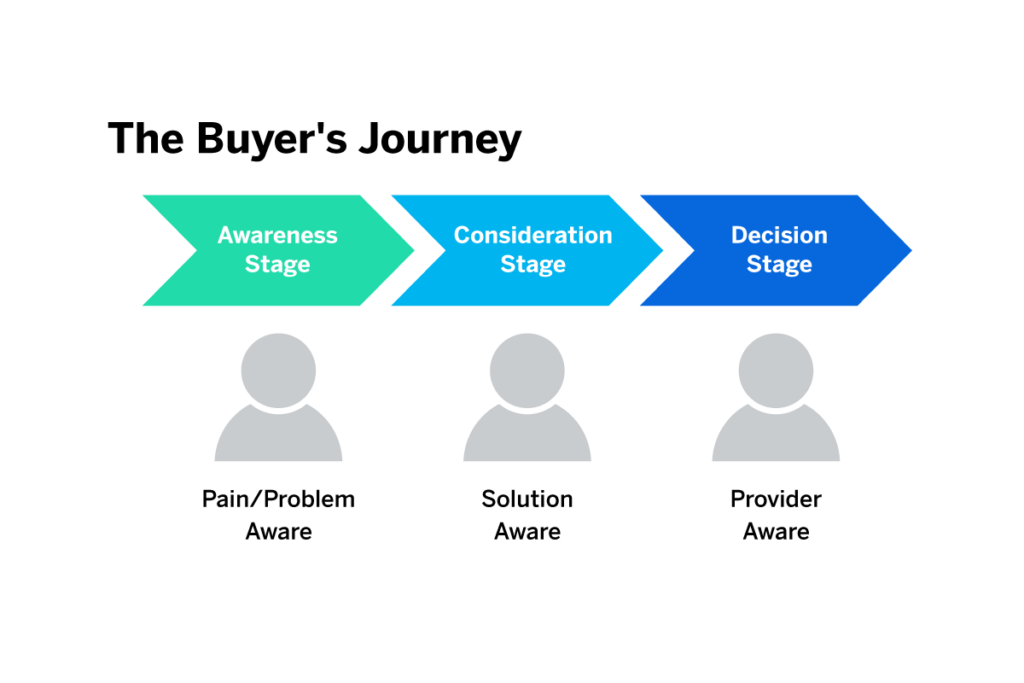
    Finding the ideal sales courses to enroll in is an exciting journey. To ensure you make informed decisions every step of the way, we will break down the buyer’s journey into four key stages:

    • Stage of Awareness: At this point, you learn how the lead begins to recognize a pain point. This initial point of contact between customers and your business is sometimes referred to as the “top of the funnel.
    • Consideration Stage: The goals of your leads shift as they enter the consideration stage. They are now weighing their options rather than attempting to become acquainted with the fundamentals of your products.
    • Decision Stage: In order to determine which good or service gives them the best value, people evaluate their options here. This is where all the effort you have put in throughout the customer journey will pay off. Individuals are aware of the value you have added by assisting them in understanding the features and learning about their subject.

    Benefits of Effective Sales Training Programs

    1. Improved Ability to Close Deals  Acquiring new sales skills is one of the main objectives of sales training. Members of the sales team will be introduced to tactics and procedures they are not familiar with through a sales training program. Effective sales training helps sales team members learn new skills to stay up-to-date with recent trends in the industry.
    1. Improved Customer Relationships: This benefit makes it easier to deliver a satisfactory customer service experience. An effective sales training program helps sales team members identify ways to improve the customer service experience. Sales training promotes attentive listening among sales team members by emphasizing interpersonal communication. Team members can then respond and take appropriate action on behalf of clients. This increased response will undoubtedly elicit good feedback from clients and customers.
    1. Revenue Boost: When sales team members participate in sales training, the organization benefits from an increase in the revenue it generates. Effective sales marketing strategies lead to higher sales, which translates to higher profits. To maximize sales, each salesperson needs to understand the best way to sell the products or services the company offers. Compared to an inexperienced agent, a well-trained salesperson will be able to close more deals faster.  

    Currently, with so many people looking for jobs, having a few extra qualifications can go a long way when landing that next position. It’s a great way to differentiate yourself from your competition. Even if the job isn’t directly related to your educational background, showing that you have a passion for learning and want to advance in your career can be what makes you stand out amongst the rest of the applicants.

  • The Importance of Domain Authority in SEO – How to Check and Improve Yours

    The Importance of Domain Authority in SEO – How to Check and Improve Yours

    A website’s SEO success can be greatly influenced by its domain authority score when it comes to digital marketing. This is particularly valid if it is up against companies with higher DA scores. Regretfully, you cannot raise your DA in a single sitting; it requires consistent effort over time. If you work hard and are patient, you will eventually see results. Here are some of the ways to check domain authority and improve SEO.

    Look at Your Competitors’ DA

    The Importance of Domain Authority in SEO - How to Check and Improve Yours

    Over the years, experts at Vazoola in search engine optimization have come to understand what influences domain authority. Certain aspects of web optimization have a direct impact on a website’s domain authority, but other factors have an indirect effect. These factors include the caliber of a website’s content and whether it offers its visitors value. High-quality content increases a website’s domain authority (DA) by obtaining links from high-ranking businesses and other websites in the same field.

    To check the domain authority of your competitors, you can enter the website URLs into Moz’s free tool to see their DA scores. Along with these features, it will offer a spam score, keyword ranking, and links to root domains. The tool can point out sections of your website that require work. Only compare your website to those in your direct competitive niche, though.

    Check Your Backlinks

    Check Your Backlinks

    One way to determine a website’s position in search engine results pages (SERPs) is through domain authority. This is important to evaluate how successful or not your SEO campaigns are. The higher the domain authority of your site, the more likely it is to rank high in SERPs. When determining domain authority, Moz takes into account a large number of ranking signals to predict the performance of your website.

    Removing irrelevant links and strengthening your internal linking structure are two strategies to raise your domain authority. Additionally, you can obtain backlinks from reputable websites in your niche, like official government websites or well-known newspapers and magazines. Increasing your DA takes time and constant work, as well as the optimization of important elements like content and keywords. The more effort you put into these tasks, the better the odds of increasing your domain authority.

    Check Your Site’s Speed

    Check Your Site's Speed for domain authority

    How quickly a website loads is another important factor that influences domain authority. Users may find a slow-loading website annoying, and it could hurt search engine optimization. There are several free and paid tools to check website speed. Although it is not a ranking factor, domain authority can be used to know a site’s position for a particular keyword.

    Since it is a comparative metric, you should frequently review your website and check the domain authority to see how it stacks up against competitors. A low DA score usually indicates a newer website or a solo blog that has yet to have the opportunity to procure many backlinks. However, these sites can still rank highly if they create high-quality content and are active on social media.

    As a dynamic metric, domain authority is constantly changing. This is because Moz’s algorithm considers changes to a website’s backlink profile, so as other websites build new links or lose old ones, their scores can fluctuate. This means tracking your DA weekly or monthly to understand the changes to your site’s performance is essential. This will help you make better decisions regarding how to optimize your site.

    Check Your Site’s Content

    The Importance of Domain Authority in SEO - How to Check and Improve Yours

    When attempting to achieve a high SEO ranking, domain authority is a crucial consideration. But keep in mind that there are numerous other factors that search engines consider. If you want to raise your domain authority, create outstanding educational content that resonates with your target audience. You can improve your website’s traffic and search engine ranking by using this strategy.

    Do not forget to include internal links in your writing. By doing this, other pages on your website will receive “link juice,” which will raise the domain’s authority. Although increasing domain authority takes time, the effort is worthwhile. Taking the tips in this post into practice will help you outperform competitors with higher DA scores and improve the usability of your website.

    Additionally, remember that SEO requires time commitment as it is an ongoing process. If you want to continue being successful, you should keep making improvements to your website’s page speed, backlink profile, and content.