Category: World

  • Ten Countries Account for 70% of IMF’s Total Outstanding Debt

    Ten Countries Account for 70% of IMF’s Total Outstanding Debt

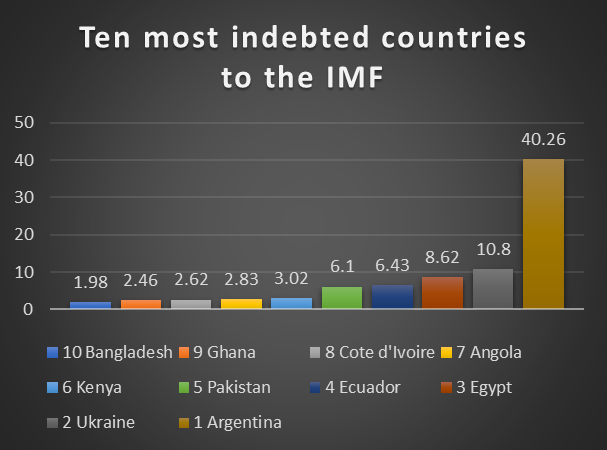
    A review of the International Monetary Fund (IMF) recent debt profile reveals that 70% of the total of $117.6 billion in outstanding debt obligation is owed by the top ten countries. The report reveals that 91 countries have outstanding debt obligations to the IMF as of 8th May, 2025. 

    According to the report, the cumulative outstanding debt obligation of the top ten most indebted countries to the Fund totalled $82.44 billion. 

    The majority of countries featured were from low and emerging-market, mostly domiciled in Africa, South America, the Caribbean, and Asia. Less than 10 countries owing outstanding balances to the IMF were from Europe, and no G20 country had any balance with the Fund. 

    Of the top ten countries most indebted to the International Monetary Fund (IMF), five are from Africa, two from South America, two from Asia, and one from Europe, war-torn Ukraine.
    Source: IMF

    10. Bangladesh ($1.98 billion)

    In 2024, Bangladesh reached a staff-level agreement with the IMF where the fund agreed to provide $645 million comprising Standard Drawing Rights (SDR 325.2 million (about US$426 million) under the External Credit Facility (ECF) and External Fund Facility (EFF) and SDR 166.7 million (about US$219 million) under the Resilient and Sustainability Facility (RSF).

    Since 2020, the IMF has reached an agreement on support facilities totaling $4 billion but has only drawn around $355 million. In May 2020, the country reached a Rapid Financing Instrument (RCF) of $355.5 million. 

    Fast forward to January 2023, it agreed to three facilities with the IMF: an Extended Credit Facility (ECF) of $822 million, an Extended Credit Fund (ECF) of $1.6 billion, and a Resilience and Sustainability Facility (RSF) of $1 billion. All three facilities are yet to be drawn and are expected to expire by July 2026. 

    09. Ghana ($2.46 billion)

    This West African country has outstanding debt balances with the IMF totaling $2.46 billion. Since defaulting on its debt obligation in 2022, Ghana has borrowed up to $1.17 billion from the IMF under the Extended Credit Facility (ECF) initiative. 

    However, the country’s economy has been in turmoil since the COVID-19 pandemic, with inflation reaching over 50% in 2022. In April 2020, the country agreed $738 million which it has drawn but not repaid. 

    The oldest unpaid IMF credit facility to Ghana dates back to 2015- an Extended Credit Facility (ECF) of $664.2 million, of which $393.5 million remains as an outstanding balance. 

    08. Côte d’Ivoire ($2.62 billion)

    This country has outstanding balances with the IMF for credit facilities dating back to a decade ago in 2011. The country has drawn portions of its last three credit facilities from the IMF, which include: an $867.2 million ECF of 2023, a $1.73 billion ECF, and $975.6 million RSF of March 2024. All three are billed to expire by 23rd September, 2026. 

    07. Angola ($2.83 billion)

    This oil-dependent economy has outstanding balances with the IMF to the tune of $2.83 billion, which was a $3.2 billion Extended Fund Facility (EFF) approved in December 2018 and set to expire in December 2021. 

    Beyond the high outstanding debt to the IMF, the country continues to be weighed down by extreme poverty, a high debt-to-GDP ratio, low life expectancy, high infant mortality, and epidemic corruption levels.

    The situation appears gloomy for Angola in the coming years as the number of people living in the country is expected to climb to 16.3 million people. 

    06. Kenya ($3.02 billion)

    The country’s total outstanding obligation to the IMF came under four credit facility programs: Rapid Credit Facility, Extended Fund Facility, Extended Credit Facility, and Resilience and Sustainability. 

    It has an outstanding balance of $542.8 million under the (RCF), and $1.51 billion under the EFF—the loan initially totaled $1.8 billion. 

    The country’s economy has been resilient despite the harsh operating environment in the past years, especially debt. Efforts by the Ruto-led government to raise revenue in line with recommendations of the Fund were met with the most brutal protests in the region to date. 

    05. Pakistan ($6.10 billion)

    This country has received over $10 billion in credit facilities from the IMF since 2019. The latest of these facilities was the Extended Fund Facility of $5.32 billion, agreed in September 2024 and set to expire in 2027. Others include a $2.25 billion iStandby Agreement, which has been fully drawn by Pakistan, and EFF of $4.98 billion, of which $3.03 billion has been drawn. 

    Last week, the IMF’s Board completed its first review of the 37-month EFF and noted that the government’s effort under the EFF has delivered economic stability in terms of surplus, inflation reduction, and increase in the country’s gross external reserve. 

    The IMF Board, in its review of the country’s performance, further approved a request to access the $1.4 billion Resilience and Sustainability Facility (RSF), which aims to strengthen resilience to natural disasters and federal and provincial responses to natural disasters, among others. 

    04. Ecuador ($6.43 billion)

    Aside from Argentina, Ecuador is the only South American country on the list. The latest of the IMF’s facilities comes amidst a significant fiscal deficit in the country, financial and fiscal instability, coupled with illiquidity problems. 

    In May 2024, the Board of the Fund approved a 48-month Extended Fund Facility (EFF) for Ecuador of $4 billion, of which $1 billion was immediately disbursed. This follows a September 2020 EFF of $4.61 billion, which has been completely drawn. Another Rapid Financing Instrument of $461.7 million was approved by the Fund in May of 2020, which was geared to help the country meet immediate balance of payment obligations in light of the shocks necessitated by the COVID-19 pandemic. 

    03. Egypt ($8.62 billion)

    The economy of Egypt faced severe challenges in 2023 and 2024, necessitating the IMF to approve significant EFF. Among these challenges are disruption of trade through the Suez Canal owing to violence orchestrated by Yemeni Houthis in the Red Sea, significant refugee inflow from the war in Sudan and Gaza. Egypt’s economy faced significant economic shocks and pressures in 2023 and 2024 owing to insecurity, which disrupted trade volume in the Suez Canal and tourism, a vital source of forex for Egypt.

    Beyond that, reforms in the foreign exchange market executed by the administration of President Sisi further encouraged support financing from the IMF. The Fund noted that these reforms are already bearing fruit for the country’s fiscal position. 

    02. Ukraine ($10.8 billion)

    This country’s presence on the list should not surprise anybody, as the reason is obvious. In the last three years, Ukraine has engaged in a war with Russia, which has defied every move to resolve it. 

    Since Russia’s invasion of Ukraine in February 2022, the country has agreed to up to $12.6 billion in Rapid Finance Instrument and Extended Fund Facility with the IMF. However, the Fund has only been able to disburse around $9.6 billion. 

    01. Argentina ($40.26 billion)

    Argentina topped the list of most indebted countries to the IMF due to the stabilization policies of the President Javier Milei administration, which inherited an economy on the brink of a balance of payments crisis.

    In the past few years, no country has received more monetary support from the IMF than Argentina. Argentina’s economy prior to President Milei had already crashed—inflation reached 211%, but has declined, significant budget deficits, and a rapidly declining foreign exchange reserve meant that only an economic surgery could see the country through. 

    Last month, the IMF reached a staff-level agreement with Argentina, which could see the country receive up to $20 billion in credit facilities-—a further boost if eventually approved by the board. This is aside from the country’s $40 billion outstanding payment. 

  • World Bank Projection of Top Ten Fastest Growing Countries in Africa in 2025

    World Bank Projection of Top Ten Fastest Growing Countries in Africa in 2025

    African economies in the past few years have been blighted by geopolitical, climatic and macroeconomic shocks resulting in a tepid post pandemic recovery curtailing growth of the fastest growing countries in the region.

    These shocks resulting in supply chain disruptions have led to high food and energy prices and worsened standards of living across the continent.

    Elevated food and energy inflation exacerbated by currency weaknesses in many countries has pushed more people into hunger and worsened the humanitarian situation in Africa most especially in West and Central Africa where an estimated 55 million people are expected to go hungry in 2024. 

    However, the tide of inflation seems to be turning in 2024 compared to 2023 where average inflation in the continent stood at 17% according to the African Development Bank (AfDB). The World Bank projects that 70% of African countries are set to register lower inflation figures in 2024 compared to the past year. Although, 13 countries including Nigeria, Ethiopia and others have rising inflation. 

    Also, exchange rate pressures have propelled Central Banks of many countries in Africa to embark on a hawkish monetary policy stance. This was due to tighter financial conditions, a strong U.S. dollar, and foreign exchange market reforms. The Nigerian Naira led the pack of worst performing currencies in Africa in 2024 so far losing almost 50% of its value followed by the Ethiopian Birr and the Kenyan shilling losing 30% and 21% respectively. 

    There has been a mixed reaction to the twin threats of inflation and currency weakness in Africa- while some Central Banks have joined the global wave of easing interest rates, others have taken a more cautious approach- and continue to tighten MPR as inflation remains stubborn.

    fastest growing countries in Africa

    Despite these macroeconomic malaises, Africa remains the second fastest growing continent in the world- only trailing Asia. In 2023, growth in Sub-Saharan Africa stood at 2.4% and rose to 3% in 2024. The World Bank projects growth to reach 4% in 2025 and 2026. Growth in the region was largely impacted by the collapse of the Sudanese economy over the raging civil war in the country which when excluded will put the regions GDP growth at 3.5% in 2024.

    In the East and Southern Africa region economic growth is expected to rise to 3.9% in 2025- 2.2% in 2024. However, South Africa and Angola seems to be dragging the regions down as the region is projected to grow by 5.3% excluding these two countries.

    Rwanda, Kenya, Tanzania and Uganda contributed significantly to making East Africa the best performing region in the continent.

    West and Central Africa’s biggest economy poses a lag to the region’s growth which is projected at 4.2% in 2025 mainly propelled by fast growth in Niger, Benin and Cote d’Ivoire. However, excluding Nigeria’s the region will is forecast to grow by 5.1% in 2025-2026.

    The World Bank in its Africa Pulse for 2024 and Middle East and North Africa (MENA) update projected growth of African countries in 2025. This article looks at the top ten fastest growing countries by GDP in Africa in 2025. 

    10. Zambia

    This Southern African country is projected to grow at 6.1% in 2025- a sharp spike considering the country’s 2.0% growth in 2024. Risk to the outlook stems from significantly high inflation projected to decelerate to 12.1% in 2025 from 15% this year.

    The country’s currency- the Zambian Kwacha is one of the worst performing currencies in the continent losing over 30% of its value in 2024 so far after the Central Bank notified the public of moving to a market driven exchange rate system.

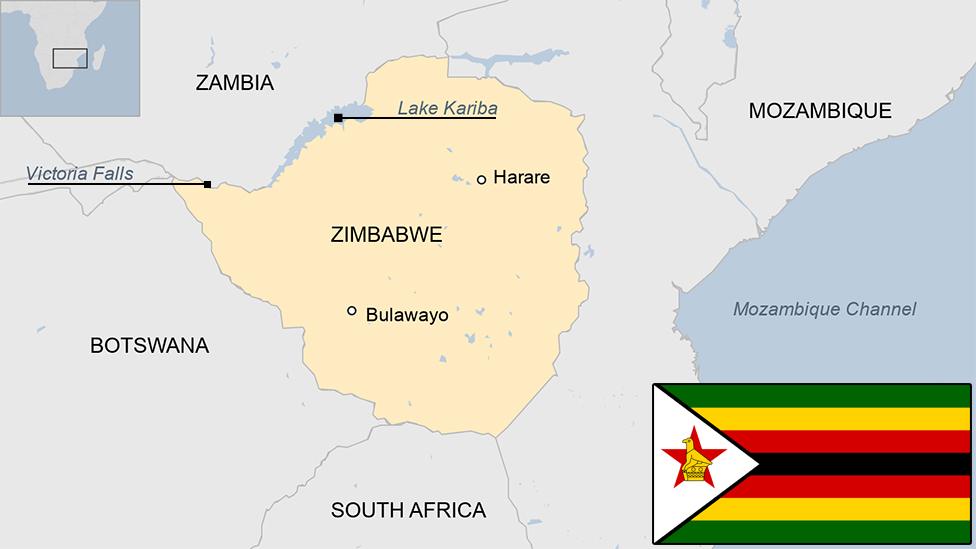
    09. Zimbabwe

    Fastest Growing Countries

    This country’s economy is projected by the World Bank to grow at 6.2% in 2025- an increase from the projection of 2.0% in 2024. The country’s inflation is projected to accelerate to 8.4% in the coming year from 6.0% in 2024. In the past few years, inflation in this country reached over 200% on the back of severe depreciation of its local currency- the Zimbabwean dollar.

    Risk to the outlook include the effect of climate change induced El Nino which affects production of key staple such as maize. Also, the country has also seen natural disasters such as flooding like its other Southern African counterpart in 2024 so far.

    08. Uganda

    The World Bank provided the same economic growth projection for both Zimbabwe and Uganda at 6.2% in 2025. The country’s GDP growth projection for 2025 represents a 0.2 percentage points increase compared to its projection for 2024. GDP growth in Uganda is one of the highest across the East Africa region.

    The country in the past 18 months has seen inflation fall to stable levels resulting in monetary policy authorities to begin the easing cycle with a 25 basis points cut in MPR. In 2023, inflation in the country stood at 8.8%- this dropped to 3.2% in 2024 and consumer prices in the coming year is projected to remain stable at 4.6%.

    07. Republic of Benin

    This West African nation is forecast to see 6.4% GDP growth in 2025 which has helped in no small measure to boost economic expansion in the West African region.

    In the past five years, the country has posted GDP growth above 5% whilst maintaining inflation under 3% dating back to 2020.

    06. Cote D’Ivoire

    Fastest Growing Countries

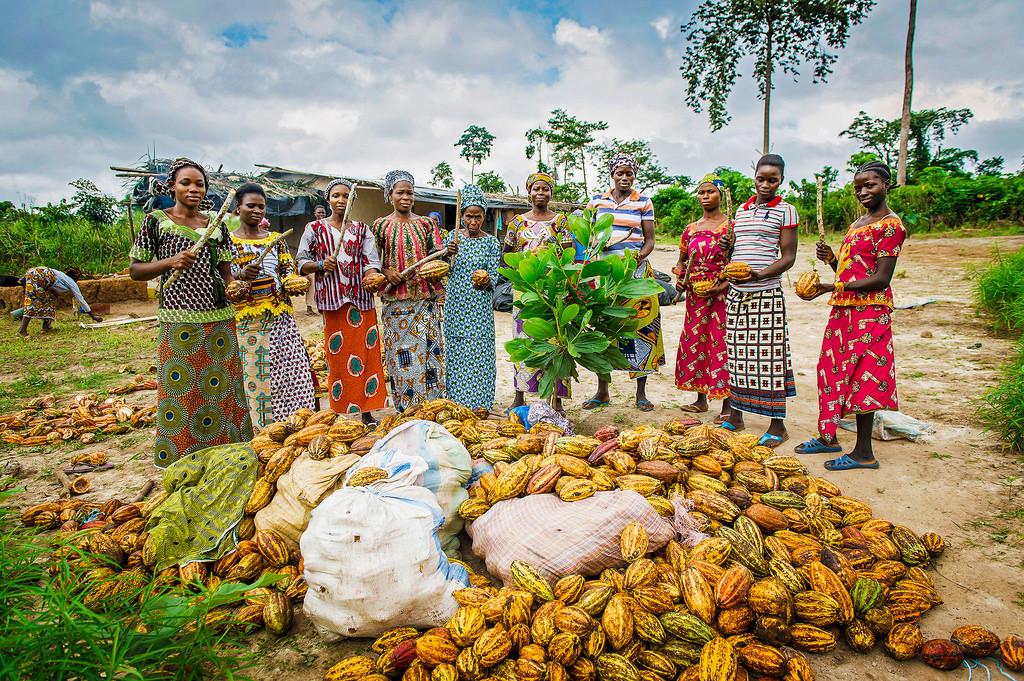
    The World Bank projects growth in this West African country to reach 6.4% in 2025- one of the strongest performers in the West African region. This growth is underpinned by strong private consumption and capita deepening as well as exploitation of recent oil discoveries in the country.

    In the past four years, the country has seen GDP growth above 6% and barring the pandemic in 2020, growth has average 7.5% dating as far as 2010.

    Inflation in the country is projected to decline by 0.6 percentage points to 3% next year from 3.6% in 2024.

    05. Ethiopia

    with GDP growth at 6.5% in 2024 according to the World Bank projection, Ethiopia is the fifth fastest growing economy in Africa. The country has been a consistent performer in the region recording over 6% growth in the last five years including during the pandemic in 2020.

    The major risk to the currency outlook is severe currency weakness- the Ethiopian Birr is among the worst performing currencies in the continent losing 30% of its value as of August 2024 and would likely have a pass-through effect on inflation.

    Also, natural disasters such as droughts and floods have negatively impacted agricultural output in the past few years with crop failure in some years hovering around 50% to 90%.

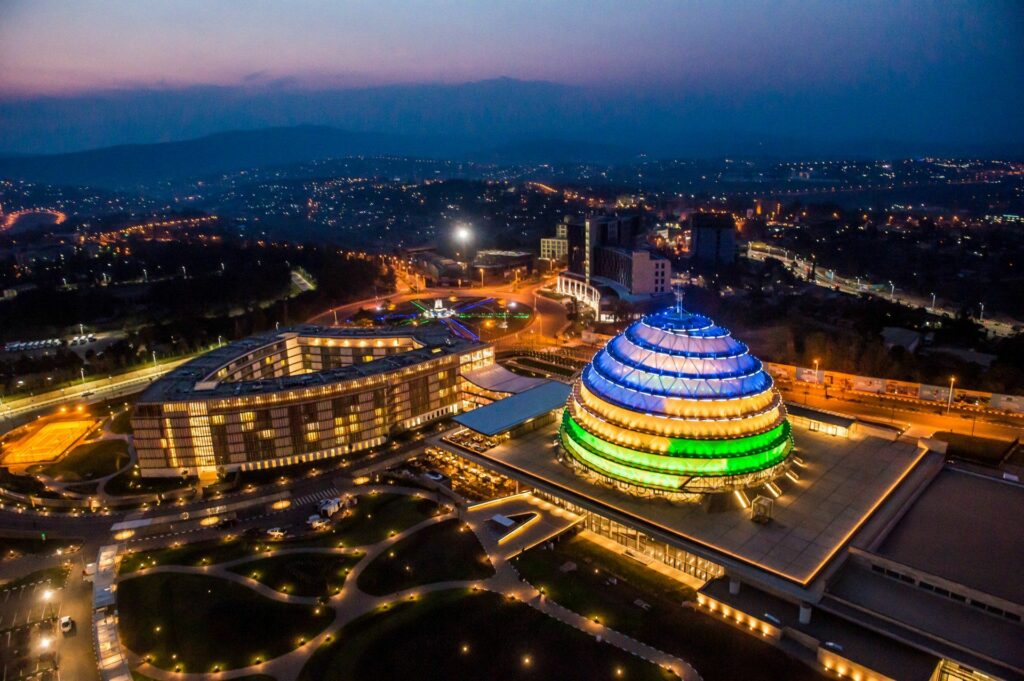
    04. Rwanda

    this country sits joint third with Mauritania as the third fastest growing economy in the Africa with the World Bank projecting its GDP to grow by 7.8% in 2024.

    The GDP growth projection for 2025 is an improvement from 7.6% recorded in 2024. Inflation in the country for 2025 is projected to decelerate to 5.0% in 2025 from the projected 6.8% this year.

    03. Mauritania

    the World Bank puts the country’s economic growth for 2025 at 7.8%- making her the joint third fastest growing economy on the continent. The projection represents an increase of 1.3 percentage points from the 2024 forecast of 6.5%.

    Inflation in the country is forecast to decline to 2% from 2.7% in 2024.

    02. Niger

    despite a coup and severing of its membership of the ECOWAS in the year, Nigeria is on track to become the second fastest growing economy in the continent in 2025 with the World Bank putting GDP growth at 8.5% in 2025.

    This is an improvement from the 5.7% projected GDP growth in 2024 which has strengthened economic activities in the West African region.

    01.Libya

    the fastest growing economy in Africa in 2025 according to the World Bank is conflict and unstable Libya projected to grow at 10.7% in 2025. The impressive GDD growth projection is underpinned by recovery from the contraction of 10.1% in 2024.

    The outlook for Libya is a downgrade compared to the Bretton Wood institute projection earlier in the year.

    The outlook for Libya is marred by conflict and political instability which has severely affected oil production in the country. Further distabilisation in the Middle East with the toppling of the Assad led Syrian regime and uncertainties in the conflict between Israel and Hamas could potentially upend the potential recovery. 

  • HMPV Outbreak in China: Are We Facing Another COVID-19-like Crisis?

    HMPV Outbreak in China: Are We Facing Another COVID-19-like Crisis?

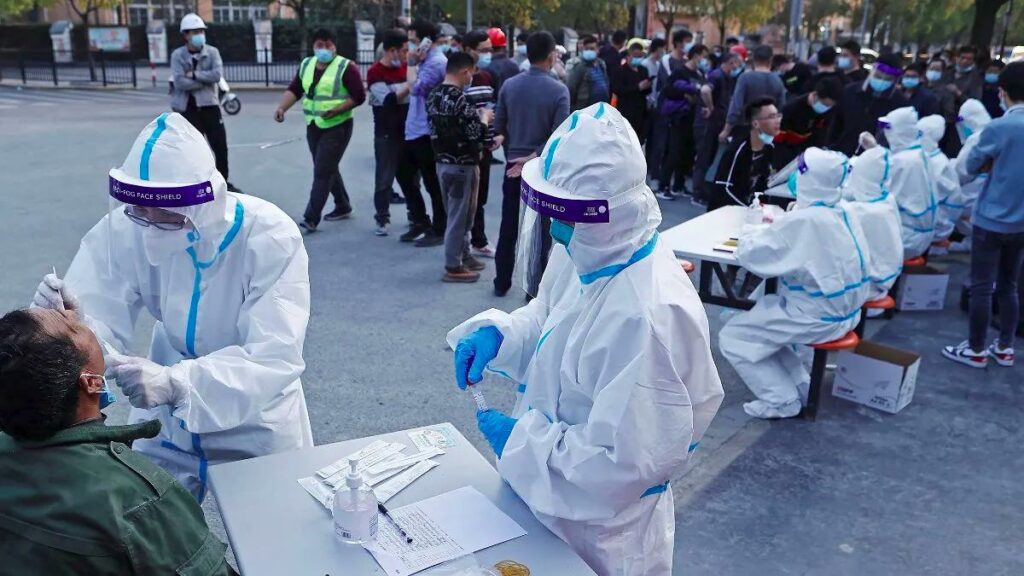
    Five years after the initial Covid-19 pandemic, China is now facing an outbreak of a new respiratory virus: Human Metapneumovirus (HMPV). This emerging pandemic has raised global concerns, prompting countries like India to closely monitor its spread and impact. In Asia, countries like Malaysia are also witnessing a rise in HMPV cases, adding to the urgency of controlling its transmission.

    Rising Concerns Over HMPV Outbreak in China

    Recent reports and social media videos depict overwhelmed hospitals, raising fears of multiple concurrent infections, including HMPV, influenza A, Mycoplasma pneumoniae, and even Covid-19. These concerns highlight the ongoing challenges in managing respiratory outbreaks.

    Symptoms of HMPV

    According to the Centers for Disease Control and Prevention (CDC), common symptoms of HMPV include:

    • Coughing
    • Runny nose
    • Fever
    • Sore throat

    In severe cases, HMPV can lead to conditions like bronchitis, pneumonia, or worsening asthma symptoms.

    How HMPV Spreads

    HMPV spreads primarily through:

    • Coughing and sneezing
    • Close contact (handshakes, touching surfaces, then the face)
    • Contaminated surfaces

    The virus tends to follow a seasonal pattern, typically spreading during late winter and spring in temperate regions.

    Who Is Most At Risk in the HMPV Outbreak in China?

    Certain populations are more vulnerable to HMPV:

    • Young children under 5 years old, especially infants
    • Older adults (ages 65 and above)
    • Individuals with weakened immune systems or chronic respiratory conditions, such as asthma or COPD

    Preventing HMPV Transmission

    While no specific antiviral therapies or vaccines currently exist for HMPV, preventive measures can help reduce its spread:

    1. Regular handwashing with soap and water for at least 20 seconds
    2. Covering the mouth and nose when coughing or sneezing
    3. Wearing face masks and avoiding contact with those showing symptoms
    4. Refraining from touching the eyes, nose, and mouth with unwashed hands

    Global Health Monitoring of HMPV Outbreak in China

    As HMPV continues to spread, global health authorities are working to assess its potential impact and devise strategies to prevent widespread outbreaks. Stay informed through trusted sources and follow public health guidelines to protect yourself and those around you.

  • Is Population Collapse Coming? A Global Decline in Birth Rates Sparks Concern

    Is Population Collapse Coming? A Global Decline in Birth Rates Sparks Concern

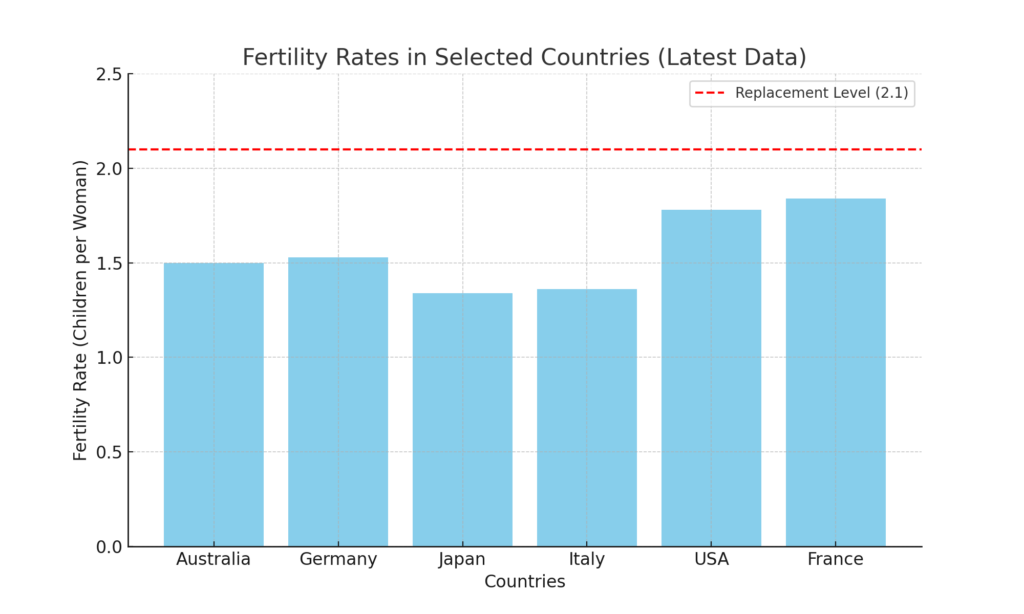
    Across the globe, fertility rates are dropping, leading to pressing questions about the future of population growth. In many developed nations, birth rates have dipped below the replacement level of 2.1 children per woman—the rate necessary to sustain a population without migration. This trend has ignited discussions among demographers, economists, and policymakers about whether we are on the brink of a population collapse and the potential consequences it might bring.

    Elon Musk, the CEO of Tesla and SpaceX, has been particularly vocal about the implications of declining birth rates. He has raised concerns about the long-term consequences of a shrinking population, warning that it could lead to labor shortages and hinder economic growth. Musk emphasizes that without a stable or growing population, societies may face challenges in sustaining technological advancements and infrastructure, ultimately impacting our quality of life.

    Musk’s insights align with broader discussions among experts who argue that declining fertility rates could create a ripple effect across various sectors, from healthcare to housing. A reduced working-age population may strain social security systems, as fewer workers support an increasing number of retirees. This demographic imbalance raises questions about the sustainability of current economic models and the welfare of future generations.

    Australia’s Fertility Decline

    Australia, with a fertility rate of just 1.5 children per woman, exemplifies the broader pattern seen in developed countries. This figure marks a significant decline from earlier in the 2000s, when fertility rates hovered around 1.8. According to the Australian Bureau of Statistics, this drop, coupled with an aging population, is putting immense pressure on the country’s social services, pension systems, and healthcare infrastructure. Without sustained immigration, Australia’s population could begin to shrink in the coming decades.

    The Global Fertility Decline

    Australia’s declining birth rate is part of a global demographic shift. Many countries, particularly developed ones, are experiencing historically low fertility rates:

    • Japan: The fertility rate stands at 1.3 children per woman. Japan’s population is already contracting, with an annual decline of around 500,000 people. Despite various government incentives aimed at encouraging childbearing, such as subsidies and work-life balance policies, Japan faces an uphill battle to reverse the trend. The United Nations predicts further population decreases, which could lead to a shrinking workforce and increased burden on the elderly.
    • South Korea: With an unprecedented fertility rate of 0.8 children per woman, South Korea holds the lowest rate in the world. This demographic crisis has been exacerbated by economic uncertainty, high housing costs, and a growing disinterest in traditional family structures. Experts warn that, without intervention, South Korea could see its population halved by the end of the century Statistics Korea.
    • Italy: The fertility rate in Italy is 1.2, placing it among the lowest in Europe. Like Japan, Italy’s population is aging rapidly. With fewer young people entering the workforce, the country’s pension system is under immense strain. A declining workforce combined with increasing numbers of retirees raises concerns about Italy’s economic future Istituto Nazionale di Statistica.
    • China: Despite decades of strict population control measures, China is now grappling with its own fertility crisis. The current fertility rate is 1.2, and although the government has relaxed the one-child policy to allow families to have up to three children, the rising cost of living has deterred many couples from expanding their families. The National Bureau of Statistics of China has noted that China’s population is expected to decline for the first time in modern history.

    Why Are Fertility Rates Falling?

    Several key factors are driving the global fertility decline:

    1. Economic Pressures: Rising living costs, particularly in urban areas, have made starting and raising a family prohibitively expensive for many. In countries like South Korea, Japan, and Italy, high housing costs and job insecurity lead young couples to delay or even forgo having children altogether.
    2. Career Prioritization: Women, in particular, are prioritizing higher education and career advancement, often choosing to delay marriage and childbearing. By the time many feel financially stable enough to start a family, fertility rates naturally decline due to age.
    3. Shifting Social Norms: Cultural changes in attitudes toward family size and marriage have also contributed. Many couples today prefer smaller families or opt out of having children entirely. Increased access to contraception has further enabled this shift, as individuals now have greater control over their reproductive choices.
    4. Environmental Concerns: With growing awareness of climate change, some individuals are choosing to have fewer or no children out of concern for the planet’s future. Environmental considerations are becoming a more common factor in reproductive decisions.

    Are We on the Verge of a Population Collapse?

    As fertility rates continue to fall below replacement levels, the question arises: are we heading toward a global population collapse?

    Population collapse is defined as a rapid and significant decrease in population size, which can result in a society with an unsustainable number of elderly people relative to the working-age population. While a shrinking population might alleviate some environmental concerns, it also presents serious economic challenges. Countries with declining birth rates may face reduced productivity, slower economic growth, and a higher dependency ratio—meaning fewer workers to support an increasing number of retirees.

    Japan, South Korea, and Italy are already facing the first stages of population collapse. Their shrinking workforces, combined with a growing elderly population, are creating economic challenges that are difficult to overcome. The strain on social services, healthcare systems, and pension funds will only worsen unless birth rates rebound or alternative solutions are found.

    The Role of Immigration

    Many countries, including Australia, have relied on immigration to bolster their populations in the face of declining birth rates. While immigration can help sustain population levels in the short term, it is not a long-term solution. As more countries experience low fertility rates, the global pool of potential migrants may diminish, leading to competition for skilled workers. Additionally, social and political resistance to high levels of immigration could create tensions in certain regions.

    Environmental Implications of Population Decline

    While fewer people could mean less strain on natural resources, a shrinking population also has downsides for environmental sustainability. Fewer workers may hinder technological and industrial innovation, which are critical for developing sustainable solutions to global challenges like climate change. Furthermore, as populations age, fewer young people will be available to drive the green economy, potentially slowing progress toward environmental goals.

    What Can Be Done?

    Governments around the world are exploring various policies to address declining fertility rates. Financial incentives for families, affordable childcare, and flexible parental leave are some measures already being implemented. Countries like France and Sweden, which offer generous family support programs, have seen some success in stabilizing fertility rates at around 1.8 children per woman.

    However, experts caution that policy interventions alone may not be enough. Cultural attitudes toward family size, career, and childbearing need to shift in parallel with policy reforms to make meaningful impacts.

    The global fertility decline presents both challenges and opportunities. While a smaller population could ease environmental pressure, it poses serious economic risks, including shrinking workforces and the unsustainability of pension systems. Countries already grappling with low birth rates, like Japan and South Korea, offer a glimpse into the potential future for many nations.

    The world now faces a demographic crossroads. The decisions made by governments, individuals, and institutions in the coming years will shape the future of global populations. Will the global population stabilize, or is population collapse inevitable?

  • Most Powerful Passport in The World Ranked

    Most Powerful Passport in The World Ranked

    The most powerful passport in the world grants its holders access to many countries without a prior visa. As determined by the Henley passport index, which measures the number of countries you may visit without one. Many factors, including regional agreements, political stability, economic strength, and diplomatic ties determine the passport’s power. The more countries a passport holder can visit without obtaining a visa or visa-on-arrival privileges, the more powerful the passport is considered.

    This year, the Henley passport index has released the passport power ranking. The holders of these passports can travel visa-free to the majority of international destinations their passports allow. Travelers will not be required to pay extra fees for each person they are traveling with if they are permitted to enter these countries without a visa. Without a visa, you may go anywhere globally at any time, saving you time and effort.

    The World’s Most Powerful Passports 2024

    COUNTRIESVISA-FREE DESTINATIONS
    France, Germany, Italy, Japan, Singapore, Spain194
    Finland, South Korea, Sweden193
    Austria, Denmark, Ireland, Netherlands192
    Belgium, Luxembourg, Norway, Portugal, UK191
    Greece, Malta, Switzerland190
    Czech Republic, New Zealand, Poland189
    Canada, Hungary, United States188
    Estonia, Lithuania187
    Latvia, Slovakia, Slovenia186
    Iceland185

    It is however important to keep in mind that having a powerful passport does not necessarily mean that citizens on the list above can easily migrate to and settle in other countries. In many cases, the most powerful passport allows for short-term travel and entry for tourism or business purposes. Migration policies are entirely separate from passport strength. Countries have their own immigration laws, regulations, and visa policies. With the conditions and requirements for anyone wishing to move there permanently or for an extended period. You might still need a job seeker visa to work and live in a country ranked for visa-free travel.

    If you’re an international student, also check out the list of Fully Funded Scholarships in 2024 for International Students.

  • Bezos, Others Reacts To Queen Elizabeth II Demise

    Bezos, Others Reacts To Queen Elizabeth II Demise

    The death of 96 year old British monarch, Queen Elizabeth II has sparked several rumours and debates both on and off the media. While the Queen who was head of United Kingdom for 70 years and 214 days received adulation during her reign for being generous and benevolent, emerging stories suggests she was anything but kind.

    Elizabeth II, the eldest daughter to King George VI who died in his sleep became successor to the King. She was thousands of miles away on a holiday trip in Kenya with her husband Prince Philip when she got news of his death. Upon her return, she took over rulership after her coronation at Westminster Abbey in central London on June 2, 1953.

    Queen Elizabeth II coronation
    Queen Elizabeth II poses for a portrait at home in Buckingham Palace in December 1958 in London, England. (Photo by Donald McKague/Michael Ochs)

    Many tech industry leaders have taken to social media to express their condolences at the Queen’s passing. Among the business leaders who shared their sentiments includes Bill Gates, Jeff Bezos, Bob Iger, Sundar Pichai, etc.

    Microsoft cofounder Bill Gates tweeted “I feel honored to have met HM Queen Elizabeth, and I am very sad to hear of her passing.”  

    There is nothing more noble than to devote your life to the service of others,” Apple’s CEO Tim Cook tweeted

    “The world has lost an extraordinary person, Queen Elizabeth,” Disney CEO Bob Iger also tweeted.

    The founder and executive chairman of Amazon, Jeff Bezos equally shared his condolences “I can think of no one who better personified duty,” Bezos said. “My deepest condolences to all the Brits mourning her passing today.”

    Jeff Bezos And Professor Uju Anya Spar Over Queen Elizabeth II

    On September 8, 2022, it was a battle of wills on Twitter space when a tweet by Uju Anya sparked an uproar. Nigerian-born professor of Applied Linguistics, anti-racist and feminist, Uju Anya poured gasoline over the Queen’s grave and ignited it.

    Uju Anya, igerian professor who reacted to Queen Elizabeth II death
    Uju Anya Credit: Daily Post

    In a now deleted tweet which claimed to have “violated the Twitter rules,” Uju Anya expressed antipathy towards the Queen. The self-acclaimed, anti-racist Nigerian professor said “I heard the chief monarch of a thieving raping genocidal empire is finally dying. May her pain be excruciating.”

    This controversial tweet has provoked an outrage across Twitter and other social media platforms. It was a savagely cruel thing to say to a dead person, especially one beloved by all. Regardless, Anya maintained her stance with a follow up tweet amid cheers and verbal onslaughts.

    “If anyone expects me to express anything but disdain for the monarch who supervised a government that sponsored the genocide that massacred and displaced half my family and the consequences of which those alive today are still trying to overcome, you can keep wishing upon a star,” Uju Anya tweeted.

    Reacting to the initial tweet, Bezos tweeted “This is someone supposedly working to make the world better? I don’t think so. Wow,”

    The institution where Uju Anya works expressed displeasure toward the offensive message following the stir Uju’s tweet caused. “We do not condone the offensive and objectionable messages posted by Uju Anya today on her personal social media account,”

    Carnegie University opposed the tweet but sang that, freedom of expression is one of their unswerving beliefs. “Free expression is core to the mission of higher education, however, the views she shared absolutely do not represent the values of the institution nor the standards of discourse we seek to foster.”

    Why Did Uju Anya Make That Tweet About The Queen?

    The alleged role of the British empire in supplying the Nigerian government with arms and ammunition during the Nigerian Civil War between 1967 and 1970. Over a million people, mostly from the southeast region were killed during the war.

    Following Uju’s tweet, several Nigerians have made similar tweets on the negative effects of British colonialism in Nigeria and Africa. The British takeover, slavery, stolen artifacts, rape, hunger, the Igbo landing, etc.

    Quuen Elizabeth II demise spark controversy among igbos
    How the Igbo people showed strength and unity in the face of persecution in ancient times Source: BBC Igbo

    Yet another subject of resentment towards the Queen is her crown, adorned with the jewels stolen from Britain’s many colonies. Neither Queen Elizabeth II nor any member of the Royal Family ever apologised for the British imperial crimes committed in the past.

    Africans still mourn the loss of what the British colonial masters took from them. Among them is Muthoni Mathenge, a Kenyan woman in her 90s who was tortured with an ax by British soldiers in 1952 for protecting her husband and resisting the British control. Muthoni recounted how she and several others were forced to bury their fellow comrades who were killed by the British.

    Muthoni Mathenege asks Queen Elizabeth II to compensate her.
    Muthoni Mathenge with a photo of her husband credit: The Star

    It might be hard to dispel these rumours, as so many Africans are reminiscing the subjugation of the British government. It is however important to note that Queen Elizabeth II cannot be held solely accountable for all the barbarousness of Britain over the years.

    In many cases, the decisions made by the British government did not come directly from her. However, as the Monarch, everyone’s resentment, rage and hatred was targeted towards her.

    The Queen never found it politically beneficial to apologise for the wrongs of the British government, hence, she never did.

  • Africa is not a Country!

    Africa is not a Country!

    Is it ignorance, sarcasm, a mockery, or affront when people ask or make statements like, “are you from Africa? Where is Africa, what country is that?”

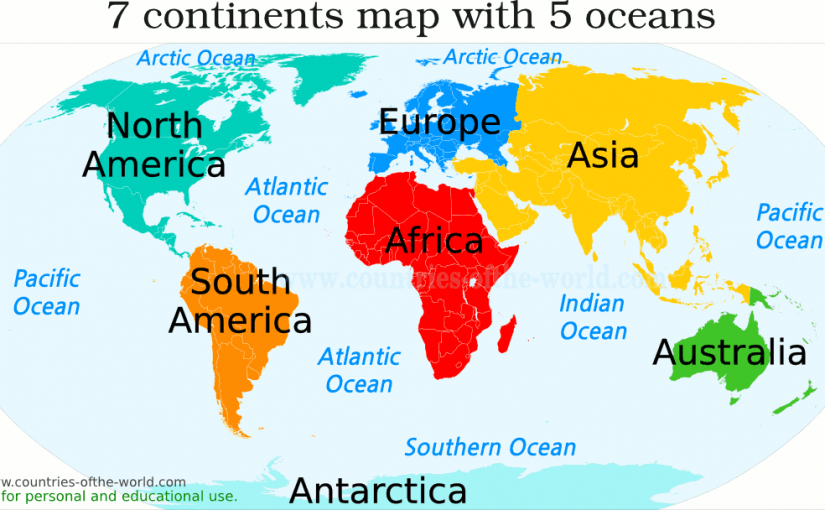
    Regardless of the reasons, the knowledge of Africa as a continent is universal which everyone ought to know, or should know. In fact, Africa is too ancient, too beautiful, too blessed, too big to be mistaken as a country. Therefore, it is worth the effort to summarize what this amazing continent, Africa is all about once more as many have done before now.

    Number of countries in Africa

    Among the 7 continents in world, Africa has the highest number of countries (54 countries) followed by Europe (51 countries), Asia (50 countries), North America (23 countries), Australia (14 countries), South America (12 countries), and Antarctica (0 country).

    Africa is the second largest by land area (30,370,000 km2) and also the second largest by population with more than 1.3 billion people.

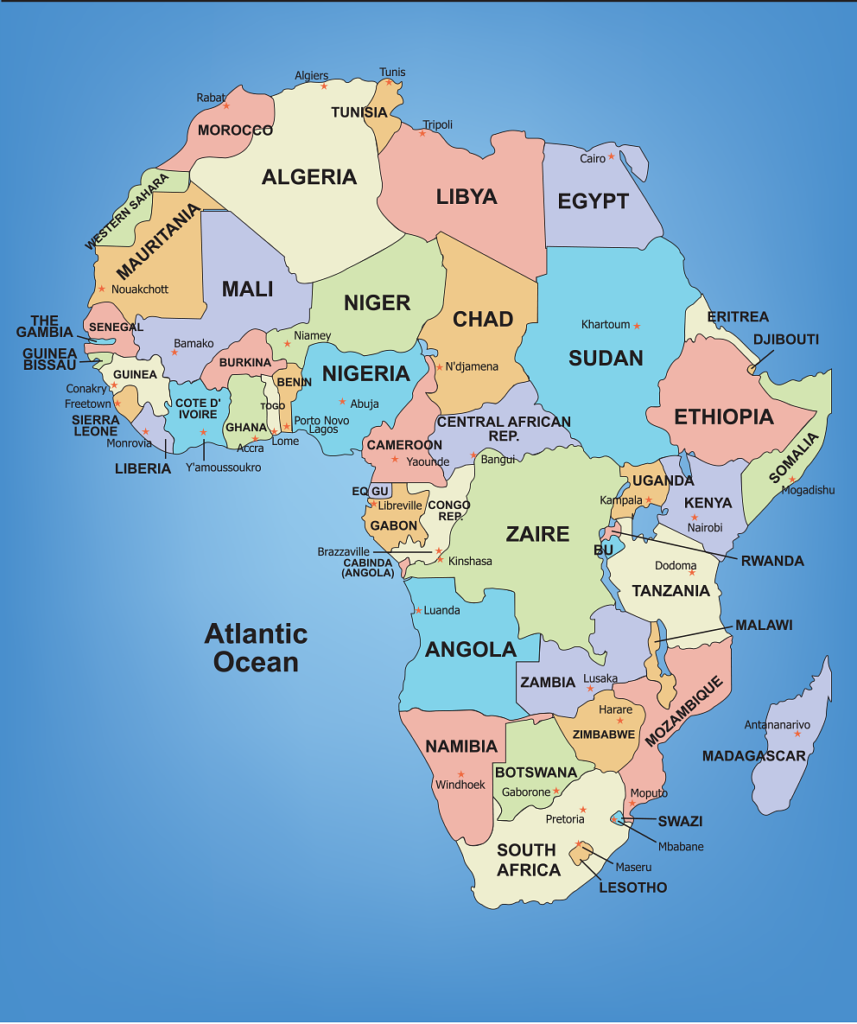
    The continent currently holds about 54 independent countries divided geographically from North, West, East, South and Central/Middle Africa. This division was done by the UN (United Nations) Division Statistics.  

    Northern African Countries

    The countries in the North of Africa are 7 in number. These are Algeria, Egypt, Libya, Morocco, Sudan, Tunisia, and Western Sahara.

    Western African Countries

    The Western side of Africa has a total number of 17 countries. These are Benin, Burkina Faso, Cape Verde, Cote D’Ivoire, Gambia, Ghana, Guinea, Guinea-Bissau, Liberia, Mali, Mauritania, Niger, Nigeria, Saint Helena, Senegal, Sierra Leone, and Togo.

    Eastern African Countries

    The Eastern part of Africa has the highest number of Countries which are a total number of 19 countries. These are Burundi, Comoros, Djibouti, Ethiopia, Eritrea, Kenya, Madagascar, Malawi, Mauritius, Mozambique, Reunion, Rwanda, Seychelles, Somalia, Somaliland, Tanzania, Uganda, Zambia, and Zimbabwe.

    Southern African Countries

    There are only a total number of 5 countries in the Southern part of Africa. These are Botswana, Lesotho, Namibia, South Africa, and Swaziland.

    Central/Middle African Countries

    These are a group of 9 countries such as Angola, Cameroon, Central African Republic, Chad, Congo Republic, Democratic Republic of Congo, Equatorial Guinea, Gabon, and Sao Tome & Principle.

    Amazon.com: Flags of Africa - NEW World Travel Poster: PosterEnvy ...
    All the African Countries and their flags

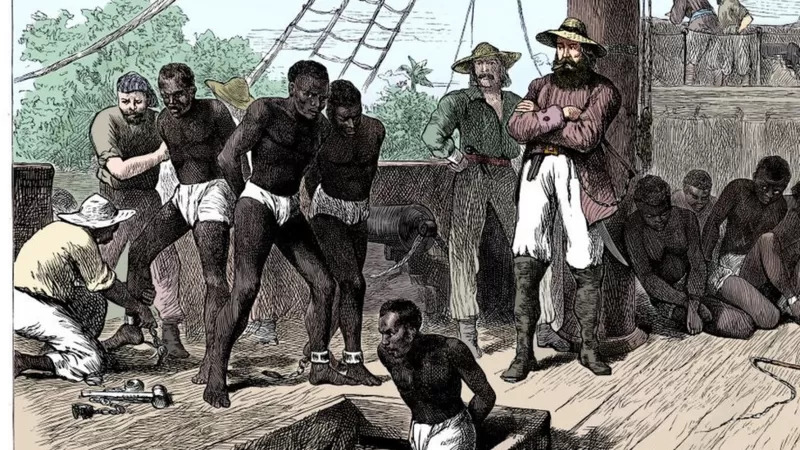
    Finally, Africa a continent with such a large population, land area and resources including a large number of independent Countries should never be called or mistaken a country. Africa is a proud continent. Its Pride comes from been able to stand strong in beauty, natural resources and human capital after a long term slavery, colonialism, and all kinds of human cruelty.

  • Chinese Schools introduce Smart Uniforms with GPS Chips to track Students during School Hours

    Chinese Schools introduce Smart Uniforms with GPS Chips to track Students during School Hours

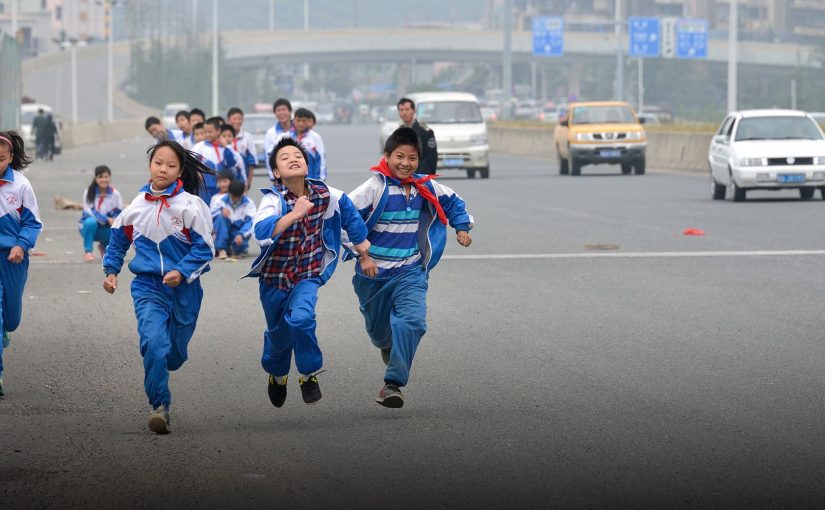
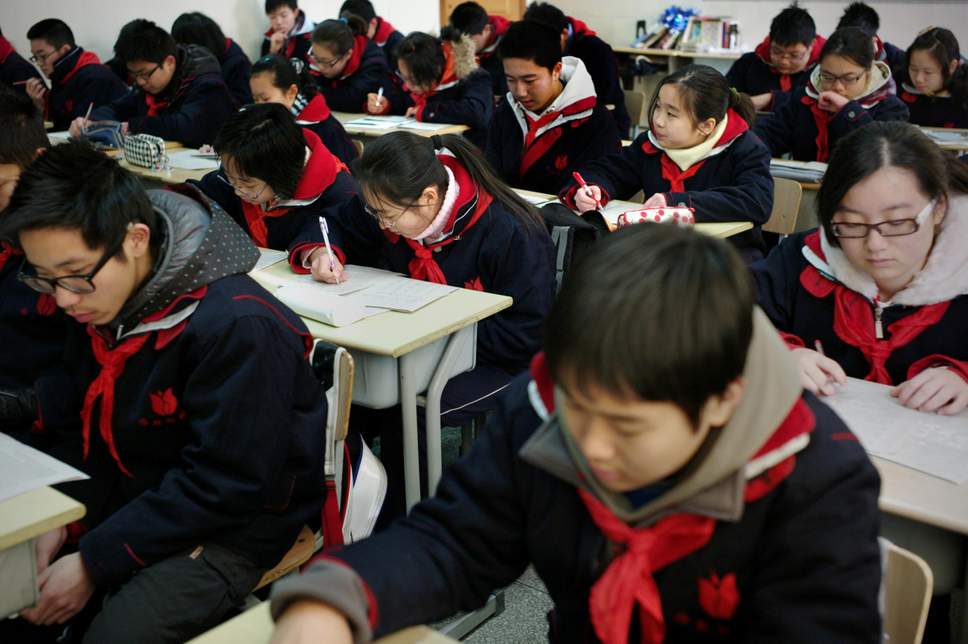
    China has introduced a new technology that will track students location using their school uniform. The new tech dubbed smart uniforms will be to tell the exact location of your ward.

    Eleven schools in the South-West province of Guizhou have introduced the uniforms, which were developed by local tech firm Guizhou Guanyu Technology.

    These smart uniforms record the time and date a student enters the school and a short video parents can see through a mobile app. This is to help encourage good attendance rates.

    It triggers an alarm to notify both teachers and parents of the student’s absence and an automatic voice alarm is activated if a student leaves school without permission.

    The chips can detect when a student has fallen asleep in class, and can also allow students to make payments using biometrics attributes to confirm the purchase.

    The company’s project manager, said that the school would only use the tracking beyond school hours if a pupil were to go missing

    smart uniforms

    He said the two chips, which are installed in each uniform’s shoulders, are able to withstand up to 500 washes and 150C. So that means students can wash, and rewash their uniforms without any problem.

    How the Chinese smart uniforms work

    Face ID, built right inside the uniforms, is a small quantity of facial recognition software to make sure that the right student is wearing the right outfit.

    Alarm is to keep the school premises in order, to notify both teachers and parents of the student’s absence and an automatic voice alarm is activated if a student leaves school without permission.

    Tracking, each of student uniform has two inbuilt chips in the shoulders. This will enable the appropriate management to know when a child is at any moment during the school hours.

  • Darwin Life Aims to Impregnate 40 and Above Women with Designer Babies

    Darwin Life Aims to Impregnate 40 and Above Women with Designer Babies

    Darwin Life is a new fertility clinic that aims to get women over the age of 40 pregnant with ‘perfect babies’. The World Health Organization (WHO) ranks infertility as the third most serious health condition in the world, after cancer and heart disease. A Chinese founder and researcher Dr. John Zhang is developing controversial methods of fertility that involves replacing some of the chromosomes in a patient’s eggs with those of a younger woman’s.

    Dr. John Zhang first made headlines in September 2016 when he successfully produced the world’s first three-parent baby using the spindle transfer technique.

    The treatment is called ‘spindle nuclear transfer’, often referred to as a three-parent-baby technique, and it is outlawed in the United States. It’s been refused for FDA approval because it involves what some view as gene manipulation.

    Doctor Zang’s work helped a woman with a rare disease called Leigh Syndrome become pregnant last year. The idea was that with the help of a donor’s chromosomes that the baby would protected against inheriting its mother’s disease, while still remaining genetically related to her.

    Zang reported mixed results; the baby was born healthy but damaged DNA from the mother was unintentionally transferred over thus creating a possibility for health problems in the future for the child.

    The alternative is standard in-vitro fertilization (IVF) where the entire egg is harvested from the donor and placed inside the mother – thus the baby is genetically related to the donor, even though the mother gives birth.

    In this case the chromosomes were harvested in the United States, but the actual application and implanting occurred in Mexico due to US restrictions and ethical concerns. America isn’t the only country concerned about the ethics; the UK allows the procedure, but only in cases where normal conception or IVF might put the baby at high risk for health issues.

    Doctor Zang wants to do more than use his method to eliminate hereditary diseases. He wants to impregnate women ages 42 through 47 who often can’t get pregnant even though they produce eggs.

    The startup also aims to blow the ‘playing God’ conversation wide-open. The Doctor told Technology Review:

    Everything we do is a step toward designer babies, with nuclear transfer and gene editing together, you can really do anything you want.

    He’s referring to the ability for parents to choose a child’s eye color or decide if their child will be tall or not. It’s a minefield of ethics concerns – is it okay to edit genes to lower the risk of cancer? What about to increase your baby’s I.Q.?

    What happens when intelligence becomes the territory of the wealthy? This is another example of the twisting complexity of the world we live in. Perfect people are on the way and I don’t think any of us are ready for that.

  • The US Government finally put an End to Phone Records Collection Program

    The US Government finally put an End to Phone Records Collection Program

    Yesterday marked the end of NSA’s program to collect bulk phone records in the United States. Advocates all over the world questioned the The US government fairness about surveillance technology and started pushing for privacy since former NSA contractor Edward Snowden exposed the program to journalists 2 years ago.

    The masses gained the government attention earlier this year with Congress passing the USA Freedom Act. But in light of the terror attacks that rocked Paris earlier this month, many hawkish lawmakers have attempted to hold off on shutting it down.

    Reports reaching us says that the Office of the Director of National Intelligence announced on Sunday that the program shut down as scheduled.

    As the program finally came to its ultimate doom, privacy advocates took a victory lap on Monday. Here are those hot takes.

    Senator Ron Wyden of Oregon wrote:

    “This program’s very existence was concealed from the American public for over a decade.  Across two administrations, senior officials from US intelligence agencies and the Justice Department repeatedly made false and misleading statements that concealed the truth about what they were doing.  These officials relied on a secret body of law to justify the mass surveillance of the American people. Fortunately, in America sooner or later the truth always comes out.  When Americans found out about this secret, unconstitutional surveillance two years ago, they were rightfully outraged.  And they made their voices heard.  The result was historic reform legislation that required the government to shut this program down.”

    Senator Mike Lee said:

    “Today both the safety and Constitutional rights of American citizens are more secure thanks to the USA Freedom Act. Not only did the USA Freedom Act strengthen the Fourth Amendment rights of all Americans by ending the bulk collection of personal data, but it also better ensured national security by closing a loophole that prevented the government from tracking foreign terrorists once they entered the United States.”

    Members of the House of Representatives also reiterated their support of the law. Bob Goodlatte, John Conyers, Jim Sensenbrenner and Jerrold Nadler issued the following statement:

    “The implementation of the USA Freedom Act represents government at its best: it is the product of a robust public debate and intense bipartisan negotiations dedicated to finding a way to protect our Constitutional rights while enhancing the safety of our country. The bipartisan law ends the bulk collection of telephone metadata once and for all, enhances civil liberties protections, increases transparency for both American businesses and the government, and provides national security officials targeted tools to keep America safe.”

    The implementation of the Freedom Act highlights that in a government marked by gridlock, there have been many major policy decisions that impact the tech industry from Washington this year. After little happened for the industry last year, 2015 brought significant reforms to the government surveillance and made net neutrality the law of the land.

  • Sweden Government Unwilling to Place Ban on The Pirate Bay

    Sweden Government Unwilling to Place Ban on The Pirate Bay

    After one month of intense debate, a Swedish court has ruled that it cannot force ISPs to block their customers’ access to file-sharing site The Pirate Bay. Reports reaching us says that TheLocal.se and safeguards citizens’ access to the site, despite it being used to distribute copyrighted material.

    Pirate Bay for the past 10 years has been home for countless pirated copies of music, videos, games and softwares. Hence, triggering Universal Music, Sony Music, Warner Music, Nordisk Film and the Swedish Film Industry to try and force ISP Bredbandsbolaget into blocking the service, as it has been in many other European countries. In the UK, for example, none of the major national ISPs allow access to the page following court orders.

    However, the action was unsuccessful, at least at District Court level.

    The court found that Bredbandsbolaget couldn’t be held responsible for the copyright infringement of its customers’ actions while using the service as it doesn’t constitute a crime under Swedish law, according to the report. As such, it’s also not liable for any of the fines.

    While it could still be overturned by a higher authority appeals court, the group representing the copyright holders will have to pay the ISPs legal costs thus far, which is more than $150,000 according to TorrentFreak.

    As a UK citizen – and therefore subject to the court-ordered bans in place here – it’s nice to see an ISP’s resistance to copyright holder demands be upheld by the court, whether or not it holds in the longer term, or other countries follow suit, remains to be seen.

    SOURCE: The Local

    MORE COVERAGE: TorrentFreak

  • US spy court appoints lawyers to panel of advisers

    US spy court appoints lawyers to panel of advisers

    Under the USA Freedom Act, the panel is to advise the judge on privacy and technical matters

    A secret U.S. spy court has appointed a five-member panel of advisers as part of the reform of the surveillance of the National Security Agency.

    The presiding judges of the Foreign Intelligence Surveillance Court and the Foreign Intelligence Surveillance Court of Review have jointly designated five persons to be eligible to serve as an amicus curiae, or friend of the court, according to a notice on the FISC website.

    The appointments have been made under the USA Freedom Act, the reform legislation that was signed into law on June 2 by President Barack Obama.

    The panel consist of four lawyers and a professor of law, and does not include technology experts, although the USA Freedom Act provides for a panel of experts at the FISA court to provide guidance on matters of privacy and civil liberties, communications technology, and other technical or legal matters.

    The persons appointed to the panel are Jonathan G. Cedarbaum, a partner in the law firm of WilmerHale, criminal defense lawyer John D. Cline, Laura Donohue, a professor of law at Georgetown Law, Amy Jeffress, a partner in the the law firm of Arnold & Porter, andMarc Zwillinger, a privacy and data security lawyer.

    The reform of the NSA was taken up after revelations in 2013 by its former contractor, Edward Snowden, about widespread surveillance by the agency in the country and abroad, including its collection of bulk phone records of Americans.

    Obama promised in January 2014 significant reform of NSA surveillance, and called on Congress to authorize the “establishment of  a panel of advocates from outside government to provide an independent voice in significant cases” before the FISA court, to ensure that the court hears a broader range of privacy perspectives.

    Under the USA Freedom Act, the amicus curiae is expected to provide to the court, as appropriate, legal arguments to promote the protection of individual privacy and civil liberties, information related to intelligence collection or communications technology, and legal arguments or information regarding any other area relevant to the issue presented to the court.

    Another key part of the reform – the bulk collection by the NSA of phone metadata records of Americans- is set to end by the close of this month. The USA Freedom Act places curbs on the bulk collection program by leaving the phone records database in the hands of telecom operators, while allowing only a targeted search of the data by the NSA for investigations.

    In September, the FISC court appointed a lawyer Preston Burton as amicus curiae in connection with a specific application by the government to retain already acquired  phone records beyond Nov. 28 for use for technical and litigation purposes.

  • US Court Officially bans Aereo from streaming live TV to devices

    US Court Officially bans Aereo from streaming live TV to devices

    Aereo can no longer relay TV shows to its customers using its teeny-tiny antennas (for now, that is), according to US District Judge Alison Nathan. 

    It’s been a while since the Supreme Court decided that the service violates the law by “transmitting performances of copyrighted work to the public,” but it’s only now that a judge has issued a temporary ban order. For those who’ve forgotten what it is: Aereo used to stream live or nearly-live programming to its subscribers’ phones, laptops or tablets for $8 a month.
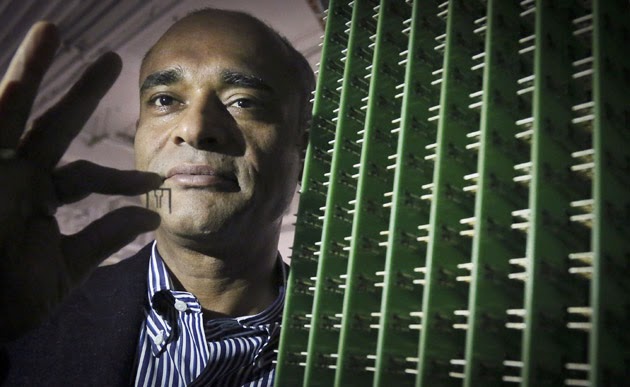
    Each customer is assigned a minuscule antenna of his own (pictured above), which captures shows from the airwaves, as well as a DVR that stores recordings for a later time. Now, though, it’s no longer allowed to beam on-air TV shows to people’s devices anymore. Even worse, Judge Nathan has refused to acknowledge it as a cable service, which means it can’t reinvent itself as one — even if it’s now willing to pay those licensing fees.

    Wondering what’s next for Aereo? Well, the jury’s still out on whether it can record and store programs to be aired at a later time. The judge didn’t grant TV networks their request to stop the company from doing so, since they didn’t include it as part of their demands when they first filed a lawsuit. She’s currently investigating whether she should grant that request, though — and whether to order a final, permanent ban against Aereo. If you want to know more about the temporary injunction, prepare to pore over 17 pages of legalese before checking out the official court documents.

    [Image credit: AP] SOURCE: Scotusblog, Bloomberg, Hollywood Reporter,Injunction (Scribd) Via Engadget.