Tag: mobile

  • How to Add Username in Telegram Messaging App

    How to Add Username in Telegram Messaging App

    Like Twitter, Facebook (and now, Telegram), the use of usernames makes it easier to find and locate users on the website. However, finding or adding users by username isn’t something very common among mobile messaging apps. WhatsApp allows you to add a username or moreorless, a nickname but people can neither find nor add you with this username – something privacy lovers will appreciate.

    Telegram on it’s own right is taking a different path. Since last year the company made it possible for you to add friends by username – without necessarily knowing their phone numbers – on their mobile app.

    The advantage of a username is that you can share your contact details for Telegram without revealing your phone number, thus safeguarding some level of privacy. A lot of users has been asking us how to add a username to the app. So, here is a step to step guide:

    Add Username on Telegram
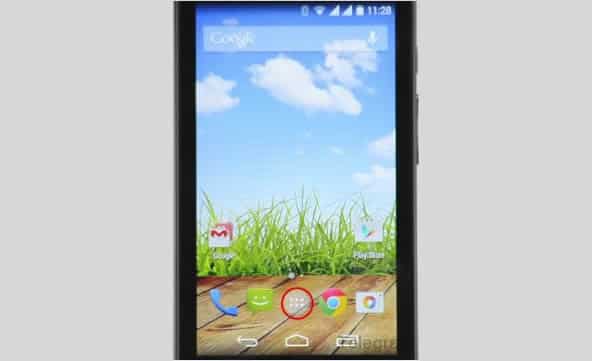
    make username on telegram 1
    Tap the menu button on your Android screen.
    make username on telegram 2
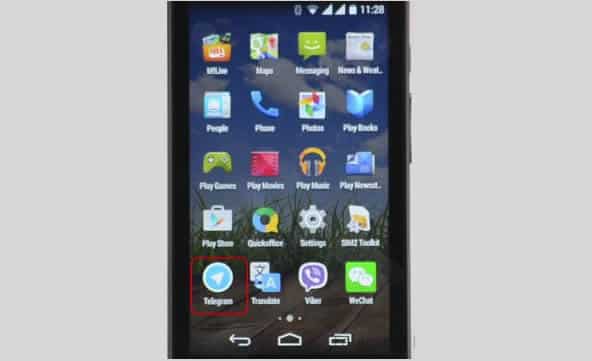
    Launch Telegram application.

    Tap the Apps button on your Android screen. Locate and launch the Telegram application.
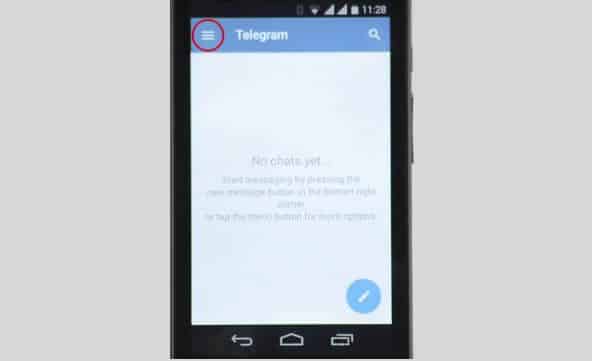
    make username on telegram 3
    Tap the menu icon on Telegram
    make username on telegram 4
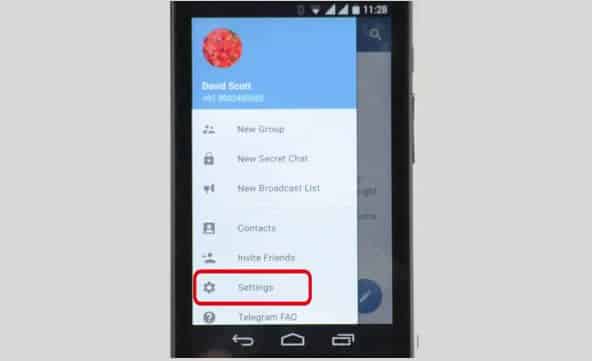
    Navigate to Settings

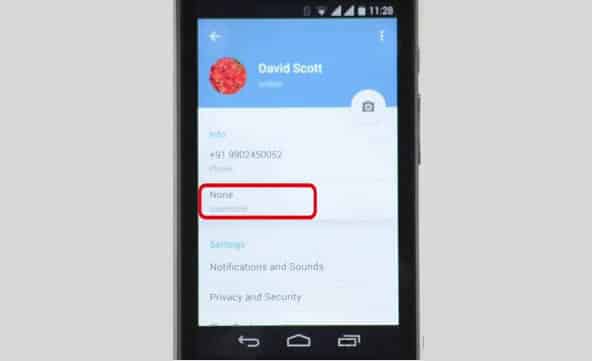
    On the Telegram app tap the menu icon (represented with three horizontal lines) and open Settings. Among other options on settings, you will find Username which is set to ‘None‘ by default.
    make username on telegram 5
    Username is set to ‘None’ by default.
    make username on telegram 6
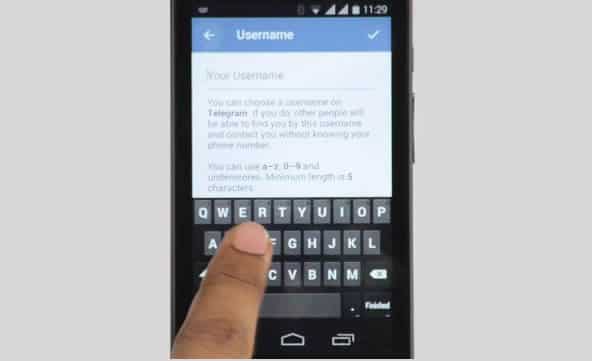
    Tap on Username.

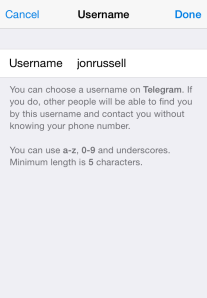
    Tapping on the Username option will open a page where you can enter or modify your username. Simply enter your desired username on the text input box.

    Usernames must be a minimum of five characters — so you can’t make up for losing out on a one-letter Twitter handle here — and can contain letters, numbers and underscores.
    make username on telegram 7
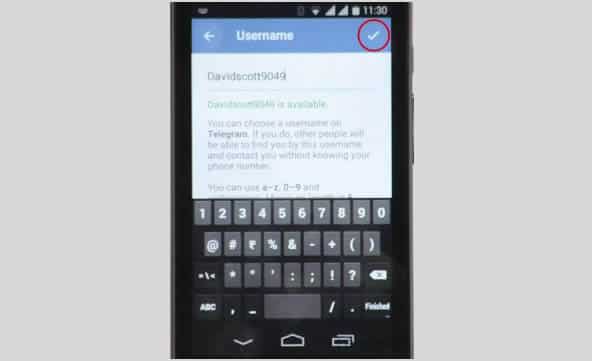
    Save your username.

    Save your new username by tapping ‘Good’ sign at the top-right side of your screen.

    You are also free to change your alias, so long as the new one is not already taken.
  • Mozilla Ends Marketing & Further Development of Firefox OS for Smartphone

    Mozilla Ends Marketing & Further Development of Firefox OS for Smartphone

    The buzz is real! Mozilla is putting an end to the development of Firefox OS for smartphone. 

    Following rumours and tweets in the social media, Techcrunch has published a post that confirms that Firefox OS will no longer be developed for smartphones. This unwillingness of Mozilla to continue their quest for mobile phone democracy which let you have an open, web-based framework that anyone could work with, instead of closed platforms and apps was triggered due to the team’s inability to deliver “best user experience possible”, the statement reads.

    “We are proud of the benefits Firefox OS added to the Web platform and will continue to experiment with the user experience across connected devices. We will build everything we do as a genuine open source project, focused on user experience first and build tools to enable the ecosystem to grow.

    Firefox OS proved the flexibility of the Web, scaling from low-end smartphones all the way up to HD TVs. However, we weren’t able to offer the best user experience possible and so we will stop offering Firefox OS smartphones through carrier channels.

    We’ll share more on our work and new experiments across connected devices soon.”

    Although the mobile OS was massively use in some part of Africa and South America, mostly because of its price, the brand was unable to maintain their stand in the smartphone market with other cheaper alternatives emerging from every corners of the world.

    However, Mozilla has maintained that they are still willing to “experiment” with the software on smart devices — they just won’t be the kind of devices that make phone calls.


  • Amazon is getting “Fired” up for another smartphone

    Amazon is getting “Fired” up for another smartphone

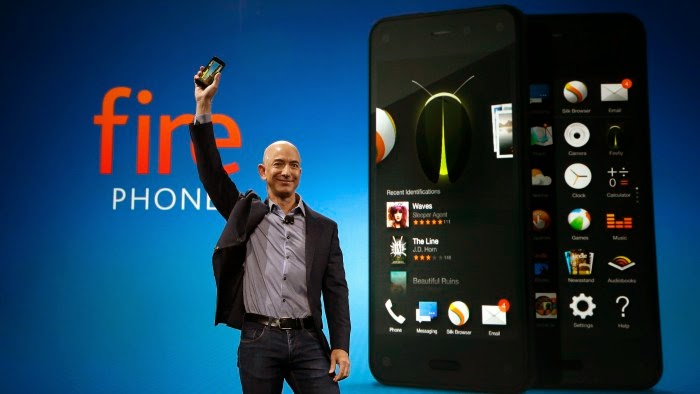
    In June of 2014, Amazon tried to launch their newest product – the Fire phone. It was essentially a modified Android phone with a “unique” 3D display and a ton of references to different Amazon shops. It turned out that “Fire” was pretty cold, being a complete failure. The phone hit Amazon with a $170 million loss in its most recent financial quarter to account for “inventory valuation and supplier commitment cost.” The major commerce company is finding it hard to even give these things away; if you wander into a Amazon warehouse, you may just find a big pile of these lonely little buggers hoping; waiting for someone to come and make them theirs.

    However, Bezos & CO aren’t giving up without a few punches here, truly living up to the phrase “if at first you don’t succeed, try again.” On Friday, Amazon released a software update for their Fire phone that adds new features and sources close to the giant company says they have plans of releasing a second Fire phone, just not anytime soon.

    Among the new features in the Friday update is text translation for the Fire Phone’s Firefly app, where you can scan text and have it converted to or from English, French, German, Italian, and Spanish.

    Firefly has also been trained to identify 2,000 famous paintings, for those of you who like to walk around art museums with your mobile in your hand.

    The update introduces a new camera feature named Best Shot, a (camera) app that takes three quick photos and lets the user choose the best ones. Amazon said this would be great for group photos or pictures of children or pets. There are also some minor UI changes, such as adjustable SMS settings and blocking phone calls by the number. Added to their “flop” phone was a office-document editing app, VPN support, and even more which you can find in the full list of changes here.

    On the topic of making another phone that customers will actually like, VentureBeat reports that several sources agree that the online megastore will take another shot at it, but it’s not in a hurry. It has “gone back to the drawing board,” one source claimed, and is currently pondering which features to put into the new device that would make it appealing, with an eye to ship it sometime in 2016.

    And we may be able to expect more phones to come from Amazon after that. The company CEO Jeff Bezos gives the Fire Phone line full support and believes it’s a young product that the company will need to “iterate” over time.

    What do you think of a new Fire phone coming out, or about the changes in the new update? Leave a comment below.

    source(s);
    TheRegister

  • BlackBerry launches their Classic smartphone with a traditional keyboard

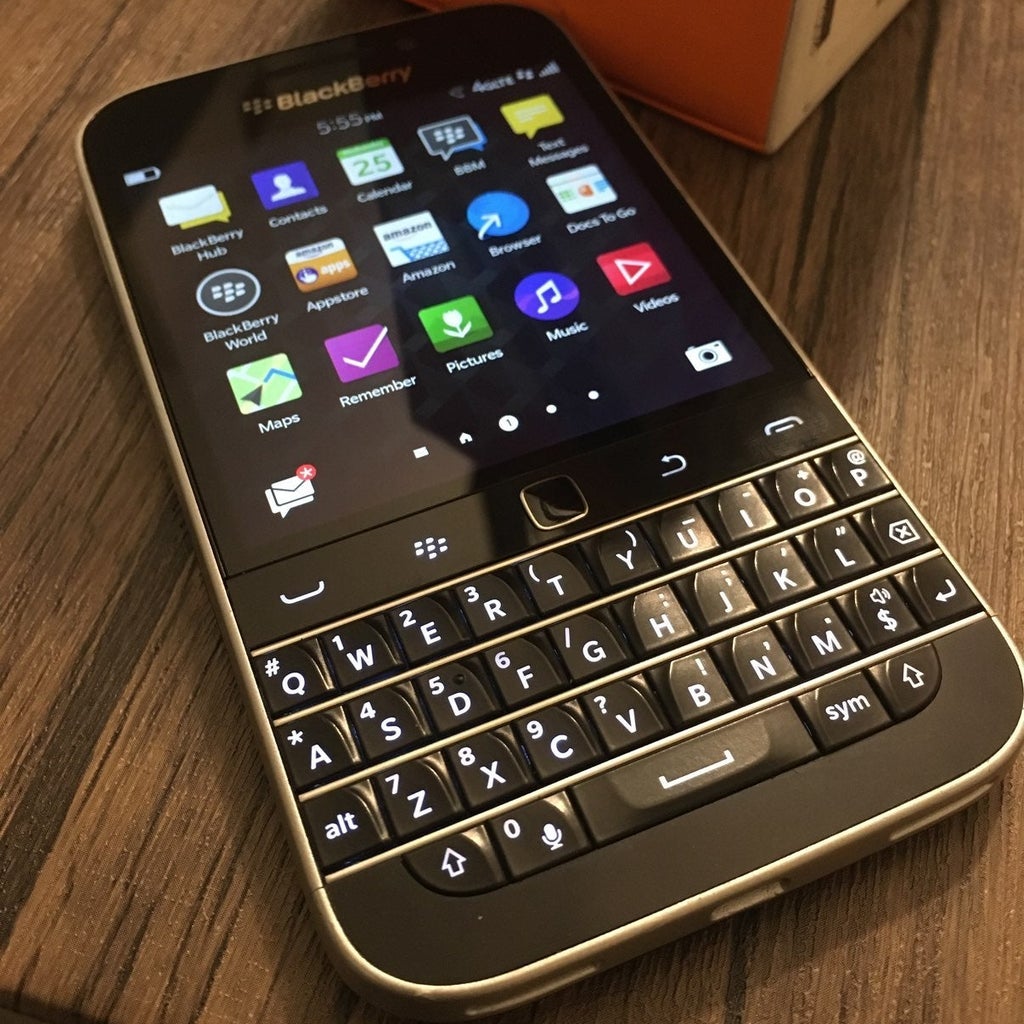
    BlackBerry launches their Classic smartphone with a traditional keyboard

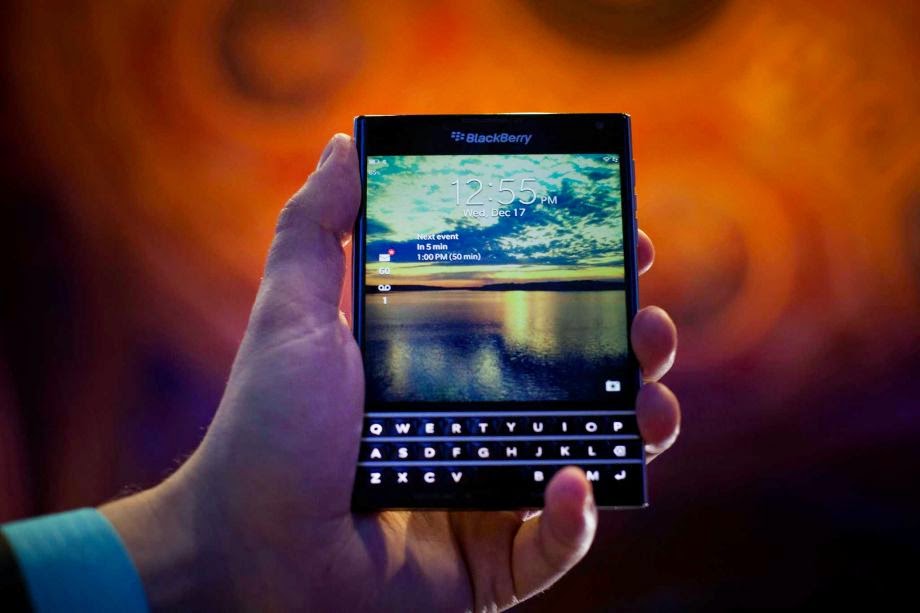
    BlackBerry is hitting the market by returning to their roots; releasing a new “Classic” smartphone with a traditional keyboard which seems like an un-logical choice in the time when rival Apple and Android devices – and most smartphone customers – have come to accept and use their screen for almost all functionality.
    BlackBerry is calling out to it’s core customer with the Classic – business folk. The physical keyboard is a traditional asset that BlackBerry users have found to be more easier and comfortable to use than to type using a touch-screen keypad. The company is also putting their emphasis on security and long battery life, however there is little released facts to prove the ladder.
     “A lot of people say the Classic is aiming for loyal customers. And that is true,” CEO John Chen said at the gadget’s launch event, tellingly held in New York City’s Financial District. But he also invited people who haven’t used a BlackBerry “especially people who are young,” to try the BlackBerry Classic.
    1999 was the year BlackBerry came up with the RIM 950, and allowed on-the-go business people to access their email wirelessly. Soon however more and more competitors came around, and BlackBerry seemed to have turned ancient. Apple showed that phones could definitely perform to a greater extent past the use of email and phone calls, and all while BlackBerry was too late to overhaul its operating system.
    A obvious sign to BlackBerry’s decline is their hold on the smartphone market – they only hold a small fraction compared to the nearly 50% that they continuously had going up until as late as 2009. The company is trying to stay relevant on making hardware even as it tries to transform into an enterprise security and consumer software company. Whether the Classic will sell enough to keep it in the hardware business is unclear.
    It’s going to be a niche product based around enterprise, based around security and pockets of the world where there is still strengths. The future of this company is not the hardware,” BGC analyst Colin Gillis said. The BlackBerry classic is on sale as of Wednesday (12/17/2014) for $449 in the U.S through Amazon.com and BlackBerry.com. The phone will soon be available at AT&T and Verizon shops and their respective websites.
    What are your thoughts on the BlackBerry Classic? What do you love/hate about it? Let us know in the comments.
    source:
  • NSA has a spying program that targets many mobile networks

    NSA has a spying program that targets many mobile networks

      The NSA has recently conducted a campaign focused on the interception of internal communications of operators and trade groups in order to infiltrate mobile networks around the world, according to recent revelations from Edward Snowden.   

    The U.S. National Security Agency ran two undisclosed operations, the Wireless Portfolio Management Office and the Target Technology Trends Center, operating under the aegis of a program called Auroragold, according to an article Saturday in The Intercept, which also published related documents.

    Operations closely monitored the GSM Association with a maintained list of 1,201 email targets or “selectors” used to intercept internal company communications and gathered information of network security flaws in the process.

    As of May 2012, NSA documents shown that the company had collected technical information on about 70% of  the  estimated 985 mobile phone networks worldwide. Besides mentioned names of operations in Libya, Iran, and China; no other names of the targeted networks were disclosed in the documents revealed by Snowden. Intercept founding editors Glenn Greenwald and Laura Poitras have been instrumental in helping Snowden leak NSA documents to the public through various media outlet

    The mentioned NSA operations collected information in “IR.21” documents used by  the GMSA members to report security weaknesses and encryption details used by mobile operators, according to the documents of Mr. Snowden. The NSA used this information to circumvent encrypted communications, according to the documents.

    “NSA collects only those communications that it is authorized by law to collect in response to valid foreign intelligence and counterintelligence requirements — regardless of the technical means used by foreign targets, or the means by which those targets attempt to hide their communications,” the NSA said in an emailed statement. “Terrorists, weapons proliferators, and other foreign targets often rely on the same means of communication as ordinary people. In order to anticipate and understand evolving threats to our citizens and our allies, NSA works to indentify and report on the communications of valid foreign targets.”

    Since June 2013, Snowden’s leaked documents have lead to a series of of reports on the extent of NSA’s spying on Internet and telecom networks worldwide. The documents have also shown that the NSA has hacked into emails of leaders of U.S. allies as well as into networks and equipment of foreign companies including China-based Huawei.

    Additional to the covert spying, the NSA has a bulk telephone record collection system highly criticized by many. Last month, NSA Director Michael Rogers said the agency is planning no major changes in its domestic telephone records collection program after a bill to curb those efforts failed in the Senate.

    sources:
    computerworld.com – computerworld.com(2)
    firstlook.com
    pcworld.com

    What are your thoughts on the NSA’s mobile spying intentions thus far? Leave a comment below.

  • Android 5.0 Lollipop Update will be available for some LG G3 phones this week

    Android 5.0 Lollipop Update will be available for some LG G3 phones this week

    Here’s some good news for owners of LG’s G3 smartphone: Your phone will be among the first to get an update to Android 5.0 Lollipop. Assuming you live in Poland, anyway.

    According to the company, it will roll out an update to Lollipop to G3 users in Poland this week, and release the update “[in] other key markets in the near future.” LG didn’t specify what it means by “near future,” however, so it could conceivably take anywhere from a few days to a few months for it to make it onto LG phones here in the US.

    The story behind the story: Fragmentation may not be the fatal flaw that some expected it to be with Android—it’s a non-issue for many people most of the time, and it’s arguably one of Android’s strengths in that it’s resulted in a wide variety of hardware and software options. But updates are one area where fragmentation still becomes an issue. Ironically, enthusiasts who bought Google Nexus devices because of the promise of speedy Android updates are watching third-party phones land Lollipop first.

    The Lollipop waiting game continues

    And so we wait. Despite the limited release of LG’s upcoming Lollipop update, though, there are some signs that we’ll start to see some updates soon. On Friday, Motorola published–then pulled —release notes for its Android Lollipop update for the second-generation Moto X. This seems to suggest that Motorola is close to having an update, but you’ll have to wait at least a little longer.

    But if you’re feeling daring—and have a compatible Nexus device, the Sony Experia Z, or the Samsung Galaxy S3—the folks at XDA Developers have cobbled together a jury-rigged build of Lollipop for you to try. It’s a potentially buggy build, though, and installing unofficial builds can be a challenge, so it isn’t for the faint of heart.

  • BlackBerry will try to tempt you back with BackBerry Classic

    BlackBerry will try to tempt you back with BackBerry Classic

    What do you like most about your old BlackBerry device? What if BlackBerry has improved those features for you?

    A top row of navigation keys! A trackpad! The BlackBerry is back, baby, with the BlackBerry Classic!

    Well, that’s how BlackBerry hopes you’ll react, anyway, with the announcement of the BlackBerry Classic on the company’s website on Tuesday. Chief executive John Chen promised the “things you remember about BlackBerry that made you better are better than ever with BlackBerry Classic”.

    “Innovation is a word that gets used too often and carelessly. Innovation is not about blowing up what works to make something new – it’s about taking what works and making it better,” Chen wrote in a blog post. “In that sense, BlackBerry Classic represents the kind of innovation BlackBerry – and you – strive toward every day.”

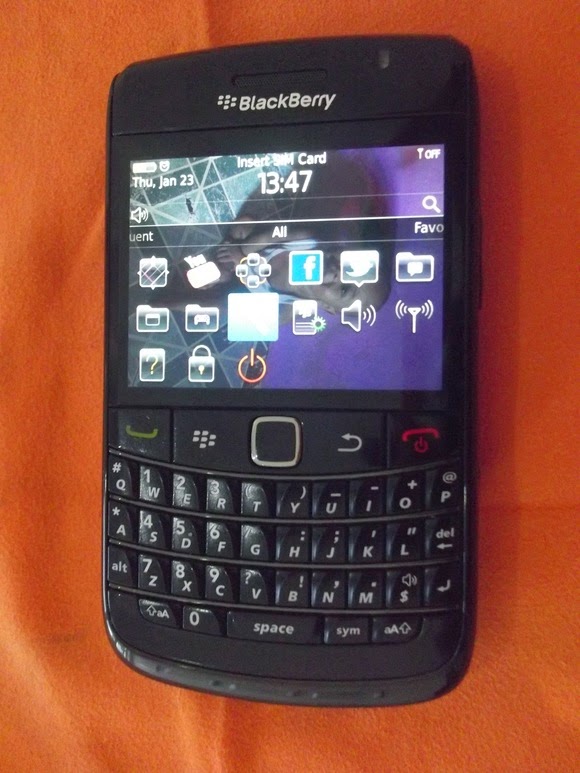
    The BlackBerry Bold 9780. [AKIDJOH]

    And while Chen didn’t reveal what those features would be, exactly, he gave some hints: the trackpad, the navigation screen, a larger, sharper screen, and “all the best productivity and collaboration features on any mobile device, including the BlackBerry Hub and our all-new BlackBerry Blend.”

    Users can sign up to hear more about the new Classic on a dedicated site, which also promises “Navigation buttons that do more than ‘go home’,” a physical keyboard “with no rival,” and a central repository for all of your messages. The site also has a partial image of the new phone.

    The Bold, of course, arguably marked the beginning of the gradual decline of the BlackBerry—not so much because of any great deficiencies of the phone, but because of the rise of the iPhone and its associated app strore. Google’s Android soon followed, and developers latched on to the new, lucrative opportunities. As of July 2014, BlackBerry had only 2.4 percent of the U.S. smartphone market, in fourth place behind Android, iOS, and Windows Phone.

    With nothing to lose, Chen and BlackBerry have rolled out a new release of the BlackBerry OS, as well as a partnership to bring many popular Android applications to the BlackBerry platform. BlackBerry recently launched the Passport, a square phone that the company is pitching at professionals.

    Could you see yourself buying a BlackBerry again? Would a touchpad be the answer to those who prefer a large phone but prefer to use it with one hand? Let us know in the comments.

    Why this matters: Having failed to attract new converts, BlackBerry is hoping to reinvigorate whatever fan base BlackBerry still has. At one time, it owned the smartphone market. So a combination of nostalgia and innovation is an obvious next step.

  • You can now Add Friends by Username in Telegram Messaging App

    You can now Add Friends by Username in Telegram Messaging App

    The Telegram Messaging App, the security-focused messaging app, now lets you add friends without necessarily knowing their phone number (see the step-by-step guide on how to add a username in Telegram). An update to the iOS and Android apps today has introduced the option to register a a username, although all users must still bind their account to a phone number.

    The advantage of a username is that you can share your contact details for Telegram without revealing your phone number, thus safeguarding some level of privacy.

    Usernames must be a minimum of five characters — so you can’t make up for losing out on a one-letter Twitter handle here — and can contain letters, numbers and underscores.

    You are also free to change your alias, so long as the new one is not already taken.
    That’s not quite all from this Telegram update. The company has also taken a leaf out of Snapchat’s book with a new feature that lets users ‘Tap and Hold to View’ photos, video and voice messages that are sent with a self-destructing timer. Prior to this update, Telegram users had to tap on media to load it.

    Importantly, Telegram has now amended said self-destructing timer for media so that it only begins once the content has been opened. That means that photos, videos, etc do not self-destruct before being read.

    Founded by the brothers behind Russian social network VK, Telegram launched in October 2013 with a promise to make mobile messaging more secure. The service gained some serious momentum after Facebook agree to buy WhatsApp, when it clocked 8 million downloads in a matter of days, primarily from users concerned with Facebook’s approach to user data.

    Earlier this year, Telegram revealed that it has 35 million monthly active users, 15 million of whom use it daily. Co-founder Pavel Durov confirmed to TechCrunch that, as of March 2014, more than 18 billion messages were received by users of the service per month.

    Those stats are far smaller than WhatsApp — which has over half a billion monthly users — and others, but they are impressive for such a new entrant in the messaging space.

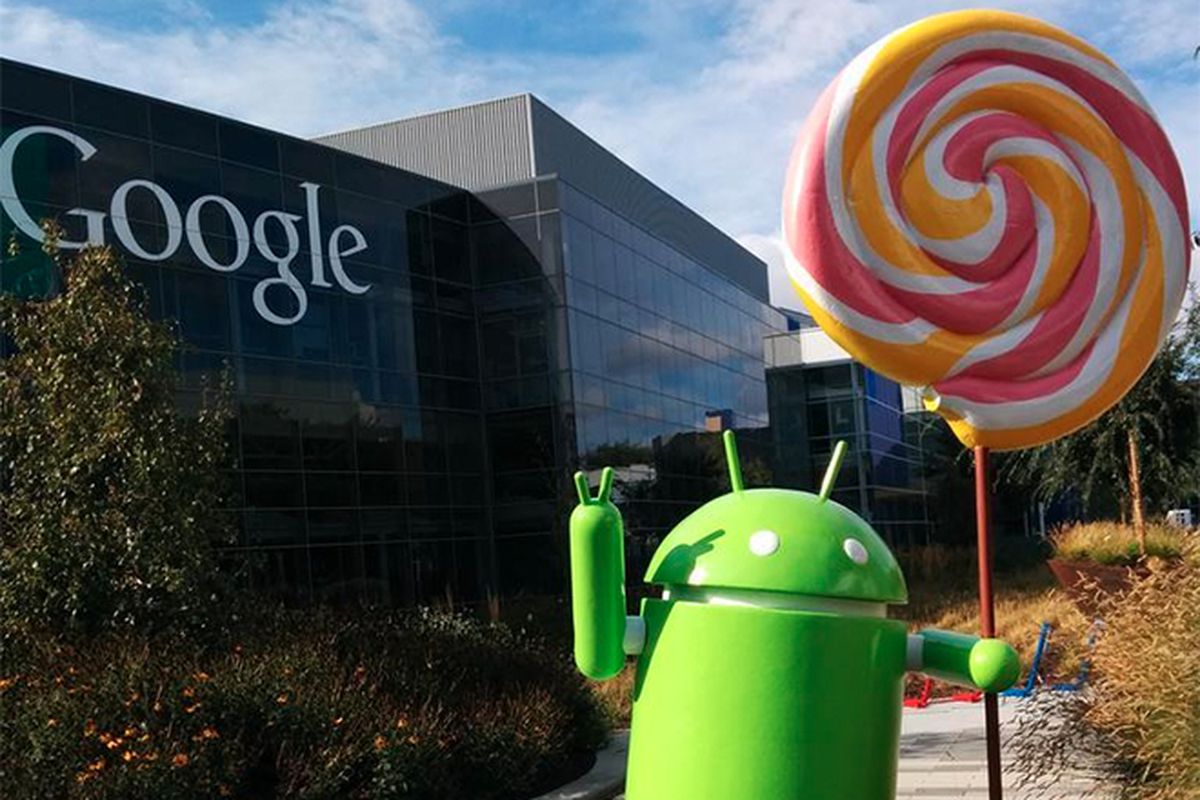
  • Android 5.0 Lollipop to hit the wild on November 3

    Android 5.0 Lollipop to hit the wild on November 3

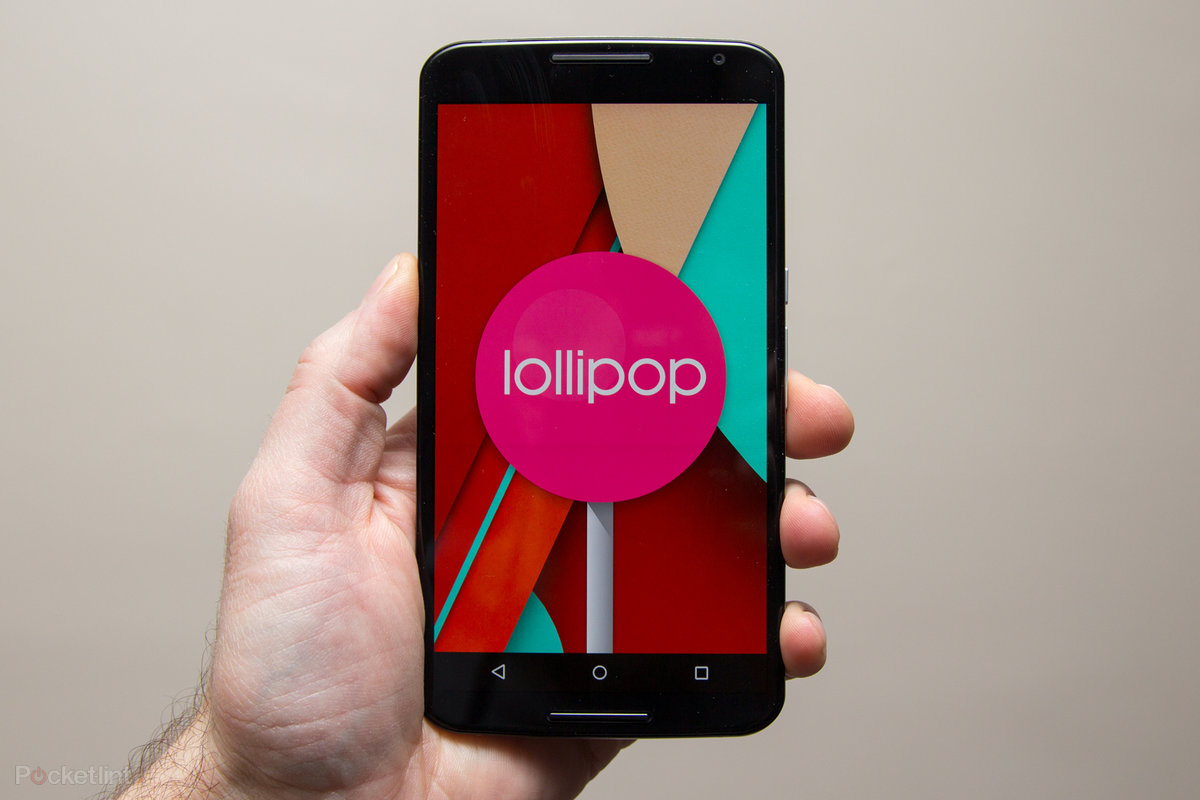
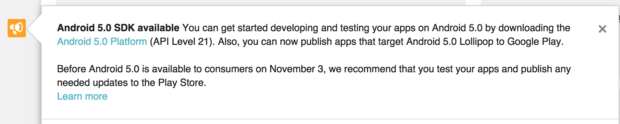
    Google is telling developers to step on it if they want their apps ready for a November 3 release of Android Lollipop.

    It’s the first specific date we’ve heard, which means the newest flavor of Android will start hitting the street in less than two weeks. The Nexus 9 preorders start shipping on that same date as well. Though as is often the case with preorders, they may show up on some people’s doorsteps early.

    Google wants developers to finish tinkering and get their apps ready to go in the Play Store.

    With Lollipop so close, Google is gently nagging programmers in the Google Play Developer Console (pictured) to grab the latest release of Android and get cracking. They can already upload apps and schedule them for release when Lollipop goes live.

    This isn’t a guarantee that your device will get Lollipop on November 3, but at least we know when the rollout will start. Expect Nexus devices to get it first, with others manufacturers planning to follow suit. Manufacturers like HTC have promised some phones (like the One M8 and M7) will get an update within 90 days of the official release—this would be the date to start the clock. Software updates often have to be tested by carriers before they’re released, too.

    Why this matters: It’s one thing to get Android 5.0 Lollipop out the door, it’s quite another to get the rest of the ecosystem ready. Lollipop is a significant rewrite of how Android looks and performs, so it will be rather funky if third-party apps look like they don’t belong.

    Google is nudging developers to update their apps so the transition to Lollipop is a smooth one, which won’t happen if all of a sudden Android owners can’t get their favorite apps to work properly.

  • Getting Started With Apple Pay? See How it Works

    Getting Started With Apple Pay? See How it Works

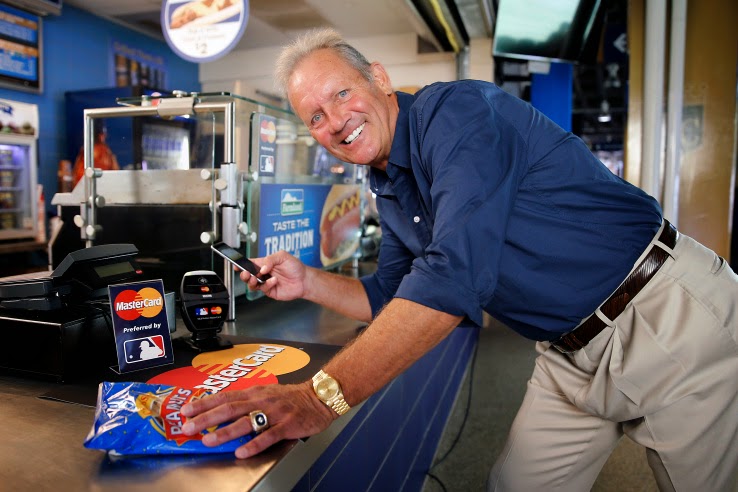
    Apple Pay is now available for anyone to use, provided they’ve got all the prerequisites, both for physical stores and for online transactions.

    But you can’t just walk up to your local brick-and-mortar store and wave your iPhone and walk out with whatever you want – that would be theft. Instead, you’ll need the following to be in place to have a happy Apple Pay experience.

    1. Hardware: iPhone 6 or 6 Plus for retail; iPad Air 2 or mini 3, or iPhone 6 or 6 Plus for in-app transactions
    2. Software: iOS 8.1 (which just because available earlier today)
    3. Touch ID set up on your device with at least one stored fingerprint
    4. A credit or debit card from one of Apple’s launch payment partners
    5. An iCloud account

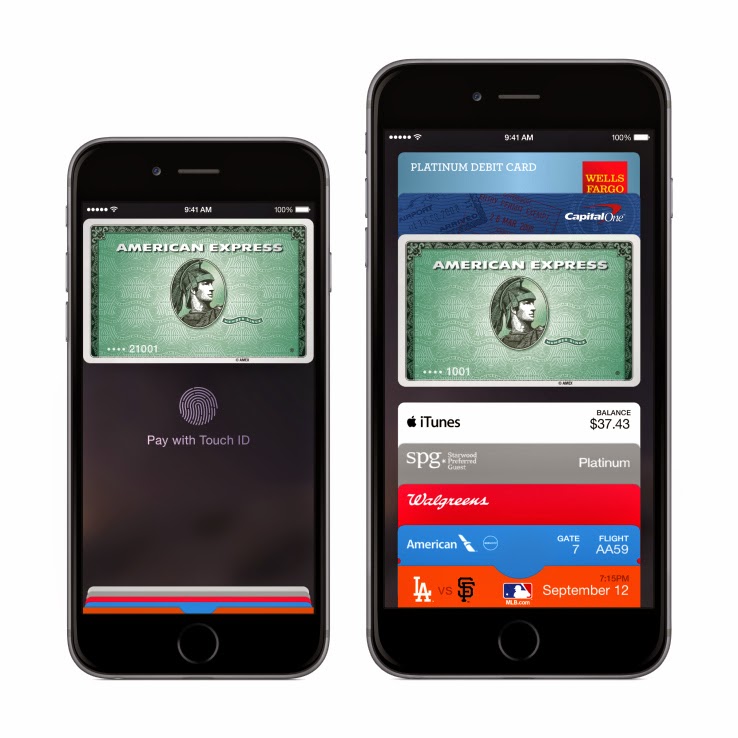
    After you’ve got all that in place, you can opt to either use the cards you’ve already got on file in iTunes to pay, or add a new one. Adding a new one is as easy as snapping a pic of your plastic, and then manually entering the security code around back. You can also manually enter all the information, if you’d rather not use the camera. If the card is compatible, it will verify and make it available for purchases. If it isn’t, call your bank and ask them to get with the program.

    If you’re using a card already on file, you’ll just need to enter the security code found on the back to authorize its use, and then agree to the Apple Pay terms of service. Once that’s complete, you’re ready to roll.

    Apple Pay in stores should be available at participating launch retailers, which include Aéropostale, American Eagle Outfitters, Babies”R”Us, BJ’s Wholesale Club, Bloomingdale’s, Champs Sports, Chevron and Texaco retail stores including ExtraMile, Disney Store, Duane Reade, Footaction, Foot Locker, House of Hoops by Foot Locker, Kids Foot Locker, Lady Foot Locker, Macy’s, McDonald’s, Nike, Office Depot, Panera Bread, Petco, RadioShack, RUN by Foot Locker, SIX:02, Sports Authority, SUBWAY, Toys”R”Us, Unleashed by Petco, Walgreens, Wegmans and Whole Foods Market.

    Online, apps are already rolling out that also support Apple Pay, so check your updates column, or stay tuned to the “Featured” page, where Apple will be surfacing many of them. You can authenticate the purchases using your fingerprint, so long as you’ve registered it with Touch ID, or using your passcode if that doesn’t work for some reason. Apple Pay is secure thanks to the system it uses to store and transmit payment information, which doesn’t actually share any credit card details over NFC with the merchant, and it works with your existing cards, including rewards programs, etc.

    We’ll have a first-hand account of how Apple Pay works in the real world shortly, but early reports from Twitter seem to indicate things are working smoothly with the newly launched

    Originally posted on TechCrunch

  • Hacked Screenshots Reveals how you can Send Money to a Friend Via Facebook Messenger

    Hacked Screenshots Reveals how you can Send Money to a Friend Via Facebook Messenger

    When Mark Zuckerberg recruited Ex-PayPal president David Marcus to head the affairs of Facebook Messenger three years ago, few understood the motive behind this move, but now it is crystal clear for everyone to see: Facebook is set to allow its users to send and receive money via its standalone Messenger.

    Mark recently hinted on the integration of a payments service into Facebook standalone messenger. Stressing that “The payments piece will be a part of what will help drive the overall success and help people share with each other and interact with businesses.”  However, he urged Wall Street not to get too foamy at the mouth because it may be awhile since “there’s so much groundwork for us to do.”

    He urged analysts and investors to revise their estimates of Facebook’s revenue if they expected this to come quickly. “To the extent that your models or anything reflect that we might be doing that, I strongly encourage you to adjust that, because we’re not going to. We’re going to take the time to do this in the way that is going to be right over multiple years” Zuckerberg concluded.

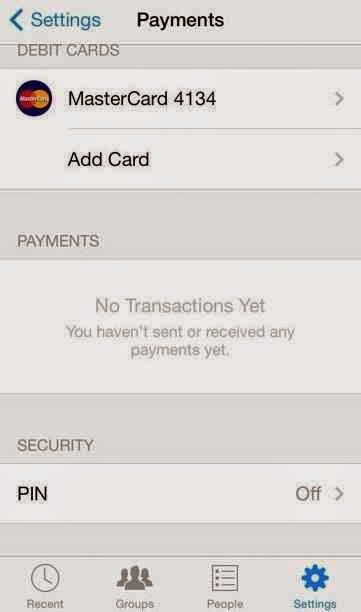
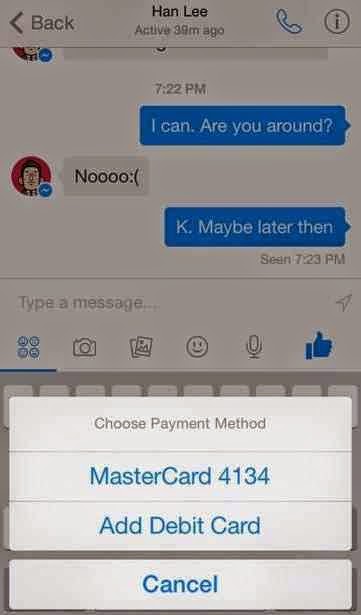
    According to screenshots and video taken using iOS app exploration developer tool Cycript by Stanford computer science student Andrew Aude, all Facebook has to do is simply turn on the feature and users will be able to send money in a message similar to how they can send a photo. Users can add a debit card in Messenger, or use one they already have on file with Facebook. An in-app pincode also exists for added security around payments.

    The presence of payments code in Messenger was first discovered by security researcherJonathan Zdziarski last month. Earlier today, Techcrunch writer Josh Constine reveals his conversation with a young computer scientist [Andrew Aude].

    Aude tells me he used Cycrypt to dig into the Messenger for iOS code on his jailbroken iPhone and turn on the payments feature to nab the screenshots and video. I contacted the company to inquire about Messenger payments. Facebook declined to comment.

    Aude played around the with feature and its code. He tells me you simply hit a button to initiate a payment, enter the amount you want to send, and send it. Facebook keeps the transaction private and doesn’t publish anything about it to the News Feed.


    EwtNet believes that Facebook has the potential to dominate both messaging and payments service globally if the Messenger Payments becomes a success.

    Images by Stanford computer science student Andrew Aude via Techrunch

  • Pick the Best Windows 8 Phone!

    Pick the Best Windows 8 Phone!

    While Apple’s iOS and the Android dominate the mobile phone’s operating systems, Microsoft’s Windows, particularly Windows 8, is growing increasingly popular not only with Nokia but Samsung and HTC have taken interest.

    Now the consumers are met with the question, “Which is the best Windows 8 phone“ in the market right now?. While we want to give you an answer, it would be best to let you decide. However, we can give you our best 5 Windows 8 phones to check for yourselves, based on the considerations of the phone’s basic functionality, look, capacity and price.

    Nokia Lumia 925/1020

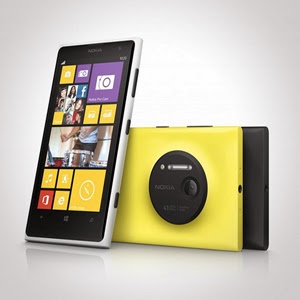
    Let us begin with Nokia. It has an array of amazing units. Nokia Lumia 925 is perfect for photography. It is equipped with Nokia’s Pureview and 6 Carl Zeiss lenses to provide 8.7megapixels with Optical Image Stabilization that allows you to capture images even on low light environments. It is somewhat lined up up there with the Iphones and Samsung Galaxy S4 with its touch-screen technology of PureMotion HD + Amoled offering you 1280×768 pixels resolution. Nokia Lumia 1020 is the video and photography professional. With its main feature of 41MP camera, your videos and photos are taken in top-class clarity and detail. It is backed by the Nokia Rich Recording that provides distortion-free and stereo sound on your videos.

    HTC 8x/8s

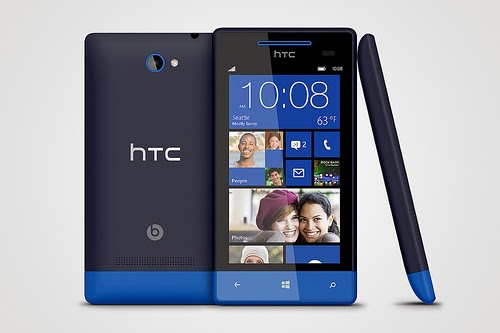
    HTC also has its wonders with Windows 8 units. It has windows phone 8X and 8S. Windows phone 8X considered as one of the best Windows 8 phone for its high end quality. It has world class camera, perfect fit design, and wide screen with 1,280×720 pixels resolution. Its dual core 1.5GHz processor is capable enough, but there is no option for expanding its memory just like most Windows 8 phones. There is also the HTC Windows phone 8S.Its boldly colored design makes it classy and attractive. It has a high performing battery. Moreover, it has a superb studio quality sound and entertainment. Great photo qualities and camera options are also featured in this one of the best Windows 8 Phone.


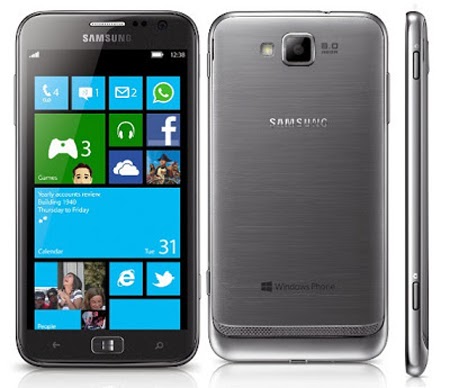
    Samsung ATIV S Neo

    Next stop is the Samsung ATIV S Neo. It is Samsung’s best Windows 8 phone, because of its affordability and good performance. It has a wide screen display of 720 x 1280 pixels, 4.77 inches for easy touch and visuals. It definitely provides a good windows 8 experience. It has long life battery of up to Up to 15 h and it has good camera features 8 MP, 3264 x 2448 pixels, autofocus that can capture sharp details. However, the phone is a little bulky and heavy. It is not much of a style but still a high end one with reasonable price.


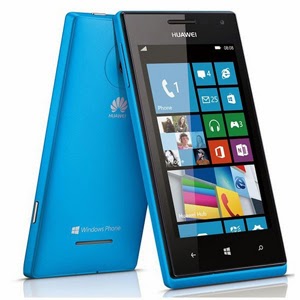
    Huawei Ascend W1

    If you are looking for a very affordable prepaid Windows 8 phone then Huawei Ascend W1 will be the best choice. It may not be a perfect device for some applications, but it has a strong battery life and expandable memory. However, this device has several drawbacks. It has a low internal storage of only 4 GB and low camera specs 5 MP, 2592*1944 pixels. Still, being affordable and practical, this might be perfect for some people who don’t want to stretch more of their budget.

    These are the top choices that we can have varying from different types of needs and lifestyle. Windows 8 had made these phones far better than usual ones. Check them out!

  • Twitter Introduce Photo Editing Tool and Trending Events to its Mobile

    Twitter Introduce Photo Editing Tool and Trending Events to its Mobile

    The future of internet and social networking is looking brighter as Twitter joins Google+ in photo editing technology.

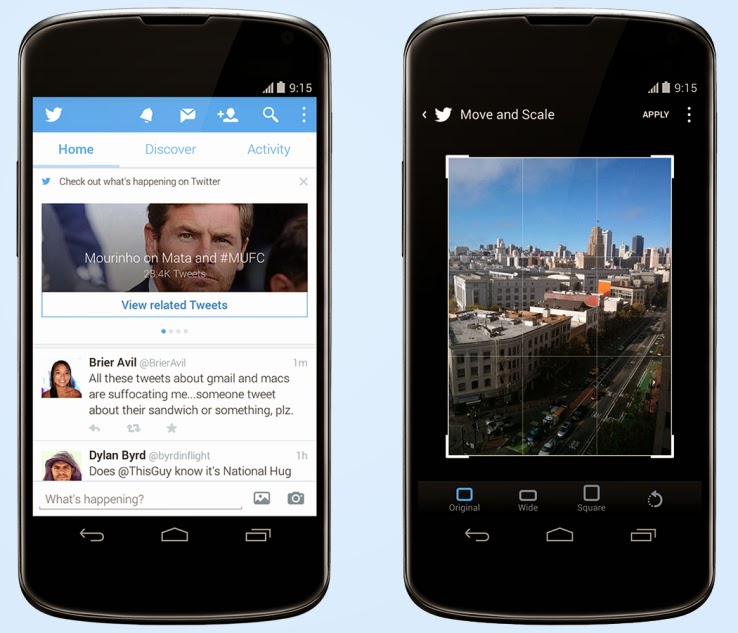
    A post on Techcrunch has reported that Twitter has just released an update to its Android client (coming soon to iOS) that brings new photo editing tools to the service, which are likely meant to make it easier to share photos direct and keep people out of competitive apps like Instagram. The second change adds a significant element of event discovery and real-time trend monitoring to user timelines.
    The event surfacing is the more interesting element, since it marks a considerable attempt by Twitter to meddle with the straightforward chronological nature of that part of its service (besides promoted content). In case a user doesn’t have any new tweets to load when you manually update it, it now brings up recommended posts from people you don’t follow, as well as trending topics and suggestions about new people to follow. In the U.S. only, it surfaces event updates for things unfolding on TV, in sports and on the news.

    Each content update features a link to click through for more tweets centered on that conversation. It’s an extension of some of the other work Twitter has been doing around surfacing events and breaking news, including the Eventparrot experiment and a feature that was tested back in August to highlight nearby events via proximity-based alerts.

    A couple of things to flag about this change: It only happens when there’s no other new content for a user to view, and when they express a desire for more content, which is very clever; and it represents a way for Twitter to secure its place as the source of live, real-time information about things unfolding on the ground, a reputation that Facebook clearly covets.

    Others are already capitalizing on Twitter’s ability to identify and follow events as they unfold, including Banjo, but Twitter adding this as a native feature in its mobile clients could change the nature of the service at a basic level. Should it roll out globally, and expand its scope, mobile users could be using Twitter a lot more for things like local discovery than they had been previously.

  • Phantom A3 (AIII) series: Review and Spec

    Phantom A3 (AIII) series: Review and Spec

    Yesterday Paul Thurrott enumerated a number of tweaks that will appear in the upcoming Windows 8.1 update. Screenshots from WZor confirm a few of Paul’s earlier notes on upcoming changes to Windows 8.x that are worth discussing.

    The gist is that Microsoft wants to unify the desktop and Metro environments, especially in the context of apps. The better the apps work between the two, the more people might use applications from the Windows Store. This is tacit admission that people love the desktop environment that they have used for decades, and have been slow to switch over to the Metro environment.
    So, if people love the desktop and you want them to use more Metro apps, you bring the Metro apps to their desktops. Paul previously reported that you would be able to run Metro apps on the desktop, but WZor screenshots show it in action. Surprise? No.

    There is more: “I can confirm one new feature: Metro apps will now include a close box, similar to that seen on desktop applications, which can be clicked with a mouse so that the app closes completely.” Thank god. Getting rid of Metro apps when you are done with them has been a constant Windows 8.x headache.

    The divide between the “new” in Windows 8.x (the Metro side of the fence) and the “old” (the Windows 7 bits of Windows 8.x) is being blurred. That’s probably good, given that the old is popular and Microsoft wants the new to become more so.

    We’ll see more before Build, given the current pace of leaks. It seems that Microsoft wants to patch the weaker parts of Windows 8.x while keeping its main thrust in place. You can’t have mobile Windows without the Metro interface, and you need an app store as well. But you can heal the cracks on traditional PCs, I suppose.

    This post first appeared on Techcrunch | Top Image Credit: Flickr

  • Freak Your Friends Out With Android Face Changer

    Freak Your Friends Out With Android Face Changer

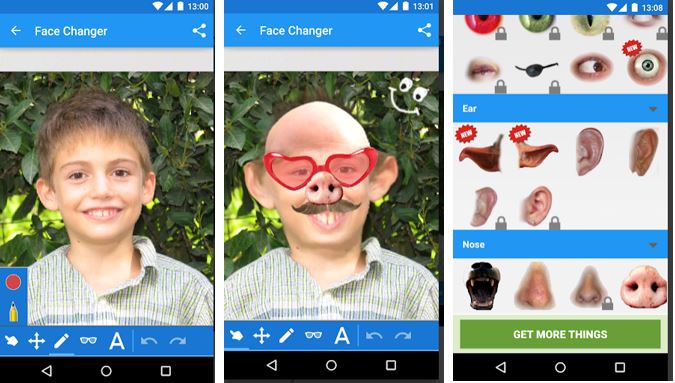
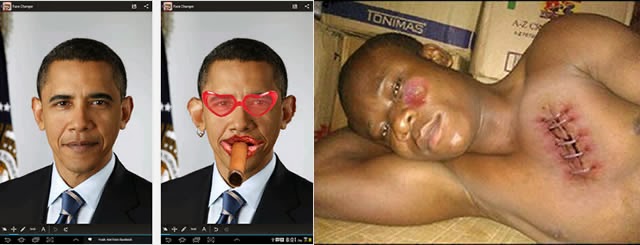
    Recently, a friend tagged me in picture where he was brutally injured. “What happened?” was my first question as I wondered what might have inflicted such injury and bruises on him. The answer didn’t wait for too long: He honestly told me it was a costume he made with Face Changer on his Android device.

    It doesn’t matter whether you forgot to apply the necessary make-ups before taking a photo, this app will help you apply make-ups or add items you never had to your photos.

    Publisher Description

    CNET: If you are searching for a great time killer and funny photo app, this one is for you. This app promises many laughs as you twist and edit your friends’ faces.   Face changer lets you easily change faces in photos. Use it to change your face, friends or change face in any image you find on the internet. It’s easy to create funny pictures and caricatures, and easy to share them.

    File Info

    – Release Date: October 24, 2013
    – Size: 6 MB
    – Version: 5.8
    – App Requirement: Android 2.2 and up
    – Age Rating: 13+

    For information on how to use Android Face Changer on PC or Mac click here, otherwise, click on the download button below to initiate your download.DOWNLOAD ANDROID FACE CHANGER