Tag: nsa

  • The US Government finally put an End to Phone Records Collection Program

    The US Government finally put an End to Phone Records Collection Program

    Yesterday marked the end of NSA’s program to collect bulk phone records in the United States. Advocates all over the world questioned the The US government fairness about surveillance technology and started pushing for privacy since former NSA contractor Edward Snowden exposed the program to journalists 2 years ago.

    The masses gained the government attention earlier this year with Congress passing the USA Freedom Act. But in light of the terror attacks that rocked Paris earlier this month, many hawkish lawmakers have attempted to hold off on shutting it down.

    Reports reaching us says that the Office of the Director of National Intelligence announced on Sunday that the program shut down as scheduled.

    As the program finally came to its ultimate doom, privacy advocates took a victory lap on Monday. Here are those hot takes.

    Senator Ron Wyden of Oregon wrote:

    “This program’s very existence was concealed from the American public for over a decade.  Across two administrations, senior officials from US intelligence agencies and the Justice Department repeatedly made false and misleading statements that concealed the truth about what they were doing.  These officials relied on a secret body of law to justify the mass surveillance of the American people. Fortunately, in America sooner or later the truth always comes out.  When Americans found out about this secret, unconstitutional surveillance two years ago, they were rightfully outraged.  And they made their voices heard.  The result was historic reform legislation that required the government to shut this program down.”

    Senator Mike Lee said:

    “Today both the safety and Constitutional rights of American citizens are more secure thanks to the USA Freedom Act. Not only did the USA Freedom Act strengthen the Fourth Amendment rights of all Americans by ending the bulk collection of personal data, but it also better ensured national security by closing a loophole that prevented the government from tracking foreign terrorists once they entered the United States.”

    Members of the House of Representatives also reiterated their support of the law. Bob Goodlatte, John Conyers, Jim Sensenbrenner and Jerrold Nadler issued the following statement:

    “The implementation of the USA Freedom Act represents government at its best: it is the product of a robust public debate and intense bipartisan negotiations dedicated to finding a way to protect our Constitutional rights while enhancing the safety of our country. The bipartisan law ends the bulk collection of telephone metadata once and for all, enhances civil liberties protections, increases transparency for both American businesses and the government, and provides national security officials targeted tools to keep America safe.”

    The implementation of the Freedom Act highlights that in a government marked by gridlock, there have been many major policy decisions that impact the tech industry from Washington this year. After little happened for the industry last year, 2015 brought significant reforms to the government surveillance and made net neutrality the law of the land.

  • NSA has a spying program that targets many mobile networks

    NSA has a spying program that targets many mobile networks

      The NSA has recently conducted a campaign focused on the interception of internal communications of operators and trade groups in order to infiltrate mobile networks around the world, according to recent revelations from Edward Snowden.   

    The U.S. National Security Agency ran two undisclosed operations, the Wireless Portfolio Management Office and the Target Technology Trends Center, operating under the aegis of a program called Auroragold, according to an article Saturday in The Intercept, which also published related documents.

    Operations closely monitored the GSM Association with a maintained list of 1,201 email targets or “selectors” used to intercept internal company communications and gathered information of network security flaws in the process.

    As of May 2012, NSA documents shown that the company had collected technical information on about 70% of  the  estimated 985 mobile phone networks worldwide. Besides mentioned names of operations in Libya, Iran, and China; no other names of the targeted networks were disclosed in the documents revealed by Snowden. Intercept founding editors Glenn Greenwald and Laura Poitras have been instrumental in helping Snowden leak NSA documents to the public through various media outlet

    The mentioned NSA operations collected information in “IR.21” documents used by  the GMSA members to report security weaknesses and encryption details used by mobile operators, according to the documents of Mr. Snowden. The NSA used this information to circumvent encrypted communications, according to the documents.

    “NSA collects only those communications that it is authorized by law to collect in response to valid foreign intelligence and counterintelligence requirements — regardless of the technical means used by foreign targets, or the means by which those targets attempt to hide their communications,” the NSA said in an emailed statement. “Terrorists, weapons proliferators, and other foreign targets often rely on the same means of communication as ordinary people. In order to anticipate and understand evolving threats to our citizens and our allies, NSA works to indentify and report on the communications of valid foreign targets.”

    Since June 2013, Snowden’s leaked documents have lead to a series of of reports on the extent of NSA’s spying on Internet and telecom networks worldwide. The documents have also shown that the NSA has hacked into emails of leaders of U.S. allies as well as into networks and equipment of foreign companies including China-based Huawei.

    Additional to the covert spying, the NSA has a bulk telephone record collection system highly criticized by many. Last month, NSA Director Michael Rogers said the agency is planning no major changes in its domestic telephone records collection program after a bill to curb those efforts failed in the Senate.

    sources:
    computerworld.com – computerworld.com(2)
    firstlook.com
    pcworld.com

    What are your thoughts on the NSA’s mobile spying intentions thus far? Leave a comment below.

  • German federal prosecutor considers formal NSA investigation

    German federal prosecutor considers formal NSA investigation

    Germany’s federal prosecutor is considering if there is enough evidence to warrant a formal, criminal investigation into the German government’s alleged involvement in the U.S. National Security Agency (NSA) data collection program, a spokeswoman said Monday.

    Privacy and human rights campaigners including the Chaos Computer Club (CCC), the International League for Human Rights (ILMR) and Digitalcourage on Monday filed a criminal complaint against the German federal government and the presidents of the German secret services for their alleged involvement in illegal and prohibited covert intelligence activities, they said in a news release.

    The complaint also targeted German Chancellor Angela Merkel, the German Minister of the Interior as well as U.S., British and German secret agents who are all accused of violating the right to privacy and obstruction of justice by cooperating with the NSA and its British counterpart GCHQ to electronically spy on German citizens, they said.

    According to the groups, these activities are felonies and violate German criminal law. “With this criminal complaint, we hope to finally initiate investigations by the Federal Prosecutor General against the German government,” they said.

    However, for the moment it remains unclear if the group’s effort is going to have the intended effect.

    The Federal Prosecutor General of the Federal Court of Justice, located in Karlsruhe, did not yet receive the group’s criminal complaint, a spokeswoman for the federal prosecutor said. But when they do, it wouldn’t be the first, she said, declining to reveal how many complaints related to the NSA affair the federal prosecution had received.

    The agency has taken very seriously the media reports about alleged mass monitoring of phone calls and emails from millions of German citizens as well as reports on the alleged spying of the chancellor’s mobile phone, she said.

    Therefore, the attorney general has asked the relevant federal authorities to share their knowledge about the operations to achieve a secure factual basis for examining the initial suspicion, she said. But because not all the necessary comments are available it is too early to make a final decision about a formal criminal investigation, she said.

    The groups called it “unacceptable that the public offices have not helped in the investigation of these crimes even if the spying is widely visible.” They also asked to hear Snowden as a technical expert and witness, and called on German citizens to file similar criminal complaints with the federal prosecution.

    The criminal complaint follows similar complaints filed in France and Belgium, the campaigners said. In August, the French public prosecutor started a preliminary inquiry into allegations that the NSA spied on French citizens with its Prism program.

  • NSA New Software will have Backdoor Access to iPhones

    NSA New Software will have Backdoor Access to iPhones

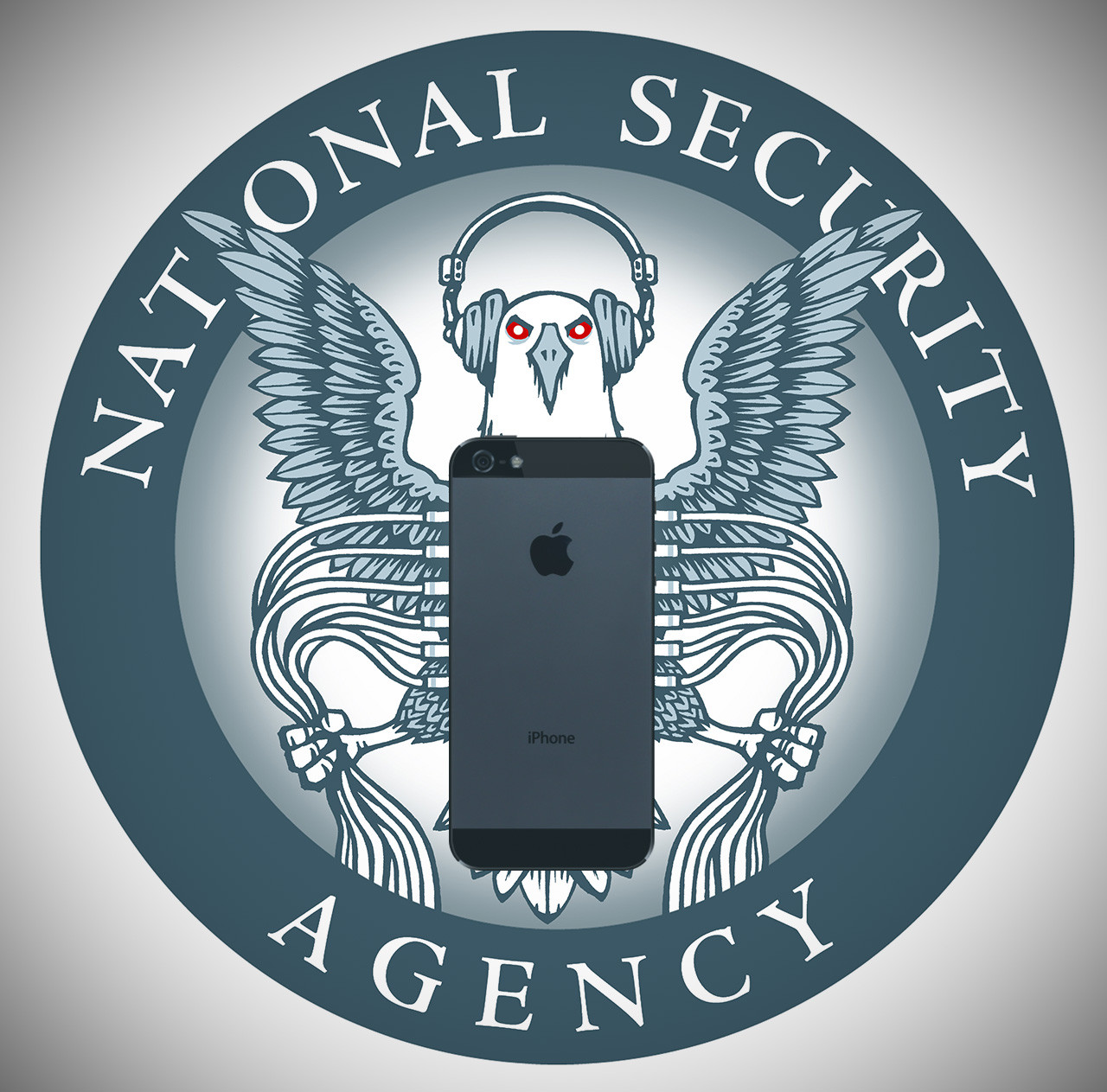
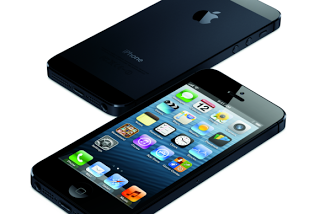
    The U.S. National Security Agency was developing in 2008 a software implant for Apple iPhones that allowed the agency to take almost total control of the device, including retrieving text messages and voicemail and remotely turning on its microphone and camera, according to a report by the German magazine Der Spiegel.

    The implant, code-named DROPOUTJEEP, was “in development” and initially intended for “close access” installation on a phone, with remote installation being planned for a future release, according to an alleged NSA document with the date October 1, 2008, that Der Spiegel included in a graphic with its recent NSA report.

    DROPOUTJEEP’s other capabilities included remotely pushing and pulling files from an iPhone, retrieving the phone’s contact list and identifying the device’s location and the location of the nearest cell tower, the document said. The implant could do all this without the phone user’s knowledge, over SMS (Short Message Service) or a GPRS (General Packet Radio Service) data connection. All the software implant’s communications would be “covert and encrypted,” the document said.

    GPRS was a pre-3G mobile data technology with speeds much lower than today’s LTE networks. The first-generation iPhone was introduced in 2007, and the iPhone 3G came out in mid-2008.

    Apple could not immediately be reached for comment on the report. In a statement reported by the Wall Street Journal, the company said it was unaware of the project and had never worked with the NSA and had never worked with the agency to create a backdoor to any of its products.

    The alleged NSA document describing DROPOUTJEEP was included in an interactive graphic published alongside a December 30 Der Spiegel report on a special hacking unit of the agency, which reportedly intercepts deliveries of computer equipment and installs spyware on it before it’s delivered to the recipients. The report cited internal NSA documents that Der Spiegel said it had viewed. The graphic included links to numerous documents about technologies that the hacking unit developed for infiltrating servers, firewalls, routers, wireless LANs, PCs, peripherals and cellphone networks.