Tag: paypal

  • PayPal will Fully Accept Nigeria only when their US Allies has Ignored them

    PayPal will Fully Accept Nigeria only when their US Allies has Ignored them

    After waiting for a little over a decade, PayPal arrived Nigeria in 2014 – arrived Nigeria with a half-baked service. A service that does little than market foreign products to Nigerians and prevent Nigerians from marketing theirs.

    From the first day they stepped into the Nigerian Market, the intent was quite clear. To make maximum profit from the Africa’s second largest economy and deliver nothing in return. Yes, I said that, the service PayPal provides to Nigerians is completely one dimensional and only profit foreign companies and businesses abroad.

    PayPal would fully accept Nigerians only when their US allies has found a more reliable means to do business. Nigeria has always been the dumping ground of failed US investments. It will come of no surprise if PayPal turn to Nigerians – desperate to do business with them – only after their popularity among US companies has declined. See why we think so.

    Do Nigerians Really Need PayPal?

    In case you are new to the current system, Nigerians can only pay money with their PayPal account but cannot receive money with their accounts. Some Nigerians has led various campaigns, asking that they should be able to receive money through their accounts like in many other countries where PayPal exist. But this campaign don’t usually make it past as many social media platforms.

    Nigerians need PayPal both on the individual scale and the corporate scale. There are so many companies looking to integrate a reliable, convenient and globally accepted payment gateway to their online store. PayPal is one of the few payment gateways meeting such criteria. Some individuals, especially freelancers has found themselves in a position where having a PayPal account is the only thing standing between them and a life-transforming job.

    Just recently, one Kofi Rukky called out PayPal on change.org. She asked that they should allow Nigerians receive money through their PayPal accounts. The petition like every other campaign, fell on deaf ears even after gaining the attention of over 1200 Nigerians.

    Like so many other Nigerians, we have often pondered on the reason why PayPal isn’t fully functional in Nigeria. Reasons why Nigerians cannot receive money through their accounts? In our twitter handle, Geek NG and 3rd Planet Techies responded to our question on why PayPal doesn’t send money to Nigerians. They suggested that “Nigeria is still considered a high risk country, the possibility of getting a full PayPal service is pretty slim”.

    Is Nigeria Really that Bad?

    Nigeria as a country has long being associated with fraud. How can we ever forget the “Nigerian Prince”? The advance fee fraud has also earned popularity across the globe.

    How far away is the 1960s from today?

    Does time really change yesterday? PayPal doesn’t think so.

    Miss Kofi Rukky is just one example of a Nigerian who is relying on the internet to earn legitimate income for themselves. As at March 31, 2017 there are 93,591,174 people accessing the internet from Nigeria. 8th position in the world’s overall ranking of internet users. According to Internet World Stats, this population amounts to 2.5% of the overall internet internet users in the world (3,731,973,423). It is likely to grow at the rate 46,695.6% in the coming year.

    This population of internet users are composed of Bloggers, Programmers, Internet Marketer, Developers, Designers and various other professionals. Professionals who has come to the ‘free web space’ seeking a legitimate way to earn income. It is also important to note that this population has its fair share of cyber criminals and 419 internet frauds.

    But is it fair to punish an entire population seeking to make clean income because of a crime committed by a few individuals? I’m sure Byron Howard and Rich Moore of Zootopia will disagree.

    Sift Science Disagrees Too

    Out of curiosity, I was forced to conduct a research on economic cyber-crime. And it was alarming to know that even the USA has more e-commerce fraud than Nigeria. Really, Nigeria is not even in the top 10. Sift Science has developed a comprehensive analysis on e-commerce fraud activity from practically everywhere in the world. Nigeria, contrary to the general assumption, lies 7 places away from the top 10 countries involved in e-commerce fraud.

    The research showed that people in the smaller countries (in terms of population) like Latvia, Egypt, Mexico, Ukraine, etc are found to participate more in e-commerce fraud than Nigerians. Even bigger economic countries like Russia and the USA has earned its place in e-commerce crime above Nigeria.

    Most US Companies are Losing Trust in PayPal

    Knowledge has increased. US companies are becoming more aware of the loopholes associated with PayPal. Really, if their system is as secure as they claim, why the need to alienate a certain individuals? That is a debate for another day.

    Minimizing cost and maximizing profit is the basic objective of every business. Over the years, PayPal hasn’t helped most businesses in the US towards achieving this basic business objective. Customers who do not have a PayPal account and wishes to buy products has to go through the rigorous process of creating a PayPal account. This in return makes companies/businesses lose potential revenues and clients.

    It has also being argued that PayPal puts customers at a risk of identity theft as they demands too much personal information, makes misleading claims, tricks people into signing up and creating an account they don’t want and extorts more personal data from those who signed up. With too much privacy questions raised recently, it wouldn’t be surprising to see people considering a life after PayPal. And with Bitcoin gaining more international recognition, it is only a matter of time before more serious businesses start jumping ship.

    Why PayPal needs Nigeria?

    Nigeria’s economy is the second largest in Africa ( after South Africa) and her banking system is one of the best in Africa. Nigeria is the most populous nation in Africa and the 7th most populous in the world. PayPal would get to realize that there are lot of business people in the country. People who are willing to use their accounts for legitimate businesses in Nigeria.

    Also, operating in Nigeria opens a unique opportunity for them in Africa. As the arguable giant of Africa, the success of most businesses in Africa depends on how successful it is in Nigeria. Several companies has denied services to Nigeria on the basis that there is no payment gateway for Nigerians.

    PayPal full arrival to Nigeria will mean more companies extending their services to Nigeria. More revenues generated for both parties and more happy Nigerians. Everybody wins! But PayPal won’t see this until their US allies turn their back on them.
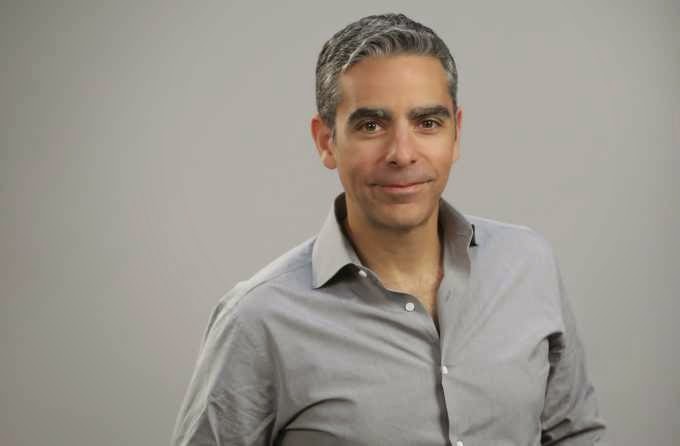
  • Facebook Calls on Ex-PayPal’s President David Marcus to Run it’s Messenger

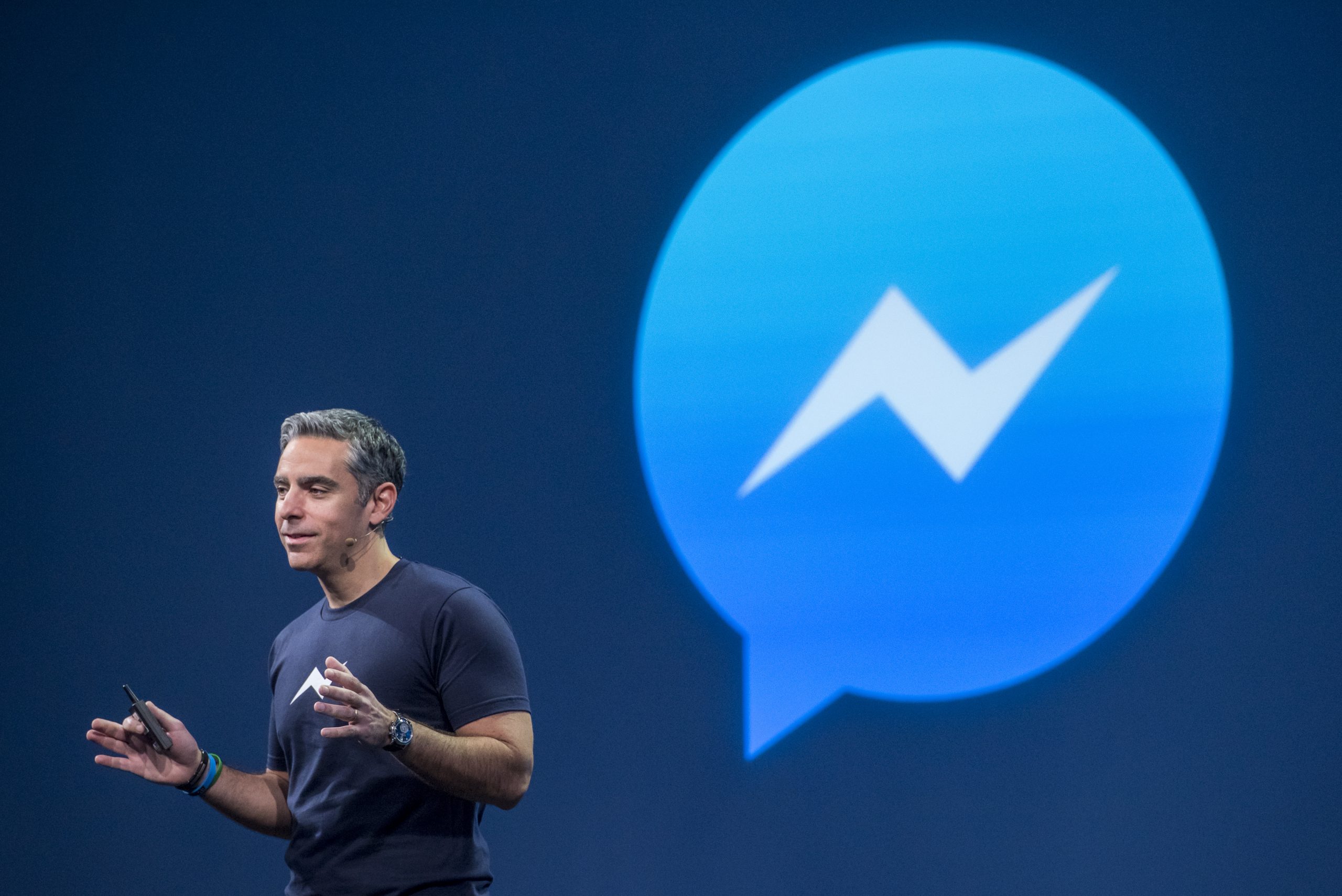
    Facebook Calls on Ex-PayPal’s President David Marcus to Run it’s Messenger

    Facebook doesn’t show ads in Messenger or WhatsApp. Instead, payments could be the key to earning money on chat, especially in the developing world where ad rates are low. If that’s the strategy, Facebook just got the perfect executive to lead the charge. It’s poached PayPal’s president David Marcus to run its Messenger unit.

    Facebook hinted that Marcus would be looking outside of ads for how Messenger could bring in revenue, writing in its announcement of the hire that “David is a widely respected leader in the technology industry with a track record of building great products and finding creative ways to turn them into great businesses.” For now, eBay CEO John Donahoe will be the interim PayPal president.

    Marcus joined PayPal three years ago when it acquired his mobile payments company Zong for $240 million in cash. Zong let users buy things online through carrier-billed mobile payments.

    In a Facebook post announcing his move, Marcus wrote: “While I was in the middle of my thought process about what was next for me, Mark Zuckerberg and I got together. Mark shared a compelling vision about Mobile Messaging. At first, I didn’t know whether another big company gig was a good thing for me, but Mark’s enthusiasm, and the unparalleled reach and consumer engagement of the Facebook platform ultimately won me over. So… yes. I’m excited to go to Facebook to lead Messaging Products.”

    Facebook has previously said that it wants its standalone apps to hit at least 100 million users before it starts monetizing them. Messenger now has 200 million users and recent acquisition WhatsApp has 500 million, so they’re both definitely eligible. Both have been focusing on growth and boxing out the competition in the heated messaging space. But since monetization plans can take a while to get mapped out and then revved up, it’s smart for Facebook to start thinking about this now.

    Facebook has already made some forays into the payments space. The Financial Times reported in April that Facebook had applied for an e-money license in Ireland that let it handle peer-to-peer money transfers in Europe.

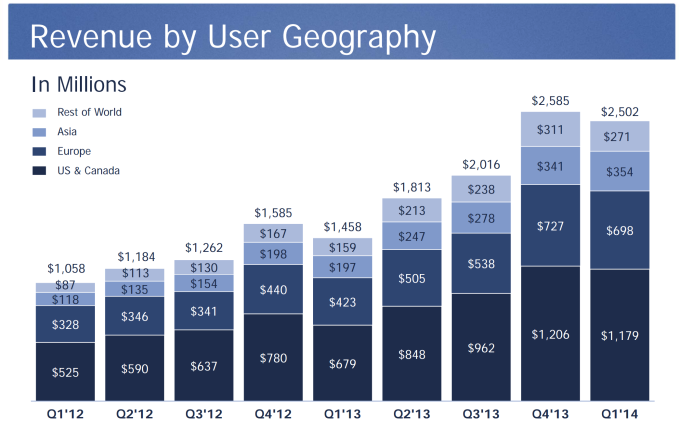
    Using Marcus’ expertise could one day help Facebook earn significant revenue from developing nations and the parts of the world it’s trying to connect to the web through Internet.org. In these markets, buying power is smaller in absolute terms because of lower currency values, cost of living, and more modest incomes of citizens. This makes it tough to earn serious revenue from ads. Facebook makes just 11 percent of its revenue from all countries outside of the U.S., Canada, Europe, and Asia combined.

    But one thing people do spend money on in the developing world is fees for payments and remittance. Mobile payments for digital and physical goods are starting to become popular in developing nations. Meanwhile, many migrants send money they earn back to family members in their home countries, but are forced to endure extortionate fees. Facebook could use the ubiquity of its mobile apps, including Messenger and WhatsApp, to disrupt the current players in mobile payments and remittance, earning those fees for itself.

    Facebook and WhatsApp already know people’s social graphs so they can chat. Layering payments on top could be relatively simple. It could look a little like a combination of Messenger and Venmo, a slick peer-to-peer payments app that PayPal acquired along with its buy of parent company Braintree. The same way you select to send a photo with a message now, you could eventually add a money transfer.

    In the developed world, this might help friends settle up for group dinners or shared taxi rides. But in developing countries, remittance through Facebook could become popular if it costs less and were easier than existing solutions. I’d imagine Zuckerberg’s vision for mobile messaging that he shared with Marcus goes something like “Messaging connects people directly and privately. Along with text and media, another big thing people send one another this way is money. By expanding Messenger to encompass payments, Facebook can bring families, friends, and colleagues closer by eliminating the barriers to sending and receiving cash.”

  • How to Create a U.S and Other Foreign Bank Accounts and Get a Debit Card any

    How to Create a U.S and Other Foreign Bank Accounts and Get a Debit Card any

    If you are residing within Australia, Nigeria, India, Russia or anywhere else around the world, wanting to own a U.S bank account or localized accounts in EURO, CHY, GBP and JPY. The Payoneer service is a secure and convenient service that allows you to send and receive funds globally.

    This is nothing like PayPal or the likes. These are fully functional bank accounts in your name. You can withdraw your funds from an ATM or make payments online with your Payoneer debit card.

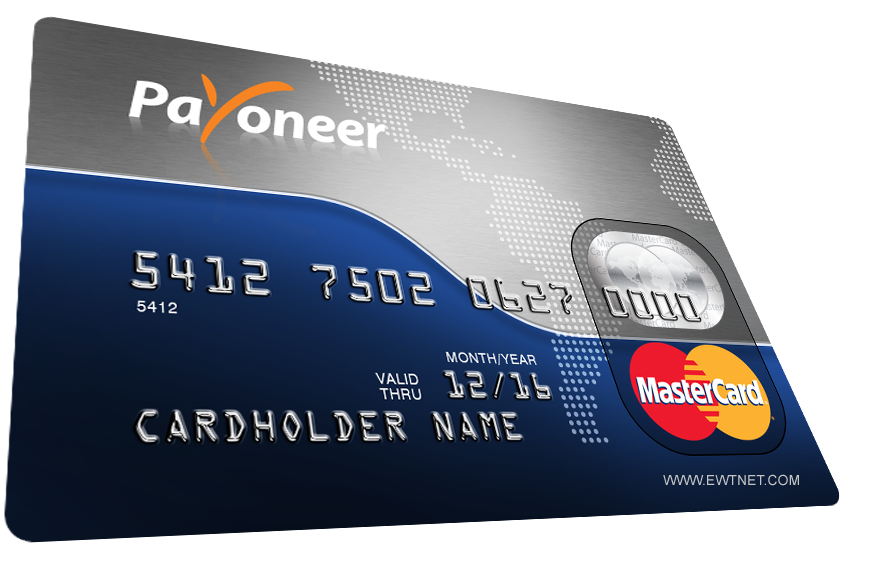
    Payoneer debit card
    Payoneer debit card

    As a resident of Nigeria (or any other country) you can own a U.S Checking Account that provides you with a US collection account that can be used to receive payments from US companies directly to your Payoneer account.

    These payments can be withdrawn using your Payoneer debit card or used to make other payments online.

    Payoneer Global Payment Service

    Furthermore, Payoneer allows account holders to own, receive and make payments in other localised currencies using the Global Payment Service.

    There are two types of receiving accounts:

    Local receiving accounts – let you get paid by local bank transfer from companies in different countries as if you had a local bank account in that country. Receiving local accounts include:

    • USD Receiving Account (United States)
    • EUR Receiving Account (Europe)
    • GBP Receiving Account (United Kingdom)
    • CHY Receiving Account (People’s Republic of China)
    • JPY Receiving Account (Japan)

    Wire (SWIFT) receiving accounts – let you get paid by wire transfer worldwide. You can use wire (SWIFT) receiving accounts to receive payments from companies located in countries where local receiving accounts aren’t supported.

    Payoneer Debit Card

    Payoneer allows you to receive ACH / Direct Deposit transfers from cooperate organizations such as eBay, Fiverr, Amazon, Upwork, etc. The debit card makes it easy and convenient to perform various transactions online such as purchasing or paying for services online and can be used in any ATM globally that accepts MasterCard.

    You can request for a separate debit card for all your currencies. Depending on your location, your debit card is shipped between 2-5 weeks.

    Setting Up your Payoneer Account

    Creating a Payoneer account is easy. You can start by simply creating an account on the Payoneer website. But the easiest method to get your account approved and verified is going through a third party.

    Co-operations such as Amazon, SeoClerks and Fiverr allows you to receive funds through your Payoneer account. Hence, providing you with a unique link to setup of your Payoneer account. In this tutorial, I will be walking you through on how to setup your U.S bank account and get your Payoneer card using Infolinks.

    Requirements

    • A Valid Email Address – Create a Gmail
    • A Website/Blog – Create a Free Blog
    • Infolinks Publisher Account – Create it!
    • A scanned copy of a government-issued ID (any of Driving licence, Passport, National ID or Voter’s Card will be fine)

    Setting Up your Infolinks Publisher’s Account

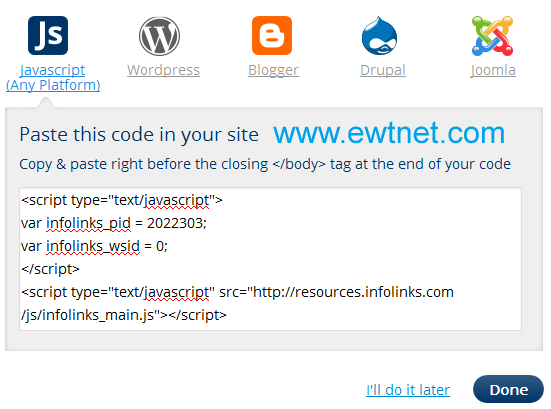
    Infolinks is a media advertisement partner that allows you to share advertisement revenue by implementing the infolinks publisher code on your website or blog.   If you don’t already own one, proceed to Gmail to create a free email account. Then visit Blogger.com to start a free blog powered by Google.

      When all is set, proceed to Infolinks Publisher’s account setup, and enter your website/blog (e.g. website.blogspot.com) address in the specified input box. FIll the remaining info and complete the setup by implementing the Infolinks code on your website/blog (See how to add custom widget on Blogger to add your Infolinks code on the Blogger platform).

    Request your Payoneer Debit Card

    I believe you have already setup your email address and created an Infolinks publisher’s account. Now, proceed to your Infolinks payment setting:

    • Enter your contact details and click next
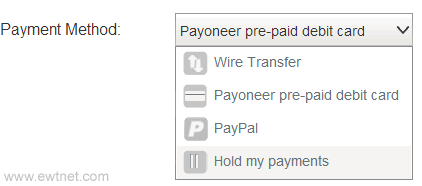
    • Select Payoneer pre-paid debit card as your payment method
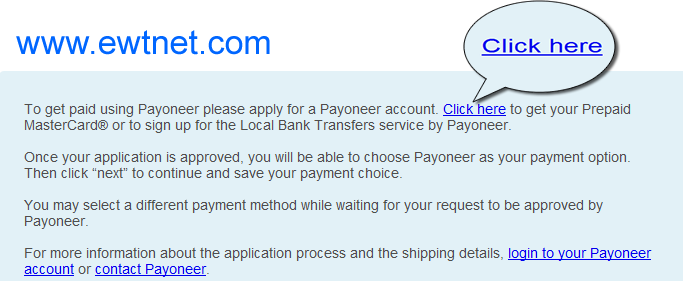
    • Immediately beneath this area, you will find a notification box prompting you that no Payoneer account is associated with your infolinks account. Kindly, follow the Creat account link and fill the form at the Payoneer website. This process will require your email address and a government issued ID. If you do not have any of driving licence, national id or passport you can select National ID and use your voters’s card later.
    Get paid using Payoneer on Infolinks

    Note: Ensure that your billing address is valid and correct. To be on the safer side, visit the nearest post office to get details of your mailing address.

    • At this point a confirmation message will be sent to your email. Sit back and wait for 2-5 business days for your Payoneer account to be reviewed and approved.

    Once your account is approved you will receive a congratulation email!

    Activate Payoneer Debit Card

    Your Payoneer Debit card will arrive your mailing address within 2-5 weeks. Once you receive it, you can proceed to your Payoneer account to view your status and activate your card.

    Setting Up your U.S Bank Account

    A free U.S checking account will be created for you the moment your debit card request is approved. This account is used to receive payments from US companies directly to your Payoneer account.

    Check your email inbox for an email from [email protected] containing the following message:

    Dear FirstName,

    Welcome to the Payoneer US Payment Service.

    This service provides you with a US collection account that can be used to receive payments from US companies directly to your Payoneer account!

    Your US Payment Service information:
    BANK NAME: Bank Of America
    ACCOUNT TYPE: CHECKING
    ACCOUNT #: ***-***-***-***-***-***
    ABA # (Bank Routing Number): ####-#####
    Please Note: Your US Payment Service has not yet been verified. In order to ensure that payments you receive are funded to your account without delay, you’ll need to verify your service by completing the following steps:

    Click here to complete the US Payment Service Questionnaire
    Click here to submit a copy of your government-issued photo ID

    Kindly, follow the links provided in the email to submit your US Payment Questionnaire and a scanned copy of your government-issued photo ID respectively.

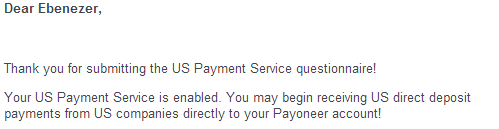
    Wait for a message similar to this one:

    Congratulations! Your U.S Bank Account is ready to be used. You can use this account to receive funds from various U.S co-operation including Paypal and Amazon.

    Need Help?

    If you want us to help you setup your U.S Checking Account or request for a Payoneer debit card. Contact us here.