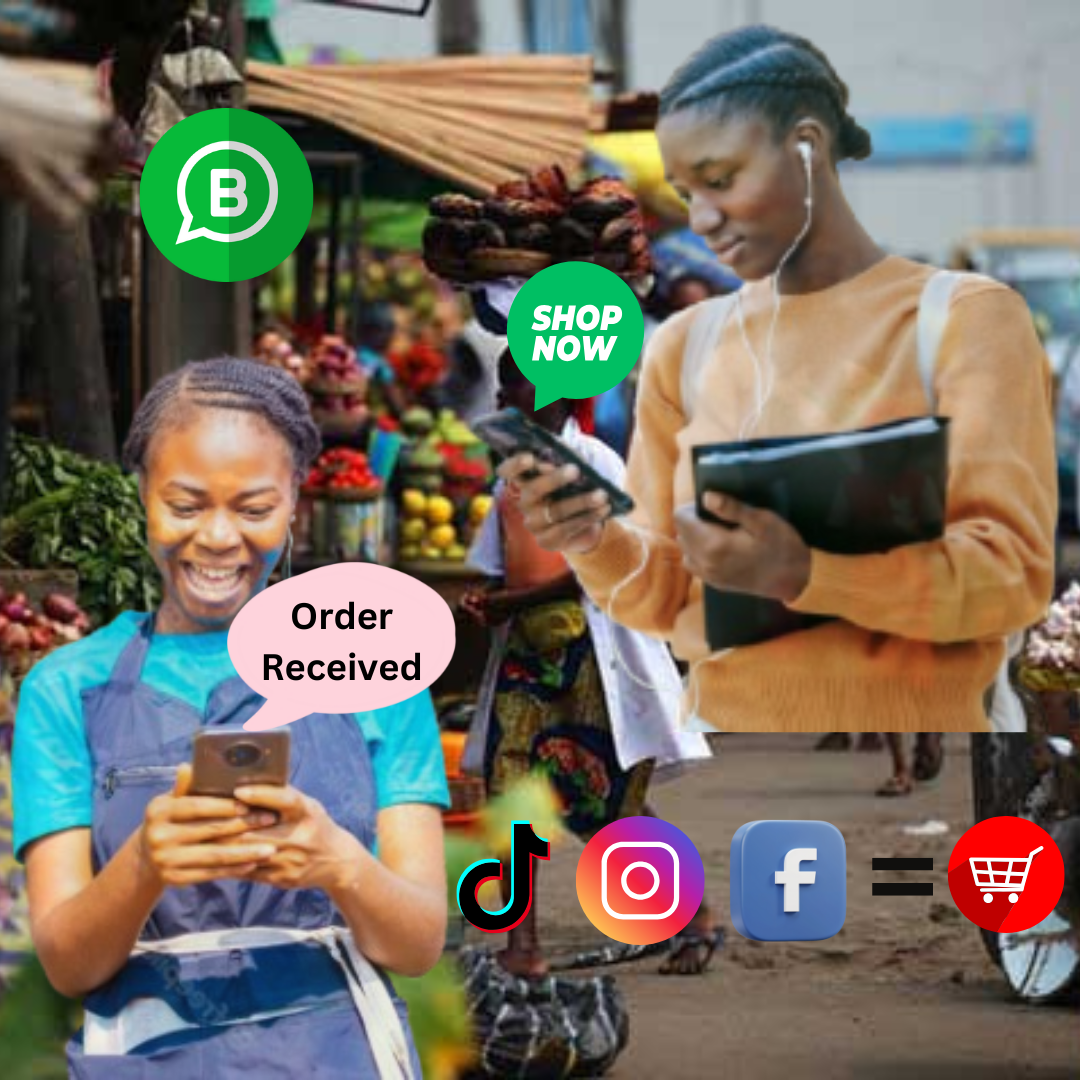
Social media has come a long way, leaving its impact even in the tiniest hole you’d find on the ground. Almost every aspect of modern life, including commerce, can’t deny this fact.
This innovation has led to the dawn of social commerce, seamlessly blending social media engagement with e-commerce transactions.
Forbes says online retail will account for 23% of all purchases by 2027 and before then, Statista reveals that by 2025, revenue in Nigeria’s e-commerce market is expected to reach $7.04 billion, with an annual growth rate of 7.81% (2025-2029). This will ultimately hit $9.51 billion by 2029.
Stressing how much individuals will rely on digital platforms for e-commerce, particularly social commerce, Statista also disclosed that the number of online shoppers is projected to grow to 28.6 million users by 2029. User penetration will increase from 13.3% in 2025 to 15.0% by 2029.
Even e-commerce giant Jumia agrees to this, noting the necessity of integrating social commerce for business growth. Revealing the top e-commerce trends for 2025, the company wrote:
“In 2025, e-commerce companies must leverage social commerce to engage with younger, tech-savvy audiences in authentic ways.
“Businesses that incorporate storytelling, user-generated content, and interactive shopping experiences will benefit from increased brand affinity and higher sales. Importantly, small and medium enterprises (SMEs) can capitalize on social commerce to reach niche markets without substantial investments in traditional e-commerce infrastructure.”
The number of internet users and a mobile-first population has increased commendably in Nigeria, enabling the digital economy to transition into a more efficient and enjoyable space for shopping on platforms like Instagram, Facebook, and TikTok.

What is Social Media Commerce?
It is the direct buying and selling of goods and services through social media platforms like Facebook, Instagram, WhatsApp, and TikTok.
This blend of social media and online shopping makes impulse purchases easier than ever before.
Compared to traditional e-commerce, which requires users to utilize a separate website, social commerce brings shopping right into your social networking space.
All you need is a few taps to see a product in a video, click a link, and complete purchases, without leaving the app.
For businesses, particularly small and medium-sized enterprises (SMEs), this is a huge innovation. They don’t need a full-scale online store to sell; their social media page becomes their storefront.
Why Social Commerce Works
Social media thrives on engagement, and engagement drives sales. Compared to traditional e-commerce, where buyers rely on descriptions and reviews, social commerce builds trust through direct interaction.
- Instant connections: Businesses respond to queries in real time via comments or direct messages.
- User-generated content: People trust other customers more than brands. Seeing a real person using a product in a TikTok video or Instagram story is more convincing than an ad.
- Seamless experience: No need to open multiple tabs or remember discount codes—everything is simplified.
Data backs this up. Conversion rates from social media are climbing, thanks to features like in-app checkouts and AI-driven recommendations.
In Nigeria, where mobile-first internet usage is scaling, platforms like WhatsApp Business, Instagram Live Shopping, and TikTok product links have made it easy for sellers to reach buyers quickly and make instant purchases.
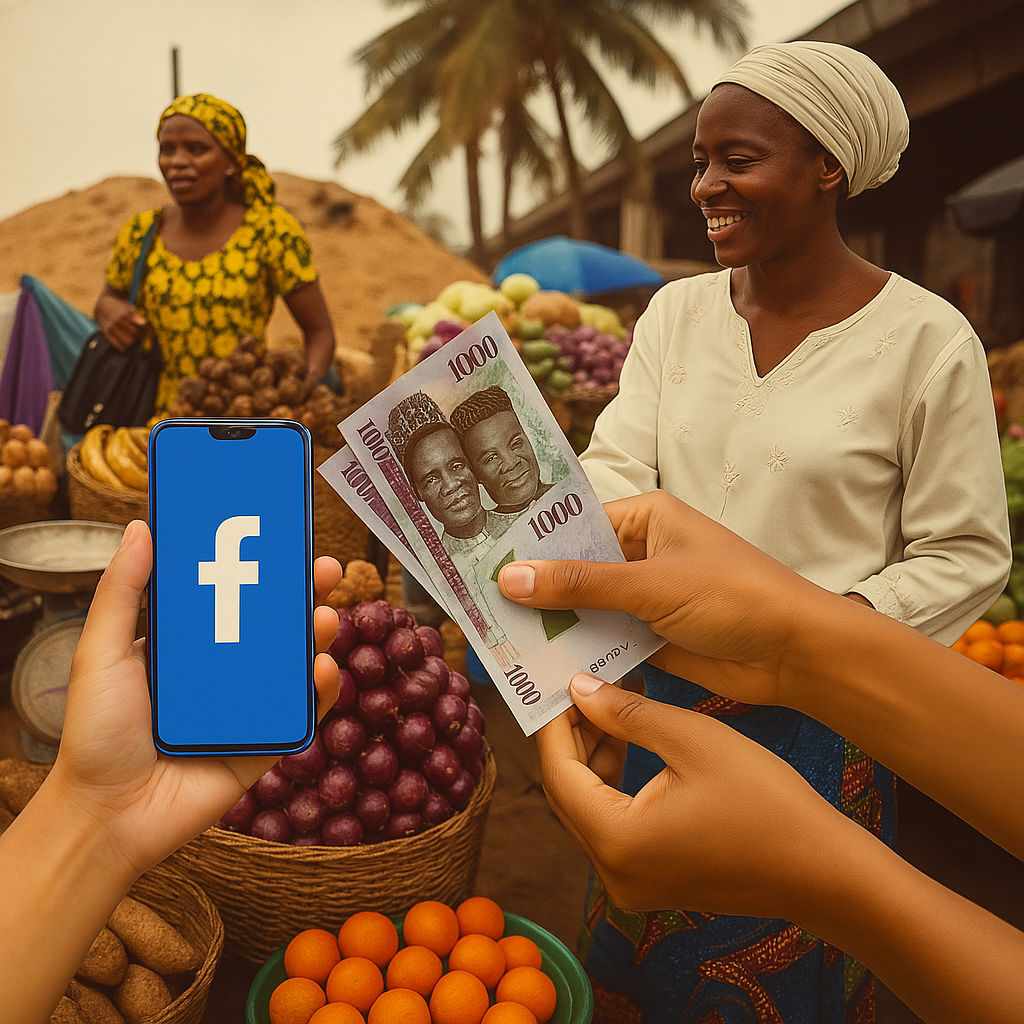
Most Leveraged Social Media Commerce Platforms in Nigeria
Facebook shops allow merchants to create digital storefronts on Facebook and Instagram, while users or potential buyers browse and purchase without leaving the app.
In order to make things even better for sellers, you’d find features like customizable catalogs, messenger integration for customer service, and targeted ads for boosting visibility.
Instagram, which used to be just a photo-sharing platform, is now a marketplace with features like product tagging, checkout integration, and influencer promotions that make it a must-use tool for brands.
With short-form videos being the most preferred when it comes to content consumption, TikTok Shop enables sellers to showcase products through engaging clips. Live shopping events and hashtag challenges amplify visibility.
Nigeria’s SMEs swear by WhatsApp Business. It allows brands to list products in a catalog, interact with customers, and even process payments, all through a simple chat interface.
The Power of E-Commerce Social Media Advertising
Social commerce doesn’t just rely on organic reach. Paid advertising supercharges visibility. Platforms like Facebook, Instagram, and TikTok provide highly targeted ad solutions, ensuring products reach the right audience.
Best Practices for Social Commerce Advertising:
- Influencer partnerships: Collaborating with content creators builds credibility and extends reach.
- Short-form video marketing: Engaging, digestable content drives conversions, especially on TikTok and Instagram Reels.
- Mobile-first optimization: Most purchases happen on smartphones. Ensuring a seamless mobile experience is highly important.
- Community engagement: Replying to comments and messages shouldn’t be left to just customer service, it’s part of the sales funnel.
So, if you are a business owner looking to become a social commerce giant:
- You can host Live Product Showcases; this can boost engagement and trust;
- Again, Encouraging User-Generated Content will go a long way; reviews and testimonials from real customers can also build authenticity;
- Lastly Integrating Local Payment Solutions through the use of platforms like Paystack and Flutterwave. This ensures smooth checkout for customers.

The Future of Social Commerce in Nigeria
Social commerce is only getting started. AI-powered recommendations, augmented reality (AR) shopping, and deeper influencer-brand integrations will drive the next phase. By 2027, online retail is expected to account for 23% of all purchases—businesses that embrace social commerce now will be ahead of the curve:
- AI-driven product recommendations will thrive: Personalised suggestions based on browsing history.
- AR will make shopping experiences better: Virtual try-ons for beauty, fashion, and accessories.
- Influencer-led commerce will be king: More brands will rely on content creators to drive sales.
Social commerce is the future of online shopping, and moving from static e-commerce sites to dynamic, interactive storefronts on social media has changed how consumers buy. Businesses that adapt to this growth will stay relevant, while those that ignore it face the risk of falling behind.
For entrepreneurs and SMEs, the opportunity is huge. Contributing factors like high mobile penetration, deep social media engagement, and digital payment must be leveraged.
Social commerce might take over the e-commerce sector faster than anticipated, and now is the time to build, experiment, and sell on social media where people spend most of their time.



You must be logged in to post a comment.